The NIH this month published notice of a funding opportunity to support the next round of pragmatic clinical trials within the NIH-DoD-VA Pain Management Collaboratory (PMC).
The PMC was established in 2017 with an initial cohort of 11 pragmatic trials. The new funding opportunity leverages the experience, expertise, and leadership of the PMC Coordinating Center with a new round of pragmatic trials evaluating nonpharmacologic solutions to address pain and comorbid conditions in veterans, United States Armed Forces service members, and their families.
The NIH Institutes participating in this funding opportunity include the National Center for Complementary and Integrative Health (NCCIH) and the National Institute of Nursing Research (NINR). Applications may be cofunded by the Office of Disease Prevention (ODP) and the Office of Behavioral and Social Sciences Research (OBSSR).
At the NIH Pragmatic Trials Collaboratory Steering Committee’s annual meeting in May, Dr. Stephanie Morain discussed the results of a recent bioethics initiative to explore ethical considerations for data sharing in the context of pragmatic clinical trials. The project was supported by a supplemental grant award from the NIH through the NIH HEAL Initiative.
Morain and coauthors Juli Bolinger, Kevin Weinfurt, and Jeremy Sugarman published their work in an article in Clinical Trials and a report of stakeholder interviews in Learning Health Systems.
With new data sharing requirements and expectations from funders, journals, and other stakeholders, Morain said the gaps in understanding related to data sharing in pragmatic clinical trials are relevant now more than ever. The supplement was an opportunity to better understand what data sharing policies exist and how well they align with pragmatic trials.
“We suspected that pragmatic clinical trials might raise different challenges compared to sharing data from traditional explanatory trials,” she explained.
Morain said that 2main reasons contributed to why data sharing may be different in the context of pragmatic clinical trials. First, many pragmatic trials use waivers or alterations of informed consent. But much existing ethical guidance for data sharing is based on the argument that sharing data is consistent with participants’ expectations or preferences.
“If we didn’t get explicit permission from participants to participate in the trial, those assumptions [about expectations or preferences] may not hold,” she explained.
The second key difference relates to the fact that pragmatic trials often use existing data from CMS or clinical records. It is often not new data generated for the research purposes, as in many traditional explanatory trials. The embedded nature of pragmatic trial data brings additional security and confidentiality concerns.
The activities of the bioethics supplement were to:
Conduct a systematic literature review to identify the specific features of pragmatic clinical trials that may alter the risk-benefit calculus for data sharing as compared to explanatory trials and other settings with ethically relevant similarities
Through stakeholder interviews, explore data sharing in pragmatic trials as understood by those responsible for the oversight, generation, dissemination, and future use of data from pragmatic trials
Evaluate existing and proposed policies and guidance to promote data sharing
Morain highlighted four key insights from this work.
More Data Needed on Patient Preferences
The first takeaway was that more data are needed on patient preferences in the context of pragmatic clinical trials.
During the qualitative interviews, stakeholders made assumptions based on irrelevant data from traditional explanatory trials. It is clear that many consider patient preferences important, and therefore, more information is needed in the context of pragmatic trials.
“If we don’t actually have permission from the people about who these data relate, we then have to make decisions about either what we think they would prefer or what we think would be in their best interest,” she explained. “Both decisions rely on empirical data to justify them,” she said.
Look Beyond Consent
The second insight was that it may be necessary to look beyond consent.
Many stakeholders in the research focused on consent as the main or only mechanism to demonstrate respect to participants. But Morain said it possible to look beyond informed consent processes to fulfill obligations of respect when sharing data from pragmatic clinical trials, particularly for trials not explicitly asking for consent.
“Consent may be one way that we [researchers] demonstrate respect, but it’s not the only way,” she said.
Healthcare Systems and Institutions Are Key Partners
The third insight was that health systems and individual institutions are key partners. It may be important for them to be transparent that pragmatic research is underway and share findings with patients.
“Institutions are key partners in regards to what data can be shared, and how to do that in a way that maximizes the benefits of sharing but also protects both the patients and the health system,” Morain said.
The Public Can’t Support What It Doesn’t Know Exists
Finally, Morain said that the findings showed that the public can’t support sharing their data if they don’t know this type of research is happening. The medical field does a poor job explaining to patients how their information will be used.
She said that sharing information, even at the aggregate level, can be powerful. Even if informed consent is waived, health systems and institutions can find ways to communicate that pragmatic research is ongoing and highlight its value in advancing science.
“Something we have been advocating for is even if we are not asking for permission, we might still be able to notify,” she said. “Even if researchers don’t have to ask for participant permission, that doesn’t mean participants can’t be told.”
The Grand Rounds session will be held on Friday, July 21, 2023, at 1:00 pm eastern.
IMPACt-LBP, an NIH Pragmatic Trials Collaboratory Trials, is a cluster randomized trial of a multidisciplinary collaborative team approach for low back pain vs usual care. The study will determine whether receiving first-line care from “primary spine practitioners” improves physical function, decreases pain and opioid prescriptions, improves patient satisfaction, and decreases costs and utilization of healthcare services.
Dr. Goertz is a professor in musculoskeletal research and the vice chair for implementation of spine health innovations in the Department of Orthopaedic Surgery, and Dr. Goode is an associate professor of orthopaedic surgery—both at Duke University.
From left: Dr. Stephanie Ibemere and Dr. Kaitlyn McLeod
The NIH Pragmatic Trials Collaboratory is welcoming its first class of fellows in a new program for early-career investigators with a scholarly interest in pragmatic clinical trials.
"We are very excited to welcome the 2 inaugural fellows to the NIH Pragmatic Trials Collaboratory Fellowship Program and give them the education and tools that they need to launch their careers as pragmatic clinical trials investigators," said Dr. Rosa Gonzalez-Guarda, cochair of the NIH Collaboratory’s Fellowship Program and Health Equity Core.
Dr. Stephanie Ibemere is an assistant professor in the Duke University School of Nursing. Dr. Ibemere will work closely with the Implementation Science Core and the GRACE NIH Collaboratory Trial team during her fellowship year.
Dr. Kaitlyn McLeod is a resident physician in the Internal Medicine Residency Program at the University of Colorado. Dr. McLeod will work closely with the Community Health Improvement Core and the Nudge NIH Collaboratory Trial team during her fellowship year.
"We are delighted that Stephanie and Kaitlyn are joining the NIH Collaboratory as fellows, and we look forward to the insights they will bring to the Cores and NIH Collaboratory Trials," said Dr. Kevin Weinfurt, co–principal investigator of the Coordinating Center and cochair of the new Fellowship Program.
During the 1-year fellowship, which began July 1, 2023, fellows will become members of the NIH Collaboratory program and have access to a wide range of activities and opportunities. Fellows will be active participants in a Core Working Group that aligns with their interests and will also be given education on the fundamentals of designing and conducting successful pragmatic clinical trials.
Working with a NIH Collaboratory Trial investigator mentor and a Core leadership mentor from the NIH Collaboratory, each fellow will complete a project that contributes to the field of pragmatic trials, resulting in a new publishable product or resource. In addition, fellows will participate in the following activities:
Regular presentations and discussions with experienced pragmatic trial investigators and leaders in the field
Individualized coursework and mentorship
Guided research program
Professional development training
Presentation and publication opportunities
Training on health equity as it relates to pragmatic trials
Ibemere and McLeod joined leaders from the NIH Collaboratory and their mentors for a welcome and orientation meeting on July 6 to kick off their fellowship year.
The 2-day workshop, held in June at the 2023 AcademyHealth Annual Research Meeting in Seattle, introduced concepts in the design, conduct, and implementation of pragmatic clinical trials embedded in healthcare systems, with a focus on methods relevant to health services researchers. Presenters shared firsthand experiences and case studies from the NIH Collaboratory Trials.
The learning objectives of the workshop included:
To clarify the definition of embedded pragmatic clinical trials and explain their utility.
To introduce attendees to the unique characteristics and challenges of designing, conducting, and implementing these trials within diverse healthcare systems.
To increase the capacity of health services researchers to address important clinical questions with pragmatic trials in real-world settings, driving tomorrow’s research outcomes.
Access the complete workshop materials, including slides, speaker biographies, and the full participant guide.
The American Heart Association (AHA) identifies Life's Essential 8 (LE8) lifestyle factors as eating better, being more active, quitting tobacco, getting healthy sleep, managing weight, controlling cholesterol, managing blood sugar, and managing blood pressure. When uncontrolled, these lifestyle factors lead to common coexisting chronic conditions, morbidity, healthcare costs, and death. Patients who experience health disparities are disproportionately affected by cardiovascular diseases, have worse disease control, and suffer greater sequelae.
Chat 4 Heart Health will use a patient-level randomized pragmatic trial to test the comparative effectiveness of 3 text messaging delivery strategies that have been shown to improve an individual's self-management health behaviors, including physical activity and medication adherence. The study findings will provide evidence regarding the best population-based strategy for universal delivery to engage all patients with health disparities in self-management to improve the AHA's LE8.
Dr. Michael Ho and Dr. Sheana Bull will serve as the co–principal investigators for Chat 4 Heart Health. Dr. Ho is a professor of medicine at the University of Colorado School of Medicine. Dr. Bull is a professor and past chair of the Department of Community and Behavioral Health at the Colorado School of Public Health, as well as the director of the mHealth Impact Lab.
The Chat 4 Heart Health NIH Collaboratory Trial is supported within the NIH Pragmatic Trials Collaboratory by a grant from the National Heart, Lung, and Blood Institute (NHLBI).
Ho and Bull are experienced investigators in the NIH Collaboratory, and both serve currently as co-PIs on the Nudge NIH Collaboratory Trial.
Julie Fritz, PT, PhD, FAPTA Distinguished Professor, Department of Physical Therapy & Athletic Training
Associate Dean for Research, College of Health
University of Utah
Guilherme Del Fiol, MD, PhD Professor, Biomedical Informatics
University of Utah
Keywords
Community Health Centers; Low Back Pain; Physical Therapy Modalities; Primary Care; Telemedicine
Key Points
Clinical practice guidelines support nonpharmacologic care as first-line management of low back pain. However, persons in low-income and rural communities have significantly higher odds of receiving a prescription opioid for a new back pain diagnosis.
Use of nonpharmacologic pain treatments is lower in rural settings and for persons of Hispanic/Latino ethnicity. Many of these communities are served by federally qualified health centers that often lack options to provide accessible nonpharmacologic alternatives.
Clinical research can exacerbate disparities, because clinical trials typically are based in urban, academic medical centers, underrepresent diverse populations, and overlook community engagement strategies in trial planning and design.
BeatPain Utah, an NIH Pragmatic Trials Collaboratory Trial, is an embedded pragmatic clinical trial comparing the effectiveness of nonpharmacologic intervention strategies for patients with back pain seeking care in federally qualified health centers in Utah. The interventions include a telehealth strategy that provides a brief pain teleconsult along with phone-based physical therapy, and an adaptive strategy that provides the brief pain teleconsult first, followed by phone-based physical therapy among patients who are nonresponsive to treatment.
BeatPain Utah is using the Community-Engaged Dissemination and Implementation (CEDI) framework, which considers both social and technical factors in the implementation of health IT strategies, decentralizes the research methods and procedures, and grounds the implementation in a systematic, iterative mapping of how both clinic staff and patients interact with health IT.
Although there is evidence of a significant divide in the implementation of advanced health IT functions, low-resource settings can adopt advanced health IT with some assistance. Moreover, there is considerable opportunity to reduce inequities through increased adoption of telehealth strategies, given that 96% of people in low-resource communities have at least a text and voice phone.
Discussion Themes
Motivating patients to engage in self-management of health conditions is a challenge, irrespective of whether the intervention is delivered in person or remotely.
Designing interventions that can meet everyone’s needs can be a challenge in a study that involves rural/urban and racial/ethnic diversity. Implementation mapping at the beginning of the design process is key. This includes direct assessment of patients’ needs, such as by interviewing patients who seek care in the partnering clinics to understand their expectations and how they would think about a mode of care delivery, like telehealth, that is unfamiliar to them.
Another crucial element of the health equity–focused model is ensuring that the question at the heart of the research is of value to the clinics and their leadership. For every trial, one of the first important tasks is to reach out to the community health center leadership and see if they are interested. The clinic’s priorities should drive the design of the trial. “We have to be very accommodating to the needs of each [community health center] and respect their needs.”
How quickly can these types of studies proceed from trial completion to release of results? Especially in studies involving chronic conditions, having long-term follow-up data to answer the core effectiveness question in a hybrid trial means there could be a long wait for results. Researchers must also be prepared to consider the question of sustaining a service that many clinics in the study have come to rely on, even before the results are available.
Pragmatic research is vulnerable to differences in data capture and access to care for different subsets of the population, which, if left unaddressed, can worsen health gaps.
In a new article published online ahead of print in JAMIA, the NIH Pragmatic Trials Collaboratory's Trial teams reflect on the challenges encountered by their trials and share the specific strategies they used to increase the generalizability of research results.
“Poor generalizability can occur because detailed information about specific populations is missing, and critically, is missing not at random,” the authors cautioned.
The NIH Collaboratory Trials are implementing approaches designed to ensure inclusion and retention of all populations, and to enable the complete collection of data.
“By improving data capture, access to care, and patient technology support, ePCTs hold the potential to yield insights and estimates pertinent to the entire population, not just a subset of the population,” they wrote.
A focus of the 2023 NIH Pragmatic Trials Collaboratory Annual Steering Committee Meeting was health equity in embedded pragmatic clinical trials (ePCTs). In an interview during the meeting, Drs. Anne Trontell and Ana Quiñones reflected on health equity in the ePCT landscape.
Trontell, who is the associate director for comparative clinical effectiveness research at the Patient-Centered Outcomes Research Institute (PCORI), said that health equity is a key component of the patient-centered efforts underlying all of PCORI’s research.
“From its beginning, PCORI has dedicated research funding to address the unique needs of historically underserved populations. The achievement of health equity is one of PCORI’s 5 guiding National Priorities for Health,” said Trontell.
As a funder, PCORI directs funds to those who pursue health equity goals and targets specific requirements that are important to the development of equity-focused research, such as working with communities and emphasizing inclusivity and diversity in the institutions and participants in research.
“It is a multipronged effort, and one that we are very excited to participate in,” said Trontell.
Quiñones, who is the core lead for the NIA IMPACT Collaboratory Health Equity Team and an associate professor at Oregon Health & Science University, said she agrees that bringing health equity into ePCTs requires a team-based approach.
“We’ve learned that leaning on ‘health equity experts’ or relying on individuals to provide answers for big gaps in the research evidence base isn’t just unrealistic, it is probably not great practice either,” said Quiñones.
One thing the NIA IMPACT Collaboratory has done is ask everyone involved in the program to think about and contribute to the process. A resulting product of this requirement is a series of best-practice recommendations for integrating health equity into ePCTs for dementia that were created by asking experts from areas across the IMPACT Collaboratory to apply a health equity perspective to their area of expertise to collectively develop recommendations for some of the issues and hidden pitfalls.
“This doesn’t mean that you don’t need people who are deeply embedded and knowledgeable about the [health equity] work, and knowledgeable about the best scientific principles, asking questions, but it does mean that everybody is a participant in solving the problem, not just the health equity expert,” said Quiñones.
Trontell said that one way PCORI is supporting health equity is by funding the groundwork that can help researchers be successful, such as building relationships with diverse communities through its engagement awards. In addition, PCORI’s Phased Large Awards for Comparative Effectiveness Research (PLACER) opportunities fund a feasibility phase that supports study refinement, infrastructure establishment, stakeholder engagement, and feasibility testing of study operations, including the ability to recruit and enroll participants successfully.
“We have heard from our investigators that meaningful engagement deserves attention, effort, and time, so our engagement awards and PLACER funding opportunity offer upstream support for strong and diverse engagement to occur,” said Trontell.
Networks such as the NIA IMPACT Collaboratory and the NIH Pragmatic Trials Collaboratory have an important role to play in these efforts as well. Quiñones said these large research networks have opportunities to build synergies around common goals related to health equity and share knowledge and best practices.
Trontell agrees. “I’m a big fan of bringing people together to figure out something and to listen to each other, particularly when they have a shared goal and excitement around trading ideas and tips. That creates a real learning community.”
In this Friday’s PCT Grand Rounds, Miguel Vazquez of the University of Texas Southwestern Medical Center and George “Holt” Oliver of the Parkland Center for Clinical Innovation will present “Improving Delivery of Care for Chronic Kidney Disease, Diabetes, and Hypertension,” including results from the ICD-Pieces NIH Collaboratory Trial.
The Grand Rounds session will be held on Friday, June 23, 2023, at 1:00 pm eastern.
ICD-Pieces, an NIH Collaboratory Trial, used a novel information technology platform to identify patients with concurrent chronic kidney disease, diabetes, and hypertension and deliver evidence-based interventions to improve patient outcomes. The study is supported within the NIH Collaboratory under an award from the National Institute of Diabetes and Digestive and Kidney Diseases.
Dr. Vazquez is a professor of internal medicine at the University of Texas Southwestern Medical Center and Dr. Oliver is vice president of clinical informatics at the Parkland Center for Clinical Innovation.


 The NIH this month published notice of a funding opportunity to support the next round of pragmatic clinical trials within the NIH-DoD-VA Pain Management Collaboratory (PMC).


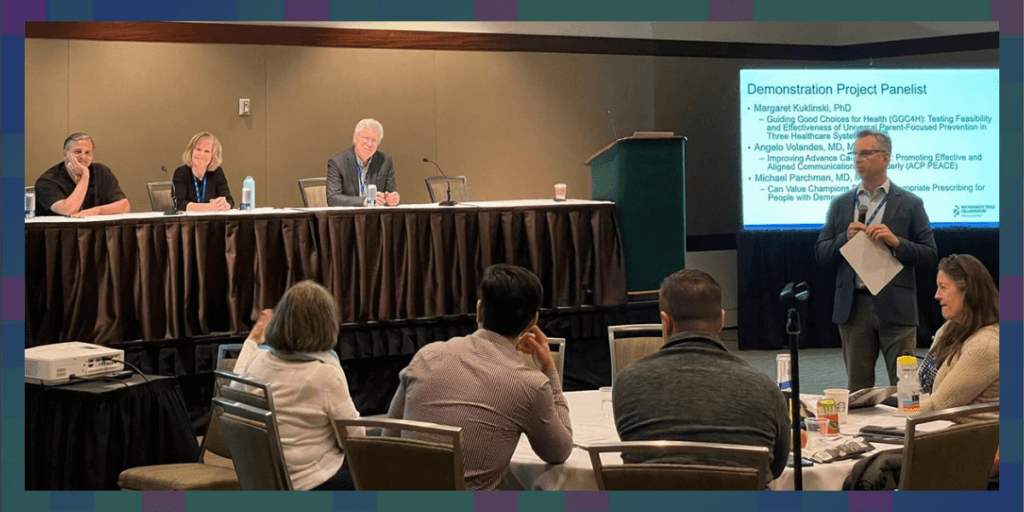 Complete materials are now available from the NIH Pragmatic Trials Collaboratory’s recent workshop,
  The NIH Collaboratory is excited to announce the addition of
  Pragmatic research is vulnerable to differences in data capture and access to care for different subsets of the population, which, if left unaddressed, can worsen health gaps.
 In this Friday’s PCT Grand Rounds, Miguel Vazquez of the University of Texas Southwestern Medical Center and George “Holt” Oliver of the Parkland Center for Clinical Innovation will present