The Grand Rounds session will be held on Friday, February 21, 2025, at 1:00 pm eastern.
This Grand Rounds session will report the results of Chat 4 Heart Health, an NIH Collaboratory Trial. The trial evaluated the comparative effectiveness of 3 text messaging delivery strategies that have been shown to improve individuals’ self-management health behaviors. The presenters will also share insights from Nudge, another NIH Collaboratory Trial, which tested a variety of text messaging strategies to encourage patients to refill their cardiovascular medications.
Ho is a senior clinician investigator at Kaiser Permanente Colorado’s Institute for Health Research. Bull is a professor of community and behavioral health at the Colorado School of Public Health.
Dr. Michael Ho and Dr. Sheana Bull, principal investigators for Nudge
Text message–based reminders to patients who delayed refilling their cardiovascular medications did not improve medication adherence compared with usual care in the recently completed Nudge trial.
Nudge, an NIH Collaboratory Trial, was a randomized, pragmatic clinical trial embedded in 3 healthcare systems testing a variety of text messaging strategies to encourage patients to refill their cardiovascular medications. Poor medication adherence is common among patients with chronic conditions, and poor adherence to cardiovascular medications is associated with higher rates of adverse health outcomes, including hospitalization and mortality.
The study team randomly assigned 9501 patients who delayed refilling their cardiovascular medications to receive either usual care or 1 of 3 text message interventions: (1) a generic text message reminder to refill medication; (2) a text message reminder that incorporated “behavioral nudges”; and (3) a behavioral nudge text message reminder plus a chatbot that used preprogrammed algorithms to assess common barriers to medication adherence. The primary outcome was the proportion of days covered in the 365 days after randomization for all cardiovascular medication classes for which the patient had a refill gap at baseline.
At the end of the trial, there were no statistically significant differences in the proportion of days covered with medication between the study groups. There were also no differences in emergency department visits, hospitalizations, and mortality. In a post hoc analysis exploring medication adherence in the first 3 months after a refill gap, the study team saw modest improvement in refill adherence with the text messaging strategies compared with usual care.
Given that most patients refilled their medications within 30 days of receiving a reminder text message, the authors concluded that the lack of benefit after 30 days may be related to “intervention decay” that has been seen with other interventions. “Additional interventions need to be rigorously tested to try to improve adherence to chronic cardiovascular medications,” they wrote.
Nudge was supported within the NIH Pragmatic Trials Collaboratory by a grant award from the National Heart, Lung, and Blood Institute.
“The feedback and guidance from the NIH Collaboratory’s Cores were instrumental to overcoming the challenges we faced in completing this project,” said Michael Ho, co–principal investigator for Nudge and a senior clinician investigator at Kaiser Permanente Colorado’s Institute for Health Research.
The NIH Pragmatic Trials Collaboratory Coordinating Center is pleased to announce that the Chat 4 Heart Health trial received approval to transition from the planning phase to the implementation phase of the study. Congratulations to Michael Ho and Sheana Bull, the Chat 4 Heart Health principal investigators, and their study team for reaching this important milestone!
Chat 4 Heart Health, an NIH Collaboratory Trial, will test the comparative effectiveness of 3 text messaging delivery strategies that have been shown to improve individuals’ self-management health behaviors, including physical activity and medication adherence. The study will provide evidence regarding the best population-based strategy for universal delivery to engage patients in self-management to improve the American Heart Association’s “Life’s Essential 8” measures for improving and maintaining cardiovascular health.
Bull and Ho spoke recently about the importance of the study at the NIH Pragmatic Trials Collaboratory’s 2024 Annual Steering Committee Meeting.
Bull is a professor of community and behavioral health and the director of the mHealth Impact Laboratory at the Colorado School of Public Health. Ho is a professor of medicine at the University of Colorado School of Medicine. They also led the Nudge study, another NIH Collaboratory Trial.
Chat 4 Heart Health is supported through a cooperative agreement from the National Heart, Lung, and Blood Institute. Learn more about Chat 4 Heart Health.
The Grand Rounds session will be held on Friday, November 17, 2023, at 1:00 pm eastern.
Nudge is an NIH Collaboratory Trial. Ho is a professor of medicine and Bull is a professor of community and behavioral health at the University of Colorado. They are the co–principal investigators of Nudge.
The American Heart Association (AHA) identifies Life's Essential 8 (LE8) lifestyle factors as eating better, being more active, quitting tobacco, getting healthy sleep, managing weight, controlling cholesterol, managing blood sugar, and managing blood pressure. When uncontrolled, these lifestyle factors lead to common coexisting chronic conditions, morbidity, healthcare costs, and death. Patients who experience health disparities are disproportionately affected by cardiovascular diseases, have worse disease control, and suffer greater sequelae.
Chat 4 Heart Health will use a patient-level randomized pragmatic trial to test the comparative effectiveness of 3 text messaging delivery strategies that have been shown to improve an individual's self-management health behaviors, including physical activity and medication adherence. The study findings will provide evidence regarding the best population-based strategy for universal delivery to engage all patients with health disparities in self-management to improve the AHA's LE8.
Dr. Michael Ho and Dr. Sheana Bull will serve as the co–principal investigators for Chat 4 Heart Health. Dr. Ho is a professor of medicine at the University of Colorado School of Medicine. Dr. Bull is a professor and past chair of the Department of Community and Behavioral Health at the Colorado School of Public Health, as well as the director of the mHealth Impact Lab.
The Chat 4 Heart Health NIH Collaboratory Trial is supported within the NIH Pragmatic Trials Collaboratory by a grant from the National Heart, Lung, and Blood Institute (NHLBI).
Ho and Bull are experienced investigators in the NIH Collaboratory, and both serve currently as co-PIs on the Nudge NIH Collaboratory Trial.
This Friday’s PCT Grand Rounds will feature the next installment of our special series, Ethical & Regulatory Dimensions of Pragmatic Clinical Trials. Pearl O’Rourke, Dave Wendler, Miguel Vazquez, and Michael Ho will present “Informing and Consenting: What Are the Goals?”
The Grand Rounds session will be held on Friday, February 10, 2023, at 1:00 pm eastern.
O’Rourke is the director of human research affairs at Partners HealthCare Systems in Boston and an associate professor of pediatrics at Harvard. She serves as cochair of the NIH Collaboratory’s Ethics and Regulatory Core. Wendler is the head of the Section on Research Ethics in the NIH Clinical Center and a member of the Ethics and Regulatory Core. Vazquez is a professor of internal medicine at UT Southwestern Medical Center and the principal investigator of the ICD-Pieces NIH Collaboratory Trial. Ho is a professor medicine at the University of Colorado and the principal investigator of the Nudge NIH Collaboratory Trial.
This special Grand Rounds series features moderated webinar discussions with panels of experts. The sessions focus on a range of topics, including the ethics of data sharing; ethical and regulatory considerations in the design and conduct of pragmatic trials; pragmatic research involving patients with dementia; and the use of waivers and alterations of consent.


 In this Friday’s PCT Grand Rounds, Michael Ho and Sheana Bull will present “Texting for Behavior Change: Lessons Learned Across 2 Interventions to Improve Chronic Care Management.”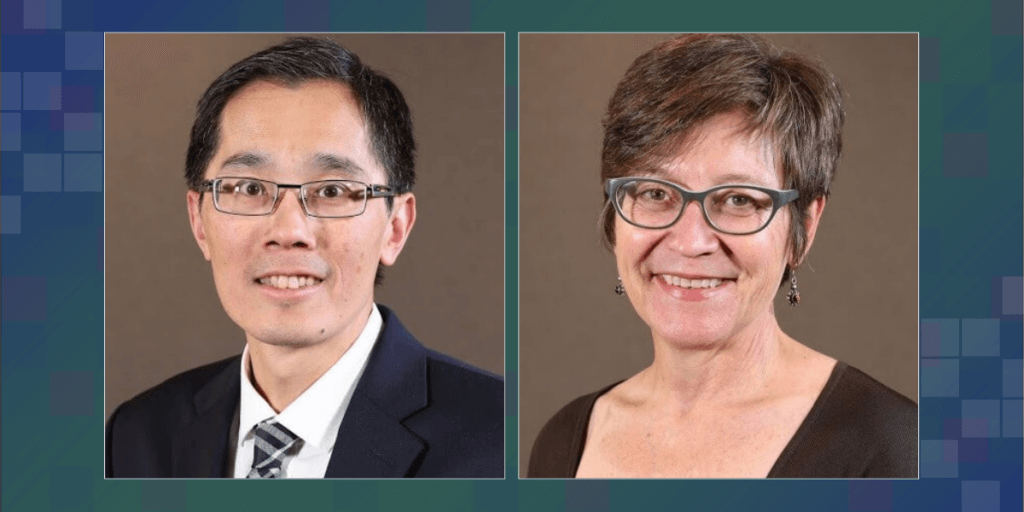
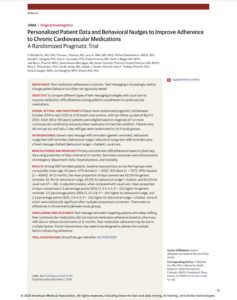 At the end of the trial, there were no statistically significant differences in the proportion of days covered with medication between the study groups. There were also no differences in emergency department visits, hospitalizations, and mortality. In a post hoc analysis exploring medication adherence in the first 3 months after a refill gap, the study team saw modest improvement in refill adherence with the text messaging strategies compared with usual care.
 In this Friday's PCT Grand Rounds, Michael Ho and Sheana Bull of the University of Colorado will present
  The NIH Collaboratory is excited to announce the addition of
  This Friday’s PCT Grand Rounds will feature the next installment of our special series, Ethical & Regulatory Dimensions of Pragmatic Clinical Trials. Pearl O’Rourke, Dave Wendler, Miguel Vazquez, and Michael Ho will present