July 31, 2025: Pragmatic Trialists Share Strategies for Monitoring Changes in Usual Care

Pragmatic clinical trials are conducted as part of routine healthcare delivery and often compare an intervention to usual care. To do this, researchers must understand, monitor, and document standard care at participating research sites.

At the NIH Pragmatic Trials Collaboratory’s 2025 Annual Steering Committee Meeting, Duke University’s Emily O’Brian asked a panel of trialists about the strategies they used to define and document usual care. The panelists included Rachel Winer, co–principal investigator (PI) of STEP-2;, Richard Platt, co-PI of INSPIRE; and Christine Goertz, co-PI of IMPACt-LBP.

Key Strategies

  • Establish a community of individuals who are interested in and committed to answering the research question
  • Develop relationships: visit each site and have monthly coaching calls
  • Get commitment in advance from sites to hold their practice constant for the duration of the trial
  • Have sites complete readiness surveys or feasibility assessments that include questions about potential upcoming quality improvement initiatives
  • Minimize burden on sites as much as possible

The Navigating the Unknown chapter of the Living Textbook includes  descriptions of unanticipated challenges that may occur during the years-long course of a study that can have profound effects on usual care, including:

These challenges all require close collaboration with research partners to develop solutions.

This summer, we are sharing highlights from the 2025 Annual Steering Committee Meeting. Access the complete collection of meeting materials.
July 10, 2025: Researchers Consider the P Value’s Usefulness in Healthcare Systems Research

The P value is a statistic frequently used in biomedical research for the presentation of study findings. It represents a dichotomous decision about whether a finding is “statistically significant” based on a predetermined level, typically  < .05.

Although the peer-reviewed journals in which researchers aspire to publish their work are anchored to P values, the information used to drive decisions in healthcare is not. At the NIH Pragmatic Trials Collaboratory’s 2025 Annual Steering Committee Meeting, a panel led by Greg Simon, leader of the Health Care Systems Interactions Core, discussed P values versus decision-maker perspectives.

Communities, partners, and healthcare systems leaders make decisions based on many, multidimensional factors.

“We care about health outcomes, but we also we care about cost and the satisfaction of members, patients, and employees. Any attempt to roll those up into one statistic is really problematic,” Simon said.

Key Takeaways

  • Where possible, measure and report on what is meaningful to partners, including effect sizes, confidence intervals, cost, and patient and employee satisfaction.
  • Recognize that that P values are a useful metric, but they are only one piece of a larger toolbox.
  • Understand that what is important depends on context, the audience, and local and national priorities.

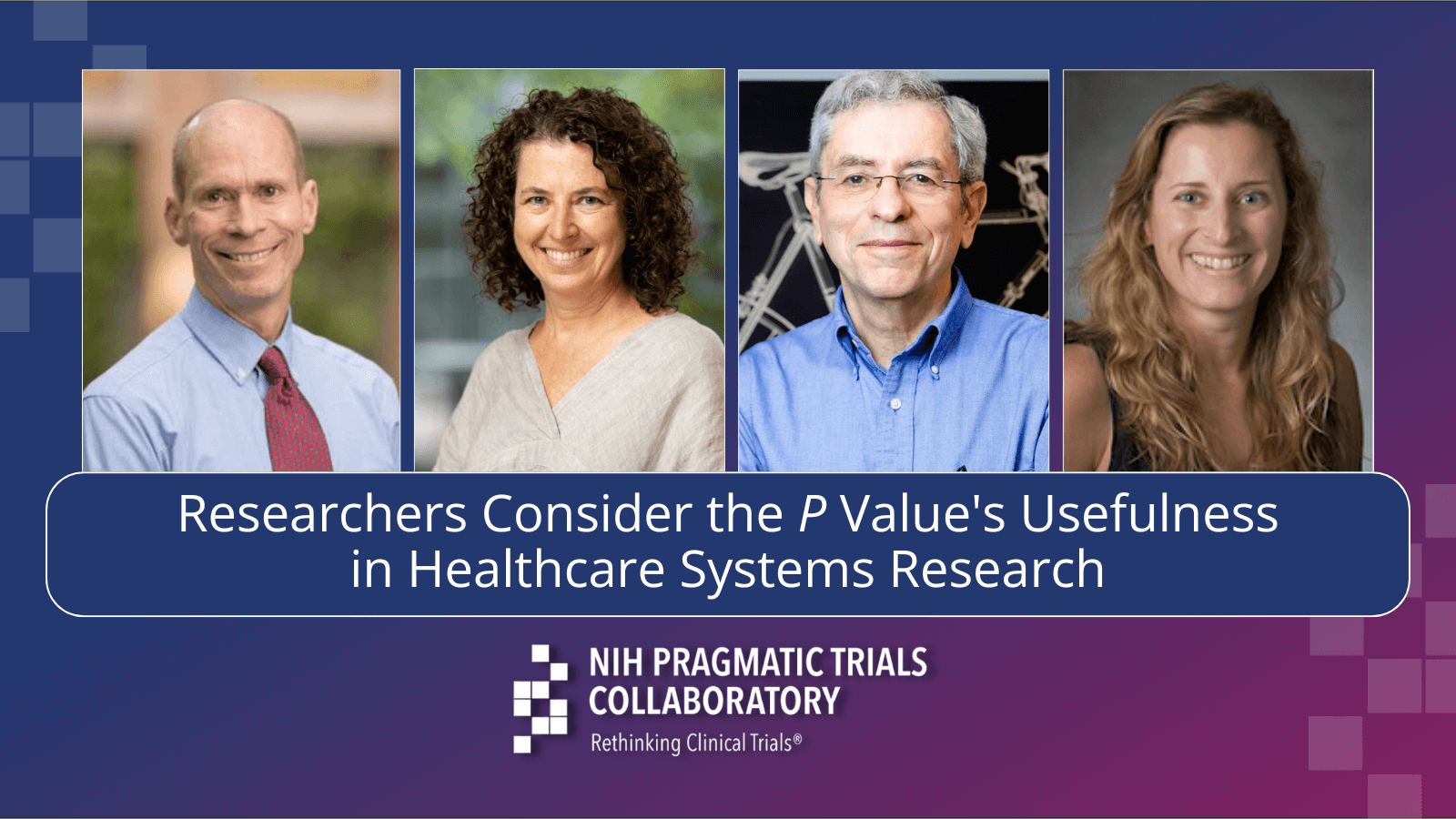
The panelists included Corita Grudzen, co–principal investigator for the PRIM-ER trial; Rich Platt, co-lead of the NIH Collaboratory’s Distributed Research Network; and Liz Turner, colead of the Biostatistics and Study Design Core.

This summer, we are sharing highlights from the 2025 Annual Steering Committee Meeting.  Access the complete collection of meeting materials.

June 26, 2025: New Podcast Episode Considers How to Make Pragmatic Trials More Pragmatic

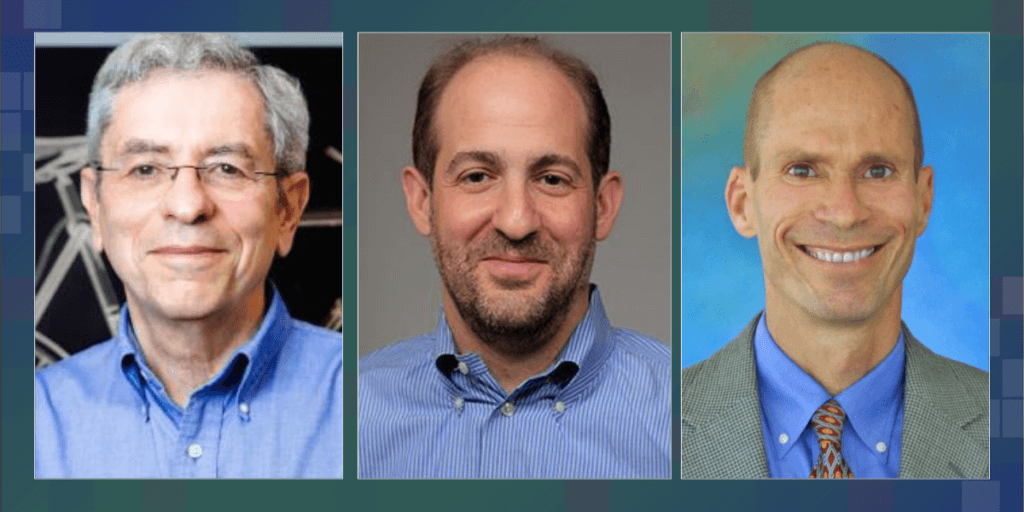
Drs. Rich Platt, Greg Simon, and Hayden BosworthIn a new episode of the NIH Pragmatic Trials Collaboratory Podcast, Rich Platt, Hayden Bosworth, and Greg Simon of the NIH Pragmatic Trials Collaboratory discuss their JAMA Viewpoint, “Making Pragmatic Clinical Trials More Pragmatic.”
Listen and subscribe to the podcast on SoundCloud or Apple Podcasts.

In the Viewpoint, the authors propose solutions to the discordance between the results of pragmatic trials and the implementation of those results in healthcare settings.

“I think one of the problems with our evidence generating process is that we may think that our
customers are grant review panels or maybe journal editors,” Platt notes in the podcast. “Those may be our short-term customers, but those are not our ultimate customers. Our ultimate customers are people who have to make decisions about healthcare,” he added.

October 3, 2024: JAMA Commentary Highlights Gap Between Research Results and Implementation Decisions

Headshots of Richard Platt, Hayden Bosworth, and Greg SimonIn a JAMA Viewpoint published online this week, leaders from the NIH Pragmatic Trials Collaboratory discuss the discordance between the results of pragmatic clinical trials and the implementation of those results in healthcare settings, even in settings that championed the work.



Coauthors Richard Platt, Hayden Bosworth, and Gregory Simon posit that, to provide evidence that healthcare systems leaders will actually use, changes are necessary:

  • Trials need to be faster (2 to 3 years)
  • Trials should consider outcomes that healthcare system leaders care about (such as costs and subgroup analyses)
  • The evidence required for change should be at the level that healthcare system leaders use (such as not necessarily rejecting the null hypothesis at P < .05 but also considering results of Bayesian methods and interim analyses)

Read the full article.

“We believe it is possible to make pragmatic clinical trials of policies and procedures more useful to delivery systems by accommodating their priorities, introducing flexibility in the level of evidence trials require, shortening the duration of planning and implementation, addressing system leaders’ interest in multiple outcomes and subgroup analyses, encouraging modification of protocols during the implementation phase, and by providing timely interim analyses that can guide decisions about continuing or modifying an intervention,” the authors wrote.

This work was based on an NIH Pragmatic Trials Collaboratory workshop held in 2023, Getting the Right Evidence to Decision-Makers Faster. The workshop explored the critical cycle of evidence generation to decision by healthcare system leaders to implement the findings of pragmatic clinical trials conducted within healthcare systems.

Platt is a cochair of the NIH Collaboratory’s Distributed Research Network and the Harvard Pilgrim Health Care Institute Distinguished Professor of Population Medicine at the Harvard Pilgrim Health Care Institute and Harvard Medical School. Bosworth is a cochair of the Implementation Science Core and a professor in population health sciences at Duke University. Simon is the chair of the Health Care Systems Interactions Core and a senior investigator at the Kaiser Permanente Washington Health Research Institute.

View the full workshop materials.

January 24, 2023: INSPIRE Intervention Goes Live, Will Use Predictive Algorithm to Reduce Unnecessary Antibiotic Prescribing

Headshot of Dr. Shruti Gohil
Dr. Shruti Gohil

The INSPIRE NIH Collaboratory Trial went live this month, with a new order entry screen being activated in the electronic health record at 51 hospital sites randomized to the intervention.

Congratulations to lead investigator Dr. Shruti Gohil, co–principal investigators Dr. Susan Huang and Dr. Richard Platt, and the INSPIRE team!

INSPIRE is studying the effectiveness of a personalized clinical decision support program in improving antibiotic prescribing for non–critically ill patients hospitalized with abdominal infections or skin and soft tissue infections. The trial is comparing routine care under hospital-based antibiotic stewardship programs with an enhanced program that adds a predictive algorithm to reduce unnecessary prescribing of extended-spectrum antibiotics.

The computerized provider order entry system at sites in the intervention group prompts physicians when the antibiotic they select is discordant with the estimated need for that antibiotic. The 18-month study will evaluate approximately 53,000 patients with abdominal infections and approximately 37,000 patients with skin or soft tissue infections.

Headshot of Dr. Susan Huang
Dr. Susan Huang
Headshot of Dr. Richard Platt
Dr. Richard Platt

Learn more about INSPIRE.

INSPIRE is supported within the NIH Pragmatic Trials Collaboratory by a grant from the National Institute of Allergy and Infectious Diseases (NIAID).

November 29, 2022: INSPIRE NIH Collaboratory Trial Joins the NIH Pragmatic Trials Collaboratory

Headshot of Dr. Shruti Gohil
Dr. Shruti Gohil

The NIH Pragmatic Trials Collaboratory is excited to welcome the INSPIRE NIH Collaboratory Trial to its portfolio of innovative, large-scale pragmatic clinical trials embedded in healthcare systems.

INSPIRE (or Intelligent Stewardship Prompts to Improve Real-Time Empiric Antibiotic Selection for Patients) will implement the INSPIRE-ASP Trials for Abdominal and Skin and Soft Tissue Infections. These 2 cluster randomized trials will study the effectiveness of a personalized clinical decision support program in improving antibiotic prescribing for non–critically ill patients who are hospitalized with abdominal infections or skin and soft tissue infections.

Although fewer than 5% of such patients have an antibiotic-resistant infection, more than half receive extended-spectrum antibiotics. Tools to support clinicians in judicious antibiotic prescribing are needed to curb the urgent public health threat of antibiotic resistance. According to the Centers for Disease Control and Prevention, more than 2.8 million antimicrobial-resistant infections occur each year in the United States alone, and more than 35,000 people die as a result.

Dr. Shruti Gohil will serve as INSPIRE’s lead investigator. Gohil is an assistant professor of medicine at the University of California, Irvine, and associate medical director of epidemiology and infection prevention at UCI Health. Dr. Susan Huang, professor of medicine at UC Irvine, and Dr. Richard Platt, professor and chair of population medicine at the Harvard Pilgrim Health Care Institute, are the co–principal investigators for the project.

Headshot of Dr. Susan Huang
Dr. Susan Huang
Headshot of Dr. Richard Platt
Dr. Richard Platt

The INSPIRE NIH Collaboratory Trial is supported within the NIH Pragmatic Trials Collaboratory by a grant from the National Institute of Allergy and Infectious Diseases (NIAID).

Huang and Platt are experienced investigators in the NIH Collaboratory. Huang was principal investigator of the ABATE Infection NIH Collaboratory Trial. Platt is a member of the program’s Coordinating Center leadership and cochair of the Distributed Research Network.

Learn more about the NIH Collaboratory Trials.

August 26, 2021: Li Receives PCORI Award to Study Methods for Cluster Randomized Trials

Headshot of Dr. Fan Li
Dr. Fan Li

Dr. Fan Li, a longtime member of the NIH Collaboratory’s Biostatistics and Study Design Core, has received approval for a $1 million grant award from the Patient-Centered Outcomes Research Institute (PCORI) to develop methods and software for designing cluster randomized trials. Li is an assistant professor of biostatistics in the Yale School of Public Health.

The study, entitled “New Methods for Planning Cluster Randomized Trials to Detect Treatment Effect Heterogeneity,” will contribute new methods, guidance, and user-friendly software for planning parallel and stepped-wedge cluster randomized trials to enable confirmatory “heterogeneity of treatment effect” (HTE) analyses with sufficient statistical power.

HTE occurs when there is systematic variation in treatment effect across predefined patient or provider subgroups that can arise due to diverse practices, varying responses to treatment, or differing vulnerability to certain diseases, among other reasons. While understanding of HTE has been a recognized goal in individually randomized trials, methods for planning cluster randomized trials with HTE analyses are limited. This PCORI-funded study will expand the current cluster randomized design toolbox to accommodate confirmatory HTE analysis and meet a growing interest in better understanding how patient- and provider-level characteristics moderate the impact of new care innovations in pragmatic trials.

The award has been approved pending completion of a business and programmatic review by PCORI staff and issuance of a formal award contract.

Joining Li on the research team are coinvestigators Dr. Patrick Heagerty of the University of Washington, Dr. Rui Wang of Harvard Medical School and the Harvard Pilgrim Health Care Institute, and Dr. Denise Esserman of the Yale School of Public Health. Heagerty and Wang are members of the NIH Collaboratory’s Biostatistics and Study Design Core. The team will work closely with other NIH Collaboratory colleagues and stakeholders, including Dr. Adrian Hernandez of Duke University, Dr. Jerry Jarvik of the University of Washington, and Dr. Richard Platt of Harvard Medical School and the Harvard Pilgrim Health Care Institute.

July 15, 2021: Richard Platt to Lead New IMPACT Collaboratory NIH Collaboratory Trial

Dr. Xioajuan Li and Dr. Richard Platt

Longtime NIH Collaboratory investigator Dr. Richard Platt will serve as co–principal investigator of a new embedded pragmatic clinical trial with Dr. Xiaojuan Li as part of the IMPACT Collaboratory. The IMPACT Collaboratory announced Li and Platt as awardees of its NIH Collaboratory Trials Program for their project Co-CARE-AD, the Collaborative Care Coordination Program for Alzheimer’s Disease and Related Dementias.

The IMPACT Collaboratory’s NIH Collaboratory Trials Program is a new funding mechanism to support full-scale, embedded pragmatic clinical trials testing nonpharmacologic interventions for people living with Alzheimer disease and related dementias and their care partners that are linked to the needs of a health care system.

Co-CARE-AD will evaluate the effectiveness of the Dementia Care Consultation program to provide multicomponent care coordination and support for community-dwelling Medicare Advantage plan members. Read more about Co-CARE-AD.

The NIA IMPACT Collaboratory is supported by a grant from the National Institute on Aging.