 The P value is a statistic frequently used in biomedical research for the presentation of study findings. It represents a dichotomous decision about whether a finding is “statistically significant” based on a predetermined level, typically < .05.
Although the peer-reviewed journals in which researchers aspire to publish their work are anchored to P values, the information used to drive decisions in healthcare is not. At the NIH Pragmatic Trials Collaboratory’s 2025 Annual Steering Committee Meeting, a panel led by Greg Simon, leader of the Health Care Systems Interactions Core, discussed P values versus decision-maker perspectives.
Communities, partners, and healthcare systems leaders make decisions based on many, multidimensional factors.
“We care about health outcomes, but we also we care about cost and the satisfaction of members, patients, and employees. Any attempt to roll those up into one statistic is really problematic,” Simon said.
Key Takeaways
- Where possible, measure and report on what is meaningful to partners, including effect sizes, confidence intervals, cost, and patient and employee satisfaction.
- Recognize that that P values are a useful metric, but they are only one piece of a larger toolbox.
- Understand that what is important depends on context, the audience, and local and national priorities.
The panelists included Corita Grudzen, co–principal investigator for the PRIM-ER trial; Rich Platt, co-lead of the NIH Collaboratory’s Distributed Research Network; and Liz Turner, colead of the Biostatistics and Study Design Core.
This summer, we are sharing highlights from the 2025 Annual Steering Committee Meeting. Access the complete collection of meeting materials.

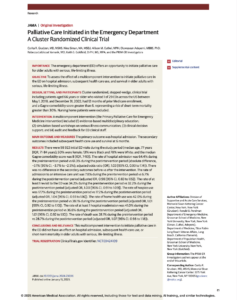 There was no difference in the rate of hospital admission for seriously ill older adults after emergency department staff received the palliative care training intervention. The intervention also did not have an effect on subsequent health care use or short-term mortality.