Dr. Perakslis is the chief science and digital officer for the Duke Clinical Research Institute and the chief research technology strategist in the Duke University School of Medicine. Join the online meeting.
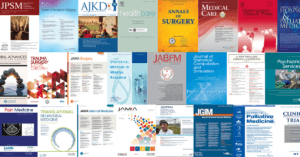
NIH Collaboratory researchers in 2021 shared study results, generated new knowledge, and developed innovative research methods in pragmatic clinical trials. Their work included insights from the Coordinating Center and Core Working Groups, analyses from the NIH Collaboratory Distributed Research Network, and results and methodological approaches from the NIH Collaboratory Trials.
So far this year, the NIH Collaboratory has produced 3 dozen articles in the peer-reviewed literature, including the primary results of the PPACT and TSOS trials, the study design of the Nudge and OPTIMUM studies, insights into the COVID-19 pandemic from the EMBED and ACP PEACE studies, and more:
In this Friday’s PCT Grand Rounds, the principal investigator of the PPACT study, an NIH Collaboratory Trial, will announce the study’s primary results.
PPACT, or the Collaborative Care for Chronic Pain in Primary Care study, was a pragmatic, cluster randomized trial that enrolled 850 patients who were receiving long-term opioid therapy for chronic pain. Patients in the intervention group participated in weekly group sessions that taught a variety of pain self-management techniques. The strategy was compared with usual care.
PPACT was supported within the NIH Collaboratory by the NIH Common Fund and by cooperative agreements from the National Institute of Neurological Disorders and Stroke.
Members of the NIH Collaboratory’s Ethics and Regulatory Core examined the use of incentives and payments to patients included in pragmatic clinical trials. Their findings and preliminary recommendations are published in the December issue of Clinical Trials.
Incentives and payments to patients are used in both pragmatic trials and conventional explanatory trials. However, because pragmatic trials typically evaluate interventions in the context of “real-world” clinical settings, the use of incentives and payments can raise logistical, ethical, and regulatory challenges.
Dr. Andrew Garland, a postdoctoral fellow at the Johns Hopkins Berman Institute of Bioethics who works in the Ethics and Regulatory Core, and who is the lead author of the article, reviewed 9 NIH Collaboratory Trials that used incentives and other payments to patients. Garland and coauthors Dr. Kevin Weinfurt and Dr. Jeremy Sugarman used these examples to describe how the standard conceptual framework for ethical payments and incentives may not always be appropriate for pragmatic trials.
This work was supported within the NIH Collaboratory by the NIH Common Fund through a cooperative agreement from the Office of Strategic Coordination within the Office of the NIH Director. This work was also supported by the NIH through the NIH HEAL Initiative.
The BEST-MSU study, supported by the Patient-Centered Outcomes Research Institute (PCORI), examined the effectiveness of prehospital diagnosis and treatment of patients with stroke symptoms using a mobile stroke unit with subsequent transfer to a comprehensive stroke center emergency department (CSC ED) for further management, compared with standard prehospital triage and transport by emergency medical services to a CSC ED for evaluation and treatment.
The Grand Rounds session will be held on Friday, November 5, at 1:00 pm eastern. Join the online meeting.
The IMPACT Collaboratory last week published a request for applications for the second cycle of its NIH Collaboratory Trials Program.
IMPACT will fund up to 2 full-scale embedded pragmatic clinical trials that test, measure, and evaluate the effects of a nonpharmacological care delivery intervention program in a healthcare system for people living with Alzheimer disease and related dementias and their care partners. The goal of the NIH Collaboratory Trials Program is to generate evidence on effective care delivery practices that can be expanded and/or implemented in other systems.
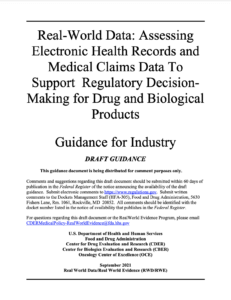
The US Food and Drug Administration (FDA) last month published draft guidance on the use of electronic health records (EHRs) and claims data to support regulatory decision making.
Left to right: Dr. Carolyn Bramante, Dr. Thomas Murray, and Dr. Jared Huling
In this Friday’s COVID-19 Grand Rounds session, Dr. Carolyn Bramante, Dr. Thomas Murray, and Dr. Jared Huling of the University of Minnesota will present “COVID-OUT: From Computer Modeling to a Phase III Trial of Early Outpatient Treatment for SARS-CoV-2 Infection.” COVID-OUT is a factorial randomized clinical trial of metformin, ivermectin, fluvoxamine, or a combination of these medications among outpatients with symptoms of COVID-19 or long COVID.
The Grand Rounds session will be held on Friday, October 1, at 1:00 pm eastern. Join the online meeting.
The NIH Collaboratory Coordinating Center is using its popular Grand Rounds platform to share late-breaking research and promote resources in support of clinical researchers affected by the COVID-19 public health emergency.
For previous COVID-19 Grand Rounds, and more news and resources related to the COVID-19 public health emergency, see the COVID-19 Resources page.
In this Friday’s PCT Grand Rounds, Dr. Theresa Coles and Dr. Kevin Weinfurt of Duke University will discuss the use of patient-reported outcome measures in clinical trials, using examples from cardiovascular trials.
The Grand Rounds session will be held on Friday, September 24, at 1:00 pm eastern. Join the online meeting.
For webinar recordings and slides from previous Grand Rounds sessions, see the Grand Rounds hub.



 NIH Collaboratory researchers in 2021 shared study results, generated new knowledge, and developed innovative research methods in pragmatic clinical trials. Their work included insights from the Coordinating Center and