January 12, 2026: Enhanced Acupuncture Strategy Found to Be Cost-Saving in Older Adults With Chronic Low Back Pain

Logo for the BackInAction trialAn economic evaluation from the BackInAction trial found that an enhanced course of acupuncture for older adults with chronic low back pain was cost-saving from both the Medicare and healthcare sector perspectives.

The article appears in the upcoming issue of Spine.

In a previously published report, the BackInAction research team established that acupuncture significantly improved pain and disability in patients aged 65 years and older. The new analysis shows the treatment also provides significant value to the healthcare system.

The cost-effectiveness analysis, led by Patricia Herman of the RAND Corporation, analyzed data for 672 participants across 3 large healthcare systems. The study compared 3 treatment strategies: a standard 12 -week course of acupuncture plus usual medical care; standard acupuncture enhanced with up to 6 maintenance sessions plus usual care; and usual care alone.

The research team found that enhanced acupuncture reduced annual back pain–related healthcare costs by an average of $491 per participant and reduced Medicare-reimbursed costs by $421 per participant compared with usual care alone. The savings were primarily driven by a significant reduction in non-acupuncture healthcare utilization.

BackInAction, an NIH Collaboratory Trial, was led by co–principal investigators Lynn DeBar of the Kaiser Permanente Center for Health Research and Andrea Cook of the Kaiser Permanente Washington Health Research Institute.

Read the full report.

Beyond financial savings, participants in the enhanced acupuncture group experienced:

  • Significant gains in quality-adjusted life-years, a standard measure of health-related quality of life
  • An 18.5 percentage-point increase in the number of participants achieving a clinically meaningful improvement in their disability scores

While standard acupuncture was slightly more expensive than usual care, the strategy’s incremental cost-effectiveness ratio of approximately $53,000 per quality-adjusted life-year suggests it may be cost-effective from the perspectives of Medicare and the healthcare sector.

The BackInAction team’s findings are particularly relevant in the context of the Medicare program’s decision in 2020 to begin covering acupuncture for chronic low back pain. The study suggests that the current Medicare benefit, which includes maintenance sessions, aligns with the most cost-effective and beneficial care for this population.

By including a variety of healthcare settings and older adults with multiple medical conditions, this pragmatic clinical trial’s results are intended to be highly generalizable and to inform future treatment policies for the millions of older people in the United States who experience chronic pain.

BackInAction was supported within the NIH Pragmatic Trials Collaboratory through the NIH HEAL Initiative by a grant from the National Center for Complementary and Integrative Health. Learn more about BackInAction.

December 15, 2025: A Year of Trial Results and Innovations From the NIH Pragmatic Trials Collaboratory

A collage of journal covers with the label "NIH Pragmatic Trials Collaboratory 2025 Publications Roundup"In 2025, NIH Pragmatic Trials Collaboratory investigators published new study designs and trial results, shared insights from program leadership, and developed innovative methods in the design, conduct, implementation, and dissemination of pragmatic clinical trials. Their work included perspectives from the Coordinating Center, best practices from the Core Working Groups, and results from the NIH Collaboratory Trials.

The program contributed 45 articles to the peer-reviewed literature this year, including the primary results of the ACP PEACE, BackInAction, HiLo, INSPIRE, and PRIM‑ER trials. Cross-Core and cross-Trial collaborations led to the sharing of important lessons from the conduct of multiple NIH Collaboratory Trials.

The total number of published articles from the program reached 386.

Coordinating Center

Cross-Core and Cross-Trial Collaborations

Distributed Research Network

Core Working Groups

Biostatistics and Study Design Core

Community Health Improvement Core

Electronic Health Records Core

Ethics and Regulatory Core

Health Care Systems Interactions Core

Patient-Centered Outcomes Core

NIH Collaboratory Trials

ABATE Infection

ACP PEACE

ARBOR-Telehealth

BackInAction

BeatPain Utah

BEST-ICU

EMBED

FM-TIPS

GGC4H

GRACE

HiLo

I CAN DO Surgical ACP

IMPACt-LBP

INSPIRE

iPATH

LIRE

MOMs Chat & Care Study

NOHARM

Nudge

OPTIMUM

PRIM-ER

SPOT

TAICHIKNEE

September 15, 2025: In BackInAction Pragmatic Trial, Acupuncture Improved Back Pain–Related Disability in Older Adults

Headshots of Dr. Lynn DeBar and Dr. Andrea Cook
Dr. Lynn DeBar and Dr. Andrea Cook, co–principal investigators for BackInAction

Older patients with chronic low back pain who receive acupuncture treatment have greater improvements in pain and disability compared with patients who receive usual care alone, according to the BackInAction trial.

The results of the study were published online in JAMA Network Open.

BackInAction, an NIH Collaboratory Trial, compared standard and enhanced courses of acupuncture with usual care alone in adults aged 65 years and older with chronic low back pain. Previous studies found acupuncture to be a safe and effective treatment for chronic low back pain in adults, and the American College of Physicians recommends the treatment as first-line therapy. However, few studies, and no large-scale randomized trials, have examined the safety and efficacy of acupuncture in older adults specifically.

“We worked hard to involve adults in multiple regions of the country so that participant demographics were consistent with the US census for older adults,” Lynn DeBar told the NIH. “And we worked with licensed acupuncturists in the community, who are most likely to deliver these services,” she said. DeBar is a senior investigator at the Kaiser Permanente Center for Health Research and a co–principal investigator for BackInAction.

The study team randomly assigned 800 patients to 1 of 3 groups: (1) a standard 12-week course of acupuncture plus usual medical care; (2) standard acupuncture enhanced with 4 to 6 maintenance sessions plus usual care; or (3) usual care alone. The study was conducted in 4 healthcare systems in the Pacific Northwest, Northern California, and New York, including a network of federally qualified health centers in an urban setting, 2 integrated health insurance and care delivery systems serving broad geographic regions, and a fee-for-service system serving a relatively urban and suburban population.

Logo for the BackInAction trial

At 6 months and 12 months after treatment, patients in both the standard and enhanced acupuncture groups experienced significantly greater reductions in pain and pain-related disability than patients in the usual care group. The improvements did not differ significantly between the standard and enhanced courses of acupuncture.

Read the full article.

“Older adults often are dealing with other medical problems in addition to back pain,” said co–principal investigator Andrea Cook, senior biostatistics investigator at the Kaiser Permanente Washington Health Research Institute. “Acupuncture offers a less invasive option that has a better safety profile than a lot of the common treatments for back pain in older adults,” she said.

BackInAction is supported within the NIH Pragmatic Trials Collaboratory through the NIH HEAL Initiative by a grant from the National Center for Complementary and Integrative Health. Learn more about BackInAction.

September 9, 2025: BackInAction Finds Higher Baseline Clinical and Social Risks Among FQHC Participants

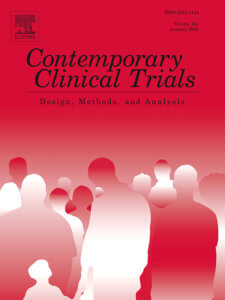
Cover of Contemporary Clinical TrialsIn a descriptive analysis of the study population in the BackInAction trial, researchers found that participants enrolled from federally qualified health centers (FQHCs) had higher than average clinical and social risks at baseline, potentially complicating intervention delivery for these patients while adding to the generalizability of the trial’s results.

The report was published in Contemporary Clinical Trials.

BackInAction, an NIH Collaboratory Trial, is a pragmatic clinical trial testing the effectiveness of acupuncture for improving back pain–related disability among older adults with chronic low back pain. The trial is being conducted in 4 healthcare systems in California, New York, and Washington, including a network of FQHCs in an urban setting, 2 integrated health insurance and care delivery systems serving broad geographic regions, and a fee-for-service system serving a relatively urban and suburban population.

The FQHC site in BackInAction had the highest proportion of participants with disability, pain that limited work, comorbid medical conditions, mental health conditions, dysfunction related to back pain, and heightened pain intensity. This site also had the highest proportion of participants with cognitive-behavioral predictors of adverse pain outcomes, such as fear avoidance and pain catastrophizing. The site’s study population was also younger, more diverse, and more socioeconomically disadvantaged than the population at the other BackInAction sites.

The authors of the report, led by Morgan Justice of the Kaiser Permanente Washington Health Research Institute under the guidance of principal investigator Lynn DeBar, noted that the research team’s success in enrolling a representative study population of older adults and including a broad range of healthcare system types should enhance the generalizability of BackInAction’s results and inform treatment policy.

Read the full article.

BackInAction is supported within the NIH Pragmatic Trials Collaboratory by a grant from the National Center for Complementary and Integrative Health. Learn more about BackInAction.

July 1, 2025: As Their Studies Wrap Up, Researchers Share Lessons for Pragmatic Trials

Headshots of Drs. Christine Goertz, Andrea Cook, Shruti Gohil, and Stacy SterlingA key feature of the NIH Pragmatic Trials Collaboratory is its culture of learning and knowledge sharing among investigators who are planning and conducting pragmatic clinical trials. In a session at the program’s 2025 Annual Steering Committee Meeting, a panel of investigators discussed their recently completed NIH Collaboratory Trials and their thoughts about future directions for pragmatic research.

The panelists included Andrea Cook, co–principal investigator (PI) for BackInAction; Shruti Gohil, lead investigator for INSPIRE; and Stacy Sterling, co-PI for GGC4H. Christine Goertz, a co-PI for IMPACt-LBP, moderated the discussion.

Key Takeaways

What do investigators wish they had known before starting a pragmatic trial? Sterling highlighted a need for ongoing engagement with partnering healthcare systems’ senior leaders to ensure they understand the challenges of adopting and sustaining the study intervention. Cook stressed the importance of educating site personnel about what it means to participate in the trial, including the potential for randomization to a usual care arm.

“We also included nonphysician clinicians in the education about the intervention, because they are often doing the steps being targeted by the intervention,” Gohil added.

How can we apply these lessons in future pragmatic trials? “Doing an embedded pragmatic trial is sort of like having a child: You really need the guidance of people who have gone before you and have real-life experience,” Goertz said.

The panelists proposed the development of more standardized materials for the consent process and other trial elements. They also discussed the need for broader dissemination strategies and new ways to promote implementation tools from trials with successful interventions.

Gohil described her research team’s commitment to developing a dissemination toolkit so people will understand how to approach implementation. She noted that, as soon as the trial was completed but before publication, the research team presented the results to the participating sites.

Greg Simon, the PI for SPOT and a member of the NIH Collaboratory Coordinating Center’s leadership team, stressed the importance of including research partners in dissemination.

“Don’t write the discussion section [of your study results paper] until you’ve talked with your healthcare system partners; they might have something to teach us about what the results mean,” he said.

About the Trials

  • BackInAction, supported by the National Center for Complementary and Integrative Health (NCCIH), is comparing standard and advanced courses of acupuncture with usual care for older adults with chronic low back pain.
  • GGC4H, supported by NCCIH, is testing the feasibility and effectiveness of implementing within healthcare systems the Guiding Good Choices program for caregivers of early adolescents to prevent common behavioral problems, such as substance use.
  • IMPACt-LBP, supported by NCCIH, is evaluating the effect of first-contact patient referral to physical therapists and doctors of chiropractic for low back pain.
  • INSPIRE, supported by the National Institute of Allergy and Infectious Diseases, used personalized clinical decision support to improve judicious antibiotic prescribing for non–critically ill patients hospitalized with abdominal infections or skin and soft tissue infections.
  • SPOT, supported by the National Institute of Mental Health, compared care management and dialectical behavior therapy skills training to usual care for adults at risk of self-harm or suicidal behavior.

This summer, we are sharing highlights from the 2025 Annual Steering Committee Meeting. Access the complete collection of meeting materials.

May 7, 2025: Results of BackInAction Pragmatic Trial of Acupuncture in Low Back Pain, in This Week’s PCT Grand Rounds

Headshots of Dr. Andrea Cook, Dr. Lynn DeBar, and Dr. Patricia Herman
Dr. Andrea Cook, Dr. Lynn DeBar, and Dr. Paricia Herman

In this Friday’s PCT Grand Rounds, Andrea Cook, Lynn DeBar, and Patricia Herman will present “A Policy-Relevant Pragmatic Trial on Acupuncture Effectiveness for Low Back Pain in Older Adults: Clinical and Cost Outcomes and Lessons Learned.”

The Grand Rounds session will be held on Friday, May 9, 2025, at 1:00 pm eastern.

The speakers will present the results of BackInAction, an NIH Collaboratory Trial. BackInAction compared standard and advanced courses of acupuncture with usual care for older adults with chronic low back pain.

Cook is a senior biostatistics investigator at the Kaiser Permanente Washington Health Research Institute; DeBar is a distinguished investigator at the Kaiser Permanente Center for Health Research; and Herman is a senior behavioral scientist at RAND, codirector of the RAND Research Across Complementary and Integrative Health Institutions (REACH) Center, and a professor of policy analysis at the RAND School of Public Policy.

Join the online meeting.

December 12, 2024: A Year of Innovations and Insights From the NIH Pragmatic Trials Collaboratory

A graphic showing a collection of journal covers.In 2024, experts from the NIH Pragmatic Trials Collaboratory published the results of newly completed studies, shared insights from program leadership, and developed innovative methods in the design, conduct, and analysis of pragmatic clinical trials. Their work included perspectives from the Coordinating Center, best practices from the Core Working Groups, and results from the NIH Collaboratory Trials.

The program contributed more than 30 articles to the peer-reviewed literature this year, including the primary results of the ICD-Pieces and Nudge trials. Several cross-Core and cross-Trial collaborations led to the sharing of important lessons from the conduct of multiple NIH Collaboratory Trials.

The total number of published articles from the program surpassed 340.

Coordinating Center

Cross-Core and Cross-Trial Collaborations

Core Working Groups

Biostatistics and Study Design Core

Electronic Health Records Core

Ethics and Regulatory Core

Community Health Improvement Core

Implementation Science Core

Patient-Centered Outcomes Core

NIH Collaboratory Trials

ABATE Infection

BackInAction

BeatPain Utah

EMBED

FM-TIPS

GGC4H

GRACE

I CAN DO Surgical ACP

ICD-Pieces

LIRE

NOHARM

Nudge

OPTIMUM

PRIM-ER

PROVEN

SPOT

STOP CRC

TSOS

June 11, 2024: Many Older Participants in Acupuncture Research Have Prior Acupuncture Experience, BackInAction Data Suggest

Headshots of Dr. Andrea Cook and Dr. Lynn DeBar
Dr. Andrea Cook and Dr. Lynn DeBar, principal investigators of BackInAction

Many older adults who participate in acupuncture research may have prior experience with acupuncture, according to an analysis of data from the BackInAction trial. The finding has implications for the design and conduct of future pragmatic clinical trials involving acupuncture.

BackInAction, an NIH Collaboratory Trial, is testing strategies for the delivery of acupuncture to older patients with chronic low back pain. Learn more about BackInAction.

The researchers used data from baseline interviews at 1 of 4 trial sites to characterize participants’ prior experience with acupuncture and their views toward the practice. They also compared clinical and sociodemographic characteristics between participants who had acupuncture experience and those who did not.

Nearly two-thirds of the participants reported they had previously received acupuncture treatment, mostly for pain-related care. There were no significant differences in clinical and sociodemographic characteristics between participants with prior acupuncture and those without. The researchers concluded that it may be more feasible for future pragmatic trials to use an expanded definition of “acupuncture-naïve” in inclusion criteria.

Read the full report.

BackInAction is supported through the NIH HEAL Initiative by a grant administered by the National Center for Complementary and Integrative Health (NCCIH).

June 30, 2022: BackInAction Is Back on Track After COVID-19 Delays

Karen J. Sherman, PhD, MPH
Dr. Karen Sherman

In connection with the NIH Pragmatic Trials Collaboratory Steering Committee meeting and 10th anniversary celebration, we sat down for an interview with Drs. Karen Sherman and Lynn DeBar to get an update on the Pragmatic Trial of Acupuncture for Chronic Low Back Pain in Older Adults (BackInAction) NIH Collaboratory Trial. BackInAction is a pragmatic randomized trial to evaluate the safety and effectiveness of treatments for older adults with chronic low back pain. The study team is conducting a 3-arm trial of adults 65 years or older with low back pain to evaluate acupuncture vs usual care.

What is the current status of the BackInAction trial?
BackInAction has recruited about two-thirds of its participants and is on track to complete recruitment next fall. We also are providing acupuncture and doing follow-up interviews, so the trial is in the “ongoing phase.”

What challenges have you faced, and how have you dealt with them?
Our biggest challenges have been associated with COVID-19 impacts. Given the higher risk and vulnerability for our older adult target population and the requirement for in-person treatment (acupuncture), we delayed the start of recruitment by many months to ensure that those outreached had ample opportunity to be vaccinated beforehand and have also paused recruitment commensurate with regional surges of COVID variants at one or more of our clinical sites as needed. We also vetted the community acupuncturists who provide acupuncture to our study participants to ensure adequate COVID-safe office practices.

Lynn DeBar, PhD, MPH
Dr. Lynn DeBar

Unrelated to COVID-19, escalating thresholds for regulatory and security features resulted in a previously approved event tracking and recruitment and assessment software system not passing the Technology Resource Office (TRO) review at multiple clinical sites and the consequent need to align data collection and aggregation from site-specific systems. TRO reviews established for clinical care software and processes for our healthcare systems increasingly restrict clinical research practices as well.

What impact do you hope your trial will have on real-world healthcare?
The grant was funded as part of the NIH HEAL Initiative's PRISM program, and the specific funding opportunity announcement was issued because Medicare was interested in additional nonpharmacological treatment options for older adults with chronic low back pain. We had thought that they would be using data from the trial for a coverage decision, since few data on acupuncture existed for older adults. We hope that the trial results will assist the Centers for Medicare & Medicaid Services in any further refinements related to coverage of acupuncture for older adults with chronic low back pain.

How has being part of the NIH Pragmatic Trials Collaboratory shaped your project?
It’s helpful to have the sounding board of regular contact with principal investigators and research teams grappling with often similar issues that arise in implementing pragmatic trials (Steering Committee meetings, annual meetings, and Core Working Groups). Feedback from the Biostatistics and Study Design Core has been particularly helpful, as has the PRISM-wide help selecting and coordinating an appropriate data repository for required HEAL common data elements. Although there have been a few instances when we’ve been surprised by and needed to correct study-specific information included in cross-site dissemination products (always given ample opportunity to do so), we’re very aware and grateful for the functionality of the program’s Coordinating Center and infrastructure in contrast to some of the more recently established Coordinating Center infrastructures for related NIH sub-initiatives. The NIH Pragmatic Trials Collaboratory is much more an aid than a hindrance!

December 14, 2021: A Year of New Insights From the NIH Collaboratory

Collage of journal coversNIH Collaboratory researchers in 2021 shared study results, generated new knowledge, and developed innovative research methods in pragmatic clinical trials. Their work included insights from the Coordinating Center and Core Working Groups, analyses from the NIH Collaboratory Distributed Research Network, and results and methodological approaches from the NIH Collaboratory Trials.

So far this year, the NIH Collaboratory has produced 3 dozen articles in the peer-reviewed literature, including the primary results of the PPACT and TSOS trials, the study design of the Nudge and OPTIMUM studies, insights into the COVID-19 pandemic from the EMBED and ACP PEACE studies, and more:

NIH Collaboratory Coordinating Center

NIH Collaboratory Distributed Research Network

ACP PEACE NIH Collaboratory Trial

BackInAction NIH Collaboratory Trial

EMBED NIH Collaboratory Trial

GRACE NIH Collaboratory Trial

HiLo NIH Collaboratory Trial

LIRE NIH Collaboratory Trial

Nudge NIH Collaboratory Trial

OPTIMUM NIH Collaboratory Trial

PPACT NIH Collaboratory Trial

PRIM-ER NIH Collaboratory Trial

PROVEN NIH Collaboratory Trial

SPOT NIH Collaboratory Trial

TSOS NIH Collaboratory Trials