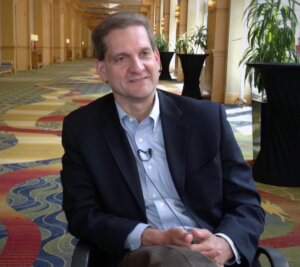
In this Friday’s PCT Grand Rounds, Dr. Bruce Neal of the George Institute Australia and UNSW Sydney will share findings from a clinical trial of the effect of salt substitution on cardiovascular events and death.
The Grand Rounds session will be held on Friday, September 10, at 1:00 pm eastern. Join the online meeting.
For webinar recordings and slides from previous Grand Rounds sessions, see the Grand Rounds hub.
The Living Textbook has recently published materials that explore how randomized trials can be designed to promote both internal and external validity. The new contributions, from Drs. Merrick Zwarenstein, Ahmed Al-Jaishi, and Amit Garg, explain that consideration of the trial’s intention, whether pragmatic or explanatory, is the key to designing a trial that successfully answers its primary research question. While there is a contrast between pragmatic and explanatory intentions, there is not a dichotomy. Instead, trials will vary across the spectrum of design decisions leaning toward choices that match the trial’s purpose. The PRECIS-2 tool can help investigators design their trial to align with its intention. The authors illustrate these points in a new Living Textbook section, PRECIS-2 Case Study, which contrasts the design decisions made for two trials in a renal dialysis setting.
“The purpose should be decided before embarking on designing a trial, and each element of the trial design should be aligned to the chosen purpose.”– Zwarenstein et al. 2021
The Good Clinical Trials Collaborative has opened a 6-week public consultation period on its draft guidance for randomized controlled trials. The consultation period will last until September 15.
Launched in June 2020 with the support of Wellcome, the Bill & Melinda Gates Foundation, and the African Academy of Sciences, the Collaborative is developing guidance “to enable and promote informative, ethical, and efficient randomized controlled clinical trials.” The purpose of the guidance is to identify the fundamental principles of randomized controlled trials and enable their application to a wide range of healthcare settings and interventions.
In this Friday’s PCT Grand Rounds, Dr. Benjamin Hibbert of the University of Ottawa Heart Institute will share findings from the DOREMI trial of milrinone vs dobutamine for the treatment of cardiogenic shock.
The Grand Rounds session will be held on Friday, August 27, at 1:00 pm eastern. Join the online meeting.
For webinar recordings and slides from previous Grand Rounds sessions, see the Grand Rounds hub.
While using Fluvoxamine to treat anxiety in patients with Wolfram Syndrome, Dr. Reiersen from Washington University, St. Louis learned that Fluvoxamine reduced inflammation and interfered with viral function.
Dr. Lenze, Dr. Reiersen, and Dr. Mattar began the preliminary pragmatic, non-contact, but high-touch STOP COVID trial in April 2020.
Results from the preliminary study showed that 0% of patients experienced clinical deterioration in the Fluvoxamine group while 8.3% of patients in the placebo group deteriorated.
The STOP-COVID 2 study was a decentralized, hub-and-spoke clinical trial conducted across the US and 2 provinces of Canada.
The Data Safety Monitoring Board(DSMB) for the study recommended an early stop for futility due to a low case rate and difficulty recruiting patients.
Discussion Themes
What outcome variables should we be using in COVID-19 studies? A binary outcome measure may limit the power of the study. When possible, continuous outcomes provide more statistical power and come closer to representing real-life outcomes.
What role should primary care providers play in clinical studies?
The Grand Rounds session will be held on Friday, August 20, at 1:00 pm eastern. Join the online meeting.
The NIH Collaboratory Coordinating Center is using its popular Grand Rounds platform to share late-breaking research and promote resources in support of clinical researchers affected by the COVID-19 public health emergency.
For previous COVID-19 Grand Rounds, and more news and resources related to the COVID-19 public health emergency, see the COVID-19 Resources page.
Edward Mills, PhD, FRCP Professor Department of Health Research Methods, Evidence & Impact McMaster University, Canada
Topic
Early Treatment of COVID-19 with Repurposed Therapies: The TOGETHER Adaptive Platform Trial
Keywords
COVID-19 treatment; Adaptive Platform Trial; Fluvoxamine; Repurposed therapies, TOGETHER Trial
Key Points
The most successful clinical trials have 1 thing in common; they are all Adaptive Platform Trials with an overarching master protocol that plans for changes in the long term, such as changing the intervention.
Perpetual trials are key to effective adaptable trials, where the focus is to build a trial infrastructure that is not abandoned at the end of the trial, but repurposed to quickly and efficiently begin another trial.
The TOGETHER Trial is a randomized Adaptive Platform Trial studying repurposed therapies to treat COVID-19.
In the TOGETHER Trial, participants were randomized to either a placebo arm of the study, or to a repurposed therapy arm of the study. If a particular repurposed therapy didn’t show significant benefit for COVID-19 patients, that arm of the study was discontinued and an additional repurposed therapy was introduced in a new arm of the study.
After many trial therapies showed little effect, Fluvoxamine, an SSRI commonly used for depression, has shown promising results when repurposed to treat COVID-19.
Discussion Themes
With important breakthroughs on COVID treatments, should we wait until a study is completed, accepted by a journal, and published before disseminating the findings?
Final results on the of Fluvoxamine trials are not yet available, but given the data thus far, there are no major concerns about the safety and tolerability of this medication.
Read more about the TOGETHER Early Treatment of COVID Trial.
The Grand Rounds session will be held on Friday, August 13, at 1:00 pm eastern. Join the online meeting.
The NIH Collaboratory Coordinating Center is using its popular Grand Rounds platform to share late-breaking research and promote resources in support of clinical researchers affected by the COVID-19 public health emergency.
For previous COVID-19 Grand Rounds, and more news and resources related to the COVID-19 public health emergency, see the COVID-19 Resources page.
A recent PCT Grand Rounds webinar and slides presenting the results from TSOS, an NIH Collaboratory Trial, are now available. TSOS was a stepped-wedge, cluster randomized pragmatic clinical trial testing the delivery of a stepped collaborative care intervention vs usual care for 635 injured patients with PTSD symptoms and comorbid conditions at 25 level I trauma centers in the United States. The results of the study were published in March in JAMA Surgery.
The TSOS Closeout Study Snapshot is also available.
TSOS is supported within the NIH Collaboratory by a cooperative agreement from the National Institute of Mental Health.
Longtime NIH Collaboratory investigator Dr. Richard Platt will serve as co–principal investigator of a new embedded pragmatic clinical trial with Dr. Xiaojuan Li as part of the IMPACT Collaboratory. The IMPACT Collaboratory announced Li and Platt as awardees of its NIH Collaboratory Trials Program for their project Co-CARE-AD, the Collaborative Care Coordination Program for Alzheimer’s Disease and Related Dementias.
The IMPACT Collaboratory’s NIH Collaboratory Trials Program is a new funding mechanism to support full-scale, embedded pragmatic clinical trials testing nonpharmacologic interventions for people living with Alzheimer disease and related dementias and their care partners that are linked to the needs of a health care system.
Co-CARE-AD will evaluate the effectiveness of the Dementia Care Consultation program to provide multicomponent care coordination and support for community-dwelling Medicare Advantage plan members. Read more about Co-CARE-AD.
The NIA IMPACT Collaboratory is supported by a grant from the National Institute on Aging.


 The Living Textbook has recently published materials that explore how randomized trials can be