August 25, 2026: NOHARM Team Describes Strategies for Posttrial Sustainment of Interventions

Headshot of Shritha Gayathri
Shritha Gayathri, lead author of the report

A new article from the NOHARM team describes the strategies the team identified for supporting posttrial sustainment of the study intervention. Their experience highlights the importance of planning for sustainment and offers lessons for designers of future pragmatic clinical trials.

The article was published online in Learning Health Systems.

NOHARM, an NIH Collaboratory Trial led by Andrea Cheville and Jon Tilburt of Mayo Clinic, is testing an electronic health record–embedded educational bundle that encourages incorporation of nonpharmacologic pain care into perioperative pain management.

The study team interviewed members of the trial’s sustainment committee and reviewed the committee’s meeting minutes to identify strategies and challenges. The strategies and challenges were grouped into 6 themes:

  • automation of low-touch intervention components
  • reliance on internal institutional champions
  • intentional handoff communication
  • institutional attention
  • relaxed implementation fidelity
  • continuous evaluation

The study team highlighted the importance of planning ahead for sustainment, thinking beyond trial settings, and using theoretically grounded approaches.

Read the full article.

NOHARM is supported within the NIH Pragmatic Trials Collaboratory by a grant award administered by the National Institute on Aging through the NIH HEAL Initiative. Learn more about NOHARM.


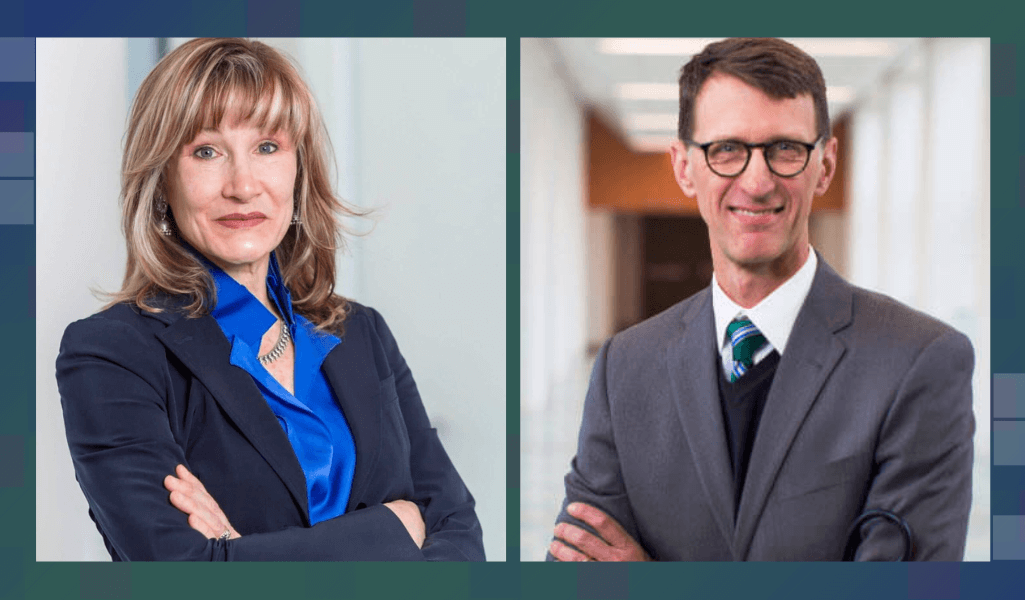
Headshots of Dr. Andrea Cheville and Dr. Jon Tilburt
Dr. Andrea Cheville and Dr. Jon Tilburt, co–principal investigators for NOHARM

August 10, 2026: NIH Collaboratory Trials Offer Lessons in Using Computable Phenotypes With Real-World Data

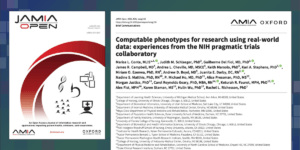
The journal cover image of JAMIA Open alongside a screenshot of the first page of the article.Members of the NIH Pragmatic Trials Collaboratory’s Electronic Health Records (EHR) Core Working Group recorded the experiences of pragmatic trial investigators in using computable phenotypes in their studies.

The article was published online in JAMIA Open.

Using real-world data for research poses many challenges, including variations in data documentation practices. Researchers use computable phenotypes—data queries that use specified codes and logical parameters—to standardize the capture of characteristics of interest from real-world data sources, such as EHRs.

The NIH Collaboratory’s EHR Core collected examples from 4 of the NIH Collaboratory Trials to illustrate how computable phenotypes are developed and used in pragmatic trials. Based on these experiences, the Core made several recommendations:

  • Develop computable phenotypes as part of a team with multiple areas of expertise
  • Use appropriate validation procedures
  • Disseminate salient details about phenotype creation
  • Capture and report any modifications made to phenotypes during the conduct of the trial

Read the full report.

July 14, 2026: Investigators for Closing Pragmatic Trials Reflect on NIH Collaboratory Experience

Three studies from the first cohort of NIH Collaboratory Trials in pain management supported through the NIH HEAL Initiative are nearing completion. At the NIH Collaboratory’s 2026 Annual Steering Committee Meeting, we asked investigators Natalia Morone, Andrea Cheville, and Ardith Doorenbos to reflect on their experiences in the program and to share lessons for other researchers starting their own pragmatic trials.

“A commonality across our trials was the effort we put into collecting outcomes, the shared prioritization of how critical this is, guiding each other in ways to maximize our response rates,” said Cheville, co–principal investigator for the NOHARM trial and a professor of physical medicine and rehabilitation at the Mayo Clinic. “Also, I think our trials share an experience of using tele-care, sometimes unplanned because of the pandemic, and experiencing the benefits and the limitations of that.”

NOHARM is testing an electronic health record–embedded, bundled intervention comprised of patient- and clinician-facing decision support components that enable patients to integrate nonpharmacologic pain care into their perioperative management.

Go to the full video.

“The best advice I got…was to be flexible, and I really took that to heart,” said Morone, associate professor of medicine at Boston University and the principal investigator for the OPTIMUM trial. OPTIMUM studied the addition of mindfulness-based group telehealth visits to usual care for patients with chronic low back pain. The trial’s primary results were published last month in JAMA Internal Medicine.

“Especially with pragmatic trials, I think there are more challenges that may arise and more questions as far as how flexible you can be,” added Doorenbos. “Emphasize relationships, value your relationships, and identify the pain points, the opportunities for synergism, how to give back to the sites that are hosting the trials,” she said.

Doorenbos is a co–principal investigator for the GRACE trial and the Harriet H. Werley Endowed Chair for Nursing Research at the University of Illinois Chicago. GRACE is assessing the effectiveness of guided relaxation and acupuncture treatments to improve pain control for patients with sickle cell disease.

OPTIMUM, NOHARM, and GRACE are supported within the NIH Collaboratory through the NIH HEAL Initiative by grants awarded by the National Institute of Neurological Disorders and Stroke and administered by the National Center for Complementary and Integrative Health (OPTIMUM and GRACE) and the National Institute on Aging (NOHARM).

In the coming weeks, we will share more highlights from the 2026 Annual Steering Committee Meeting. Access the complete meeting materials.

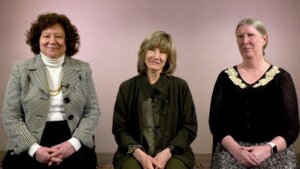
Video still from an interview with Drs. Natalia Morone, Andrea Cheville, and Ardith Doorenbos
Dr. Natalia Morone, Dr. Andrea Cheville, and Dr. Ardith Doorenbos

December 15, 2025: A Year of Trial Results and Innovations From the NIH Pragmatic Trials Collaboratory

A collage of journal covers with the label "NIH Pragmatic Trials Collaboratory 2025 Publications Roundup"In 2025, NIH Pragmatic Trials Collaboratory investigators published new study designs and trial results, shared insights from program leadership, and developed innovative methods in the design, conduct, implementation, and dissemination of pragmatic clinical trials. Their work included perspectives from the Coordinating Center, best practices from the Core Working Groups, and results from the NIH Collaboratory Trials.

The program contributed 45 articles to the peer-reviewed literature this year, including the primary results of the ACP PEACE, BackInAction, HiLo, INSPIRE, and PRIM‑ER trials. Cross-Core and cross-Trial collaborations led to the sharing of important lessons from the conduct of multiple NIH Collaboratory Trials.

The total number of published articles from the program reached 386.

Coordinating Center

Cross-Core and Cross-Trial Collaborations

Distributed Research Network

Core Working Groups

Biostatistics and Study Design Core

Community Health Improvement Core

Electronic Health Records Core

Ethics and Regulatory Core

Health Care Systems Interactions Core

Patient-Centered Outcomes Core

NIH Collaboratory Trials

ABATE Infection

ACP PEACE

ARBOR-Telehealth

BackInAction

BeatPain Utah

BEST-ICU

EMBED

FM-TIPS

GGC4H

GRACE

HiLo

I CAN DO Surgical ACP

IMPACt-LBP

INSPIRE

iPATH

LIRE

MOMs Chat & Care Study

NOHARM

Nudge

OPTIMUM

PRIM-ER

SPOT

TAICHIKNEE

November 20, 2025: NOHARM Explores Patients’ and Nurses’ Experiences With a Perioperative Nonpharmacologic Pain Care Education Program

Headshots of Dr. Andrea Cheville and Dr. Jon Tilburt
Dr. Andrea Cheville and Dr. Jon Tilburt, principal investigators for NOHARM

In 2 recent studies, as part of the NOHARM trial, researchers explored the perspectives of patients and nurses on the implementation of a perioperative nonpharmacologic pain care education program.

One study, published in JMIR Nursing, evaluated inpatient nurses’ perceptions of barriers and facilitators to implementing the Healing After Surgery initiative. Healing After Surgery is a program embedded in the electronic health record (EHR) that provides education and support to patients for incorporating nonpharmacologic pain care techniques into their individualized perioperative pain management plans.

The researchers found that the nurses understood the benefits of the program but had difficulty implementing unfamiliar pain care techniques and prioritizing the initiative due to other clinical demands. Read the full report.

In the second study, published in BMC Complementary Medicine and Therapies, the researchers used semistructured qualitative interviews to explore patients’ experiences participating in the Healing After Surgery initiative. Among other things, they found that patients generally liked the program and felt that it aligned with their beliefs about wellness techniques and concerns about opioids. Read the full article.

NOHARM, an NIH Collaboratory Trial, is a stepped-wedge, cluster randomized trial testing an EHR-embedded, bundled intervention comprised of patient- and clinician-facing decision support components that enable patients to integrate nonpharmacologic pain care into their perioperative management. The study is supported within the NIH Pragmatic Trials Collaboratory by a grant award administered by the National Institute on Aging through the NIH HEAL Initiative.

Learn more about NOHARM.

July 23, 2025: Initial Outcomes of the NOHARM Trial, in This Week’s Rethinking Clinical Trials Grand Rounds

Headshots of Dr. Andrea Cheville and Dr. Jon Tilburt
Dr. Andrea Cheville and Dr. Jon Tilburt

In this Friday’s Rethinking Clinical Trials Grand Rounds, Jon Tilburt of the Mayo Clinic in Arizona and Andrea Cheville of the Mayo Clinic in Minnesota will present “Initial Outcomes of the NOHARM Pragmatic Trial.”

The Grand Rounds session will be held on Friday, July 25, 2025, at 1:00 pm eastern.

NOHARM, an NIH Collaboratory Trial, is testing the use of EHR-embedded tools consisting of patient- and clinician-facing decision support components that enable patients to integrate nonpharmacologic pain care into their perioperative management.

Tilburt and Cheville are the principal investigators of NOHARM. Tilburt is a professor of medicine at the Mayo Clinic in Arizona, and Cheville is a professor of physical medicine and rehabilitation at the Mayo Clinic in Minnesota.

Join the online meeting.

December 12, 2024: A Year of Innovations and Insights From the NIH Pragmatic Trials Collaboratory

A graphic showing a collection of journal covers.In 2024, experts from the NIH Pragmatic Trials Collaboratory published the results of newly completed studies, shared insights from program leadership, and developed innovative methods in the design, conduct, and analysis of pragmatic clinical trials. Their work included perspectives from the Coordinating Center, best practices from the Core Working Groups, and results from the NIH Collaboratory Trials.

The program contributed more than 30 articles to the peer-reviewed literature this year, including the primary results of the ICD-Pieces and Nudge trials. Several cross-Core and cross-Trial collaborations led to the sharing of important lessons from the conduct of multiple NIH Collaboratory Trials.

The total number of published articles from the program surpassed 340.

Coordinating Center

Cross-Core and Cross-Trial Collaborations

Core Working Groups

Biostatistics and Study Design Core

Electronic Health Records Core

Ethics and Regulatory Core

Community Health Improvement Core

Implementation Science Core

Patient-Centered Outcomes Core

NIH Collaboratory Trials

ABATE Infection

BackInAction

BeatPain Utah

EMBED

FM-TIPS

GGC4H

GRACE

I CAN DO Surgical ACP

ICD-Pieces

LIRE

NOHARM

Nudge

OPTIMUM

PRIM-ER

PROVEN

SPOT

STOP CRC

TSOS

July 14, 2022: Solving Unexpected Challenges in Pragmatic Trial Data Collection

Headshot of Dr. Keith MarsoloDuring the NIH Pragmatic Trials Collaboratory Steering Committee meeting and 10th anniversary celebration, Dr. Keith Marsolo, Co-chair of the Electronic Health Records Core, moderated a panel on “Barriers and Challenges: Data Collection and Merging Datasets.” Four panelists shared their experiences collecting and aggregating data from diverse data sets and how they solved unexpected challenges.

The panelists included Drs. Ted Melnick (EMBED), Holt Oliver (ICD-Pieces), Margaret Kuklinski (GGC4H), and Andrea Cheville (NOHARM).

During the discussion, panelists shared lessons learned from collecting electronic health record (EHR) data during large pragmatic clinical trials across multiple health systems. Common challenges included:

  • Privacy concerns and not having the ability to collect deidentified patient or clinician demographic information
  • Working across health systems that use different EHR platforms and collecting data consistently across sites
  • Turnover of IT staff at participating sites and changes in site data agencies during the study period
  • Updates to the EHR that affect study algorithms and other issues with algorithms not identifying data as expected
  • Overcoming technical barriers with practice workflows and integrating with IT systems

The panelists shared solutions and possible best practices for future studies, including the need for planning, coordinating, and testing before study launch, the importance of being able to pivot and change directions as problems arise, being open to alternative data collection methods such as surveys to augment findings, and having the right team at the right time to be responsive to problems, which for one study meant having informaticists and expert EHR builders embedded in the trial team.

Panelists identified two key policy and infrastructure changes that would help trials be successful in the future. These changes include development of a national unique patient identifier across health systems and incentivizing EHR vendors to find common ground to better support research.

The Electronic Health Records Core continues to learn from experiences of the program’s NIH Collaboratory Trials and shares emerging information, resources, and EHR-related recommendations to improve future pragmatic research.

View slides from the discussion panel.

Learn more

View video collection that highlights advances in Electronic Health Records for pragmatic research.

Watch the August 2021 Interview with Electronic Health Record Core leaders Drs. Rachel Richesson and Keith Marsolo

May 25, 2022: NOHARM Aims to Change How Patients Manage Pain After Surgery

NOHARM, an NIH Pragmatic Trials Collaboratory Trial, is a cluster-randomized, stepped-wedge trial of a bundled intervention that relies heavily on the electronic health record to encourage perioperative patients to consider using nonpharmacologic approaches to manage their postoperative pain. The goal is to diminish patients’ reliance on opioids after surgery and, as a result, reduce rates of inappropriate and prolonged use of opioids.

Dr. Andrea L. Cheville, Co-PI of the Non-pharmacological Options in postoperative Hospital-based And Rehabilitation pain Management (NOHARM) project, discussed the study in an interview during the NIH Pragmatic Trials Collaboratory’s Steering Committee meeting in April.

NOHARM includes 5 steps with 22 clusters randomized to each step. The clusters are defined by surgical type as well as site. The project includes 4 health systems that fall under the Mayo enterprise and share a common electronic health record.

“We have now gone live with 2 of our steps, a total of about 10 clusters, and the surgical types that are included are transplant, cardiac, pulmonary, gynecologic, C-section, orthopedic, and colorectal surgeries,” said Cheville. “The statisticians from the Collaboratory were truly vital allies in parameterizing our choice of procedures and the stepped-wedge so I really cannot call them out enough.”

In May, the project was set to go live with a third step, the automated assignment of a portal-delivered conversation guide to patients.

“The goal of the guide is to educate patients that they are likely to have pain, that it’s important to take seriously and plan for, the benefits and the potential harms of opioid use, and the availability of equally effective, safer nonpharmacologic options that have additional benefits with respect to function and anxiety and sleep quality,” Cheville said.

NOHARM has engaged more than 36,000 patients with a target of roughly 100,000 patients total. Cheville said the project has learned that patients’ receptivity to different pain management options is dynamic over the course of their perioperative journey.

NOHARM, like other trials, has faced challenges related to COVID-19, and the fact that sites may experience surges at different times. A COVID-19 surge at one site can mean that nurses trained in the intervention are deployed elsewhere or that their ability to ingest new information and change practice patterns is stressed and challenged.

“We are trying to find a happy medium between advancing the trial, ensuring high-fidelity delivery, and consistent implementation across all of our clusters while being very respectful to the taxing demands imposed by the COVID-19 epidemic on all of the stakeholder groups,” Cheville said.

Cheville said being part of the NIH Pragmatic Trials Collaboratory has been extremely beneficial for NOHARM, particularly having access to experts who are available to help with methodology, informatics, the electronic health record, parameterization, and statistics.

“If I had to pinpoint one attribute of the Collaboratory it would be the freedom to share our weaknesses, our fears, the things that keep us up at night, with colleagues who are grappling and troubleshooting exactly the same issues in parallel, who truly are walking the walk. Feeling part of a community, that’s been vital for our own psychosocial well-being,” Cheville said.

View the full video here.

April 27, 2021: NOHARM Trial Enrolls First Participants in Study of Postoperative Pain Care

Photographs of Dr. Andrea Cheville on the left and Dr. Jon Tilburt on the right.
Dr. Andrea Cheville (left) and Dr. Jon Tilburt (right)

The Nonpharmacologic Options in Postoperative Hospital-Based and Rehabilitation Pain Management (NOHARM) trial has begun enrollment of study participants. The trial is among the first of the NIH Collaboratory’s Demonstration Projects to be supported through the NIH Heal Initiative’s PRISM program.

Congratulations to co–principal investigators Drs. Andrea Cheville and Jon Tilburt and the NOHARM team!

The PRISM projects—Pragmatic and Implementation Studies for the Management of Pain to Reduce Opioid Prescribing—are studying the real-world effectiveness of nonpharmacologic interventions for pain and assessing the implementation of these interventions to improve pain management and reduce reliance on opioids. The NIH Collaboratory Coordinating Center serves as the PRISM Resource Coordinating Center.

NOHARM is a stepped-wedge, cluster randomized pragmatic trial testing a bundled intervention comprised of patient- and clinician-facing decision support embedded in the electronic health record (EHR). The purpose of the intervention is to elicit preferences for, document, and direct patients toward evidence-based nonpharmacologic postoperative pain care. The trial will enroll up to 140,000 patients in surgical practices in 4 healthcare systems to evaluate whether pain and function, assessed with PROMIS tools, can be improved while honoring patient values and deemphasizing opioids in pain management.

During the 1-year planning phase, the study team recruited study sites and assessed the feasibility of the EHR-embedded bundle of decision support components. Learn more about NOHARM in this interview with Dr. Cheville.

NOHARM is supported by the NIH through the NIH HEAL Initiative under an award from the National Institute on Aging.