March 18, 2021: FM-TIPS Becomes First PRISM NIH Collaboratory Trial to Begin Enrollment

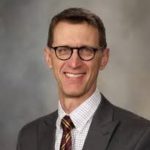
Still image from a video interview of Drs. Kathleen Sluka on the left and Leslie Crofford on the right
Dr. Kathleen Sluka (left) and Dr. Leslie Crofford (right)

The Fibromyalgia TENS in Physical Therapy Study (FM-TIPS) has begun enrollment of study participants. It is the first study supported through the NIH Heal Initiative’s PRISM program to begin enrollment.

Congratulations to co–principal investigators Drs. Kathleen Sluka and Leslie Crofford and the FM-TIPS team!

The PRISM projects—Pragmatic and Implementation Studies for the Management of Pain to Reduce Opioid Prescribing—are studying the real-world effectiveness of nonpharmacologic interventions for pain and assessing the implementation of these interventions to improve pain management and reduce reliance on opioids. The NIH Collaboratory Coordinating Center serves as the PRISM Resource Coordinating Center.

FM-TIPS is using a cluster randomized trial design to assess the feasibility of using transcutaneous electrical nerve stimulation (TENS) in addition to physical therapy for the treatment of fibromyalgia. The study will also determine whether the use of TENS improves symptoms of fibromyalgia, increases adherence to physical therapy and the likelihood of meeting therapeutic goals, and reduces medication use.

During the 1-year planning phase, the study team recruited physical therapy sites into the trial, established a better understanding of usual practice to inform trial processes, and ensured the adequacy of trial infrastructure. Learn more about FM-TIPS in this interview with Drs. Sluka and Crofford.

FM-TIPS is supported by the NIH through the NIH HEAL Initiative under an award from the National Institute of Arthritis and Musculoskeletal and Skin Diseases.
March 11, 2021: TSOS Study Intervention Reduces PTSD Symptoms in Injured Patients at Level I Trauma Centers

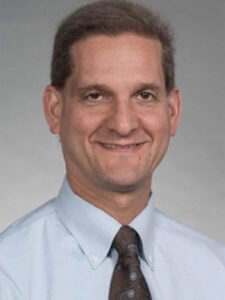
Photo of Dr. Doug Zatzick
Dr. Doug Zatzick

A collaborative care intervention for injured patients at trauma centers can reduce symptoms of posttraumatic stress disorder (PTSD), according to the results of the Trauma Survivors Outcomes and Support (TSOS) study. The results were published online this week in JAMA Surgery.

The TSOS study, an NIH Collaboratory Demonstration Project, was a stepped-wedge, cluster randomized pragmatic clinical trial testing the delivery of a stepped collaborative care intervention vs usual care for 635 injured patients with PTSD symptoms and comorbid conditions at 25 level I trauma centers in the United States.

Patients in the control group received usual care plus nurse notification about the patient’s high level of distress. Patients in the intervention group received collaborative care consisting of evidence-based medication, cognitive behavioral therapy, and case management. Patients in the intervention group whose PTSD symptoms persisted after initial treatment received stepped-up care, such as medication adjustments or additional psychotherapeutic elements.

After 6 months, the intervention group experienced a significant reduction in PTSD symptoms as compared with the control group. The treatment effect was greater for patients with higher baseline PTSD risk.

“Our study shows that a brief, approximately 2-hour collaborative care intervention delivered by frontline trauma center providers can significantly reduce PTSD symptoms in diverse injury survivors, including survivors of firearm injuries,” said Dr. Doug Zatzick of the University of Washington School of Medicine, the TSOS study’s principal investigator. “Collaborative care may therefore be an optimal treatment approach for trauma-exposed patients treated in acute care medical settings,” he said.

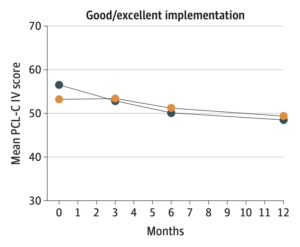
Figure from the TSOS main outcomes paper
Source: JAMA Surg. 2021 Mar 10. doi: 10.1001/jamasurg.2021.0131.

The study also included an implementation process assessment to allow the investigators to examine how the quality of each site’s implementation of the protocol affected study outcomes. The effect of the intervention on PTSD symptoms was greater at trauma centers with good or excellent protocol implementation.

“The upfront integration of an implementation process assessment into the TSOS pragmatic trial design allowed us to identify sites with good/excellent versus fair/poor protocol implementation, a key characteristic in discriminating patient-level PTSD treatment effects,” Zatzick said.

Overall, reduction in PTSD symptoms did not differ significantly between the study arms at 3 and 12 months, and there was no effect on secondary outcomes. However, the subgroup of patients who had firearm injuries and who were treated at sites with good or excellent implementation had among the largest 6-month treatment effects and demonstrated significant treatment effects at 12 months.

TSOS was supported within the NIH Collaboratory by a cooperative agreement from the National Institute of Mental Health and by the NIH Common Fund through a cooperative agreement from the Office of Strategic Coordination within the Office of the NIH Director. Learn more about the NIH Collaboratory Demonstration Projects.

November 13, 2020: Pragmatic and Explanatory Attitudes to RCTs: Using the PRECIS-2 Tool to Describe the Design of the MyTEMP Trial (Ahmed Al-Jaishi, PhD; Amit Garg, MD, PhD, Merrick Zwarenstein, MBBCh, MSc, PhD)

Speakers

Ahmed Al-Jaishi, PhD (candidate)
Health Research Methodology
McMaster University

Amit Garg, MD, PhD
Professor, Department of Medicine
Epidemiology & Biostatistics
Western University, London, Canada
Senior Core Scientist, Site Director, and Program Lead
ICES Western Kidney Dialysis & Transplantation Research Program, London, Canada
Nephrologist, London Health Sciences Centre
Victoria Hospital, London, Canada

Merrick Zwarenstein, MBBCh, MSc, PhD
Professor, Department of Family Medicine
Epidemiology & Biostatistics
Western University, London, Canada
Senior Core Scientist
ICES Western Primary Care & Health Systems Research Program, London, Canada

Topic

Pragmatic and Explanatory Attitudes to RCTs: Using the PRECIS-2 Tool to Describe the Design of the MyTEMP Trial

Keywords

Pragmatic trials; PRECIS-2; Canadian Institutes of Health Research (CIHR); Study design; External validity

Key Points

  • Randomized controlled trial (RCT) intentions (attitudes) can be described as: pragmatic intentions provide evidence for decision-makers to choose between interventions, whereas explanatory intentions test a hypothesis about a mechanism.
  • Pragmatic and explanatory trials are not a dichotomy; a good trial design matches the intention of the trial.
  • Trials can be designed with both internal validity and external validity.
  • Different trial intentions, design choices, conclusions, and recommendations lead to different usefulness for decision-making.

Discussion Themes

Can you comment on the retrospective use of PRECIS-2 to dichotomize trials as pragmatic or explanatory?

What suggestions do you have to improve the labeling of trials as explanatory versus pragmatic, since both types are randomized controlled trials (RCTs)?

Read more about the PRECIS-2 tool and the CONSORT statement for pragmatic trials.

Tags

#pctGR, @Collaboratory1

November 2, 2020: PRIM-ER Pilot Study Identifies Keys to Implementation Success

Cover image of JGIMIn a qualitative analysis of the PRIM-ER pilot study, receiving the support of institutional leadership and leveraging existing institutional processes emerged as keys to successfully implementing the study intervention.

The results of the analysis were published last week in the Journal of General Internal Medicine.

PRIM-ER, an NIH Collaboratory Trial, is a stepped-wedge cluster randomized clinical trial that will test a multidisciplinary primary palliative care intervention consisting of education, clinical decision support, and other elements in a diverse mix of emergency departments in the United States. The intervention is intended to improve the delivery of goal-directed emergency care of older adults.

In the pilot study, the research team launched the intervention in 2 emergency departments. The purpose of the qualitative analysis was to measure and evaluate the reach and effectiveness of the intervention. Both sites in the pilot study achieved a high level of reach, or intervention completeness. The intervention’s effectiveness—in terms the success of its implementation—was enhanced by support from institutional leadership and use of the sites’ existing processes for quality improvement. The findings will guide the research team as they implement the intervention at additional study sites.

PRIM-ER is supported within the NIH Collaboratory by a cooperative agreement from the National Institute on Aging. Read more about PRIM-ER.

October 9, 2020: Pragmatic Trial of Higher vs. Lower Serum Phosphate Targets in Patients Undergoing Hemodialysis (HiLo) (Myles Wolf, MD)

Speaker

Myles Wolf, MD, MMSc
Division of Nephrology, Department of Medicine
Duke Clinical Research Institute
Duke University School of Medicine

Topic

Pragmatic Trial of Higher vs. Lower Serum Phosphate Targets in Patients Undergoing Hemodialysis (HiLo)

Keywords

End-stage renal disease; Hemodialysis; Serum phosphate; Patient-centered outcomes; NIDDK; Electronic health record; Cluster randomization; eConsent

Key Points

  • High serum phosphate is a ubiquitous complication in end-stage renal disease (ESRD), a serious illness that affects ~500,000 people in the United States. However, evidence is lacking for the best approach to reducing high phosphate that benefits survival in patients.
  • The hemodialysis setting is ideal for conducting a pragmatic trial because of an accessible study population, frequent clinical encounters, granular and uniform data collection via electronic health record (EHR), and the many unanswered questions about major aspects of dialysis care.
  • Pragmatic features of HiLo include:
    • Real-world setting
    • Cluster randomization
    • Broad entry criteria
    • Electronic informed consent
    • No traditional on-site study staff
    • Remote site monitoring
    • Outcomes based on EHR with no adjudication

Discussion Themes

The HiLo Ambassadors, a patient advisory group, have contributed to HiLo study materials including the protocol, informed consent form, eConsent script, informational videos, FAQs, flyer, and website content. They are providing strategies to help patients successfully participate and stay in the trial.

Dieticians are critical to the success of HiLo as they directly interact with dialysis patients and are among the most motivated caregivers on dialysis teams.

The onset of the COVID-19 pandemic came after the first week of HiLo site activation, causing a pause of trial activities and enrollment at the dialysis facilities.

What will success look like for the HiLo trial? A clear, proven answer to the question of higher versus lower target.

Read more about HiLo trial at the study website and the NIH Collaboratory Trials page.

Tags

#pctGR, @Collaboratory1

October 6, 2020: Four PRISM NIH Collaboratory Trials Awarded Continuation From Planning to Implementation Phase

The NIH Collaboratory is pleased to announce that the four PRISM NIH Collaboratory Trials received approval to transition from the planning phase to the implementation phase of their studies. These embedded PCTs (ePCTs) are directly addressing the U.S. opioid crisis and exploring fundamental questions of pain management using nonpharmacologic treatments.

Congratulations to the PIs and study teams for their excellent work!


BackInAction: Pragmatic Trial of Acupuncture for Chronic Low Back Pain in Older Adults

Karen Sherman, PhD, MPH
Photo of Lynn DeBar, principal investigator of PPACT
Lynn DeBar, PhD, MPH

BackInAction is conducting a three-arm pragmatic trial of older adults who have chronic low back pain to evaluate acupuncture versus usual care. The study will compare a standard 12-week course of acupuncture, an enhanced course of acupuncture (12-week standard course, plus 12-week maintenance course), and usual care to assess back-related function at 26 weeks.


FM TIPS: Fibromyalgia TENS in Physical Therapy Study

Kathleen Sluka, PT, PhD
Leslie Crofford, MD

The aim of FM TIPS is to demonstrate the feasibility of adding transcutaneous electrical nerve stimulation (TENS) to the treatment of patients with fibromyalgia in a real-world physical therapy setting, and to determine if adding TENS to physical therapy reduces pain, increases adherence to physical therapy, and allows patients with fibromyalgia to reach their specific functional goals with less medication use.


NOHARM: Nonpharmacologic Options in Postoperative Hospital-based and Rehabilitation Pain Management

Photo of Andrea Cheville, co–principal investigator of NOHARM
Andrea Cheville, MD
Jon Tilburt, MD

NOHARM is a stepped-wedge cluster-randomized trial that is testing a sustainable system-wide strategy for perioperative pain management using nonpharmacologic options in a manner that preserves patient function, honors patient values, and maintains availability of opioids as a last resort.


OPTIMUM: Group-based Mindfulness for Patients with Chronic Low Back Pain in the Primary Care Setting

Natalia Morone, MD

OPTIMUM aims to evaluate the impact of an innovative, group-based mindfulness program for patients with chronic low back pain in a real-life clinical setting. Mindfulness is effective for the treatment of chronic low back pain, yet remains underutilized as it has not been regularly woven into the outpatient clinical setting.


The PRISM program (Pragmatic and Implementation Studies for the Management of Pain to Reduce Opioid Prescribing) is a component of the NIH’s Helping to End Addiction Long-term (HEAL) Initiative. The NIH Collaboratory serves as the PRISM Resource Coordinating Center and is supported by the National Center for Complementary and Integrative Health. Support is also provided by the NIH Common Fund through a cooperative agreement from the Office of Strategic Coordination within the Office of the NIH Director.

September 22, 2020: New Article Highlights Ethical and Regulatory Challenges of Conducting PCTs

Cover of Ethics & Human ResearchA recent article in Ethics & Human Research describes the experience and management of regulatory noncompliance during the conduct of a large, multisite embedded pragmatic clinical trial (ePCT). The Trauma Survivors Outcomes and Support (TSOS), an NIH Collaboratory Trial, was a stepped-wedge, cluster-randomized clinical trial of a collaborative care intervention for injured patients with symptoms of posttraumatic stress disorder in 25 level 1 trauma centers in the United States. The article, Ethical and Regulatory Concerns in Pragmatic Clinical Trial Monitoring and Oversight, was coauthored by members of the TSOS study team, the Collaboratory’s Ethics and Regulatory Core, and colleagues.

The authors describe how the study encountered variabilities in participant tracking across sites, which led to a study-wide internal audit and corrective action. The study team implemented a revision of the participant tracking system and retrained site staff in new procedures. Based on the lessons learned, the authors offer recommendations for future PCTs and relevant stakeholders, including institutional review boards, data safety and monitoring boards, institutions, and trial sponsors.

Among the recommendations:

  • Use a single IRB of record to streamline regulatory processes and reduce variability among research sites.
  • Standardize research procedures but allow for real-world flexibility; this could include real-time, workflow-integrated study logging that captures and documents provider turnover and regulatory training compliance.
  • Implement thorough, specific, and practical training in procedures, especially around participant enrollment and tracking.
  • Ensure that research procedures, monitoring and oversight plans, and training are study specific to account for unique issues, contexts, and needs.

Thoughtful planning, communication, and development and dissemination of standardized procedures remain hallmarks of successful research operations both to advance biomedical research and to ensure appropriate safeguards for its participants. –Roberts et al.

September 16, 2020: Results of TSOS Trial to Be Announced in NIH Collaboratory Grand Rounds

Photo of Dr. Doug Zatzick

The principal investigator of the Trauma Survivors Outcomes and Support (TSOS) pragmatic clinical trial, an NIH Collaboratory Trial, will announce the study’s primary results in the next session of PCT Grand Rounds on September 18.

Dr. Doug Zatzick of the University of Washington will present “The Trauma Survivors Outcomes and Support (TSOS) Pragmatic Clinical Trial: Effectiveness and Implementation Process Assessment Results.” The Grand Rounds session will be held on Friday, September 18, at 1:00 pm eastern. Join the online meeting.

TSOS was a stepped-wedge, cluster randomized clinical trial of a collaborative care intervention for injured patients with symptoms of posttraumatic stress disorder in 25 level 1 trauma centers in the United States.

TSOS is supported within the NIH Collaboratory by a cooperative agreement from the National Institute of Mental Health.

September 8, 2020: LIRE Trial Finds No Change in Healthcare Utilization, Small Drop in Opioid Prescriptions

Photo of Jeffrey Jarvik
Dr. Jerry Jarvik, principal investigator of LIRE

Inserting benchmark prevalence information about common imaging findings into spine image reports did not reduce spine-related healthcare utilization but did slightly reduce subsequent opioid prescriptions. These were the main findings of the Lumbar Imaging With Reporting of Epidemiology (LIRE) trial, an NIH Collaboratory Trial.

The report was published this month in JAMA Network Open.

Spine imaging often has incidental findings that can lead to unnecessary tests and treatments. Prior observational research suggested that placing information about the prevalence of common findings in spine imaging reports may help reassure physicians and patients about such findings and reduce subsequent, unnecessary healthcare interventions.

LIRE was a stepped-wedge, cluster randomized trial of an intervention that placed age- and modality-appropriate epidemiological benchmark information about common imaging findings in lumbar spine imaging reports. The intervention did not reduce spine-related healthcare utilization overall.

In prespecified secondary analyses, the intervention slightly reduced subsequent opioid prescriptions, and patients for whom computed tomography was the imaging modality had lower spine-related healthcare utilization.

LIRE was supported within the NIH Collaboratory by a cooperative agreement from the National Institute of Arthritis and Musculoskeletal and Skin Diseases. Read more about the LIRE trial.
August 28, 2020: Designing, Conducting, Monitoring, and Analyzing Data from Pragmatic Clinical Trials: Proceedings from a Multi-Stakeholder Think Tank Meeting (Trevor Lentz, PT, PhD, MHA; Lesley Curtis, PhD; Frank Rockhold, PhD)

Speakers

Trevor Lentz, PT, PhD, MHA
Assistant Professor in Orthopaedic Surgery
Duke Clinical Research Institute

Lesley Curtis, PhD
Chair and Professor, Department of Population Health Sciences
Duke University School of Medicine

Frank Rockhold, PhD, ScM, FASA, FSCT
Professor of Biostatistics and Bioinformatics
Duke Clinical Research Institute

Topic

Designing, Conducting, Monitoring, and Analyzing Data from Pragmatic Clinical Trials: Proceedings from a Multi-Stakeholder Think Tank Meeting

Keywords

Pragmatic clinical trials; Think tank; Risk-based monitoring; Data quality; Real-world data; Electronic health records

Key Points

  • Pragmatism in study design is not a binary concept: some trial elements are purely explanatory (to establish efficacy in ideal settings) and some elements are purely practical (to establish effectiveness in the real world). The study design must serve the research question.
  • Findings from the think tank discussions on best practices and actionable steps included:
    • Ask precise research questions, and select the appropriate degree of pragmatism.
    • Optimize data quality through study design.
    • Focus on primary endpoints in data capture to maximize likelihood of success.
    • Innovate on mechanisms for data capture.
    • Promote adherence to the study protocol.
    • Evolve trial operations staff to focus on data science and informatics.
    • Share learning experiences openly and widely.

Discussion Themes

There is a misconception that PCTs, because they pursue pragmatism, are less rigorous and conducted without proper oversight or adherence to a protocol. Quality by design and good clinical practice principles apply equally to PCTs.

Risk-based monitoring is a potentially dynamic system that could improve study safety and quality, and make better use of study resources.

There is great interest from regulators, sponsors, and the academic research community to move PCT methods forward. To achieve this, we need to see more examples of successful PCTs in a context of regulatory decision-making.

Read the proceedings from the think tank meeting published in Therapeutic Innovation & Regulatory Science.

Tags

#pctGR, @Collaboratory1