November 9, 2021: PPACT Study Finds Benefits of Cognitive Behavioral Therapy in Reducing Chronic Pain and Pain-Related Disability

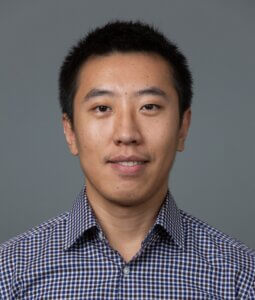
Photo of Dr. Lynn DeBar
Dr. Lynn DeBar, principal investigator of PPACT

Patients who participated in a cognitive behavioral therapy (CBT) intervention as part of their regular care for chronic pain showed improved function and reduced pain compared to standard treatment, according to the results of the Pain Program for Active Coping and Training (PPACT) study. Although CBT did not reduce opioid use, patients who participated in a 12-week course on pain self-management led by primary care providers showed modest but sustained benefits that persisted for 12 months after the intervention.

Study results were published this month in the Annals of Internal Medicine.

The PPACT study, an NIH Collaboratory Trial, was a pragmatic, cluster randomized trial that enrolled 850 patients receiving long-term opioid therapy for chronic pain. Patients in the intervention group participated in 12 weekly, 90-minute group sessions that taught skills of muscle relaxation, guided imagery, cognitive restructuring, and yoga-based adapted movement. Patients in the usual care group continued to receive pharmacologic and nonpharmacologic treatment.
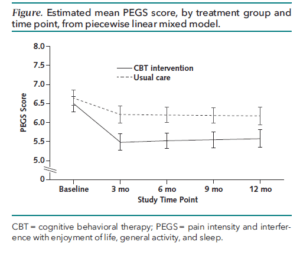
Figure from PPACT main outcomes paper
Source: Annals of Internal Medicine 2021 Nov 2. doi: 10.7326/M21-1436

Patients were followed for 12 months with primary outcome measures of pain impact on enjoyment of life, activity levels, and sleep. Researchers also assessed secondary outcome measures of pain-related disability and opioid use.

Compared to usual care, the CBT intervention reduced self-reported pain and pain-related disability and increased satisfaction with primary healthcare providers. Opioid use and dose remained the same in both the intervention group and the usual care group.

PPACT was supported within the NIH Collaboratory by the NIH Common Fund, the National Center for Complementary and Integrative Health (NCCIH), and the National Institute of Neurological Disorders and Stroke (NINDS). Learn more about the NIH Collaboratory Trials.

October 29, 2021: Embedding Pragmatic Trials into Emergency and Critical Care (Matthew W. Semler, MD, MSc; Jonathan D. Casey, MD, MSc)

Speakers

Matthew W. Semler, MD, MSc
Assistant Professor
Vanderbilt University Medical Center

Jonathan D. Casey, MD, MSc
Assistant Professor
Vanderbilt University Medical Center

Topic

Embedding Pragmatic Trials into Emergency and Critical Care

Keywords

Pragmatic clinical trials; Study design; Comparative effectiveness trials; Treatment effect; SMART trial; PreVent trial; Exception from Informed Consent (EFIC)

Key Points

  • Emergency medical clinicians are faced with common decisions in everyday practice with little to no data from randomized clinical trials to help inform their decisions.
  • Four barriers to comparative effectiveness trials in a critical care setting are a brief therapeutic window, patients with multiple co-morbidities, the inability of the patient to consent to research, and analyzing average treatment effect rather than individual treatment effect.
  • The PreVent Trial studied the use of bag-mask ventilation to prevent hypoxemia for patients who had been administered anesthesia in preparation for intubation.
  • Efficient, pragmatic trial procedures that don’t delay treatment enable comparative effectiveness randomized clinical trials to be conducted effectively.
  • After 50 years of debate about bag-mask ventilation during this interval period, the PreVent Trial found that bag-mask ventilation cut the rate of hypoxemia by 50% without affecting aspiration.
  • The SMART Trial was a cluster-randomized, multiple-crossover trial of fluid management that studied patient outcomes when Balanced Crystalloids were used versus Saline solution.
  • The large sample size of over 15,000 patients provided the SMART trial with the power to detect that a balanced crystalloid fluid prevented Major Adverse Kidney Events in 1% of patients compared to Saline solution. /li>
  • Exception from Informed Consent (EFIC), implemented in 1996 allows trials in emergency situations of the condition is life-threatening, existing treatments are unproven or unsatisfactory, and research involves no more than minimal risk.
  • Analyzing Individual Treatment Effects will allow clinical providers to tailor their decisions to their individual patient.

Discussion Themes

Clinical equipoise poses a challenge for comparative effectiveness trials.

Key to getting buy-in from clinician stakeholders is explaining the importance of the research to the patient.


Read more about PreVent trial and the SMART trial.

Tags

#pctGR, @Collaboratory1

October 22, 2021: The STAMP Trial: Increasing Engagement in Advance Care Planning and Lessons Learned from Partnering with Community Ambulatory Practices (Terri R. Fried, MD)

Speaker

Terri R. Fried, MD
Section Chief, Geriatrics
Professor of Medicine
Yale School of Medicine
Attending Physician
VA Connecticut Healthcare System

Topic

The STAMP Trial: Increasing Engagement in Advance Care Planning and Lessons Learned from Partnering with Community Ambulatory Practices

Keywords

STAMP Trial; Advance Care Planning; ACP; Patient engagement; Cluster randomized trial

Key Points

  • The STAMP (Sharing and Talking about My Preferences) Trial is a cluster randomized controlled trial aimed at increasing engagement in Advanced Care Planning (ACP).
  • The STAMP Trial first aimed to re-conceptualize advance care planning (ACP) to achieve the ultimate goal of enabling the patient or surrogate to make decisions in a future moment rather than making decisions in advance. In this way, ACP is a flexible act of communication that allows for in-the-moment advice of a patients care providers about the nuances of a particular clinical situation.
  • ACP is a Health Behavior that involves stages of change. The STAMP Trial uses a 10 minute survey to assess how ready a patient is to start the ACP communication process.
  • Patients are given ACP materials based on their stage of readiness as assessed by the survey.
  • Results showed a small increase in ACP planning for groups randomized to the study interventions, but that small increase applied over large numbers of patients could have a significant impact on the number of people participating in ACP.

Discussion Themes

Cluster randomized trial design is complex unless you are working with an intervention that is implemented in a whole health care system rather than individual patients.

Determining a denominator in a cluster randomized trial at the patient level was very difficult.


Read more about Dr. Fried’s work on the STAMP Trial.

Tags

#pctGR, @Collaboratory1

October 15, 2021: The Impact of Community Masking on COVID-19: A Cluster-Randomized Trial in Bangladesh (Jason Abaluck, PhD)

Speaker

Jason Abaluck, PhD
Professor of Economics
Yale School of Management

Topic

The Impact of Community Masking on COVID-19: A Cluster-Randomized Trial in Bangladesh

Keywords

COVID-19; Cluster-randomized trial; Masking; Community spread; NORM model

Key Points

  • Dr. Abaluck’s cluster-randomized trial on the impact of community masking in ~350,000 adults in 600 villages of Bangledesh aimed to answer 2 questions: What strategies or interventions will increase mask-wearing? and What is the impact of mask wearing intervention on COVID-10?
  • There are two major differences between the existing randomized trials of mask wearing for flu and the impact of community masking in Bangladesh trial. The first issue is the existing trials were randomized individually not by communities so you cannot evaluate weather masks act as source control. The second issue with the existing trials is the discrepancy between the number of people who attest to wearing a mask and the number who actually wore a mask.
  • The impact of community masking in Bangladesh trial used the NORM model to increase mask wearing. The NORM model distributes masks at No-cost, Offers information about why mask wearing is important, Reinforces mask wearing by having mask promoters give free masks and information in public places, and Modeling by trusted community leaders wearing masks and endorsing mask wearing.
  • The NORM model more than tripled mask usage(13% usage increased to 42%), increased physical distancing, and had a sustained impact that lasted at least 10 weeks.
  • Communities where the NORM model was employed saw a 9% reduction in symptomatic COVID-19 infections.
  • Mask wearing showed a greater reduction in COVID-19 among the elderly.

Discussion Themes

The NORM model would have different efficacy rates in different cultures and communities.

You can get some people to wear a mask by just distributing the masks in public places and asking them to wear them.

Masks are not an all-or-nothing protection. Masks have a dose-reduction effect and that dose-reduction translates into a transmission effect.


Read more about the Dr. Abaluck’s work on masking and COVID-19 in the recently published Discussion Paper.

Tags

#pctGR, @Collaboratory1, @Jabaluck

October 13, 2021: COVID-19 Grand Rounds to Feature Cluster Randomized Trial of Community Masking

Headshot of Jason Abaluck
Dr. Jason Abaluck

In this Friday’s COVID-19 Grand Rounds session, Dr. Jason Abaluck of Yale University will present “The Impact of Community Masking on COVID-19: A Cluster-Randomized Trial in Bangladesh.”

The Grand Rounds session will be held on Friday, October 15, at 1:00 pm eastern. Join the online meeting.

The NIH Collaboratory Coordinating Center is using its popular Grand Rounds platform to share late-breaking research and promote resources in support of clinical researchers affected by the COVID-19 public health emergency.

For previous COVID-19 Grand Rounds, and more news and resources related to the COVID-19 public health emergency, see the COVID-19 Resources page.

September 10, 2021: Effect of Salt Substitution on Cardiovascular Events and Death (Bruce Neal, MB ChB, PhD, FRCP, FAHA, FAHMS)

Speaker

Bruce Neal, MB ChB, PhD, FRCP, FAHA, FAHMS
Executive Director, George Institute Australia
Professor of Medicine, UNSW Sydney
Honorary Professor, Sydney Medical School, University of Sydney
Professor of Clinical Epidemiology, Imperial College London

Topic

Effect of Salt Substitution on Cardiovascular Events and Death

Keywords

Cluster randomized trial; Salt substitute; Stroke; Cardiovascular disease; SSaSS

Key Points

  • The SSaSS study is a pragmatic, cluster randomized trial on the effects of salt substitutes versus regular salt on stroke, major adverse cardiovascular events, and mortality.
  • The SSaSS study followed almost 21,000 people in 600 village clusters over 5 years. At the end of the 5 year study, 92% of the intervention group was still using salt substitute and 6% of control started using salt substitute.
  • Data from the study show evidence of lower blood pressure, lower risk of stroke, lower risk of major adverse cardiovascular events, and protection against premature death with no evidence of harm.
  • There was no evidence of any increased risk of hyperkalemia.

Discussion Themes

Successful recruitment approaches in this large, long-term trial required extensive engagement and networking with local health workers and community leaders.

Salt substitute as a method to lower stroke and cardiovascular risk is attractive because it looks and tastes the same as salt, and doesn’t ask people to change their behavior.

The use of salt substitutes to decrease the intake of discretionary sodium, the salt used in home cooking or sprinkled on food after cooking, may have more effect in developing countries.  Developed countries consume processed and packaged foods more often and have less discretionary sodium intake.  In developed countries, it may be necessary to encourage food manufacturers to decrease sodium and increase potassium in the processed and packaged foods they produce.

Many millions of lives could benefit from the effects of salt substitute if this could be implemented in developing countries around the world.

Read more about Dr. Neal’s work with the SSaSS study.

Tags

#pctGR, @Collaboratory1

September 8, 2021: PCT Grand Rounds Explores Effects of Salt Substitution on Cardiovascular Events and Death

Head shot of Dr. Bruce Neal
Dr. Bruce Neal

In this Friday’s PCT Grand Rounds, Dr. Bruce Neal of the George Institute Australia and UNSW Sydney will share findings from a clinical trial of the effect of salt substitution on cardiovascular events and death.

The Grand Rounds session will be held on Friday, September 10, at 1:00 pm eastern. Join the online meeting.

For webinar recordings and slides from previous Grand Rounds sessions, see the Grand Rounds hub.

August 26, 2021: Li Receives PCORI Award to Study Methods for Cluster Randomized Trials

Headshot of Dr. Fan Li
Dr. Fan Li

Dr. Fan Li, a longtime member of the NIH Collaboratory’s Biostatistics and Study Design Core, has received approval for a $1 million grant award from the Patient-Centered Outcomes Research Institute (PCORI) to develop methods and software for designing cluster randomized trials. Li is an assistant professor of biostatistics in the Yale School of Public Health.

The study, entitled “New Methods for Planning Cluster Randomized Trials to Detect Treatment Effect Heterogeneity,” will contribute new methods, guidance, and user-friendly software for planning parallel and stepped-wedge cluster randomized trials to enable confirmatory “heterogeneity of treatment effect” (HTE) analyses with sufficient statistical power.

HTE occurs when there is systematic variation in treatment effect across predefined patient or provider subgroups that can arise due to diverse practices, varying responses to treatment, or differing vulnerability to certain diseases, among other reasons. While understanding of HTE has been a recognized goal in individually randomized trials, methods for planning cluster randomized trials with HTE analyses are limited. This PCORI-funded study will expand the current cluster randomized design toolbox to accommodate confirmatory HTE analysis and meet a growing interest in better understanding how patient- and provider-level characteristics moderate the impact of new care innovations in pragmatic trials.

The award has been approved pending completion of a business and programmatic review by PCORI staff and issuance of a formal award contract.

Joining Li on the research team are coinvestigators Dr. Patrick Heagerty of the University of Washington, Dr. Rui Wang of Harvard Medical School and the Harvard Pilgrim Health Care Institute, and Dr. Denise Esserman of the Yale School of Public Health. Heagerty and Wang are members of the NIH Collaboratory’s Biostatistics and Study Design Core. The team will work closely with other NIH Collaboratory colleagues and stakeholders, including Dr. Adrian Hernandez of Duke University, Dr. Jerry Jarvik of the University of Washington, and Dr. Richard Platt of Harvard Medical School and the Harvard Pilgrim Health Care Institute.

August 19, 2021: Biostatistics Core Helps Projects ‘Roll With the Punches’ of the Pandemic

Leaders of the NIH Collaboratory’s Biostatistics and Study Design Core Working Group spoke in a recent interview about the impacts of the COVID-19 pandemic on the NIH Collaboratory Trials, including the 2 newest projects, BeatPain Utah and GRACE.

“BeatPain Utah and GRACE are fascinating studies, as all our NIH Collaboratory Trials are, and are giving us lots of food for thought at the Biostatistics Core,” said Dr. Liz Turner, associate professor of biostatistics and bioinformatics at Duke University and a cochair of the Core. View the full video.

The 2 studies “have been pretty well positioned to roll with some of the distancing required or the lack of in-person visits,” said Dr. Patrick Heagerty, professor of biostatistics at the University of Washington and the other cochair of the Core. “The BeatPain project had a remote delivery from the beginning, so I think the impact of COVID was not as dramatic as it’s been for other projects. But GRACE, where acupuncture is part of it, they have to figure out what are the elements of the research protocol they can do remotely but still need to get folks in person to do that acupuncture,” Heagerty said.

“There really have been some considerable challenges for several of the other NIH Collaboratory Trials,” said Turner. “Good examples of these challenges are those faced by 2 stepped-wedge cluster randomized trials, ACP PEACE and PRIM-ER. …They had to really restructure the design and respond very quickly to what was happening in practice out in the field. Interestingly, on the flip side, the disruptions last spring in 2020 did provide opportunities to address other research questions and perhaps generate other interesting evidence,” Turner said.

(Learn more about the ACP PEACE study’s COVID-19 supplement: “Can a Primary Care Telehealth Intervention Change the Paradigm for Advance Care Planning?”)

Heagerty and Turner also described ongoing projects of the Core to support pragmatic research, including guidance on longitudinal analysis in randomized trials, considerations for studies with multiple outcomes, and handing of studies with variable cluster sizes. Learn more about the Biostatistics and Study Design Core.


Screen shot of interview with Patrick Heagerty and Liz Turner

August 4, 2021: PCT Grand Rounds Presents Results of the TSOS NIH Collaboratory Trial

Photo of Dr. Doug Zatzick
Dr. Doug Zatzick

A recent PCT Grand Rounds webinar and slides presenting the results from TSOS, an NIH Collaboratory Trial, are now available. TSOS was a stepped-wedge, cluster randomized pragmatic clinical trial testing the delivery of a stepped collaborative care intervention vs usual care for 635 injured patients with PTSD symptoms and comorbid conditions at 25 level I trauma centers in the United States. The results of the study were published in March in JAMA Surgery.

The TSOS Closeout Study Snapshot is also available.

TSOS is supported within the NIH Collaboratory by a cooperative agreement from the National Institute of Mental Health.