August 23, 2021: BeatPain Utah Takes Pragmatic Research to New Frontiers

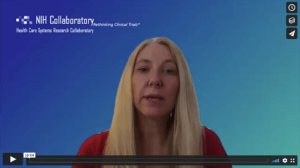
BeatPain Utah, an NIH Collaboratory Trial, is studying real-world implementation of a telehealth physical therapy strategy for patients with chronic back pain. Dr. Julie Fritz, the principal investigator of BeatPain Utah, discussed the study in a Zoom-based interview after the NIH Collaboratory’s annual steering committee meeting.

“[BeatPain Utah] is focused on overcoming access barriers and providing nonpharmacologic options for individuals in our state and in under-resourced communities who have chronic back pain,” said Fritz, who is a distinguished professor of physical therapy and athletic training and the associate dean for research at the University of Utah College of Health.

The project is part of the NIH HEAL Initiative, which aims to reduce reliance on prescription opioid medications.

View the full video.

Fritz highlighted the project’s partnerships with federally qualified health centers throughout the state of Utah. “Some are in urban areas serving under-resourced communities,” she said, “and others, given the geography of Utah, are in very rural and remote communities where access to specialists and allied health professionals is particularly limited.” The communities also include a significant number of patients who are Hispanic or Latino and communicate primarily in Spanish.

When asked why a pragmatic clinical trial was the best approach for BeatPain Utah, Fritz noted the urgency of the need for alternative pain management strategies, especially in low-resource populations.

“Accelerating the real-world applicability of our research is particularly critical in this area of clinical research,” Fritz said. “So for us, in addressing the needs of populations that need resources—and they need them now—a pragmatic trial that focuses on real-world solutions was a particularly attractive option,” she said.

On being part of the NIH Collaboratory, Fritz said, “So many of the things that we encounter, someone’s already dealt with or is currently working on. It’s just invaluable to have those colleagues and professionals who are trying similar aims to what we’re doing. Being part of this Collaboratory has been of tremendous value for our project.”

View the full video.

BeatPain Utah is supported by the NIH through the NIH HEAL Initiative under a grant from the National Institute of Nursing Research and receives logistical and technical support from the PRISM Resource Coordinating Center.

Screen shot of interview with Dr. Julie Fritz

August 19, 2021: Biostatistics Core Helps Projects ‘Roll With the Punches’ of the Pandemic

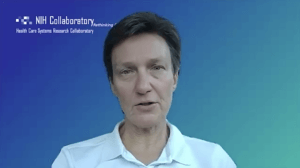
Leaders of the NIH Collaboratory’s Biostatistics and Study Design Core Working Group spoke in a recent interview about the impacts of the COVID-19 pandemic on the NIH Collaboratory Trials, including the 2 newest projects, BeatPain Utah and GRACE.

“BeatPain Utah and GRACE are fascinating studies, as all our NIH Collaboratory Trials are, and are giving us lots of food for thought at the Biostatistics Core,” said Dr. Liz Turner, associate professor of biostatistics and bioinformatics at Duke University and a cochair of the Core. View the full video.

The 2 studies “have been pretty well positioned to roll with some of the distancing required or the lack of in-person visits,” said Dr. Patrick Heagerty, professor of biostatistics at the University of Washington and the other cochair of the Core. “The BeatPain project had a remote delivery from the beginning, so I think the impact of COVID was not as dramatic as it’s been for other projects. But GRACE, where acupuncture is part of it, they have to figure out what are the elements of the research protocol they can do remotely but still need to get folks in person to do that acupuncture,” Heagerty said.

“There really have been some considerable challenges for several of the other NIH Collaboratory Trials,” said Turner. “Good examples of these challenges are those faced by 2 stepped-wedge cluster randomized trials, ACP PEACE and PRIM-ER. …They had to really restructure the design and respond very quickly to what was happening in practice out in the field. Interestingly, on the flip side, the disruptions last spring in 2020 did provide opportunities to address other research questions and perhaps generate other interesting evidence,” Turner said.

(Learn more about the ACP PEACE study’s COVID-19 supplement: “Can a Primary Care Telehealth Intervention Change the Paradigm for Advance Care Planning?”)

Heagerty and Turner also described ongoing projects of the Core to support pragmatic research, including guidance on longitudinal analysis in randomized trials, considerations for studies with multiple outcomes, and handing of studies with variable cluster sizes. Learn more about the Biostatistics and Study Design Core.


Screen shot of interview with Patrick Heagerty and Liz Turner

August 9, 2021: ‘Pause’ for COVID-19 Complicates Research Embedded in Healthcare Systems

Leaders of the NIH Collaboratory’s Health Care Systems Interactions Core Working Group spoke in a recent interview about the impacts of the COVID-19 pandemic on the NIH Collaboratory Trials.

“Some of the projects are facing healthcare systems that are on pause for research,” said Leah Tuzzio, a senior research associate at Kaiser Permanente Washington Health Research Institute (KPWHRI) and a member of the Core. “It’s happened before when policy changes or when [electronic health record] systems change or when someone important leaves, but the pandemic has had a huge impact,” she said.

“Healthcare systems are strongly influenced by the environment and by changes in their environment, and so any pragmatic trial that’s really embedded in the healthcare system will be affected by the environment around it,” said Dr. Eric Larson, a KPWHRI senior investigator and the chair of the Core. Healthcare systems participating in the NIH Collaboratory NIH Collaboratory Trials have been overwhelmed by their number one priority, which—in addition to caring for their patients—is adapting to COVID, Larson said.

In addition to guiding the NIH Collaboratory Trials through pandemic-related challenges, the Health Care Systems Interactions Core has been working on several long-term projects.

“One of the things that we’re currently working on is a typology of the healthcare systems that have participated in [the GRACE and BeatPain Utah NIH Collaboratory Trials] as well as the projects that came before,” said Core project manager Rachel Hays. The Core is surveying NIH Collaboratory Trial investigators about what lessons they would pass on to future pragmatic trial investigators about building partnerships with their participating healthcare systems, she said.


Screen shot of interview with Eric Larson, Leah Tuzzio, and Rachel Hays
Dr. Eric Larson, Leah Tuzzio, and Rachel Hays

July 26, 2021: NIH Collaboratory Leaders Discuss PRISM Projects, New Initiatives, and the Future of the Program

In a recent interview, Dr. Wendy Weber shared that the National Advisory Council for Complementary and Integrative Health has approved a concept for the NIH Collaboratory to continue with the support of NIH Institutes and Centers, as the program completes its term as an NIH Common Fund initiative.


“We’re quite excited for some new directions in where we’re going to head with this program, and really excited that we’ve identified a number of partners across the NIH as different Centers, Institutes, and Offices that want to continue this program and want to continue to do research embedded in healthcare systems,” Weber said.

Weber is the branch chief for the Clinical Research in Complementary and Integrative Health Branch in the Division of Extramural Research at the National Center for Complementary and Integrative Health (NCCIH) and serves as the program officer for the NIH Collaboratory.

“I think one new direction for us is looking at how do we address health disparities in healthcare systems, what types of interventions can actually improve those disparities and improve the quality of care so that we have less differences in the way patients are treated within the healthcare delivery system,” Weber said.

We interviewed Weber after the NIH Collaboratory’s annual steering committee meeting, along with Dr. Robin Boineau, the project scientist for the NIH Collaboratory, and Dr. Kevin Weinfurt, a professor in population health sciences at Duke University and a co–principal investigator for the NIH Collaboratory Coordinating Center. View the full interview.

The 3 leaders talked about the program’s newest NIH Collaboratory Trials—BeatPain Utah and GRACE—and their role in advancing the goals of the NIH Collaboratory. They also discussed focus areas for the coming year, including greater attention to implementation science outcomes, diversity in pragmatic trials, and lessons from the COVID-19 pandemic.

“[BeatPain Utah and GRACE] are helping the Collaboratory to learn how to design, analyze, and interpret adaptive designs,” said Weinfurt. “These are our 2 first trials where we’re using adaptive designs. One of the goals of the Collaboratory is to generate generalizable knowledge about how to do pragmatic trials, so we like these types of learning opportunities,” he said.

Boineau highlighted the Diversity Workshop Grand Rounds Series, which began in May and is ongoing. The series is focused on strategies for improving diversity in pragmatic clinical trials and is “an important next step to really think together about where we can go and what we can do to really build this community of investigators and participants,” Boineau said.


Screen shot of Dr. Wendy Weber interview
Dr. Wendy Weber of NCCIH, program officer for the NIH Collaboratory

June 4, 2021: Inclusion of Diverse Participants in Pragmatic Clinical Trials: Planning for Diversity – Stakeholder Engagement and Site Selection to Maximize Diversity (Wendy Weber, ND, PhD, MPH; Julie Fritz, PhD, PT; David Wetter, PhD, MS; Gloria Coronado, PhD; Amanda Petrik, MS)

Speakers

Panelists:

BeatPain Utah  
Julie Fritz, PhD, PT
Associate Dean for Research, College of Health
Adjunct Professor, Orthopaedic Surgery
Distinguished Professor, Physical Therapy & Athletic Training
Adjunct Professor, Orthopaedic Surgery Operations
University of Utah  

David Wetter, PhD, MS
Professor, Population Health Sciences
Adjunct Professor, Psychology
University of Utah  

STOP CRC  
Gloria Coronado, PhD
Distinguished Investigator Mitch Greenlick Endowed Scientist for Health Disparities
Kaiser Permanente Center for Health Research  

Amanda Petrik, MS
Sr. Research Associate Center for Health Research
Kaiser Permanente Northwest

Guest Moderator:

Wendy Weber, ND, PhD, MPH
Chief, Clinical Research in Complementary and Integrative Health Branch
Division of Extramural Research
National Center for Complementary and Integrative Health (NCCIH)
National Institutes of Health (NIH)

Topic

Inclusion of Diverse Participants in Pragmatic Clinical Trials: Planning for Diversity – Stakeholder Engagement and Site Selection to Maximize Diversity

Keywords

Participant diversity; Stakeholder engagement strategies; STOP CRC; BeatPain Utah; Health equity; Community health centers; Plan-Do-Study-Act

Key Points

  • Disparities in pain prevalence and pain management are well established. In particular, odds of receiving opioids for pain management are greater, and odds of nonpharmacologic care lower, in rural, low income, and Latinx communities.
  • It is essential that communities and researchers come together to create long-term solutions to prevent cancer, chronic and infectious disease, and improve health among underserved populations. Research projects should be driven by the priorities of community partners.
  • Study advisory boards can include health center leaders, patient advocates, legislators, and community organization leaders. These boards provide local context and, in the case of STOP CRC, they identified policy changes that were needed around access to colorectal cancer screening.

Discussion Themes

Sharing information and resources with community partners—and responding to their needs and building their capacity—helps to build trust around medicine and research.

To what extent is it important to show evidence of interest in and respect for the community beyond the specific focus of your initiative? For example, participating in important community activities and developing a deeper understanding of the culture.

We must design and plan for sustainability at the outset, and we must make targeted, specific efforts to ensure the inclusion of diverse populations in clinical trials.

Another way to increase diversity is to prepare and train more scientists and investigators from diverse populations.

Read more about the BeatPain Utah and STOP CRC Demonstration Projects.

Tags

#pctGR, @Collaboratory1

Grand Rounds Diversity Workshop Series June 4: Inclusion of Diverse Participants in Pragmatic Clinical Trials: Planning for Diversity – Stakeholder Engagement and Site Selection to Maximize Diversity

Guest Moderator:
Wendy Weber, ND, PhD, MPH
Chief, Clinical Research in Complementary and Integrative Health Branch
Division of Extramural Research
National Center for Complementary and Integrative Health (NCCIH)
National Institutes of Health (NIH)

Panel:
BeatPain Utah

Julie Fritz, PhD, PT
Associate Dean for Research, College of Health
Adjunct Professor, Orthopaedic Surgery
Distinguished Professor, Physical Therapy & Athletic Training
Adjunct Professor, Orthopaedic Surgery Operations
University of Utah

David Wetter, PhD, MS
Professor, Population Health Sciences
Adjunct Professor, Psychology
University of Utah

STOP CRC

Gloria Coronado, PhD
Distinguished Investigator
Mitch Greenlick Endowed Scientist for Health Disparities
Kaiser Permanente Center for Health Research

Amanda Petrik, MS
Sr. Research Associate
Center for Health Research
Kaiser Permanente Northwest

Topic: Inclusion of Diverse Participants in Pragmatic Clinical Trials: Planning for Diversity – Stakeholder Engagement and Site Selection to Maximize Diversity
Date: Friday, June 4, 2021, 1:00-2:00 p.m. ET

Meeting Info: To check whether you have the appropriate players installed for UCF (Universal Communications Format) rich media files, go to https://dukemed.webex.com/dukemed/systemdiagnosis.php.

To join the online meeting:
Go to https://dukemed.webex.com/dukemed/j.php?MTID=m228b52a4666c1e24046e11c01ae7bd0d

You must log in to the URL first.
Click ‘Audio Conference’
Choose ‘I will call in’, select the Toll number.
Dial in using the information from the dialog box that appears.
Be certain to use the Access Code AND the Attendee ID.

Troubleshooting:
If the URL above does not work, go to dukemed.webex.com and enter:
Meeting Number: 120 909 9614
Meeting Password: 1234

For Audio ONLY:
Call-in toll number (US/Canada): 1-650-479-3207
Access code: 120 909 9614

NOTE: For Toll-free users, the call-back (call me) services are also available.

February 8, 2021: Meeting Minutes are Available from the Ethics and Regulatory Core Discussions with the PRISM NIH Collaboratory Trials

Meeting minutes, supplementary materials, and updates are available that summarize recent discussions related to the ethics and regulatory issues associated with the six PRISM NIH Collaboratory Trials:

These discussions, which took place by teleconference, included representation from study principal investigators and study teams, members of the NIH Collaboratory Ethics and Regulatory Core, NIH staff, and NIH Collaboratory Coordinating Center personnel as well as some IRBs responsible for oversight of the projects.

November 9, 2020 Virtual Onboarding Meeting: BeatPain Utah and GRACE

PRISM Onboarding Meeting

November 9, 2020
Virtual

Main Purpose

Welcome the new PRISM UG3 NIH Collaboratory Trials; provide introductions, an overview of the Collaboratory Program and the NIH HEAL Initiative, hear from the new UG3 PRISM Projects; and discuss lessons learned from the Collaboratory Projects.

Welcome and Opening Remarks
Helene Langevin, MD, CM; Richard Hodes, MD; Lesley Curtis, PhD

Overview of the NIH HCS Research Collaboratory Program
Cathy Meyers, MD

HEAL Initiative Overview
Rebecca Baker, PhD

Overview of a HEAL Cooperative Agreement
Wendy Weber, ND, PhD, MPH; Laura Wandner, PhD

Discussion From New UG3 NIH Collaboratory Trials

  • GRACE
    Ardith Z. Doorenbos, PhD, RN; Robert E. Molokie, MD; Judith M. Schlaeger, PhD, CNM; Miriam O. Ezenwa, PhD, RN; Nirmish Shah, MD

Lessons Learned from Seasoned NIH Collaboratory Trials
Moderator: Lesley Curtis, PhD

Panel:
Jerry Jarvik, MD, MPH; Doug Zatzick, MD; Miguel Vazquez, MD; Mike Ho, MD, PhD; Karen Sherman, PhD, MPH; Natalia Morone, MD

Closing Remarks
Helene Langevin, MD, CM; Richard Hodes, MD; Lesley Curtis, PhD

October 12, 2020: NIH Collaboratory Welcomes 2 New PRISM NIH Collaboratory Trials to Address the Opioid Epidemic

Logo for the NIH HEAL InitiativeThe NIH Collaboratory is adding 2 new NIH Collaboratory Trials to its portfolio of innovative pragmatic clinical trials embedded in healthcare systems. The projects are funded through the Pragmatic and Implementation Studies for the Management of Pain to Reduce Opioid Prescribing (PRISM) program, a component of the Helping to End Addiction Long-Term Initiative℠, or NIH HEAL Initiative℠, to address the opioid crisis.

The new PRISM awards total approximately $1.6 million in the initial planning phase and are supported by the HEAL Initiative and administered by 2 participating NIH institutes:

  • BeatPain Utah is a pragmatic trial of nonpharmacologic pain management interventions in primary care clinics of US federally qualified health centers in Utah. The interventions will be designed to overcome barriers specific to rural and lower-income communities through innovative use of telehealth resources. The study is administered by the National Institute of Nursing Research and will be conducted by Dr. Julie Fritz of the University of Utah under grant award 1UG3NR019943-01.
  • The Guided Relaxation and Acupuncture for Chronic Sickle Cell Disease Pain (GRACE) trial is a hybrid effectiveness–implementation trial of guided relaxation and acupuncture for pain associated with chronic sickle cell disease in 3 large healthcare systems. The study is administered by the National Center for Complementary and Integrative Health and will be conducted by Drs. Ardith Doorenbos, Judith Schlaeger, Robert Molokie, Miriam Ezenwa of the University of Illinois at Chicago and Dr. Nirmish Shah of Duke University under grant award 1UG3AT011265-01.

In its role as the PRISM Resource Coordinating Center, the NIH Collaboratory will provide technical support and pragmatic trial expertise for the new NIH Collaboratory Trials. The PRISM Resource Coordinating Center is supported by NIH through the NIH HEAL Initiative.

The NIH Collaboratory aims to improve the way clinical trials are conducted by creating an infrastructure for collaborative research with healthcare systems. The Collaboratory has 5 Core Working Groups of experts that help research teams address challenges of conducting research embedded in clinical care, and they collect and disseminate knowledge and best practices learned throughout the process. The ultimate goal is to ensure that healthcare providers and patients can make decisions based on the best available clinical evidence.

The Helping to End Addiction Long-term Initiative℠, or NIH HEAL Initiative℠, is an aggressive, trans-NIH effort to speed scientific solutions to stem the national opioid public health crisis. Launched in April 2018, the initiative is focused on improving prevention and treatment strategies for opioid misuse and addiction, and enhancing pain management. For more information, visit heal.nih.gov.