May 11, 2021: OPTIMUM Begins Enrollment in Group-Based Mindfulness Intervention for Low Back Pain

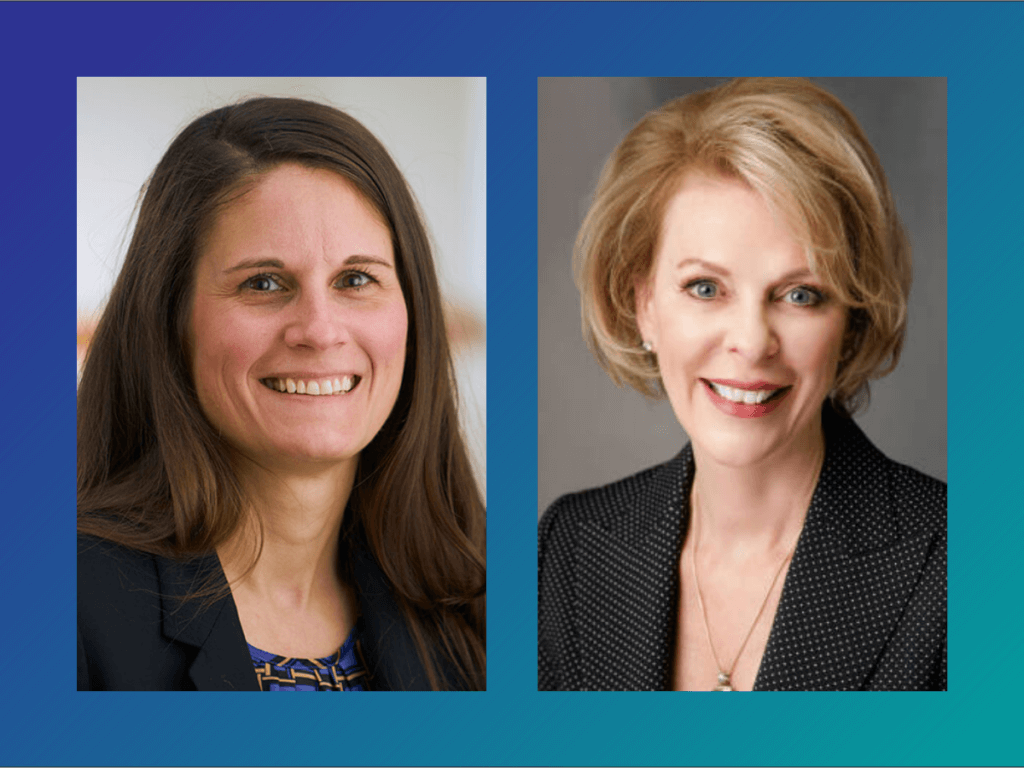
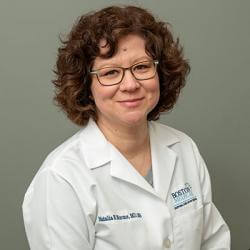
Dr. Natalia Morone
Dr. Natalia Morone

The Group-Based Mindfulness for Patients With Chronic Low Back Pain in the Primary Care Setting (OPTIMUM) trial has begun enrollment of study participants. The trial is part of the first cohort of the NIH Collaboratory’s Demonstration Projects to be supported through the NIH Heal Initiative’s PRISM program.

Congratulations to principal investigator Dr. Natalia Morone and the OPTIMUM team!

OPTIMUM is a pragmatic clinical trial integrating a group-based mindfulness stress reduction program into primary care settings for patients with chronic low back pain. The study will randomly assign 450 patients in 3 healthcare systems to either the group-based mindfulness intervention or usual care. The aim of the study is to integrate the program into primary care clinics and measure its effectiveness in reducing chronic low back pain, improving physical and psychological function, and reducing or stopping opioid prescriptions.

The PRISM projects—Pragmatic and Implementation Studies for the Management of Pain to Reduce Opioid Prescribing—are studying the real-world effectiveness of nonpharmacologic interventions for pain and assessing the implementation of these interventions to improve pain management and reduce reliance on opioids. The NIH Collaboratory Coordinating Center serves as the PRISM Resource Coordinating Center.

Learn more about OPTIMUM in this interview with Dr. Morone.

OPTIMUM is supported by the NIH through the NIH HEAL Initiative under an award from the National Center for Complementary and Integrative Health.
May 10, 2021: Dr. Clyde Yancy to Give Keynote Address This Friday to Launch Diversity Workshop Grand Rounds Series

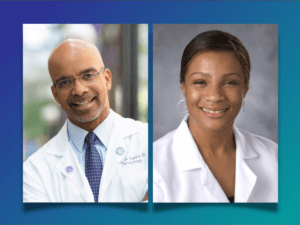
Photographs of Dr. Clyde Yancy on the left and Dr. Kanecia Zimmerman on the right
Dr. Clyde Yancy (left) and Dr. Kanecia Zimmerman (right)

The NIH Collaboratory this Friday, May 14, will use its popular ePCT Grand Rounds platform to launch a special workshop series on diversity in pragmatic clinical trials.

Dr. Clyde Yancy of Northwestern University will begin the series with a keynote address, “Diverse Representation Among Clinical Trial Participants: Why It Is Important and How We Can Improve.” Dr. Kanecia Zimmerman of Duke University will facilitate the discussion. The Grand Rounds session will be held on Friday, May 14, at 1:00 pm eastern. Join the online meeting.

The webinar series—Inclusion of Diverse Participants in Pragmatic Clinical Trials—will focus on increasing engagement of diverse participants and building trust, recruiting diverse research sites, learning from implementation science to maximize diversity, and developing a pipeline of trainees from underrepresented groups to be leaders in pragmatic clinical research.

Other upcoming sessions in the diversity workshop series include:

All sessions are free and open to the public; no registration is required. Recordings will be archived on the Grand Rounds website.

May 5, 2021: NIA IMPACT Collaboratory to Publish Pilot Grant Funding Opportunity

NIA IMPACT Collaboratory logoThe NIA IMPACT Collaboratory will publish a request for applications for pilot grants on August 16, 2021, with letters of intent due September 17, 2021.

More information is available on the IMPACT Collaboratory website.

The 1-year pilot grant awards will likely be eligible for funding of up to $175,000. The awards will support pilot projects that aim to generate preliminary data for the design and conduct of full-scale embedded pragmatic clinical trials of nonpharmacologic interventions in healthcare systems for persons living with Alzheimer disease and related dementias and/or their care partners. The IMPACT Collaboratory will give preference to applications that address care for traditionally marginalized or underrepresented populations in clinical research and those that promote health equity.

More than 5 million Americans are living with Alzheimer disease and related dementias. They are particularly vulnerable to receiving uncoordinated and poor-quality care, which contributes to adverse health outcomes and misuse of resources. The mission of the IMPACT Collaboratory is to advance care for persons with dementia and their caregivers in real-world settings by building national capacity to conduct pragmatic clinical trials that test interventions embedded in healthcare systems.

The NIA IMPACT Collaboratory is supported by a grant from the National Institute on Aging.

April 30, 2021: ACTIV-6: COVID-19 Outpatient Randomized Trial to Evaluate Efficacy of Repurposed Medications (Susanna Naggie, MD, MHS; Elizabeth Shenkman, PhD)

Speakers

Susanna Naggie, MD, MHS
Associate Professor of Medicine
Duke Clinical Research Institute

Elizabeth Shenkman, PhD
Chair, Department of Health Outcomes and Biomedical Informatics
Co-Director, Clinical and Translational Science Institute (CTSI)
University of Florida

Topic

ACTIV-6: COVID-19 Outpatient Randomized Trial to Evaluate Efficacy of Repurposed Medications

Keywords

COVID-19; NIH ACTIV Initiative; Repurposed drugs; Vaccines; Therapeutic agents; Direct-to-participant trials; PCORnet

Key Points

  • Accelerating COVID-19 Therapeutic Interventions and Vaccines (ACTIV) is a public-private partnership to develop a coordinated research strategy for prioritizing and speeding development of the most promising treatments and vaccines. The ACTIV initiative is coordinated by the Foundation for the National Institutes of Health.

  • ACTIV-6 asks: Are there medications currently approved for other conditions that improve symptoms in nonhospitalized patients with mild-to-moderate COVID-19 symptoms? The study aims to find out how to help patients feel better faster and how to prevent hospitalizations or death in newly diagnosed patients with mild or moderate COVID-19.

  • All study visits are conducted remotely: Participants use an online system to complete study surveys and report adverse events or changes in clinical status. Participants are assigned randomly to receive either a placebo or one of the treatments, which will be sent to them by mail. If deemed necessary by a study investigator, in-person or remote study visits are possible.

Discussion Themes

Vaccine hesitancy is still an issue, especially in rural areas; there will continue to be cases of COVID-19.

To ensure diversity in enrollment, the ACTIV-6 study takes a multipronged approach, including making it easy to participate without in-person appointments; partnering with community groups for broad outreach and messaging; and monitoring enrollment numbers closely.

Sites provide participant education and recruitment. The process is straightforward and appeals to both clinicians and patients. Each study site has a primary care physician as a clinical champion.

Read more about ACTIV-6, the NIH’s ACTIV initiative, and the ACTIV master protocols including ACTIV-6.

Tags

#pctGR, @Collaboratory1

April 23, 2021: COVID Clinical Trials: The Intermountain Healthcare Experience (Samuel M. Brown, MD, MS)

Speaker

Samuel M. Brown, MD, MS
Associate Professor and Director of Pulmonary/Critical Care Research
Intermountain Healthcare
Associate Professor, University of Utah

Topic

COVID Clinical Trials: The Intermountain Healthcare Experience

Keywords

COVID-19; Public health; Integrated health system; COVID-19 treatment trials

Key Points

  • Intermountain Healthcare is a nonprofit, community-based healthcare system that maintains an academic referral center and several hospitals in Utah.
  • During the pandemic, the health system was able to integrate COVID-19 research with urgent clinical, operational, and public health needs. The health system currently supports 15 randomized clinical trials in COVID-19 research, investigating immunologic and virologic therapies.
  • Collaboration and communication across divisions were essential elements to the successes achieved.
  • Among the challenges of conducting the COVID-19 trials, there remains a wish for a comprehensive risk management solution and regulatory reform.

Discussion Themes

Could we establish a robust program that provides better training and pay for study coordinators? These staff have direct contact with participants for recruitment and retention and can make or break a trial.

What aspects of institutional culture contributed to the success of conducting these trials?

What is needed is a clinical research ecosystem that appropriately balances regulatory oversight with the agility to answer urgent health questions.

Read more about Intermountain Healthcare’s experiences with COVID-19 clinical trials in these recent publications:

Tags

#pctGR, @Collaboratory1

April 27, 2021: NOHARM Trial Enrolls First Participants in Study of Postoperative Pain Care

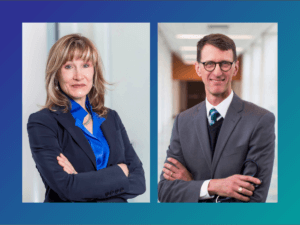
Photographs of Dr. Andrea Cheville on the left and Dr. Jon Tilburt on the right.
Dr. Andrea Cheville (left) and Dr. Jon Tilburt (right)

The Nonpharmacologic Options in Postoperative Hospital-Based and Rehabilitation Pain Management (NOHARM) trial has begun enrollment of study participants. The trial is among the first of the NIH Collaboratory’s Demonstration Projects to be supported through the NIH Heal Initiative’s PRISM program.

Congratulations to co–principal investigators Drs. Andrea Cheville and Jon Tilburt and the NOHARM team!

The PRISM projects—Pragmatic and Implementation Studies for the Management of Pain to Reduce Opioid Prescribing—are studying the real-world effectiveness of nonpharmacologic interventions for pain and assessing the implementation of these interventions to improve pain management and reduce reliance on opioids. The NIH Collaboratory Coordinating Center serves as the PRISM Resource Coordinating Center.

NOHARM is a stepped-wedge, cluster randomized pragmatic trial testing a bundled intervention comprised of patient- and clinician-facing decision support embedded in the electronic health record (EHR). The purpose of the intervention is to elicit preferences for, document, and direct patients toward evidence-based nonpharmacologic postoperative pain care. The trial will enroll up to 140,000 patients in surgical practices in 4 healthcare systems to evaluate whether pain and function, assessed with PROMIS tools, can be improved while honoring patient values and deemphasizing opioids in pain management.

During the 1-year planning phase, the study team recruited study sites and assessed the feasibility of the EHR-embedded bundle of decision support components. Learn more about NOHARM in this interview with Dr. Cheville.

NOHARM is supported by the NIH through the NIH HEAL Initiative under an award from the National Institute on Aging.

April 27, 2021: COVID-19 Grand Rounds Continues With the ACTIV-6 Direct-to-Participant Platform Trial

PhotoIn this week’s COVID-19 Grand Rounds session, Dr. Susanna Naggie of Duke University and Dr. Elizabeth Shenkman of the University of Florida will present “ACTIV-6: A Direct-to-Participant Platform Trial of Repurposed Drugs for COVID-19 in Non-hospitalized Patients.” The Grand Rounds session will be held on Friday, April 30, at 1:00 pm eastern. Join the online meeting.

The NIH Collaboratory Coordinating Center is using its popular Grand Rounds platform to share late-breaking research and promote resources in support of clinical researchers affected by the COVID-19 public health emergency.

For previous COVID-19 Grand Rounds, and more news and resources related to the COVID-19 public health emergency, see the COVID-19 Resources page.

April 22, 2021: Materials From the NIH Collaboratory Steering Committee’s Virtual Meeting Now Available

On April 14 and 15, 2021, more than 100 participants joined the online Steering Committee meeting to discuss important considerations for Collaboratory trials and the embedded pragmatic clinical trial ecosystem at large, including adaptations made due to COVID-19, data sharing models and experiences, barriers encountered, and lessons learned. All presentations are available for download.

April 20, 2021: COVID-19 Grand Rounds Continues With the Intermountain Healthcare Experience

Dr. Samuel BrownIn this week’s COVID-19 Grand Rounds session, Dr. Samuel Brown of Intermountain Healthcare and the University of Utah will present “COVID Clinical Trials: The Intermountain Healthcare Experience.” The Grand Rounds session will be held on Friday, April 23, at 1:00 pm eastern. Join the online meeting.

The NIH Collaboratory Coordinating Center is using its popular Grand Rounds platform to share late-breaking research and promote resources in support of clinical researchers affected by the COVID-19 public health emergency.

For previous COVID-19 Grand Rounds, and more news and resources related to the COVID-19 public health emergency, see the COVID-19 Resources page.

April 9, 2021: Taking Research to the Participant: Experiences with TREAT NOW, a No-Touch COVID-19 Trial (Adit Ginde, MD, MPH)

Speaker

Adit Ginde, MD, MPH
Professor and Vice Chair for Research, Department of Emergency Medicine
Director of Clinical Research, Department of Anesthesiology
Director, Colorado CTSI Trial Innovation Network Hub
University of Colorado School of Medicine

Topic

Taking Research to the Participant: Experiences with TREAT NOW, a No-Touch COVID-19 Trial

Keywords

COVID-19; No-touch trial design; Antiviral therapy; Adaptive platform trial; Repurposed drugs; Patient-reported outcomes

Key Points

  • The TREAT NOW trial evaluated the effectiveness and safety of early treatment with antiviral agents (lopinavir/ritonavir) in outpatient adults with COVID-19 for preventing hospitalization and improving clinical outcomes.
  • The trial used an adaptive platform approach with the ability to add or remove agents, and focused on repurposed FDA-approved therapies that are rapidly scalable and easily deployed.
  • The no-touch design required that the entire trial be completed without having any physical interaction with the participant.
  • TREAT NOW shows that no-touch trials are not only feasible but also effective. However, considerable effort was needed to get the smart data systems right. The data system must accommodate many different levels of technical skill, different languages, and different modes of communication.

Discussion Themes

What is the role of a site in a no-touch trial?

What was the most effective recruitment strategy?

What is the demographic breakdown of your participants?

Read more about the TREAT NOW trial on ClinicalTrials.gov.

Tags

#pctGR, @Collaboratory1