July 30, 2025: Podcast Episode Takes Listeners Behind the Scenes of New Learning Module

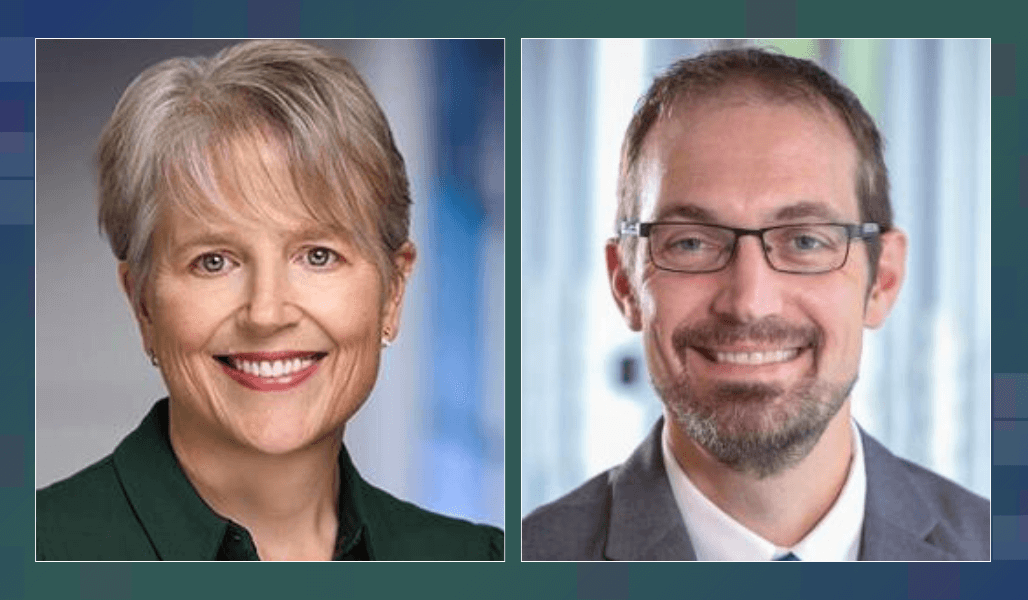
Headshots of Dr. Lesley Curtis and Dr. Keith MarsoloIn a new episode of the NIH Pragmatic Trials Collaboratory Podcast, Lesley Curtis and Keith Marsolo of the NIH Pragmatic Trials Collaboratory discuss the latest Living Textbook learning module, “Healthcare Data Interoperability and Standardization for Research.”

Listen and subscribe to the podcast on SoundCloud or Apple Podcasts.

Curtis and Marsolo developed the module to help researchers understand how healthcare data are collected and how those data can be used in a variety of research projects.

“For people who haven’t tried to use healthcare data before in research, it seems obvious that it should be so easy. We hear about these things and think, well surely, it all works together to help me answer my question. When in fact, it’s pretty complicated,” Curtis noted on the podcast.

“And unless you have a good understanding of how the pieces fit together and where they don’t, you might be in for a whole lot of frustration and heartache.”

Curtis is professor and chair of population health sciences at Duke University and a co–principal investigator of the NIH Pragmatic Trials Collaboratory Coordinating Center. Marsolo is an associate professor of population health sciences and a cochair of the NIH Collaboratory’s Electronic Health Records Core.

Podcast July 30, 2025: Healthcare Data Interoperability and Standardization for Research (Lesley Curtis, PhD; Keith Marsolo, PhD)

In this episode of the NIH Collaboratory podcast, Drs. Lesley Curtis and Keith Marsolo discuss the new learning module “Healthcare Data Interoperability and Standardization for Research.”

Read the transcript. For alerts about new episodes, subscribe free on Apple Podcasts or SoundCloud.

June 16, 2025: NIH Pragmatic Trials Collaboratory Holds Annual Steering Committee Meeting

The NIH Pragmatic Trials Collaboratory held its 2025 Annual Steering Committee Meeting in Bethesda, Maryland, on May 28 and 29. The program’s leadership discussed evolving approaches to pragmatic clinical trials and considered the latest developments in the landscape of pragmatic research.

All materials from the meeting are now available online.

The NIH Pragmatic Trials Collaboratory added 3 new trials in the past year. The Annual Steering Committee Meeting was a time for new and experienced NIH Collaboratory Trial investigators and program leaders to share challenges and lessons learned in conducting their pragmatic trials.

“The addition of trials to the NIH Collaboratory portfolio is always a highlight of our annual meeting, and this year we were thrilled to welcome 3 new trials,” said Lesley Curtis, chair of the Steering Committee and chair and professor of population health sciences at Duke University.

The LungSMART trial will test telehealth interventions to address barriers to lung cancer screening. The STEP-2 trial will assess the effectiveness of self-testing for cervical cancer. The APA-SM trial will evaluate the effectiveness of self-management of pain using auricular point acupressure.

“These new trials address important public health questions and do so in rural communities and other priority populations,” Curtis noted. Learn more about the NIH Collaboratory Trials.

At the meeting, investigators shared methods for building relationships with communities in pragmatic research, designing and conducting pragmatic trials to support broad implementation, and monitoring and navigating changes in usual care. Investigators and program leaders also considered posttrial obligations, selection of data repositories, and optimal use of digital tools in research.

In the coming weeks, we will share more highlights from the 2025 Annual Steering Committee Meeting. Access the complete meeting materials.

May 28, 2025: New NIH Collaboratory Learning Module Explores Challenges and Possibilities of Working With Electronic Health Record Data

The NIH Pragmatic Trials Collaboratory has launched a new learning module, Healthcare Data Interoperability and Standardization for Research, exploring the complexities of collecting, storing, and transforming healthcare data in the electronic health record to achieve optimal patient and research outcomes.

The learning module, which was developed by members of the NIH Collaboratory’s Electronic Health Records Core Working Group, comprises 2 new learning topic videos, “The Big Picture: Healthcare Data and Interoperability” and “Common Data Models.” The module is led by Lesley Curtis of Duke University, a co⁠–⁠principal investigator of the NIH Collaboratory Coordinating Center.

“Research requires a common data structure that can be meaningfully compared across sources,” Curtis explained. “To be useful beyond patient care, complex and variable healthcare data must be organized and standardized,” she said.

The first video in the module, “The Big Picture: Healthcare Data and Interoperability,” covers the key concepts of the Fast Healthcare Interoperability Resources (FHIR) standard, the US Core Data for Interoperability (USCDI) standard, and the Trusted Exchange Framework and Common Agreement (TEFCA). The module explains that these key elements of healthcare data collection, storage, and transfer are a step toward greater interoperability for the US healthcare system.

“Common Data Models” explores the tools and processes available for transforming healthcare data into research data. The video introduces common data models such as Sentinel, OMOP, and PCORnet and explains how each model accomplishes the goal of transforming raw data into a standard format, curating this data for accuracy and completeness, and phenotyping for consistency.

“By employing frameworks that improve healthcare data interoperability and using tools to standardize data structure, we move closer to unlocking the full potential of healthcare data,” Curtis said.

Find all the NIH Collaboratory Learning Modules.

June 25, 2024: NIH Collaboratory Leaders Discuss the Pragmatic Trials Landscape and the Future of the Program

Leaders of the NIH Pragmatic Trials Collaboratory met in Bethesda, Maryland, last month for the program’s 2024 Annual Steering Committee Meeting—an opportunity to network and hold rich discussions on key issues related to pragmatic research.

The program added 9 new trials in the past year. The Annual Steering Committee Meeting provided a collaborative space for new and seasoned NIH Collaboratory Trial investigators to share challenges and lessons learned in conducting their pragmatic trials. They shared methods for increasing patient engagement, overcoming challenges in trial implementation, and creating reusable infrastructure. Seasoned investigators also shared insights into planning for posttrial activities and transitioning to the next trial.

In an interview at the meeting, Coordinating Center co–principal investigators Adrian Hernandez, Lesley Curtis, and Kevin Weinfurt discussed the state of the program and the current pragmatic trials landscape.

“We have more trials working in rural populations,” noted Curtis. “Something that emerged [during the meeting] is the opportunity to bring the Cores together to tackle the issues we’ve been tackling, but with a focus on rural populations, which pose some unique challenges and opportunities,” she said.

The meeting featured a fireside chat, moderated by Wendy Weber, NIH program officer for the NIH Pragmatic Trials Collaboratory, where NIH Director Monica Bertagnolli and FDA Commissioner Robert Califf shared their thoughts on how pragmatic research can help address the nation’s top health priorities. Bertagnolli highlighted an opportunity to bring pragmatic research into a primary care research network that can engage more patients in research. Califf stressed the importance of implementation science and how to maximize the evidence generated from pragmatic trials.

Weber and colleague Beda Jean-Francois of the National Center for Complementary and Integrative Health discussed the future of the NIH Collaboratory program and new directions for pragmatic research.

“I’m always amazed that there is more to learn, new frontiers, new directions—doing trials in rural communities, doing trials to address maternal morbidity,” Weber said as she reflected on key takeaways from the meeting. “We heard a challenge from the NIH Director during this meeting to think about primary care settings and how the NIH Collaboratory can help do those trials and take the lessons we’ve learned into that program,” she said.

Access the complete meeting materials from the 2024 Annual Steering Committee Meeting.

May 12, 2022: Current and Past Leaders of NIH Pragmatic Trials Collaboratory Reflect on the Past, Present, and Future

In an interview at the Steering Committee’s annual meeting in April, Dr. Wendy Weber, Dr. Josephine Briggs, and Dr. Catherine Meyers celebrate the success of the NIH Pragmatic Trials Collaboratory and look at the roadmap to its future.

In the Beginning…

The NIH Pragmatic Trials Collaboratory (then the NIH Health Care Systems Research Collaboratory) began as an NIH Common Fund–initiated program. According to Dr. Josephine Briggs, Director Emeritus of the National Center for Complementary and Integrative Health (NCCIH), the idea began with a recognition that “explanatory trials were often run in ways to demonstrate that an intervention worked with selected populations implemented in a very controlled environment… We really needed to test those interventional trials and see whether they really worked when generalized to a broader population likely to be using them to settings in which the intervention implementation wasn’t as tightly controlled.”

In 2012, the Common Fund awarded both the Coordinating Center and the first 7 NIH Collaboratory Trials (ABATE, BPMedTime, LIRE, PPACT, SPOT, STOP CRC, TiME).

The Present

In its first 10 years, the NIH Pragmatic Trials Collaboratory has supported 22 NIH Collaboratory Trials involving 38 investigators.
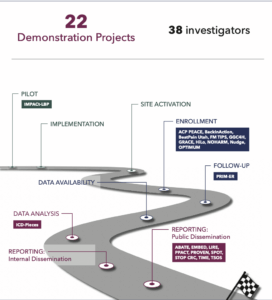
 

Road map

Dr. Cathy Meyers, Director Emeritus of the NCCIH Office of Clinical and Regulatory Affairs stated that “The Coordinating Center has really been a scribe throughout this last decade of recording problems and, more importantly, their solutions, and has even, with the last wave of solicitations for applications, incorporated training.”

Living Textbook VisitorsMuch of this content is housed in Rethinking Clinical Trials®: A Living Textbook of Pragmatic Clinical Trials, a free online textbook developed and maintained by the NIH Collaboratory. Drawing on experiences from the program’s NIH Collaboratory Trials and community of experts, the Living Textbook provides guidance on each step of a pragmatic trial, from study design through applying results in the real world. The Living Textbook is continually updated and expanded as new information emerges. This new knowledge is also disseminated through the NIH Collaboratory’s Knowledge Repository and weekly Grand Rounds series.

Looking to the future

“There are now 8 different partnering institutions and centers that support the NIH Pragmatic Trials Collaboratory, and we are open to more,” said Dr. Wendy Weber, NCCIH Project Officer for the NIH Collaboratory.

When asked what she is looking forward to in the future, Dr. Weber stated that “There is a unique opportunity to look at trials that address health disparities. How do we solve what we know is a problem in the healthcare system? How can we design interventions to improve that. We do so much research documenting how much disparity there is. Let’s do something to actually improve that.”

Towards this end, the NIH released a request for applications (RFA) for new NIH Collaboratory Trial grants that address health disparities.  The RFA for this funding opportunity encourages applications that focus on improving health outcomes in populations that experience health disparities, such as higher rates of disease or mortality compared with the general population. Applications are due June 17, 2022. Letters of intent are due 30 days prior (May 17, 2022).

We will be sharing more insights form the 2022 NIH Pragmatic Trials Steering Committee Meeting over the coming weeks. All meeting materials are available online.

View the full interview.

About the NIH Pragmatic Trials Collaboratory

The NIH Pragmatic Trials Collaboratory Coordinating Center consists of the Duke Clinical Research Institute, the Harvard Pilgrim Health Care Institute, the Kaiser Permanente Washington Health Research Institute, the Johns Hopkins Berman Institute of Bioethics, the University of Washington, and the University of Michigan. The program is supported by the National Institutes of Health (NIH) through cooperative agreement U24AT009676 from the Office of Strategic Coordination within the Office of the NIH Director. It is also supported by the NIH through the NIH HEAL Initiative under award number U24AT010961. The content is solely the responsibility of the authors and does not necessarily represent the official views of the NIH or its HEAL Initiative. To learn more about the program, visit rethinkingclinicaltrials.org.


February 14, 2022: IMPACT Collaboratory Grand Rounds to Highlight First Decade of NIH Pragmatic Trials Collaboratory

Headshots of Dr. Adrian Hernandez, Dr. Lesley Curtis, and Dr. Kevin Weinfurt
Dr. Adrian Hernandez, Dr. Lesley Curtis, and Dr. Kevin Weinfurt

This week’s NIA IMPACT Collaboratory Grand Rounds session will highlight the first decade of the NIH Pragmatic Trials Collaboratory. The Grand Rounds session—“Lessons From the First Decade of the NIH Pragmatic Trials Collaboratory”—will be held on Thursday, February 17, at 12:00 pm eastern.

The co–principal investigators of the NIH Pragmatic Trials Collaboratory Coordinating Center at Duke University—Drs. Adrian Hernandez, Dr. Lesley Curtis, and Dr. Kevin Weinfurt—will share lessons from the network’s portfolio of NIH Collaboratory Trials and discuss priorities for future research.

The NIA IMPACT Collaboratory is supported by a grant from the National Institute on Aging. Its mission is to advance care for persons with dementia and their caregivers in real-world settings by building national capacity to conduct pragmatic clinical trials that test interventions embedded in healthcare systems.

July 27, 2021: Diversity Workshop Continues With Diversifying the Pipeline of PCT Investigators and Leaders

The NIH Collaboratory is using its popular ePCT Grand Rounds platform for a special webinar series on diversity in pragmatic clinical trials.

In this Friday’s session—“Diversity in the PCT Ecosystem – How Do We Develop a Pipeline of Diverse Investigators and Leaders in PCTs?”—Dr. Lesley Curtis, co–principal investigator of the NIH Collaboratory Coordinating Center, will host a panel of investigators for a discussion about strategies for developing a diverse pipeline of researchers and leaders in the field of pragmatic clinical research.

The panelists will include:

  • Dr. Marie Bernard, deputy director of the National Institute on Aging and acting NIH chief officer for scientific workforce diversity
  • Dr. George Mensah of the Center for Translation Research and Implementation Science at the National Heart, Lung, and Blood Institute
  • Dr. Natalia Morone of Boston University, principal investigator of OPTIMUM, an NIH Collaboratory Trial

The Grand Rounds session will be held on Friday, July 30, at 1:00 pm eastern. Join the online meeting.

The complete diversity workshop series includes:

All sessions are free and open to the public; no registration is required. Recordings will be archived on the Grand Rounds website.


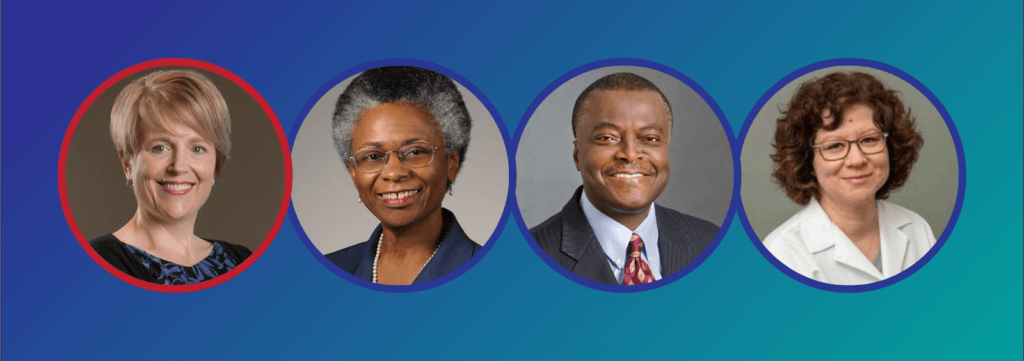
Headshots of Lesley Curtis, Marie Bernard, George Mensah, and Natalia Morone
Left to right: Dr. Lesley Curtis, Dr. Marie Bernard, Dr. George Mensah, and Dr. Natalia Morone