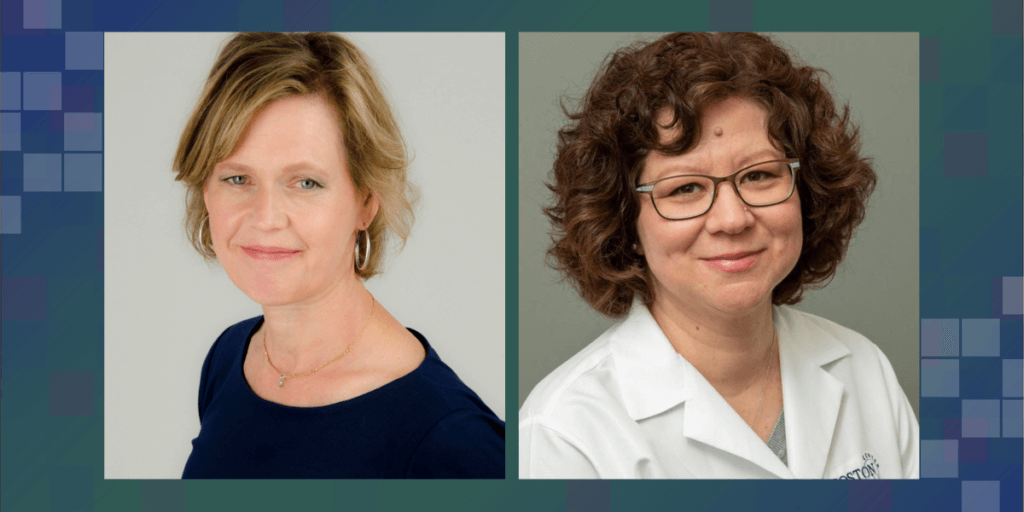
The Grand Rounds session will be held on Friday, September 12, 2025, at 1:00 pm eastern.
OPTIMUM, an NIH Collaboratory Trial, is studying the addition of mindfulness-based stress reduction to usual care for patients with chronic low back pain, compared with usual care alone, with the goal of improving pain outcomes and reducing opioid prescriptions. Learn more about OPTIMUM.
Morone, the principal investigator for OPTIMUM, is an associate professor of medicine at Boston University and a clinical general internist at Boston Medical Center. Greco is an associate professor of psychiatry and psychical therapy at the University of Pittsburgh. Faurot is an assistant professor of physical medicine and rehabilitation at the University of North Carolina at Chapel Hill.
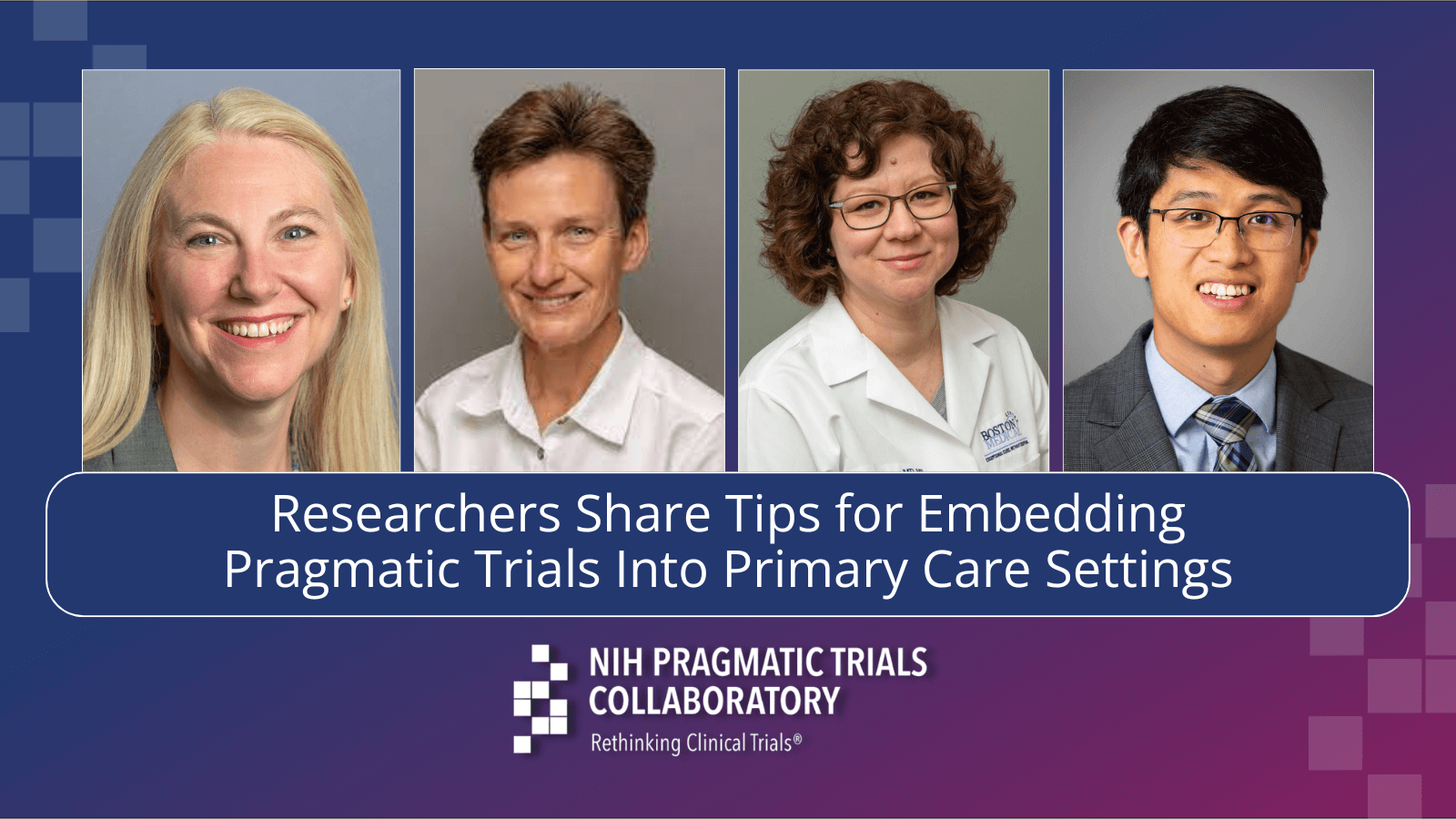
Although the need for pragmatic research in primary care settings is great, conduct of pragmatic clinical trials in these settings remains nascent. In a session at the NIH Pragmatic Trials Collaboratory’s 2025 Annual Steering Committee Meeting, Wendy Weber of the National Center for Complementary and Integrative Health (NCCIH) led a discussion about how to expand pragmatic research into primary care settings.
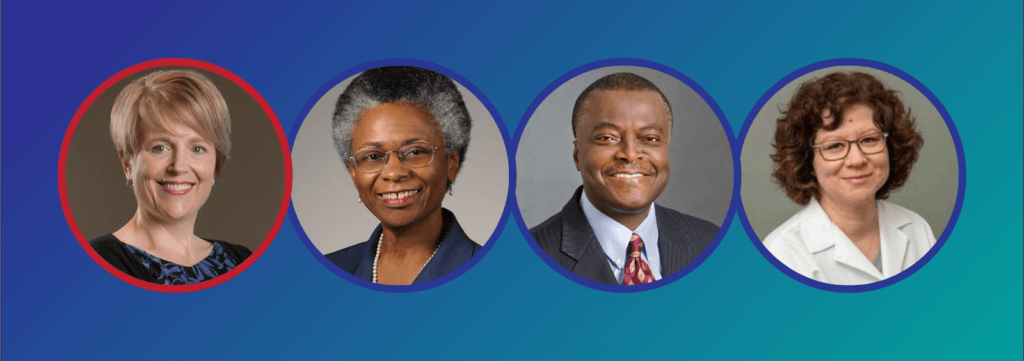
The panelists included Julie Fritz, principal investigator (PI) for BeatPain Utah; Natalia Morone, PI for OPTIMUM; and Sebastian Tong, co-PI for AIM-CP. They shared some of the challenges of conducting research in primary care.
Primary care physicians have multiple competing demands for attention and focus, and a range of topics to cover in a single visit.
The expectation of being offered participation in clinical trials is lower in primary care than in specialty visits.
There are fewer resources that can be diverted to research in primary care, especially time and personnel.
Key Takeaways
How do we adapt pragmatic clinical trials to primary care?
Identify relevant and meaningful research questions
The panelists suggested that, when planning a trial, investigators should think about the primary care setting and consider what problems keep clinicians up at night. Research will be easier to implement if it helps alleviate these problems.
“In primary care, [primary care physicians] are looking at the entire person,” Tong said. “There has to be value added in how we care for the patients with the condition under study, either where the [physician] sees a difference in their patients’ lives or their own lives with respect to reduced burden,” he said.
The panelists also suggested that, for community health centers, there are certain conditions that are linked to data reporting standards, and aligning research with these standards will make studies easier to champion.
Adapt to different kinds of primary care settings
The panelists stressed the need for adaptably and flexibility in intervention delivery because all primary care settings are different. If possible, researchers should tailor the workflow at each site in a way that is familiar to providers. the panelists also suggested that initial engagement by external researchers is best made with someone who is trusted at the site.
Some clinics, including community health centers, may be new to research and may need additional support. Many do not have an institutional review board or a Federalwide Assurance number, and many do not have experience using the electronic health record for research and developing data use agreements.
About the Trials
BeatPain Utah, supported by the National Institute of Nursing Research (NINR), is comparing the effectiveness of nonpharmacologic interventions delivered via telehealth for patients with back pain seeking care in federally qualified health centers in Utah.
OPTIMUM, supported by NCCIH, is assessing the impact of a group-based mindfulness intervention for patients with chronic back pain under usual care circumstances in the primary care setting.
AIM-CP, supported by NINR, is testing the implementation of a care management program to address disparate access to nonpharmacological treatments for chronic pain in rural populations.
Developing a Pipeline of Investigators: An Investigator Perspective
Description
In this video, Dr. Natalia Morone, PI of the OPTIMUM trial, describes her experience with developing a pipeline of faculty for research. She also describes the Career Education and Enhancement for Health Care Research program, designed for post-docs and early career faculty in health-related sciences.
Biography
Natalia Morone, MD, MS
Associate Professor of Medicine, Boston University
OPTIMUM NIH Collaboratory Trial PI
In an interview at the annual NIH Pragmatic Trials Collaboratory Steering Committee meeting, Dr. Lynn DeBar and Dr. Natalia Morone had a conversation about sharing trial results with participant partners. Both also participated in a discussion session about the challenges and value of results dissemination. DeBar is a principal investigator of the BackInAction and PPACT NIH Collaboratory Trials, and Morone is the principal investigator of the OPTIMUM NIH Collaboratory Trial.
They described sharing results as important now more than ever. Dissemination can be a feasible and respectful way to keep patients involved in the study. It can also combat misinformation and promote trust.
An Ethical Obligation
DeBar and Morone said they are often surprised by the number of research participants, particularly older patients, who participate in trials based on altruism or with the goal of contributing to advancing science.
“We have done focus groups about why people participate in research, and many times it is the altruism,” Morone said. “People want to help others, and they very specifically said they want to know what’s going on with the study.”
In this case, there may especially be a moral obligation to share results with patients.
“I think it’s an obligation because they were generous in giving us their time, but also, they requested it,” DeBar said. “I think we have that responsibility.”
Engaging With Community Advisory Boards
Both researchers highlighted how valuable community stakeholder insight is in how to best communicate results with patients. Community advisory boards can provide a wealth of information.
“Having materials vetted by folks that represent your population is really valuable,” Morone said. “As a physician, I will start using medical language with my patients, and as a researcher, I may use research language. It’s just so automatic.”
That’s why removing jargon and making results accessible is so important, and community experts can provide that necessary insight, Morone explained. Stakeholder perspectives may also change over time, so research teams should be flexible.
Morone recalled an instance when community advisory board representatives requested testimonials from participants on the research project’s website.
“When you have someone with lived experienced sharing the results, it just carries a weight that I do not [as a researcher],” Morone said.
DeBar highlighted that results can and can be presented in creative and engaging ways. Lay summaries, videos, and graphics can help complicated research results be more accessible.
Communicating Results Over Time
Especially in the context of pragmatic trials, and when trials take place over many years, teams should not wait until the end of the study to share information, they said.
“If they are informed, participants can be better partners,” DeBar explained.
Sharing results over the course of the study can be a mechanism for engaging participants. Even if individual data can’t be shared, aggregate data provides insight.
“We aren’t waiting to the end of the study. We are updating our website, and we send them newsletters with information because they ask us for it,” Morone said.
She noted that when patients are engaged and treated as partners in research, they will often be part of the dissemination efforts.
DeBar highlighted that sharing anecdotes, when they align with data, can be a powerful way to communicate results with participant partners.
“I like the phrase fact-congruent stories,” she said. “Those are the things that are really compelling to people. You definitely need the results of the study, but if it can be packaged in ways that really bring that to life, it makes a big difference.”
Mindfulness-based stress reduction is now recommended by the American College of Physicians for initial treatment of chronic low back pain. The primary goal of OPTIMUM, an NIH Pragmatic Trials Collaboratory Trial, is to determine the impact of a group-based mindfulness intervention under usual care circumstances.


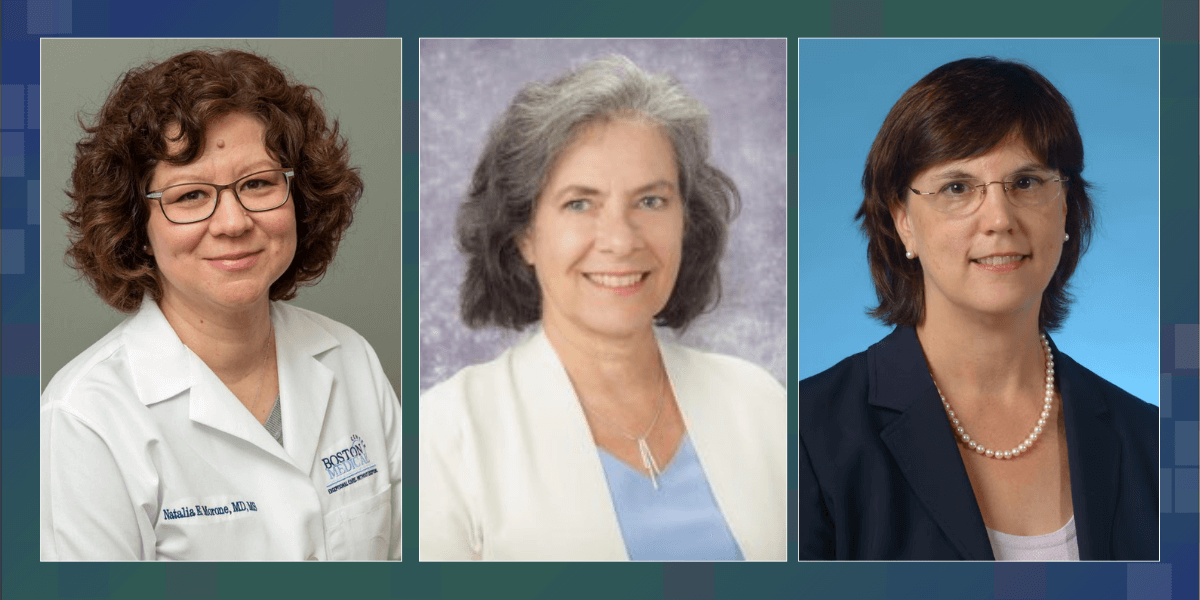 In this Friday’s Rethinking Clinical Trials Grand Rounds, Natalia Morone, Carol Greco, and Kim Faurot will present “Initial Outcomes of the Optimizing Pain Treatment in Medical Settings Using Mindfulness (OPTIMUM) Pragmatic Trial.”
 Although the need for pragmatic research in primary care settings is great, conduct of pragmatic clinical trials in these settings remains nascent. In a session at the NIH Pragmatic Trials Collaboratory’s