December 22, 2025: Rural Health Symposium Opens Registration, Announces Call for Abstracts

The Duke University School of Nursing will convene healthcare professionals, educators, researchers, community leaders, and policymakers for a 1-day symposium dedicated to reducing rural health disparities across North Carolina through collaboration and innovation.

On April 20, 2026, from 9:00 am to 3:00 pm at Duke University in Durham, North Carolina (and virtually via livestream), participants will come together for dynamic presentations, panels, poster sessions, and discussions with guests, including leaders from ECU Health, Sanford Health, UT-Arlington, and the NC Department of Health and Human Services. A reception will follow the program.

The deadline for abstract submission is February 9, 2026. See more information about the program below.

Did you know the NIH Pragmatic Trials Collaboratory supports several innovative pragmatic clinical trials to improve healthcare for rural and remote populations? Learn more about:

  • AIM-CP: Adapting and Implementing a Nurse Care Management Model to Care for Rural Patients with Chronic Pain
  • APA-SM: Personalized Auricular Point Acupressure for Chronic Pain Self-Management in Rural Populations
  • ARBOR-Telehealth: Advancing Rural Back Pain Outcomes Through Rehabilitation Telehealth
  • BeatPain Utah: Nonpharmacologic Pain Management in Federally Qualified Health Centers Primary Care Clinics
  • LungSMART: Population Health Management Approaches to Increase Lung Cancer Screening in Community Health Centers
  • RAMP: Reaching Rural Veterans: Applying Mind-Body Skills for Pain Using a Whole Health Telehealth Intervention

1st Annual Duke University School of Nursing Rural Health Symposium: Innovative Solutions to Addressing Rural Health Disparities

1st Annual Duke University School of Nursing Rural Health Symposium: Innovative Solutions to Addressing Rural Health Disparities

Monday, April 20, 9am-3pm, with Reception to Follow

Duke University Campus and Livestream Webinar

Register Now and Submit Abstracts by February 9

You are warmly invited to participate in the 1st Annual Duke University School of Nursing Rural Health Symposium, a one-day event that will convene healthcare professionals, educators, researchers, community leaders, and policymakers to address rural health disparities across North Carolina through collaboration and innovation.

Date: April 20, 2025
Time: 9:00 AM – 3:00 PM
Location: Duke University (with virtual livestream option)

The symposium will feature dynamic presentations, panel discussions, poster sessions, and networking opportunities, including a closing reception. Distinguished speakers will include:

  • Trisha Baise, ECU Health
  • Erica DeBoer, Sanford Health
  • Elizabeth Merwin, University of Texas at Arlington
  • Maggie Sauer, North Carolina Department of Health and Human Services

We invite you to submit abstracts by February 9 to share your research, innovations, and best practices that advance rural health.

Register today: https://duke.is/ruralhealth

Your participation will help foster meaningful dialogue and actionable strategies to improve health outcomes in rural communities. We look forward to your contributions and engagement in this important event.

July 14, 2025: Researchers Share Tips for Building Relationships With Communities in Pragmatic Research

Engaging with community partners can enrich and inform research through the lifespan of a trial. In a session at the NIH Pragmatic Trials Collaboratory’s 2025 Annual Steering Committee Meeting, Cherise Harrington, cochair of the program’s Community Health Improvement Core, led a discussion about building relationships with communities in pragmatic research.
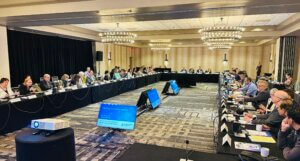
The panelists included Jennifer Kawi, principal investigator (PI) for APA-SM; Kathleen Sluka, PI for FM-TIPS; Sebastian Tong, PI for AIM-CP; and David Wetter, PI for LungSMART. They shared examples of how community relationships have enriched their trials, along with impediments to meaningful community engagement and successful methods for building relationships with communities.

Key Strategies for Engaging With Communities

  • Build long-standing relationships with community partners, develop shared goals, and practice shared decision-making.
  • Design for sustainability. Design research projects with minimal disruption to the clinical workflow; utilize existing community health workers and programs; and integrate behavioral economics principles (nudges) into study design.
  • Budget for community engagement and include community members in study planning from the beginning.
  • Engage in the preferred language of the community. Ensure there are research staff who are fluent in the community’s preferred language and embedded in the community so they can provide key perspectives and help build trust.
  • Provide community health workers and research staff with training on community engagement.
  • Connect with community members where they spend time, such as community events and fairs, and visit local clinics to share information for referrals.

About the Trials

  • AIM-CP, supported by the National Institute of Nursing Research, is testing the implementation of a care management program to address disparate access to nonpharmacological treatments for chronic pain in rural populations.
  • APA-SM, supported by the National Center for Complementary and Integrative Health and the National Institute of Neurological Disorders and Stroke, is testing a 4-week auricular point acupressure intervention for self-management of chronic pain in rural communities in South Carolina and Texas.
  • FM-TIPS, supported by the National Institute of Arthritis and Musculoskeletal and Skin Diseases, is examining whether the addition of transcutaneous electrical nerve stimulation to routine physical therapy improves movement-evoked pain compared with physical therapy alone among patients with fibromyalgia.
  • LungSMART, supported by the National Cancer Institute, is testing telehealth interventions designed to address logistical barriers and hesitancy around completing lung cancer screening among patients receiving care in community health centers in Utah.

This summer, we are sharing highlights from the 2025 Annual Steering Committee Meeting. Access the complete collection of meeting materials.

June 16, 2025: NIH Pragmatic Trials Collaboratory Holds Annual Steering Committee Meeting

The NIH Pragmatic Trials Collaboratory held its 2025 Annual Steering Committee Meeting in Bethesda, Maryland, on May 28 and 29. The program’s leadership discussed evolving approaches to pragmatic clinical trials and considered the latest developments in the landscape of pragmatic research.



All materials from the meeting are now available online.

The NIH Pragmatic Trials Collaboratory added 3 new trials in the past year. The Annual Steering Committee Meeting was a time for new and experienced NIH Collaboratory Trial investigators and program leaders to share challenges and lessons learned in conducting their pragmatic trials.

“The addition of trials to the NIH Collaboratory portfolio is always a highlight of our annual meeting, and this year we were thrilled to welcome 3 new trials,” said Lesley Curtis, chair of the Steering Committee and chair and professor of population health sciences at Duke University.

The LungSMART trial will test telehealth interventions to address barriers to lung cancer screening. The STEP-2 trial will assess the effectiveness of self-testing for cervical cancer. The APA-SM trial will evaluate the effectiveness of self-management of pain using auricular point acupressure.

“These new trials address important public health questions and do so in rural communities and other priority populations,” Curtis noted. Learn more about the NIH Collaboratory Trials.

At the meeting, investigators shared methods for building relationships with communities in pragmatic research, designing and conducting pragmatic trials to support broad implementation, and monitoring and navigating changes in usual care. Investigators and program leaders also considered posttrial obligations, selection of data repositories, and optimal use of digital tools in research.

In the coming weeks, we will share more highlights from the 2025 Annual Steering Committee Meeting. Access the complete meeting materials.

April 21, 2025: Ethics Consultation Documentation Now Available for LungSMART and STEP-2 Trials

Headshots of LungSMART investigators David Wetter, Guilherme Del Fiol, and Ken Kawamoto
Left to right: LungSMART investigators Drs. David Wetter, Guilherme Del Fiol, and Ken Kawamoto

Ethics and regulatory onboarding documentation for 2 of the NIH Pragmatic Trials Collaboratory’s newest studies is now available. The documents include meeting minutes and supplementary materials summarizing recent discussions of ethics and regulatory issues associated with the LungSMART trial and the STEP-2 trial.

The consultations took place by video conference and included representation from the study teams, members of the NIH Collaboratory’s Ethics and Regulatory Core, NIH staff, and NIH Collaboratory Coordinating Center personnel.

LungSMART will test telehealth interventions designed to address logistical barriers and hesitancy around completing lung cancer screening among patients receiving care in community health centers in Utah.

Headshots of Drs. Rachel Winer, Amanda Petrik, and Jasmin Tiro
Left to right: STEP-2 investigators Drs. Rachel Winer, Amanda Petrik, and Jasmin Tiro

The STEP-2 trial will evaluate the comparative effectiveness and cost-effectiveness of in-clinic vs mailed distribution of human papillomavirus (HPV) self-sampling kits to improve cervical cancer screening rates among patients receiving care in community health centers in Oregon and Washington.

LungSMART and STEP-2 are the first NIH Collaboratory Trials to be supported by grant awards from the National Cancer Institute.

Ethics and regulatory documentation for all of the NIH Collaboratory Trials is available on our Data and Resource Sharing page.

December 2, 2024: NCI-Supported LungSMART Trial Joins the NIH Pragmatic Trials Collaboratory

Headshots of LungSMART investigators David Wetter, Guilherme Del Fiol, and Ken Kawamoto
From left to right: Drs. David Wetter, Guilherme Del Fiol, and Ken Kawamoto, principal investigators for LungSMART

The NIH Pragmatic Trials Collaboratory is pleased to welcome LungSMART (Population Health Management Approaches to Increase Lung Cancer Screening in Community Health Centers) to its portfolio of innovative NIH Collaboratory Trials.

Lung cancer is the leading cause of cancer-related deaths in the United States, but only 6.5% of eligible individuals were screened for lung cancer in 2020. Moreover, there are significant disparities in lung cancer screening related to race/ethnicity and socioeconomic status.

The LungSMART team will conduct a sequential multiple-assignment randomized trial (SMART) in community health centers in Utah to test telehealth interventions designed to address logistical barriers and hesitancy around completing lung cancer screening. The new project is supported by a grant award from the National Cancer Institute, a first for the NIH Pragmatic Trials Collaboratory.

David Wetter, Guilherme Del Fiol, and Ken Kawamoto will serve as the principal investigators for LungSMART. Wetter is the Jon M. and Karen Huntsman Presidential Professor, director of the Center for Health Outcomes and Population Equity, senior director for cancer health equity science at the Huntsman Cancer Institute, and director of community and stakeholder engagement at the Clinical and Translational Sciences Institute; Del Fiol is professor and vice chair of biomedical informatics; and Kawamoto is professor and vice chair of clinical informatics—all at the University of Utah.

Learn more about the LungSMART trial.

November 20, 2024 Virtual Onboarding Meeting: LungSMART

NIH Pragmatic Trials Collaboratory Onboarding Meeting

November 20, 2024
Virtual

Purpose

Welcome and hear from our new NIH Collaboratory Trial; provide introductions and an overview of the NIH Pragmatic Trials Collaboratory; hear from the Core Working Groups; and engage in discussion.

Welcome and Opening Remarks
Lesley Curtis
Beda Jean-Francois

Overview of the NIH Pragmatic Trials Collaboratory and a Cooperative Agreement
Beda Jean-Francois

Working With the NIH Collaboratory Coordinating Center
Lesley Curtis

Brief Introduction to the Core Working Groups

New UG3 NIH Collaboratory Trial Overview
Population Health Management Approaches to Increase Lung Cancer Screening in Community Health Centers (LungSMART)
David Wetter
Guilherme Del Fiol
Kensaku Kawamoto

Open Discussion
Lesley Curtis

Closing Remarks
Lesley Curtis
Beda Jean-Francois