December 13, 2021: BeatPain Utah and GRACE Begin Enrollment in Studies of Nonpharmacologic Pain Management

Headshot of Dr. Julie Fritz
Dr. Julie Fritz, BeatPain Utah

The BeatPain Utah study and the GRACE trial have begun enrollment of study participants. Both projects were awarded continuation into the UH3 implementation phase in the summer. The studies make up the second cohort of NIH Collaboratory Trials to be supported through the NIH HEAL Initiative’s PRISM program.

Congratulations to both study teams for reaching this important project milestone!

BeatPain Utah is studying real-world implementation of a telehealth physical therapy strategy for patients with chronic back pain in primary care clinics of federally qualified health centers. Learn more about BeatPain Utah in this interview with principal investigator Dr. Julie Fritz. BeatPain Utah is supported by the NIH through the NIH Heal Initiative under an award from the National Institute of Nursing Research.

The GRACE trial is studying real-world implementation of acupuncture and guided relaxation for patients with pain associated with sickle cell disease. Learn more about GRACE in this interview with co–principal investigator Dr. Robert Molokie. GRACE is supported by the NIH through the NIH HEAL Initiative under an award from the National Center for Complementary and Integrative Health.

Combined headshots of Drs. Ardith Doorenbos, Judith Schlaeger, Robert Molokie, Miriam Ezenwa, and Nirmish Shah
GRACE co–principal investigators Drs. Ardith Doorenbos, Judith Schlaeger, Robert Molokie, Miriam Ezenwa, and Nirmish Shah

The PRISM projects—Pragmatic and Implementation Studies for the Management of Pain to Reduce Opioid Prescribing—are studying the real-world effectiveness of nonpharmacologic interventions for pain and assessing the implementation of these interventions to improve pain management and reduce reliance on opioids. The NIH Collaboratory Coordinating Center serves as the PRISM Resource Coordinating Center.

October 5, 2021: New Article Identifies Challenges and Prerequisites for Using Electronic Health Record Systems for Pragmatic Research

JAMIA Cover

In a new NIH Collaboratory study, 20 NIH Collaboratory Trials responded to a survey about challenges encountered when using the electronic health record (EHR) for pragmatic clinical research. The goal of the study was to elucidate challenges and develop solutions—or prerequisites for pragmatic research—to enable healthcare system leaders, policy makers, and EHR designers to improve the national capacity for generating real-world evidence.

The article was published in the Journal of American Medical Informatics Association (JAMIA).

The challenges identified by the projects fell into 6 broad themes, including inadequate collection of patient-centered data, lack of functionality for structured data collection, lack of standardization, lack of resources to support customization, difficulties aggregating data from multiple sites, and difficult and inefficient access to EHR data.

Researchers from the NIH Collaboratory’s EHR Core and colleagues from the Patient-Centered Outcomes and the Health Care Systems Interactions Core Working Groups discussed the issues and iterated possible solutions. The authors developed the following prerequisites for the conduct of pragmatic research:

  • Integrate collection of patient-centered data into EHR systems
  • Facilitate structured research data collection by leveraging standard EHR functions, usable interfaces, and standard workflows
  • Support creation of high-quality research data by using standards
  • Ensure adequate IT staff to support embedded research
  • Create aggregate, multidata type resources for multisite trials
  • Create reusable and automated queries

The authors argue for the ability to tailor EHR systems to enable the collection of patient-centered outcomes and the extraction of high-quality, standardized data. Although the primary uses of the data are for clinical care and billing, high-quality data from the EHR also have the potential to improve clinical care and population health by providing reliable evidence and to support pragmatic research and learning within and across healthcare systems.

Read the full article.

This work was supported within the National Institutes of Health (NIH) Health Care Systems Research Collaboratory by the NIH Common Fund through cooperative agreement U24AT009676 from the Office of Strategic Coordination within the Office of the NIH Director. This work was also supported by the NIH through the NIH HEAL Initiative under award number U24AT010961.


September 30, 2021: BeatPain Utah and GRACE Awarded Continuation to Implementation Phase

The NIH Collaboratory is pleased to announce that the BeatPain Utah and GRACE NIH Collaboratory Trials received approval this month to transition from the planning phase to the implementation phase of their studies. As projects funded through the NIH HEAL Initiative’s PRISM program, these pragmatic clinical trials embedded in healthcare systems are directly addressing the US opioid crisis by exploring the implementation of novel, nonpharmacologic interventions for pain management.

Congratulations to the BeatPain Utah and GRACE principal investigators and their study teams for reaching this important milestone!


BeatPain Utah: Nonpharmacologic Pain Management in FQHC Primary Care Clinics

Headshot of Dr. Julie Fritz
Dr. Julie Fritz

BeatPain Utah is a pragmatic trial of nonpharmacologic pain management interventions in primary care clinics of US federally qualified health centers in Utah. The interventions will be designed to overcome barriers specific to rural and lower-income communities through innovative use of telehealth resources. The study is administered by the National Institute of Nursing Research and is being conducted by Dr. Julie Fritz of the University of Utah.


GRACE: Hybrid Effectiveness-Implementation Trial of Guided Relaxation and Acupuncture for Chronic Sickle Cell Disease Pain

Headshots of Drs. Ardith Doorenbos, Judith Schlaeger, Robert Molokie, Miriam Ezenwa, and Nirmish Shah
Left to right: Drs. Ardith Doorenbos, Judith Schlaeger, Robert Molokie, Miriam Ezenwa, and Nirmish Shah

The GRACE trial is a hybrid effectiveness–implementation trial of guided relaxation and acupuncture for pain associated with chronic sickle cell disease in 3 large healthcare systems. The study is administered by the National Center for Complementary and Integrative Health and is being conducted by Drs. Ardith Doorenbos, Judith Schlaeger, Robert Molokie, Miriam Ezenwa of the University of Illinois Chicago and Dr. Nirmish Shah of Duke University.


The PRISM program (Pragmatic and Implementation Studies for the Management of Pain to Reduce Opioid Prescribing) is a component of the NIH’s Helping to End Addiction Long-term (HEAL) Initiative. The NIH Collaboratory serves as the PRISM Resource Coordinating Center and is supported by the National Center for Complementary and Integrative Health. Support is also provided by the NIH Common Fund through a cooperative agreement from the Office of Strategic Coordination within the Office of the NIH Director.

July 26, 2021: NIH Collaboratory Leaders Discuss PRISM Projects, New Initiatives, and the Future of the Program

In a recent interview, Dr. Wendy Weber shared that the National Advisory Council for Complementary and Integrative Health has approved a concept for the NIH Collaboratory to continue with the support of NIH Institutes and Centers, as the program completes its term as an NIH Common Fund initiative.


“We’re quite excited for some new directions in where we’re going to head with this program, and really excited that we’ve identified a number of partners across the NIH as different Centers, Institutes, and Offices that want to continue this program and want to continue to do research embedded in healthcare systems,” Weber said.

Weber is the branch chief for the Clinical Research in Complementary and Integrative Health Branch in the Division of Extramural Research at the National Center for Complementary and Integrative Health (NCCIH) and serves as the program officer for the NIH Collaboratory.

“I think one new direction for us is looking at how do we address health disparities in healthcare systems, what types of interventions can actually improve those disparities and improve the quality of care so that we have less differences in the way patients are treated within the healthcare delivery system,” Weber said.

We interviewed Weber after the NIH Collaboratory’s annual steering committee meeting, along with Dr. Robin Boineau, the project scientist for the NIH Collaboratory, and Dr. Kevin Weinfurt, a professor in population health sciences at Duke University and a co–principal investigator for the NIH Collaboratory Coordinating Center. View the full interview.

The 3 leaders talked about the program’s newest NIH Collaboratory Trials—BeatPain Utah and GRACE—and their role in advancing the goals of the NIH Collaboratory. They also discussed focus areas for the coming year, including greater attention to implementation science outcomes, diversity in pragmatic trials, and lessons from the COVID-19 pandemic.

“[BeatPain Utah and GRACE] are helping the Collaboratory to learn how to design, analyze, and interpret adaptive designs,” said Weinfurt. “These are our 2 first trials where we’re using adaptive designs. One of the goals of the Collaboratory is to generate generalizable knowledge about how to do pragmatic trials, so we like these types of learning opportunities,” he said.

Boineau highlighted the Diversity Workshop Grand Rounds Series, which began in May and is ongoing. The series is focused on strategies for improving diversity in pragmatic clinical trials and is “an important next step to really think together about where we can go and what we can do to really build this community of investigators and participants,” Boineau said.


Screen shot of Dr. Wendy Weber interview
Dr. Wendy Weber of NCCIH, program officer for the NIH Collaboratory

May 13, 2021: NIH HEAL Initiative Seeking Feedback Through Online Idea Exchange

Logo for the NIH HEAL InitiativeThe Helping to End Addiction Long-Term Initiative℠, or NIH HEAL Initiative℠, has launched an online communication and collaboration space, the Moving HEAL Research into Action Idea Exchange, to collect information that will shape the future of the initiative’s research on pain and addiction. Researchers, healthcare providers, and other stakeholders in the opioid crisis are encouraged to register for free and submit ideas to the exchange by June 1.

Information collected in the idea exchange will help the NIH HEAL Initiative identify research information that is important to stakeholders in the pain and opioid misuse communities and guide the initiative on how to share the results of research most effectively.

One component of the NIH HEAL Initiative is the PRISM program—Pragmatic and Implementation Studies for the Management of Pain to Reduce Opioid Prescribing. Six PRISM Demonstration Projects within the NIH Collaboratory are studying the real-world effectiveness of nonpharmacologic interventions for pain and assessing the implementation of these interventions to improve pain management and reduce reliance on opioids. The NIH Collaboratory Coordinating Center serves as the PRISM Resource Coordinating Center.
May 11, 2021: OPTIMUM Begins Enrollment in Group-Based Mindfulness Intervention for Low Back Pain

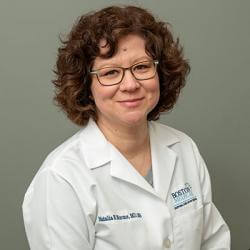
Dr. Natalia Morone
Dr. Natalia Morone

The Group-Based Mindfulness for Patients With Chronic Low Back Pain in the Primary Care Setting (OPTIMUM) trial has begun enrollment of study participants. The trial is part of the first cohort of the NIH Collaboratory’s Demonstration Projects to be supported through the NIH Heal Initiative’s PRISM program.

Congratulations to principal investigator Dr. Natalia Morone and the OPTIMUM team!

OPTIMUM is a pragmatic clinical trial integrating a group-based mindfulness stress reduction program into primary care settings for patients with chronic low back pain. The study will randomly assign 450 patients in 3 healthcare systems to either the group-based mindfulness intervention or usual care. The aim of the study is to integrate the program into primary care clinics and measure its effectiveness in reducing chronic low back pain, improving physical and psychological function, and reducing or stopping opioid prescriptions.

The PRISM projects—Pragmatic and Implementation Studies for the Management of Pain to Reduce Opioid Prescribing—are studying the real-world effectiveness of nonpharmacologic interventions for pain and assessing the implementation of these interventions to improve pain management and reduce reliance on opioids. The NIH Collaboratory Coordinating Center serves as the PRISM Resource Coordinating Center.
Learn more about OPTIMUM in this interview with Dr. Morone.

OPTIMUM is supported by the NIH through the NIH HEAL Initiative under an award from the National Center for Complementary and Integrative Health.

April 27, 2021: NOHARM Trial Enrolls First Participants in Study of Postoperative Pain Care

Photographs of Dr. Andrea Cheville on the left and Dr. Jon Tilburt on the right.
Dr. Andrea Cheville (left) and Dr. Jon Tilburt (right)

The Nonpharmacologic Options in Postoperative Hospital-Based and Rehabilitation Pain Management (NOHARM) trial has begun enrollment of study participants. The trial is among the first of the NIH Collaboratory’s Demonstration Projects to be supported through the NIH Heal Initiative’s PRISM program.

Congratulations to co–principal investigators Drs. Andrea Cheville and Jon Tilburt and the NOHARM team!

The PRISM projects—Pragmatic and Implementation Studies for the Management of Pain to Reduce Opioid Prescribing—are studying the real-world effectiveness of nonpharmacologic interventions for pain and assessing the implementation of these interventions to improve pain management and reduce reliance on opioids. The NIH Collaboratory Coordinating Center serves as the PRISM Resource Coordinating Center.

NOHARM is a stepped-wedge, cluster randomized pragmatic trial testing a bundled intervention comprised of patient- and clinician-facing decision support embedded in the electronic health record (EHR). The purpose of the intervention is to elicit preferences for, document, and direct patients toward evidence-based nonpharmacologic postoperative pain care. The trial will enroll up to 140,000 patients in surgical practices in 4 healthcare systems to evaluate whether pain and function, assessed with PROMIS tools, can be improved while honoring patient values and deemphasizing opioids in pain management.

During the 1-year planning phase, the study team recruited study sites and assessed the feasibility of the EHR-embedded bundle of decision support components. Learn more about NOHARM in this interview with Dr. Cheville.

NOHARM is supported by the NIH through the NIH HEAL Initiative under an award from the National Institute on Aging.

April 22, 2021: Materials From the NIH Collaboratory Steering Committee’s Virtual Meeting Now Available

On April 14 and 15, 2021, more than 100 participants joined the online Steering Committee meeting to discuss important considerations for Collaboratory trials and the embedded pragmatic clinical trial ecosystem at large, including adaptations made due to COVID-19, data sharing models and experiences, barriers encountered, and lessons learned. All presentations are available for download.

March 18, 2021: FM-TIPS Becomes First PRISM NIH Collaboratory Trial to Begin Enrollment

Still image from a video interview of Drs. Kathleen Sluka on the left and Leslie Crofford on the right
Dr. Kathleen Sluka (left) and Dr. Leslie Crofford (right)

The Fibromyalgia TENS in Physical Therapy Study (FM-TIPS) has begun enrollment of study participants. It is the first study supported through the NIH Heal Initiative’s PRISM program to begin enrollment.

Congratulations to co–principal investigators Drs. Kathleen Sluka and Leslie Crofford and the FM-TIPS team!

The PRISM projects—Pragmatic and Implementation Studies for the Management of Pain to Reduce Opioid Prescribing—are studying the real-world effectiveness of nonpharmacologic interventions for pain and assessing the implementation of these interventions to improve pain management and reduce reliance on opioids. The NIH Collaboratory Coordinating Center serves as the PRISM Resource Coordinating Center.

FM-TIPS is using a cluster randomized trial design to assess the feasibility of using transcutaneous electrical nerve stimulation (TENS) in addition to physical therapy for the treatment of fibromyalgia. The study will also determine whether the use of TENS improves symptoms of fibromyalgia, increases adherence to physical therapy and the likelihood of meeting therapeutic goals, and reduces medication use.

During the 1-year planning phase, the study team recruited physical therapy sites into the trial, established a better understanding of usual practice to inform trial processes, and ensured the adequacy of trial infrastructure. Learn more about FM-TIPS in this interview with Drs. Sluka and Crofford.

FM-TIPS is supported by the NIH through the NIH HEAL Initiative under an award from the National Institute of Arthritis and Musculoskeletal and Skin Diseases.

March 17, 2021: Cultural and Linguistic Adaptations: Results of a Survey of PRISM NIH Collaboratory Trials

To better understand efforts at cultural and linguistic adaptions in clinical trials focused on pain, members of the NIH Collaboratory’s Patient-Centered Outcomes Core recently conducted a survey of the PRISM NIH Collaboratory Trials (Pragmatic and Implementation Studies for the Management of Pain to Reduce Opioid Prescribing), which are part of NIH’s Helping to End Addiction Long-term Initiative℠, or NIH HEAL Initiative℠.

"Having culturally valid patient-reported outcome instruments is extremely important to the conduct of embedded pragmatic trials. For the results to be valid, the intended audience needs to understand both the measure and what is being asked of them. This is critical for trials centered on pain because pain-related outcomes are best described by the person who is experiencing the symptoms."  —Emily O’Brien, PhD, Co-Chair of the Patient-Centered Outcomes Core

The results are published in the Cultural Adaptation and Linguistic Translation section of the Patient-Reported Outcomes Chapter in the Living Textbook.
For more information on the PRISM projects, study snapshots are accessible from each NIH Collaboratory Trial page and the links below:

  • BackInAction: Pragmatic Trial of Acupuncture for Chronic Low Back Pain in Older Adults
  • FM TIPS: Fibromyalgia TENS in Physical Therapy Study
  • OPTIMUM: Group-based Mindfulness for Patients with Chronic Low Back Pain in the Primary Care Setting
  • NOHARM: Nonpharmacologic Options in Postoperative Hospital-based and Rehabilitation Pain Management

Note that the 2 newest PRISM projects, GRACE and BeatPain Utah, are still in the design phase and were not included in this round of interviews.