January 14, 2022: Searching for a Unicorn: Understanding Stakeholder Perspectives When Selecting Outcomes for Outpatient Trials (Christopher Lindsell, PhD)

Speaker

Christopher Lindsell, PhD
Professor of Biostatistics and Biomedical Informatics
Director, Vanderbilt Institute for Clinical and Translational Research (VICTR) Methods Program
Codirector, Vanderbilt Health Data Science (HEADS) Center

Topic

Searching for a Unicorn: Understanding Stakeholder Perspectives When Selecting Outcomes for Outpatient Trials

Keywords

Research outcome; Outpatient clinical trials; Patient-reported outcomes; Researcher-observed outcomes; Pragmatic trials; ACTIV-6; Days of benefit; Mean time unwell

Key Points

  • A research outcome is the main piece of data used to decide if the research intervention has failed or succeeded.
  • If the incorrect outcome is chosen, the question of whether the intervention has succeeded can’t be answered accurately. Finding the correct outcome requires asking the question ‘What matters?’
  • In studies that are designed to help you feel better faster, we may need to prioritize symptoms and signs (patient reported outcomes) over objective measures (researcher observed outcomes).
  • Outcomes should be chosen based on the purpose of the study.
  • Researchers need to balance sensitivity and specificity when choosing an outcome measure.
  • The ACTIV-6 study uses an overall symptom outcome scale to determine if patients ‘feel better faster.’
  • ACTIV-6 uses Days of Benefit and Time to Recovery/hospitalization and death as an outcome to determine if the intervention is successful.

Discussion Themes

It’s important to strive to complete the most powerful and efficient studies that we can do.

Having multiple medicines available that balance risk and benefit differently gives patients options for their treatment. Individual patients have differing levels of risk tolerance and different ideas about what is the most beneficial outcome.


Learn more about the ACTIV-6 study.


Tags

#pctGR, @Collaboratory1

December 3, 2021: Primary Care-Based Behavioral Treatment for Long Term Opioid Users with Chronic Pain: Primary Results and Lessons Learned from the PPACT Pragmatic Trial (Lynn DeBar, PhD MPH)

Speaker

Lynn DeBar, PhD MPH
Senior Scientist
Kaiser Permanente Washington Health Research Institute
Seattle, WA

Keywords

PPACT, Chronic pain, Opioid use, Patient reported outcome data, Patient-centered research, Cognitive behavioral therapy

Key Points

  • Chronic Pain is responsible for far more years lived with disability than a large number of other diseases and injuries, such as COPD, diabetes, dementia, stroke and others, combined.
  • PPACT was a cluster randomized study aimed at integrating interdisciplinary pain management methods into primary care to improve care for patients with chronic pain.
  • Participants had been prescribed long-term opioids for mixed chronic pain conditions.
  • Study intervention lasted 12 weeks and included cognitive behavioral therapy, yoga-based exercises, physical therapy, a medication review, and support from a primary care provider.
  • Participants in the treatment group of the PPACT study showed a modest reduction of pain that was sustained over a 12 month period.
  • The PPACT intervention was cost effective versus usual treatment methods.

Discussion Themes

An in-person enhanced enrollment session was conducted to give potential subjects a comprehensive overview of the study procedures. This enrollment session led to fewer people enrolling in the study, but of those that did, more completed the study.

The key to successful CBT is an interactive patient-centered approach.


Read more about the PPACT study.


Tags

#pctGR, @Collaboratory1

November 19, 2021: Exploring Approaches in Using Digital and Mobile Health in Patient-oriented Research: Pearls and Pitfalls (Anish K. Agarwal MD, MPH MS)

Speaker

Anish K. Agarwal MD, MPH MS
Assistant Professor of Emergency Medicine
Clinical Innovation Manager, Penn Medicine Center for Health Care Innovation
University of Pennsylvania, Perelman School of Medicine

Topic

Exploring Approaches in Using Digital and Mobile Health in Patient-oriented Research: Pearls and Pitfalls

Keywords

Mobile health; Digital health; Patient-oriented research; Study design

Key Points

  • Digital and mobile health is a rapidly evolving field that integrates with the electronic health records in both low and high tech ways.
  • Dr. Agarwal conducted a randomized control trial of overweight veterans who had daily access to a smartphone or tablet. These participants were sent a wearable device to collect step count data.
  • An important consideration for studies using mobile health technology is participant access to a smart or mobile device. 85% of Americans have access to a Smartphone where 97% have access to a mobile device that can receive texts. 20% use a smartwatch.
  • Mobile methods are just tools to support overall study design.
  • Dr. Agrawal conducted a study on post-operative opioid prescribing and use. Data was gathered from participants via text messaging systems.
  • Simple text messages that are more conversational in nature are received better by the participant. Links in text messages should be limited. It’s important for participants to understand the privacy and security of their communications and data. Nudge a participant with a text at the right time to avoid being overbearing.

Discussion Themes

Let patients know that SMS is not secure, and frame questions to avoid patients sending HIPAA covered data via text.

A good relationship with your institutions Privacy and Safety office is fundamental to navigating IRB regulations for research with digital and mobile devices.


Read more about Dr. Agarwal’s studies using mobile health devices: Effect of Gamification With and Without Financial Incentives to Increase Physical Activity Among Veterans Classified as Having Obesity or Overweight: A Randomized Clinical Trial and Patient-Reported Opioid Consumption and Pain Intensity After Common Orthopedic and Urologic Surgical Procedures With Use of an Automated Text Messaging System.


Tags

#pctGR, @Collaboratory1

November 12, 2021: Using Financial Incentives to Increase COVID-19 Vaccine Uptake (Charlene Wong, MD MSHP; Noel T. Brewer, PhD)

Speakers

Charlene Wong, MD MSHP
Associate Professor of Pediatrics and Public Policy
Duke University School of Medicine
Chief Health Policy Officer for COVID-19
North Carolina Department of Health and Human Services

Noel T. Brewer, PhD
Gillings Distinguished Professor in Public Health
Department of Health Behavior
Gillings School of Global Public Health
University of North Carolina
Member, Lineberger Comprehensive Cancer Center
University of North Carolina

Topic

Using Financial Incentives to Increase COVID-19 Vaccine Uptake

Keywords

COVID-19; Vaccine; Incentive; North Carolina DHHS

Key Points

  • The Summer Cash Card incentive program, run by the North Carolina Department of Health and Human Services from May 26 to June 8, 2021, offered $25 gift cards as an incentive to receive a COVID-19 vaccination and an additional $25 gift card to anyone transporting individuals to a vaccination site.
  • During the time period that the Summer Cash Card incentive program was running, 2 in 10 people indicated that they were likely to get vaccinated, but remained unvaccinated for reasons such as lost wages, lack of child care, and lack of transportation.
  • Other incentive programs used in North Carolina included drawings for larger cash prizes or college scholarships for teens.
  • Recipients of $25 gift cards completed a survey asking the importance of getting the $25 gift card in their decision to get vaccinated or drive someone to get vaccinated.
  • Results from the survey showed that the financial incentive was particularly important to Hispanic individuals and individuals with an annual income below $40,000.
  • During times when vaccine administration fell, incentive sites did not see the same drop in vaccination rates.
  • Incentives are effective if they are known, valued, contingent, certain, and immediate.

Discussion Themes

For many individuals cost or transportation issues are the main barrier to vaccination.

Financial incentives could be considered coercive, but the benefits to the individual and the community are broad and the risks low. The $25 incentive is a fair amount to cover the costs of lost wages and transportation that it takes to get to the vaccine clinic.

Focus for incentives is still on the remaining people who are not vaccinated at all rather than on those who need booster vaccines.


Read more about the North Carolina DHHS financial incentive program for COVID-19 vaccines. Read the JAMA paper published in October 2021.


Tags

#pctGR, @Collaboratory1

November 17, 2021: PCT Grand Rounds to Explore Digital and Mobile Health in Patient-Oriented Research

Headshot of Dr. Anish Agarwal
Dr. Anish Agarwal

In this Friday’s PCT Grand Rounds session, Dr. Anish Agarwal of the University of Pennsylvania will present “Exploring Approaches in Using Digital and Mobile Health in Patient-Oriented Research: Pearls and Pitfalls.”

Dr. Agarwal is an assistant professor of emergency medicine at Penn and the clinical innovation manager at the Penn Medicine Center for Health Care Innovation.

The Grand Rounds session will be held on Friday, November 19, at 1:00 pm eastern. Join the online meeting.

November 5, 2021: Benefits of Stroke Treatment Delivered Using a Mobile Stroke Unit Compared to Standard Management by Emergency Medical Services: The BEST-MSU Study (James C Grotta, MD)

Speaker

James C Grotta, MD
Director Stroke Research and Mobile Stroke Unit
Memorial Hermann Hospital-Texas Medical Center
Houston, Texas

Topic

Benefits of Stroke Treatment Delivered Using a Mobile Stroke Unit Compared to Standard Management by Emergency Medical Services: The BEST-MSU Study

Keywords

Stroke; BEST-MSU study; Mobile Stroke Unit; Patient-centered outcome; tPA

Key Points

  • We can improve stroke outcomes by giving tPA in the first hour after stroke onset, but to do this, we have to bring the treatment to the patient.
  • The Mobile Stroke Unit (MSU) is an ambulance equipped with a CT scanner and other medical care equipment necessary to treat stroke.
  • The BEST-MSU Study was a partially randomized trial that examined outcomes of patients who were treated by the MSU versus in the hospital emergency department.
  • The BEST-MSU study compared the diagnosis of telemedicine and onboard neurologists, and they agreed that the patient was having a stroke 88% of the time, which is the same as the agreement rate of two neurologists in the hospital setting.
  • For every 100 patients treated with the MSU rather than the standard medical practice in a hospital emergency setting, 27 will have less final disability and 11 more will be disability-free.

Discussion Themes

Consent to deliver treatment wasn’t necessary in this case because the treatment delivered was the standard of care. Consent to use the patient’s data was obtained in the emergency department after the patient had stabilized. Very few patients refused to consent.

Implementation of the MSU with the local fire departments was straight forward, but the politics of the area served was a challenge for implementation.

One barrier to treating stroke quickly with the MSU is the patient’s hesitancy to call 911. Calling emergency services needs to be made less threatening and less expensive to promote better patient outcomes.


Read more about The BEST-MSU study here and in the paper publish in September 2021 “Prospective, Multicenter, Controlled Trial of Mobile Stroke Units.”


Tags

#pctGR, @Collaboratory1

November 9, 2021: PPACT Study Finds Benefits of Cognitive Behavioral Therapy in Reducing Chronic Pain and Pain-Related Disability

Photo of Dr. Lynn DeBar
Dr. Lynn DeBar, principal investigator of PPACT

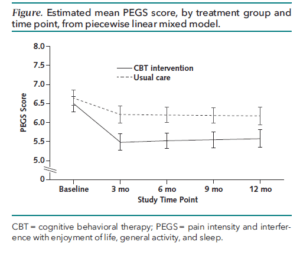
Patients who participated in a cognitive behavioral therapy (CBT) intervention as part of their regular care for chronic pain showed improved function and reduced pain compared to standard treatment, according to the results of the Pain Program for Active Coping and Training (PPACT) study. Although CBT did not reduce opioid use, patients who participated in a 12-week course on pain self-management led by primary care providers showed modest but sustained benefits that persisted for 12 months after the intervention.

Study results were published this month in the Annals of Internal Medicine.

The PPACT study, an NIH Collaboratory Trial, was a pragmatic, cluster randomized trial that enrolled 850 patients receiving long-term opioid therapy for chronic pain. Patients in the intervention group participated in 12 weekly, 90-minute group sessions that taught skills of muscle relaxation, guided imagery, cognitive restructuring, and yoga-based adapted movement. Patients in the usual care group continued to receive pharmacologic and nonpharmacologic treatment.

Figure from PPACT main outcomes paper
Source: Annals of Internal Medicine 2021 Nov 2. doi: 10.7326/M21-1436

Patients were followed for 12 months with primary outcome measures of pain impact on enjoyment of life, activity levels, and sleep. Researchers also assessed secondary outcome measures of pain-related disability and opioid use.

Compared to usual care, the CBT intervention reduced self-reported pain and pain-related disability and increased satisfaction with primary healthcare providers. Opioid use and dose remained the same in both the intervention group and the usual care group.

PPACT was supported within the NIH Collaboratory by the NIH Common Fund, the National Center for Complementary and Integrative Health (NCCIH), and the National Institute of Neurological Disorders and Stroke (NINDS). Learn more about the NIH Collaboratory Trials.

November 3, 2021: PCT Grand Rounds to Feature BEST-MSU Study of Stroke Treatment

Headshot of Dr. James Grotta
Dr. James Grotta

In this Friday’s PCT Grand Rounds session, Dr. James Grotta of Memorial Hermann Hospital-Texas Medical Center will present “Benefits of Stroke Treatment Delivered Using a Mobile Stroke Unit Compared to Standard Management by Emergency Medical Services: The BEST-MSU Study.”

The BEST-MSU study, supported by the Patient-Centered Outcomes Research Institute (PCORI), examined the effectiveness of prehospital diagnosis and treatment of patients with stroke symptoms using a mobile stroke unit with subsequent transfer to a comprehensive stroke center emergency department (CSC ED) for further management, compared with standard prehospital triage and transport by emergency medical services to a CSC ED for evaluation and treatment.

The Grand Rounds session will be held on Friday, November 5, at 1:00 pm eastern. Join the online meeting.

October 5, 2021: New Article Identifies Challenges and Prerequisites for Using Electronic Health Record Systems for Pragmatic Research

JAMIA Cover

In a new NIH Collaboratory study, 20 NIH Collaboratory Trials responded to a survey about challenges encountered when using the electronic health record (EHR) for pragmatic clinical research. The goal of the study was to elucidate challenges and develop solutions—or prerequisites for pragmatic research—to enable healthcare system leaders, policy makers, and EHR designers to improve the national capacity for generating real-world evidence.

The article was published in the Journal of American Medical Informatics Association (JAMIA).

The challenges identified by the projects fell into 6 broad themes, including inadequate collection of patient-centered data, lack of functionality for structured data collection, lack of standardization, lack of resources to support customization, difficulties aggregating data from multiple sites, and difficult and inefficient access to EHR data.

Researchers from the NIH Collaboratory’s EHR Core and colleagues from the Patient-Centered Outcomes and the Health Care Systems Interactions Core Working Groups discussed the issues and iterated possible solutions. The authors developed the following prerequisites for the conduct of pragmatic research:

  • Integrate collection of patient-centered data into EHR systems
  • Facilitate structured research data collection by leveraging standard EHR functions, usable interfaces, and standard workflows
  • Support creation of high-quality research data by using standards
  • Ensure adequate IT staff to support embedded research
  • Create aggregate, multidata type resources for multisite trials
  • Create reusable and automated queries

The authors argue for the ability to tailor EHR systems to enable the collection of patient-centered outcomes and the extraction of high-quality, standardized data. Although the primary uses of the data are for clinical care and billing, high-quality data from the EHR also have the potential to improve clinical care and population health by providing reliable evidence and to support pragmatic research and learning within and across healthcare systems.

Read the full article.

This work was supported within the National Institutes of Health (NIH) Health Care Systems Research Collaboratory by the NIH Common Fund through cooperative agreement U24AT009676 from the Office of Strategic Coordination within the Office of the NIH Director. This work was also supported by the NIH through the NIH HEAL Initiative under award number U24AT010961.


September 23, 2021: PCO Core Aims for Greater Consistency in Integrating Patient-Reported Outcomes in Research and Clinical Care

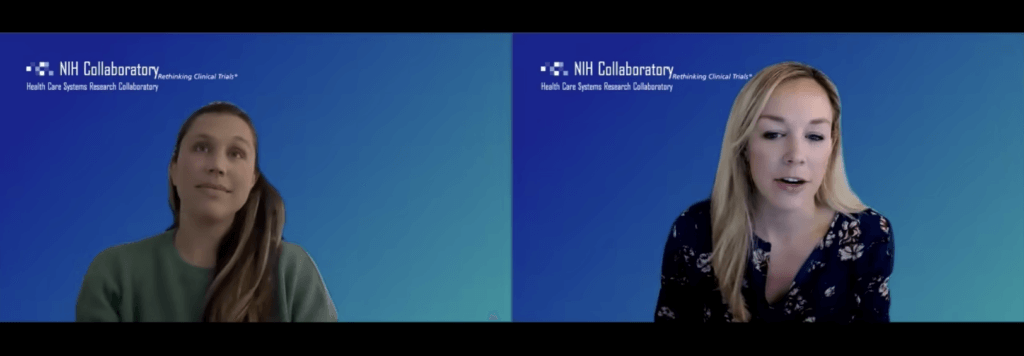
Leaders of the NIH Collaboratory’s Patient-Centered Outcomes (PCO) Core Working Group spoke in a recent Zoom-based interview about the Core’s latest accomplishments and ongoing collaborations with the NIH Collaboratory Trials.

“The purpose of the Core is to provide reusable and sustainable resources and tools to help project teams incorporate patient-centered outcomes and other patient-reported data in pragmatic clinical trials and the electronic health record,” said Dr. Emily O’Brien, an associate professor in population health sciences at Duke University and a cochair of the PCO Core.

“We address 3 components in any clinical research study: the needs of the clinician to provide care for the patient, the needs of the researcher, and the needs of the patient or the individual being treated,” added Dr. Christy Zigler, an assistant professor in population health sciences at Duke University and a cochair of the PCO Core. “To guide clinical researchers about PCO data collection, we usually think about 4 major considerations: adding IT infrastructure, deciding when PCOs are appropriate and choosing the best instrument, defining how to integrate PCO collection into the care process in a meaningful and appropriate way, and preparing for real-time reporting and statistical of PCO data,” Zigler said.

View the full video.

Last year, the PCO Core completed a survey of NIH Collaboratory Trials about cultural and linguistic adaptations of patient-centered outcome measures. The survey revealed significant barriers to researchers wanting to tailor instruments for their study populations.

“We wanted to know how and whether existing NIH Collaboratory Trials were adapting instruments for their populations of interest, either through translation, or cultural adaptation, or both,” said O’Brien. “This was really helpful to give us a sense of what barriers projects might encounter in the future… Planning ahead is critical, and having enough time and resources available to make these adaptations will be important for any projects that might benefit from having these adapted instruments available,” she said.

“We’re also thinking a lot about acceptability and burden of patient-centered outcomes,” said Dr. Zigler. “So we’re targeting PRISM NIH Collaboratory Trials within the first year of transition to implementation…and sending out a survey to gauge acceptability and burden at all levels, from the clinical care team, from the research side, and also from the patients themselves,” Zigler said.

Zigler and O’Brien also highlighted ongoing collaborations with the NIH Collaboratory’s other Core Working groups, including discussions with the Ethics and Regulatory Core about the ethical implications of integrating PCO data into clinical care and a consultation with the Electronic Health Records Core on integrating patient-centered and patient-reported outcomes into the electronic health record so that pragmatic clinical trial researchers can use them.

“Patient-centered outcomes data does not exist in a vacuum,” said O’Brien. “The data that are collected as part of NIH Collaboratory projects exist as part of both the larger study and also the larger health system within which the study is being conducted. So there are really clear connections between the PCO Core and the work that we do and all the other Cores, and those Cores have been a great resource for us as we’re advising projects on key issues that come up during the design and implementation phases of their studies,” she said.

View the full interview with Dr. Zigler and Dr. O’Brien.


Screen shot from video interview with Dr. Christy Zigler and Dr. Emily O'Brien