March 15, 2023: In This Friday’s PCT Grand Rounds, PROs for Adverse Event Monitoring in Oncology

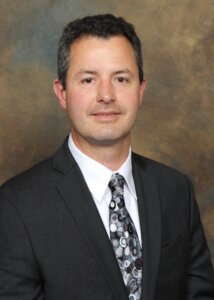
Headshot of Dr. Ethan BaschIn this Friday’s PCT Grand Rounds, Ethan Basch of the University of North Carolina at Chapel Hill will present “Patient-Reported Outcomes for Symptom and Adverse Event Monitoring in Oncology.” The Grand Rounds session will be held on Friday, March 17, 2023, at 1:00 pm eastern.

Basch is the Richard M. Goldberg Distinguished Professor of Medical Oncology in the UNC School of Medicine and a professor of health policy and management in the UNC Gillings School of Global Public Health. He led the National Cancer Institute’s initiative to develop a patient-reported adverse event monitoring system for use in clinical research (the “PRO-CTCAE”), and he is the study chair for multiple trials employing patient-reported endpoints.

Join the online meeting.

August 30, 2022: FDA Announces Webinar on Patient-Focused Drug Development Draft Guidance

FDA logoThe US Food and Drug Administration (FDA) will host a webinar on September 9 for industry, patient groups, and other interested stakeholders to discuss and answer questions about the draft guidance, Patient-Focused Drug Development: Selecting, Developing, or Modifying Fit-for-Purpose Clinical Outcome Assessments.

The draft guidance, known as “Guidance 3,” is the third of 4 methodological guidance documents for patient-focused drug development that describe how patients, caregivers, researchers, medical product developers, and others can collect and submit patient experience data and other relevant information to be used for medical product development and regulatory decision making. Guidance 3 discusses approaches to selecting, modifying, developing, and validating clinical outcome assessments to measure outcomes of importance to patients in clinical trials.

Register for the webinar at https://www.eventbrite.com/e/public-webinar-patient-focused-drug-development-pfdd-draft-guidance-3-tickets-397246183027.

July 7, 2022: Patient-Centered Outcomes Core Values Cross-Core Collaboration and Real-World Knowledge

Headshot of Dr. Emily O'Brien
Dr. Emily O'Brien

In connection with the NIH Pragmatic Trials Collaboratory’s annual Steering Committee meeting and 10th anniversary celebration, we interviewed Dr. Christy Zigler and Dr. Emily O’Brien, asking them to reflect on the role of the Patient-Centered Outcomes Core in helping the NIH Collaboratory Trial teams plan and implement their trials, and to discuss their focus for the Core’s future contributions to pragmatic clinical trials.

Based on your experience working with the NIH Collaboratory Trials, what are some of the common challenges of patient-centered outcomes?

Based on our experience, the challenges that NIH Collaboratory Trials face with patient-centered outcomes can occur across several project periods. In the planning phase, we see a number of basic questions about patient-reported outcomes (PROs), including “What outcomes should be measured?” and “What measures should be used to capture these outcomes?”

Once appropriate measures have been identified, there are often challenges related to implementation of these measures and resources. For example, project teams are usually interested in understanding the availability of existing PROs within the electronic health records that study sites could leverage, as well as which measures have appropriate translations or cross-cultural validation versions that are already established.

We also have come across some interesting Core-crossing challenges, including ethical considerations for collecting PROs (Who is responsible for monitoring patient responses?) and data collection methods (Should PROs be integrated within the EHR systems or in a separate repository?). Finally, sites are sensitive to patient and system burden of PRO collection, how to reduce the likelihood of missing data, and how patient-centered outcomes fit into the overall statistical analysis plan.

Dr. Christy Zigler

What strategies have NIH Collaboratory Trials used to overcome these barriers?

So far, the NIH Collaboratory Trials have been able to share resources and test out some direct strategies to overcome these challenges. For example, some projects have created outcome-specific data silos and also tested different administration methods. The Cores have also been able to provide insight into best practices for making these decisions, such as when to use particular formats for PRO administration (eg, in clinic, via telephone, via text, via electronic capture).

How are the NIH Collaboratory Trials’ experiences with patient-centered outcomes helping the field of pragmatic research?

We’ve really be able to pull together the lessons learned around patient-centered outcomes in pragmatic research to help inform the field. In particular, even for NIH Collaboratory Trials that have not conferred directly with our Core, we have been able to interview them about their work. For example, we highlighted critical advice from the Guiding Good Choices for Health (GGC4H) NIH Collaboratory Trial on the Living Textbook. Their real-world experience with determining and utilizing patient-centered outcomes provide a road map for other investigators.

What do you think the Core can contribute over the next decade?

Our wish list for future contributions includes:

  • More cross-core collaboration—specifically, conferring with the Biostatistics and Study Design Core on quantitative measurement questions around topics like meaningful change and longitudinal responsiveness within the context of pragmatic trials.
  • More focus on lessons learned from NIH Collaboratory Trial teams who have worked through their enrollment periods and have successful response rates. This real-world knowledge is very valuable to the field.
  • More focus on how to create equity within patient-centered outcomes in pragmatic trials.


June 27, 2022: Special Edition of Contemporary Clinical Trials Offers New Perspectives on Pragmatic and Virtual Clinical Trials

Contemporary Clinical TrialslsA special series of articles addressing pragmatic and virtual trials appears this week in the journal Contemporary Clinical Trials and offers practical approaches to the many challenges clinical trials face.

The 14 articles bring together leaders, researchers, biostatisticians, and bioethicists—including members of the NIH Pragmatic Trials Collaboratory—who are rethinking key aspects of the development, conduct, and oversight of clinical trials.

The articles include recommendations and real-world experience on how clinical trials can be done better while maintaining high-quality results using digital technology, direct-to-participant methods, and electronic health records.

The special issue can be found on the Contemporary Clinical Trials website.

Adrian F. Hernandez, MD, MHS, a co-principal investigator for the NIH Pragmatic Trials Collaboratory Coordinating Center, and Tammy Reece, MS, PMP, CCRA, the program’s project director, served as the issue co-editors. Dr. Hernandez is also vice dean and executive director of the Duke Clinical Research Institute and professor of medicine at Duke University. Ms. Reece is a Senior Project Leader in the Government Trials and Networks Group at the Duke Clinical Research Institute.

Following an introduction written by Hernandez, the remaining 13 articles focus on topics including simplification by design, digital technologies and clinical trials, iterative approaches to the use of electronic health records data for large pragmatic studies, ethics and regulatory considerations, and lifestyle and behavioral modification trials.

This body of work offers pragmatic approaches to overcoming the many reasons clinical trials are underperforming, such as high financial costs, long duration, administrative complexity, low recruitment and retention of participants, and difficulty translating knowledge to actual medical care.

“The articles in this issue recognize advances in evidence generation while sharing the challenges and gaps that still need to be addressed,” Hernandez said. “Ultimately, the clinical research ecosystem must improve, not only to keep pace with the advances in science, but to improve public health in meaningful ways.”

“The NIH Pragmatic Trials Collaboratory has been working to re-engineer clinical trials for a decade, yet there is still progress to be made,” Reece said. “Sharing knowledge and innovations across disciplines is critical to continue the momentum of transformation toward a learning health system.”

May 23, 2022: Solving Problems Collaboratively in Partnership With the Patient-Centered Outcomes Research Trust Fund

Over the last 10 years, the Patient-Centered Outcomes Research Trust Fund (OS-PCORTF) has brought together agencies to work on joint problems and made data investments to enable research that generates knowledge about patient-centered outcomes.

Nancy DeLew, MA, MPA, Associate Deputy Assistant Secretary for Health Policy in the Office of the Assistant Secretary for Planning and Evaluation in the Department of Health and Human Services, and Wendy Weber, ND, PhD, MPH, NIH Project Officer for the NIH Pragmatic Trials Collaboratory, discussed the fund in an interview during the NIH Pragmatic Trials Collaboratory’s annual Steering Committee meeting in April.

The OS-PCORTF has three purposes: to fund research, to fund dissemination and training, and to fund data infrastructure.

Trials, such as the ADAPTABLE study, have used funds from the OS-PCORTF for additional research. In the ADAPTABLE study, for instance, investigators wanted to ask whether the information that is in the electronic health record matches what the patient would report on a variety of patient-reported data. The NIH Pragmatic Trials Collaboratory also organized a roundtable discussion with researchers from the ADAPTABLE study to produce consensus findings on the analysis and integration of patient-reported health data in clinical trials.

“That’s been a really great example of working together,” Weber said. “As the programs evolved and especially in the new strategic planning efforts, there were a lot of questions about how the Collaboratory investigators use all of the various data. They were interviewed and part of the workshops and other elements to help frame the new strategic priorities for the Trust Fund.”

The OS-PCORTF has made prioritizing patient-centered research more possible.

“I think the Trust Fund has helped identify patient-centered, person-centered work as a high priority, which might not have been in the forefront of people’s minds before the Trust Fund was enacted in the Congress,” DeLew said. “By the 10-year reauthorization, we know we have additional funds to do more work. We’re trying to help agencies create evidence that we can then use in decision making in the Department, and we think that will help drive health outcomes over the next decade.”

As the OS-PCORTF moves into its next 10 years of funding, there are a several goals the Trust Fund wants to achieve, DeLew said.

The future focus will be on projects that address national health priorities and projects that will link data over time and help build a longitudinal track record for patients and their experience. Another goal is to take advantage of innovation that is happening in the data field, such as machine learning and artificial intelligence. The Trust Fund also aims to improve health equity and ensure its research is inclusive of populations who might not have been in clinical trials in the past.

“We also want to branch out and move into climate change. That’s an area we haven’t addressed at all in the first decade of the Trust Fund and that’s a high priority for us going forward as well,” DeLew said.

View the full interview.

See the complete materials from the 2022 Steering Committee meeting.

March 9, 2022: PCT Grand Rounds to Feature MIPACT Study and THRIVE Pragmatic Trial

Headshots of Dr. Sachin Kheterpal, Dr. Jessica Golbus, and Nicole Pescatore
Dr. Sachin Kheterpal, Dr. Jessica Golbus, and Nicole Pescatore

In this Friday’s PCT Grand Rounds, Dr. Sachin Kheterpal, Dr. Jessica Golbus, and Nicole Pescatore of the University of Michigan will present “Understanding a Patient’s Daily Experience Through Mobile Devices and Wearables: Lessons Learned From the 8000 Patient MIPACT Study and Implementation in a National Pragmatic Trial.” The Grand Rounds session will be held on Friday, March 11, at 1:00 pm eastern.

The Michigan Predictive Activity and Clinical Trajectories (MIPACT) study is a prospective observational study exploring whether data collected on an Apple Watch, combined with home blood pressure measurements and other health information, can provide insights into health and disease. The Trajectories of Recovery After Intravenous Propofol vs Inhaled Volatile Anesthesia (THRIVE) trial is a pragmatic trial of of intravenous vs inhalational general anesthesia in patients undergoing elective noncardiac surgery.

Join the online meeting.

February 8, 2022: Patient-Centered Outcomes Core Highlights Lessons From the NIH Collaboratory Trials

PRO figure

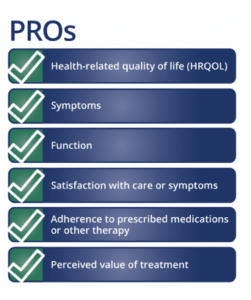
In new additions to the Living Textbook, the Patient-Centered Outcomes Core of the NIH Pragmatic Trials Collaboratory explores lessons learned from the NIH Collaboratory Trials and provides information about including patient-reported outcomes (PROs) in pragmatic clinical trials.

The new content includes:

  • A Case Study from Guiding Good Choices for Health in which the principal investigators provide their most critical advice and tips for study teams
  • A new section about the Food and Drug Administration’s Patient-Focused Drug Development series. This 4-part series provides guidance about how to collect and submit patient experience data in clinical research.
  • New content on Cultural Adaptation and Linguistic Translation from the NIH HEAL Initiative’s PRISM program—Pragmatic and Implementation Studies for the Management of Pain to Reduce Opioid Prescribing. The PRISM NIH Collaboratory Trials are designed to assess the effectiveness of non-opioid interventions for pain management. Cultural and linguistic adaptation of PRO measures enables inclusion of a broader study population and enhanced generalizability of results.
  • New content on acceptability and burden in the chapter on Incorporating PRO Data into the Electronic Health Record (EHR).

Read the Patient-Reported Outcomes chapter.

The PRISM program is a part of the Helping to End Addiction Long-Term Initiative℠, or NIH HEAL Initiative℠. The NIH Pragmatic Trials Collaboratory Coordinating Center serves as the PRISM Resource Coordinating Center.


January 27, 2022: Grand Rounds Podcast Now Available, Featuring Dr. Chris Lindsell on Selecting Outcomes for Outpatient Trials

Headshot of Dr. Christopher John LindsellIn the latest episode of the NIH Collaboratory Grand Rounds podcast, Dr. Christopher Lindsell and Dr. Adrian Hernandez continue the discussion about research outcomes and the importance of understanding stakeholder perspectives in choosing the correct outcomes for outpatient trials.

The full January 14 Grand Rounds webinar with Dr. Lindsell is also available.

Podcast January 19, 2022: Searching for a Unicorn: Understanding Stakeholder Perspectives When Selecting Outcomes for Outpatient Trials (Christopher Lindsell, PhD)

This podcast continues the discussion with Dr. Christopher Lindsell as he discusses research outcomes and the importance of choosing the correct outcome.

Click on the recording below to listen to the podcast.

Want to hear more? View the full Grand Rounds presentation.

For alerts about new episodes, subscribe free on Apple Podcasts or SoundCloud.

Read the transcript.

January 21, 2022: Primary Palliative Care for Emergency Medicine (Corita R. Grudzen, MD, MSHS, FACEP)

Speaker

Corita R. Grudzen, MD, MSHS, FACEP
Professor, Emergency Medicine and Population Health
Associate Dean, Clinical Sciences
Deputy Director, Clinical and Translational Science Institute
Vice Chair for Research, Emergency Medicine
Ronald O. Perelman Department of Emergency Medicine
NYU Grossman School of Medicine

Keywords

Palliative Care; Stepped-Wedge study design; Emergency Department (ED); Gagne Index; PRIM-ER


Key Points

  • The Emergency Department is increasingly seeing older adults with serious illness rather than patients with acute trauma.
  • Primary Palliative Care for Emergency Medicine (PRIM-ER) is a stepped-wedge study partnership of 18 health systems in 33 EDs designed to change the culture and norms of emergency care to promote palliative care at home or hospice rather than admittance to the hospital.
  • The study used the Gagne Index greater than 6 to identify patients at high risk of short-term mortality. Patients with dementia did not need to meet the Gagne Index criteria to be included in the study.
  • A baseline survey, training of 2,470 emergency providers, and study intervention has been completed at all 33 sites.
  • Only .2% of ED patients in the study were admitted to hospice after their ED visit.  At 12 months post ED visit, 30% of dementia patients had died whereas 15.6% of the non-dementia chronic disease patients had died. Data analysis is ongoing.

Discussion Themes

Stepped-wedge studies present timing issues and COVID-19 increased these problems. A cluster randomized design may have been easier to implement.


The PRIM-ER study was considered quality improvement by the IRB, so no human subjects approval from the IRB was required.


The PRIM-ER next step will be developing tools for patients with dementia regarding palliative care in the ED.


Learn more about the PRIM-ER study.


Tags

#pctGR, @Collaboratory1