April 7, 2026: Enrollment Begins for AIM-CP and RAMP Pragmatic Trials

Two of the NIH Collaboratory Trials began enrollment last week. Congratulations to the study teams from AIM-CP and RAMP for reaching this important project milestone!

Headshots of Dr. Sebastian Tong and Dr. Kushang Patel
Sebastian Tong and Kushang Patel, principal investigators for AIM-CP

AIM-CP (Adapting and Implementing a Nurse Care Management Model to Care for Rural Patients With Chronic Pain) is testing the implementation of a care management model to address disparate access to nonpharmacological treatments for chronic pain in rural populations. The program includes care coordination, cognitive behavioral therapy, and referral to a virtual exercise program. The study is led by principal investigators Sebastian Tong and Kushang Patel of the University of Washington.

The AIM-CP study team recently reported the results of a pilot study showing that their integrated nurse care management model is a feasible and effective way to deliver nonpharmacological chronic pain treatment to patients in rural communities. Learn more about AIM-CP.
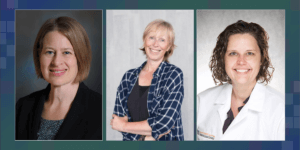
Headshots of Diana Burgess, Roni Evans, and Katherine Hadlandsmyth
Diana Burgess, Roni Evans, and Katherine Hadlandsmyth, principal investigators for RAMP

RAMP (Reaching Rural Veterans: Applying Mind-Body Skills for Pain Using a Whole Health Telehealth Intervention) is evaluating the use of a 9-week mind-body skills training program for rural veterans with pain within the VA’s Whole Health initiative, including a one-on-one session with a health coach followed by weekly group sessions that include prerecorded expert-led education videos, mind-body skills training and practice, and group discussions. The principal investigators are Diana Burgess and Roni Evans of the University of Minnesota and Katherine Hadlandsmyth of the University of Iowa.

A recently published pilot study allowed the research team to identify several strategies to optimize the RAMP intervention for the full-scale randomized trial, including strategies to reduce participant burden and improve retention and tailor the program to the rural veteran experience. Learn more about RAMP.

Both AIM-CP and RAMP are supported within the NIH Pragmatic Trials Collaboratory through the NIH HEAL Initiative by grants administered by the National Institute of Nursing Research.

February 19, 2026: RAMP Pilot Study Supports Telehealth Mind-Body Program for Rural Veterans With Chronic Pain

Headshots of Diana Burgess, Roni Evans, and Katherine Hadlandsmyth
Diana Burgess, Roni Evans, and Katherine Hadlandsmyth, principal investigators for RAMP

A pilot study of the RAMP intervention suggests that a multimodal, telehealth-delivered intervention is both feasible and acceptable for rural veterans experiencing chronic pain. The findings demonstrate how mind-body and exercise strategies can be successfully delivered to populations that typically face significant barriers to specialized care.

The article was published online ahead of print in Contemporary Clinical Trials.

RAMP, an NIH Collaboratory Trial, is evaluating the use of a mind-body skills training program for rural veterans with chronic pain within the Department of Veterans Affairs (VA) Whole Health initiative.

Veterans living in rural areas experience a higher prevalence of chronic pain than their urban counterparts but often lack access to nonpharmacologic treatments due to travel distances and a shortage of local providers. While the VA has prioritized nonpharmacologic self-management, these programs remain underused among patients in rural areas and patients from marginalized groups. The RAMP intervention was designed to overcome these obstacles by providing a comprehensive self-management program directly to veterans in their homes.

The pilot study enrolled 40 rural VA patients with moderate to severe chronic pain. The intervention consisted of 12 telehealth sessions facilitated by trained health coaches. The sessions included an initial individual session to set personal health goals; 11 weekly group sessions featuring expert-led educational videos, physical exercises, and mind-body skill-building; and instruction in cognitive behavioral strategies, mindfulness, and pain-specific mobility exercises.

The pilot study met several key milestones for feasibility and acceptability. Ninety percent of participants expressed satisfaction with the intervention, and 82% stated they would recommend the program to other veterans with chronic pain. The facilitators successfully delivered 100% of the planned session activities, demonstrating high fidelity to the RAMP program model.

Participants reported that RAMP enhanced their capabilities, opportunities, and motivation to manage their pain. Specifically, the participating veterans felt more confident in their ability to handle “flare-ups,” manage stress, and incorporate physical activity into their daily lives.

“Pilot results demonstrated that RAMP is feasible and acceptable to rural Veterans with chronic pain,” the authors concluded. Because the program uses nonclinician health coaches, it has the potential to be easily integrated into existing VA clinical workflows to reach millions of rural-dwelling veterans.

The research team identified several strategies to optimize the RAMP intervention for a larger, upcoming randomized trial. To reduce participant burden and improve retention, the team plans to shorten the program from 12 to 9 weeks, provide more examples tailored to the rural veteran experience, and introduce text message reminders.

Read the full report.

The RAMP trial is supported within the NIH Pragmatic Trials Collaboratory through the NIH HEAL Initiative by a grant from the National Institute of Nursing Research.

Learn more about RAMP.

February 18, 2026: Applying Mind-Body Skills for Pain, in This Week’s Rethinking Clinical Trials Grand Rounds

In this Friday’s Rethinking Clinical Trials Grand Rounds, Diana Burgess, Roni Evans, and Katie Hadlandsmyth will present “Applying Mind-Body Skills for Pain Using a Whole Health Telehealth Intervention (RAMP): Early Progress and Lessons Learned.”

The Grand Rounds session will be held on Friday, February 20, 2026, at 1:00 pm eastern.

RAMP, an NIH Collaboratory Trial, is evaluating the use of a 12-week mind-body skills training program for rural veterans with pain within the VA’s Whole Health initiative, including a one-on-one session with a Whole Health coach followed by 11 weekly group sessions to include prerecorded expert-led education videos, mind-body skills training and practice, and group discussions. The study is supported by within the NIH Collaboratory by a grant from the National Institute of Nursing Research.

Burgess is a professor of medicine at the University of Minnesota and the director of the VA Advanced Fellowship Program in Health Systems Research. Evans is a research professor at the University of Minnesota and the director of their Integrative Health and Wellbeing Research Program. Hadlandsmyth is an associate professor at the University of Iowa.

Join the online meeting

Add to your calendar:
Google
iCal
Outlook

Or join the Grand Rounds mailing list to receive calendar invitations.

December 22, 2025: Rural Health Symposium Opens Registration, Announces Call for Abstracts

The Duke University School of Nursing will convene healthcare professionals, educators, researchers, community leaders, and policymakers for a 1-day symposium dedicated to reducing rural health disparities across North Carolina through collaboration and innovation.

On April 20, 2026, from 9:00 am to 3:00 pm at Duke University in Durham, North Carolina (and virtually via livestream), participants will come together for dynamic presentations, panels, poster sessions, and discussions with guests, including leaders from ECU Health, Sanford Health, UT-Arlington, and the NC Department of Health and Human Services. A reception will follow the program.

The deadline for abstract submission is February 9, 2026. See more information about the program below.

Did you know the NIH Pragmatic Trials Collaboratory supports several innovative pragmatic clinical trials to improve healthcare for rural and remote populations? Learn more about:

  • AIM-CP: Adapting and Implementing a Nurse Care Management Model to Care for Rural Patients with Chronic Pain
  • APA-SM: Personalized Auricular Point Acupressure for Chronic Pain Self-Management in Rural Populations
  • ARBOR-Telehealth: Advancing Rural Back Pain Outcomes Through Rehabilitation Telehealth
  • BeatPain Utah: Nonpharmacologic Pain Management in Federally Qualified Health Centers Primary Care Clinics
  • LungSMART: Population Health Management Approaches to Increase Lung Cancer Screening in Community Health Centers
  • RAMP: Reaching Rural Veterans: Applying Mind-Body Skills for Pain Using a Whole Health Telehealth Intervention

1st Annual Duke University School of Nursing Rural Health Symposium: Innovative Solutions to Addressing Rural Health Disparities

1st Annual Duke University School of Nursing Rural Health Symposium: Innovative Solutions to Addressing Rural Health Disparities

Monday, April 20, 9am-3pm, with Reception to Follow

Duke University Campus and Livestream Webinar

Register Now and Submit Abstracts by February 9

You are warmly invited to participate in the 1st Annual Duke University School of Nursing Rural Health Symposium, a one-day event that will convene healthcare professionals, educators, researchers, community leaders, and policymakers to address rural health disparities across North Carolina through collaboration and innovation.

Date: April 20, 2025
Time: 9:00 AM – 3:00 PM
Location: Duke University (with virtual livestream option)

The symposium will feature dynamic presentations, panel discussions, poster sessions, and networking opportunities, including a closing reception. Distinguished speakers will include:

  • Trisha Baise, ECU Health
  • Erica DeBoer, Sanford Health
  • Elizabeth Merwin, University of Texas at Arlington
  • Maggie Sauer, North Carolina Department of Health and Human Services

We invite you to submit abstracts by February 9 to share your research, innovations, and best practices that advance rural health.

Register today: https://duke.is/ruralhealth

Your participation will help foster meaningful dialogue and actionable strategies to improve health outcomes in rural communities. We look forward to your contributions and engagement in this important event.

August 11, 2025: New Living Textbook Chapter Explores Implementation in Pragmatic Clinical Trials

The NIH Pragmatic Trials Collaboratory Implementation Science Core, led by Devon Check and Hayden Bosworth, has developed a new chapter on implementation to assist study teams with the complex process of using and studying implementation strategies to help implement research findings into clinical care. The chapter includes sections on:
Case studies are used to illustrate how pragmatic clinical trials embedded in healthcare systems use implementation frameworks, including examples from RAMP, BEST-ICU, STOP CRC, TSOS, ABATE, STEP-2, and GRACE.

For more, see our collection of chapters on Dissemination and Implementation, which includes chapters on Dissemination to Different Stakeholders, Data Sharing and Embedded Research, and End-of-Trial Decision-Making.

February 24, 2025: Study Snapshots and Updated Ethics Documentation Available for 3 NIH HEAL Initiative–Supported Trials in Rural Populations

New study snapshots and updated ethics and regulatory documentation are now available for the AIM-CP, ARBOR-Telehealth, and RAMP trials. The 3 NIH Collaboratory Trials, all supported through the NIH HEAL Initiative℠, or Helping to End Addiction Long-Term Initiative℠, reflect a special emphasis on developing strategies for the management of chronic pain in rural and remote populations. The trials have transitioned from the UG3 planning phase to the UH3 implementation phase.

“There are many known disparities between urban and rural populations,” said Karen Kehl, a program director at the National Institute of Nursing Research (NINR), in an interview at the NIH Pragmatic Trials Collaboratory’s 2024 Annual Steering Committee Meeting. “And when we talk about chronic pain, we know that there’s a higher incidence and a higher severity of pain in rural populations, and yet they don’t have access to many of the effective solutions that we have,” Kehl added.

AIM-CP

AIM-CP is testing the implementation of a care management program to address disparate access to nonpharmacological treatments for chronic pain in rural populations. The principal investigators are Sebastian Tong and Kushang Patel of the University of Washington. The study is supported by NINR.


ARBOR-Telehealth

ARBOR-Telehealth is evaluating the use of a telehealth physical therapy strategy for patients who present to primary care clinics with low back pain in rural communities. The principal investigators are Richard Skolasky and Kevin McLaughlin of Johns Hopkins University. The study is supported by the National Institute of Arthritis and Musculoskeletal and Skin Diseases.


RAMP

RAMP is evaluating the use of a 12-week mind-body skills training program for rural veterans with pain within the VA’s Whole Health initiative, including a one-on-one session with a Whole Health coach followed by 11 weekly group sessions to include prerecorded expert-led education videos, mind-body skills training and practice, and group discussions. The principal investigators are Diana Burgess and Roni Evans of the University of Minnesota and Katherine Hadlandsmyth of the University of Iowa. The study is supported by NINR.


June 27, 2024: NIH HEAL Initiative Turns Attention to Pragmatic Trials in Rural Communities

Three of the newest NIH Collaboratory Trials are supported through the NIH HEAL Initiative℠, or Helping to End Addiction Long-Term Initiative℠, reflecting a special emphasis on developing strategies for the management of chronic pain in rural and remote populations.

“There are many known disparities between urban and rural populations,” said Karen Kehl, a program director at the National Institute of Nursing Research (NINR). “And when we talk about chronic pain, we know that there’s a higher incidence and a higher severity of pain in rural populations, and yet they don’t have access to many of the effective solutions that we have,” Kehl added.

We recently spoke with Kehl, Julie Fritz of the BeatPain Utah trial, and the principal investigators of the AIM-CP, ARBOR-Telehealth, and RAMP trials at the NIH Collaboratory’s 2024 Annual Steering Committee Meeting. They discussed the progress of their studies and the importance of supporting healthcare and promoting health equity in rural communities through pragmatic research.

AIM-CP

AIM-CP will test the implementation of a care management program to address inequities in access to nonpharmacological treatment for chronic pain in rural populations. The principal investigators are Kushang Patel and Sebastian Tong of the University of Washington. The study is supported by NINR. Learn more about AIM-CP.

ARBOR-Telehealth

ARBOR-Telehealth will evaluate the use of a telehealth physical therapy strategy for patients who present to primary care clinics with low back pain in rural communities. The principal investigators are Richard Skolasky and Kevin McLaughlin of Johns Hopkins University. The study is supported by the National Institute of Arthritis and Musculoskeletal and Skin Diseases. Learn more about ARBOR-Telehealth.

RAMP

RAMP will evaluate the use of a 12-week mind-body skills training program for rural veterans with pain, including a one-on-one session with a “whole health coach” followed by 11 weekly group sessions to include prerecorded expert-led education videos, mind-body skills training and practice, and group discussions. The principal investigators are Diana Burgess and Roni Evans of the University of Minnesota and Katherine Hadlandsmyth of the University of Iowa. The study is supported by NINR. Learn more about RAMP.

Learn more about the NIH Collaboratory Trials.

June 13, 2024: Burgess to Present Results of LAMP Trial, Precursor of NIH Collaboratory’s RAMP Trial

Headshot of Dr. Diana Burgess
Dr. Diana Burgess

Diana Burgess, a co–principal investigator of the NIH Pragmatic Trials Collaboratory’s RAMP trial, will present the results of the precursor LAMP trial as part of the Veterans Affairs (VA) Health Systems Research Cyberseminars series.

The Learning to Apply Mindfulness to Pain (LAMP) trial is a multisite pragmatic clinical trial that compared 2 approaches for delivering mindfulness-based interventions via telehealth for veterans with chronic pain. Both interventions improved pain functioning and important biopsychosocial outcomes over 12 months when compared with usual care among veterans with chronic pain and high levels of psychiatric comorbidity. These approaches to delivering mindfulness-based interventions could help accelerate the implementation of nonpharmacologic pain treatment in the VA healthcare system and other healthcare systems.

Results From the Learning to Apply Mindfulness to Pain (LAMP) Study: A Pragmatic Clinical Trial
VA HSR Cyberseminars
Registration for the webinar is required.
Date and time: Thursday, June 20, 2024; 12:00-1:00 pm ET

Burgess is also a co–principal investigator of Reaching Rural Veterans: Applying Mind-Body Skills for Pain Using a Whole Health Telehealth Intervention (RAMP), an NIH Collaboratory Trial. RAMP will test the delivery of a modified version of the LAMP interventions for veterans in rural communities. Learn more about RAMP.

Burgess is the director of the VA Advanced Fellowship Program in Health Services Research in the Center for Care Delivery and Outcomes Research (CCDOR), the director of the VA’s QUERI Complementary and Integrative Health Evaluation Center (CIHEC), and a professor of medicine at the University of Minnesota.

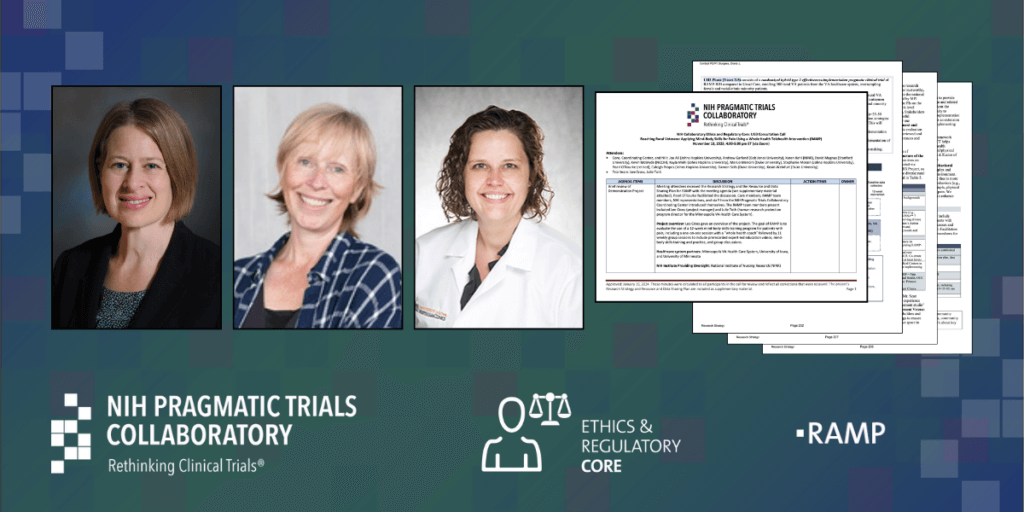
January 23, 2024: Ethics Consultation Documents Now Available for RAMP Trial

Ethics and regulatory onboarding documentation is now available for RAMP, one of the NIH Pragmatic Trials Collaboratory's newest pragmatic clinical trials. The documents include meeting minutes and supplementary materials summarizing recent discussions of ethics and regulatory issues associated with the study.

The consultation took place by video conference and included representation from the study's principal investigator and study team, members of the NIH Collaboratory's Ethics and Regulatory Core, NIH staff, and NIH Collaboratory Coordinating Center personnel.

The goal of RAMP is to evaluate the use of a 12-week mind-body skills training program for patients with pain, including a one-on-one session with a “whole health coach” followed by 11 weekly group sessions to include prerecorded expert-led education videos, mind-body skills training and practice, and group discussions.

Ethics and regulatory documentation for all of the NIH Collaboratory Trials is available on our Data and Resource Sharing page.

November 1, 2023 Virtual Onboarding Meeting: iPATH, AIM-CP, I CAN DO Surgical ACP, MOMS, RAMP, and ARBOR-Telehealth

NIH Pragmatic Trials Collaboratory Onboarding Meeting

November 1, 2023
Virtual

Purpose

Welcome the new UG3 and R01 NIH Collaboratory Trials; provide introductions and an overview of the NIH Collaboratory program; hear from the new UG3 and R01 project teams; and discuss lessons learned from the seasoned NIH Collaboratory Trial investigators.

Welcome and Opening Remarks
Wendy Weber, ND, PhD, MPH
Lesley Curtis, PhD

Overview of the NIH Pragmatic Trials Collaboratory and a Cooperative Agreement
Beda Jean-Francois, PhD

NIH Collaboratory Coordinating Center: Overview and Goals
Lesley Curtis, PhD

Program Policies and Guidance Documents
Rich Platt, MD, MSc
Gina Uhlenbrauck

Discussion of New NIH Collaboratory Trials

  • iPATH
    Sara Singer, PhD, MBA
  • AIM-CP
    Sebastian Tong, MD, MPH
    Kushang Patel, Phd, MPH
  • MOMs
    Stephanie Fitzpatrick, PhD
  • RAMP
    Diana Burgess, PhD
    Roni Evans, DC, MS, PhD
    Katherine Hadlandsmyth, PhD

Lessons Learned From Seasoned NIH Collaboratory Trials
Moderator: Lesley Curtis, PhD

Panel:

  • Lynn Debar, PhD
  • Angelo Volandes, MD, MPH
  • Susan Huang, MD, MPH
  • Michael Ho, MD, PhD
  • Kathleen Sluka, PT, PhD
  • Andrea Cheville, MD

Closing Remarks
Beda Jean-Francois, PhD
Lesley Curtis, PhD