August 18, 2022: Rural and Remote Populations Are Focus of Funding Opportunity From NIH HEAL Initiative

NIH Heal Initiative logoThe NIH HEAL Initiative℠, or Helping to End Addiction Long-Term Initiative℠, announced its intent to publish a new funding opportunity for cooperative research that will accelerate implementation of nonopioid interventions for chronic pain management in rural and remote populations. The initiative will support pragmatic, implementation, and hybrid effectiveness-implementation trials that study strategies for equitably and efficiently implementing effective interventions and evidence-based pain management guidelines in rural and remote communities.

The funding opportunity announcement is expected to be published in fall 2022, with an expected application due date in winter 2022. Funded projects will become part of the NIH HEAL Initiative’s PRISM (Pragmatic and Implementation Studies to Improve the Management of Pain and Reduce Opioid Prescribing) program.

The NIH Collaboratory Coordinating Center serves as the PRISM Resource Coordinating Center. Six PRISM NIH Collaboratory Trials within the NIH Collaboratory are studying the real-world effectiveness of nonpharmacologic interventions for pain and assessing the implementation of these interventions to improve pain management and reduce reliance on opioids.

Read the complete Notice of Intent to Publish a Funding Opportunity Announcement for HEAL Initiative: Prevention and Management of Chronic Pain in Rural Populations (UG3/UH3, Clinical Trials Required).

July 19, 2022: Three PRISM NIH Collaboratory Trials Share Latest Updates and Accomplishments

At the NIH Pragmatic Trials Collaboratory’s annual Steering Committee meeting this spring, we interviewed investigators from 3 of the PRISM NIH Collaboratory Trials to discuss their progress in the first year of study implementation. All of the studies began enrollment last year.

The PRISM program (Pragmatic and Implementation Studies for the Management of Pain to Reduce Opioid Prescribing) is a component of the NIH’s Helping to End Addiction Long-term (HEAL) Initiative. The PRISM NIH Collaboratory Trials are studying the real-world effectiveness of nonpharmacologic interventions for pain and assessing the implementation of these interventions to improve pain management and reduce reliance on opioids. The NIH Collaboratory Coordinating Center serves as the PRISM Resource Coordinating Center.

BeatPain Utah is a pragmatic trial of nonpharmacologic pain management interventions in primary care clinics of US federally qualified health centers in Utah. The interventions are designed to overcome barriers specific to rural and lower-income communities through innovative use of telehealth resources. The study is administered by the National Institute of Nursing Research and is being conducted by Dr. Julie Fritz of the University of Utah. Learn more about BeatPain Utah.

The GRACE trial is a hybrid effectiveness–implementation trial of guided relaxation and acupuncture for pain associated with chronic sickle cell disease in 3 large healthcare systems. The study is administered by the National Center for Complementary and Integrative Health and is being conducted by Drs. Ardith Doorenbos, Judith Schlaeger, Robert Molokie, and Miriam Ezenwa of the University of Illinois Chicago and Dr. Nirmish Shah of Duke University. Learn more about GRACE.

OPTIMUM is evaluating the impact of an innovative, group-based mindfulness program for patients with chronic low back pain in real-world clinical settings. Mindfulness is effective for the treatment of chronic low back pain but remains underutilized as it has not been regularly woven into outpatient clinical settings. The study is administered by National Center for Complementary and Integrative Health and is being conducted by Dr. Natalia Morone of Boston University and Boston Medical Center. Learn more about OPTIMUM.

See also our recent interviews with the principal investigators of our other PRISM NIH Collaboratory Trials:

Headshots of Julie Fritz, Ardith Doorenbos, and Natalia Morone

June 30, 2022: BackInAction Is Back on Track After COVID-19 Delays

Karen J. Sherman, PhD, MPH
Dr. Karen Sherman

In connection with the NIH Pragmatic Trials Collaboratory Steering Committee meeting and 10th anniversary celebration, we sat down for an interview with Drs. Karen Sherman and Lynn DeBar to get an update on the Pragmatic Trial of Acupuncture for Chronic Low Back Pain in Older Adults (BackInAction) NIH Collaboratory Trial. BackInAction is a pragmatic randomized trial to evaluate the safety and effectiveness of treatments for older adults with chronic low back pain. The study team is conducting a 3-arm trial of adults 65 years or older with low back pain to evaluate acupuncture vs usual care.

What is the current status of the BackInAction trial?
BackInAction has recruited about two-thirds of its participants and is on track to complete recruitment next fall. We also are providing acupuncture and doing follow-up interviews, so the trial is in the “ongoing phase.”

What challenges have you faced, and how have you dealt with them?
Our biggest challenges have been associated with COVID-19 impacts. Given the higher risk and vulnerability for our older adult target population and the requirement for in-person treatment (acupuncture), we delayed the start of recruitment by many months to ensure that those outreached had ample opportunity to be vaccinated beforehand and have also paused recruitment commensurate with regional surges of COVID variants at one or more of our clinical sites as needed. We also vetted the community acupuncturists who provide acupuncture to our study participants to ensure adequate COVID-safe office practices.

Lynn DeBar, PhD, MPH
Dr. Lynn DeBar

Unrelated to COVID-19, escalating thresholds for regulatory and security features resulted in a previously approved event tracking and recruitment and assessment software system not passing the Technology Resource Office (TRO) review at multiple clinical sites and the consequent need to align data collection and aggregation from site-specific systems. TRO reviews established for clinical care software and processes for our healthcare systems increasingly restrict clinical research practices as well.

What impact do you hope your trial will have on real-world healthcare?
The grant was funded as part of the NIH HEAL Initiative's PRISM program, and the specific funding opportunity announcement was issued because Medicare was interested in additional nonpharmacological treatment options for older adults with chronic low back pain. We had thought that they would be using data from the trial for a coverage decision, since few data on acupuncture existed for older adults. We hope that the trial results will assist the Centers for Medicare & Medicaid Services in any further refinements related to coverage of acupuncture for older adults with chronic low back pain.

How has being part of the NIH Pragmatic Trials Collaboratory shaped your project?
It’s helpful to have the sounding board of regular contact with principal investigators and research teams grappling with often similar issues that arise in implementing pragmatic trials (Steering Committee meetings, annual meetings, and Core Working Groups). Feedback from the Biostatistics and Study Design Core has been particularly helpful, as has the PRISM-wide help selecting and coordinating an appropriate data repository for required HEAL common data elements. Although there have been a few instances when we’ve been surprised by and needed to correct study-specific information included in cross-site dissemination products (always given ample opportunity to do so), we’re very aware and grateful for the functionality of the program’s Coordinating Center and infrastructure in contrast to some of the more recently established Coordinating Center infrastructures for related NIH sub-initiatives. The NIH Pragmatic Trials Collaboratory is much more an aid than a hindrance!

May 17, 2022: NIH and Program Leaders Discuss PRISM’s Role in NIH HEAL Initiative

In an interview at the NIH Pragmatic Trials Collaboratory Steering Committee’s annual meeting in April, Dr. Rebecca Baker, Dr. Adrian Hernandez, and Dr. Wendy Weber discussed how the PRISM program and the NIH HEAL Initiative are working together to answer questions about pain management and the national opioid public health crisis.

Baker is the director of the NIH HEAL Initiative, and Hernandez is co-principal investigator of the NIH Pragmatic Trials Collaboratory Coordinating Center, for which Weber is the NIH Project Officer.

“I think the PRISM program is a great piece of the NIH HEAL initiative,” said Weber. “The HEAL initiative has everything from basic science all the way up to what PRISM is doing, which is taking these effective interventions and actually figuring out how do you put them into the healthcare system.”

The Helping to End Addiction Long-term Initiative (NIH HEAL Initiative) is an aggressive, trans-agency effort to speed scientific solutions to stem the national opioid public health crisis. It has launched more than 600 different research projects, totaling a more than $2 billion investment.

The PRISM program (Pragmatic and Implementation Studies for the Management of Pain to Reduce Opioid Prescribing) is a component of the NIH HEAL Initiative, and the NIH Pragmatic Trials Collaboratory serves as the PRISM Resource Coordinating Center, supporting large-scale embedded pragmatic clinical trials to determine the effectiveness of non-opioid interventions for pain.

“When we talk about learning in the healthcare system, this is an area that we see is going to have continuous learning, and so, as there are new options for pain management, how do you get them implemented into practice, what are the gaps, what else is needed for these areas,” said Hernandez. “This becomes a hallmark of what we are aiming to do for the NIH Pragmatic Trials Collaboratory.”

PRISM and the NIH HEAL Initiative have developed common measures across studies in order to create a HEAL data ecosystem that will allow investigators to do meta-analyses with shared outcome measures across studies.

“One thing that we’ve learned through HEAL, especially in our focus on pain, but also for addiction, is that these conditions don’t exist in isolation, so people rarely have just pain—they have pain plus other health conditions,” said Baker. “Being able to study that in a pragmatic way and iterate around different types of patients enriches the knowledge that comes out of the study and then enables clinicians to provide great care, too.”

Through key partnerships with the NIH Pragmatic Trials Collaboratory, PRISM, and other federal partners, the NIH HEAL Initiative is now integrating the experience of patients at the outset of studies and focusing on health disparities and health inequity issues.

“If we just conduct research, publish the papers, go to academic meetings and discuss them, we’re not going to have the impact we’re hoping to have through this initiative, and so the next phase is continuing to expand our research into these domains that we weren’t able to start with at the beginning but also continue to build those partnerships for dissemination and implementation,” said Baker.

View the full interview.

See the complete materials from the 2022 Steering Committee meeting.

March 25, 2022: A Telehealth-Delivered Pragmatic Trial of Mindfulness for Persons with Chronic Low Back Pain (Natalia Morone, MD, MS)

Speaker

Natalia E. Morone, MD, MS
Associate Professor of Medicine
Boston University/Boston Medical Center

Keywords

Chronic pain; Mindfulness; Stress Reduction; Low back pain; OPTIMUM; The Pain, Enjoyment of Life and General Activity (PEG) Scale; HEAL Initiative

Key Points

  • Chronic back pain is very common across all racial and ethnic groups. Doctors treat chronic back pain with non-pharmacologic methods before resorting to pharmacologic treatments.
  • Optimizing Pain Treatment in Medical Settings Using Mindfulness (OPTIMUM) is a randomized study of mindfulness for low back pain operating in 3 health settings: Boston Medical Center; UPMC, Pittsburgh, PA; and University of North Carolina, Chapel Hill in partnership with Piedmont Health Services.
  • Participation in the OPTIMUM study requires 8 weekly 90 minute group-based sessions of mindfulness meditation training delivered in primary care through a telehealth medical visit with follow up assessments at 6 and 12 months.
  • Four methods of mindfulness meditation are taught: Walking meditation, body scan, breath focused meditation, and mindful stretching.
  • The OPTIMUM study uses the PEG scale as the main outcome measure at the 6 and 12 month follow up assessments.
  • Group tele-health visits provide a variety of benefits for patients including more time with a clinician, better medication adherence, and more patient satisfaction.

Discussion Themes

Primary care usually consists of 1 provider and 1 patient, but family medicine evolved to see patients in a group. This group setting model may have unexpected benefits.

OPTIMUM is part of the PRISM project and is collecting data on participant use of opioids along with all PRISM projects.

Recruiting minority participants has been a priority in the OPTIMUM trial. Targeting recruitment advertisements to zip codes where more minorities live makes a difference in recruiting a diverse population.


Read more about the OPTIMUM trial.


 Tags

#pctGR, @Collaboratory1

February 8, 2022: Patient-Centered Outcomes Core Highlights Lessons From the NIH Collaboratory Trials

PRO figure

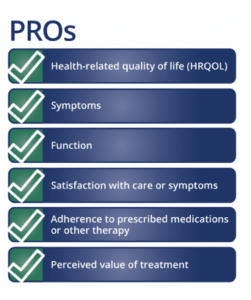
In new additions to the Living Textbook, the Patient-Centered Outcomes Core of the NIH Pragmatic Trials Collaboratory explores lessons learned from the NIH Collaboratory Trials and provides information about including patient-reported outcomes (PROs) in pragmatic clinical trials.

The new content includes:

  • A Case Study from Guiding Good Choices for Health in which the principal investigators provide their most critical advice and tips for study teams
  • A new section about the Food and Drug Administration’s Patient-Focused Drug Development series. This 4-part series provides guidance about how to collect and submit patient experience data in clinical research.
  • New content on Cultural Adaptation and Linguistic Translation from the NIH HEAL Initiative’s PRISM program—Pragmatic and Implementation Studies for the Management of Pain to Reduce Opioid Prescribing. The PRISM NIH Collaboratory Trials are designed to assess the effectiveness of non-opioid interventions for pain management. Cultural and linguistic adaptation of PRO measures enables inclusion of a broader study population and enhanced generalizability of results.
  • New content on acceptability and burden in the chapter on Incorporating PRO Data into the Electronic Health Record (EHR).

Read the Patient-Reported Outcomes chapter.

The PRISM program is a part of the Helping to End Addiction Long-Term Initiative℠, or NIH HEAL Initiative℠. The NIH Pragmatic Trials Collaboratory Coordinating Center serves as the PRISM Resource Coordinating Center.


January 20, 2021: New Article Explores Ethical Obligation to Monitor Signals of Behavioral and Mental Health Risk in Pragmatic Trials

In a new Contemporary Clinical Trialslsarticle, members of the Ethics and Regulatory Core of the NIH Pragmatic Trials Collaboratory explore the ethical obligation of investigators to address signals of behavioral and mental health risk in pragmatic clinical trials.

The article was published online ahead of print in Contemporary Clinical Trials and will appear in a forthcoming special issue on pragmatic and virtual trials.

Some pragmatic trials collect sensitive data that could signal distress, such as suicidal ideation, opioid use disorder, or depression. Investigators have an ethical obligation to monitor these signals and identify in advance if, when, and how such signals will trigger a response. Using examples from the NIH Collaboratory Trials, the authors offered preliminary recommendations and identified opportunities for future work.

The NIH Collaboratory Trials discussed in the article are supported by the PRISM program—Pragmatic and Implementation Studies for the Management of Pain to Reduce Opioid Prescribing. The projects are studying the real-world effectiveness of nonpharmacologic interventions to improve pain management and reduce reliance on opioids.

Read the full article.

The PRISM program is a part of the Helping to End Addiction Long-Term Initiative℠, or NIH HEAL Initiative℠. The NIH Pragmatic Trials Collaboratory Coordinating Center serves as the PRISM Resource Coordinating Center.

December 13, 2021: BeatPain Utah and GRACE Begin Enrollment in Studies of Nonpharmacologic Pain Management

Headshot of Dr. Julie Fritz
Dr. Julie Fritz, BeatPain Utah

The BeatPain Utah study and the GRACE trial have begun enrollment of study participants. Both projects were awarded continuation into the UH3 implementation phase in the summer. The studies make up the second cohort of NIH Collaboratory Trials to be supported through the NIH HEAL Initiative’s PRISM program.

Congratulations to both study teams for reaching this important project milestone!

BeatPain Utah is studying real-world implementation of a telehealth physical therapy strategy for patients with chronic back pain in primary care clinics of federally qualified health centers. Learn more about BeatPain Utah in this interview with principal investigator Dr. Julie Fritz. BeatPain Utah is supported by the NIH through the NIH Heal Initiative under an award from the National Institute of Nursing Research.

The GRACE trial is studying real-world implementation of acupuncture and guided relaxation for patients with pain associated with sickle cell disease. Learn more about GRACE in this interview with co–principal investigator Dr. Robert Molokie. GRACE is supported by the NIH through the NIH HEAL Initiative under an award from the National Center for Complementary and Integrative Health.

Combined headshots of Drs. Ardith Doorenbos, Judith Schlaeger, Robert Molokie, Miriam Ezenwa, and Nirmish Shah
GRACE co–principal investigators Drs. Ardith Doorenbos, Judith Schlaeger, Robert Molokie, Miriam Ezenwa, and Nirmish Shah

The PRISM projects—Pragmatic and Implementation Studies for the Management of Pain to Reduce Opioid Prescribing—are studying the real-world effectiveness of nonpharmacologic interventions for pain and assessing the implementation of these interventions to improve pain management and reduce reliance on opioids. The NIH Collaboratory Coordinating Center serves as the PRISM Resource Coordinating Center.

September 30, 2021: BeatPain Utah and GRACE Awarded Continuation to Implementation Phase

The NIH Collaboratory is pleased to announce that the BeatPain Utah and GRACE NIH Collaboratory Trials received approval this month to transition from the planning phase to the implementation phase of their studies. As projects funded through the NIH HEAL Initiative’s PRISM program, these pragmatic clinical trials embedded in healthcare systems are directly addressing the US opioid crisis by exploring the implementation of novel, nonpharmacologic interventions for pain management.

Congratulations to the BeatPain Utah and GRACE principal investigators and their study teams for reaching this important milestone!


BeatPain Utah: Nonpharmacologic Pain Management in FQHC Primary Care Clinics

Headshot of Dr. Julie Fritz
Dr. Julie Fritz

BeatPain Utah is a pragmatic trial of nonpharmacologic pain management interventions in primary care clinics of US federally qualified health centers in Utah. The interventions will be designed to overcome barriers specific to rural and lower-income communities through innovative use of telehealth resources. The study is administered by the National Institute of Nursing Research and is being conducted by Dr. Julie Fritz of the University of Utah.


GRACE: Hybrid Effectiveness-Implementation Trial of Guided Relaxation and Acupuncture for Chronic Sickle Cell Disease Pain

Headshots of Drs. Ardith Doorenbos, Judith Schlaeger, Robert Molokie, Miriam Ezenwa, and Nirmish Shah
Left to right: Drs. Ardith Doorenbos, Judith Schlaeger, Robert Molokie, Miriam Ezenwa, and Nirmish Shah

The GRACE trial is a hybrid effectiveness–implementation trial of guided relaxation and acupuncture for pain associated with chronic sickle cell disease in 3 large healthcare systems. The study is administered by the National Center for Complementary and Integrative Health and is being conducted by Drs. Ardith Doorenbos, Judith Schlaeger, Robert Molokie, Miriam Ezenwa of the University of Illinois Chicago and Dr. Nirmish Shah of Duke University.


The PRISM program (Pragmatic and Implementation Studies for the Management of Pain to Reduce Opioid Prescribing) is a component of the NIH’s Helping to End Addiction Long-term (HEAL) Initiative. The NIH Collaboratory serves as the PRISM Resource Coordinating Center and is supported by the National Center for Complementary and Integrative Health. Support is also provided by the NIH Common Fund through a cooperative agreement from the Office of Strategic Coordination within the Office of the NIH Director.

September 23, 2021: PCO Core Aims for Greater Consistency in Integrating Patient-Reported Outcomes in Research and Clinical Care

Leaders of the NIH Collaboratory’s Patient-Centered Outcomes (PCO) Core Working Group spoke in a recent Zoom-based interview about the Core’s latest accomplishments and ongoing collaborations with the NIH Collaboratory Trials.

“The purpose of the Core is to provide reusable and sustainable resources and tools to help project teams incorporate patient-centered outcomes and other patient-reported data in pragmatic clinical trials and the electronic health record,” said Dr. Emily O’Brien, an associate professor in population health sciences at Duke University and a cochair of the PCO Core.

“We address 3 components in any clinical research study: the needs of the clinician to provide care for the patient, the needs of the researcher, and the needs of the patient or the individual being treated,” added Dr. Christy Zigler, an assistant professor in population health sciences at Duke University and a cochair of the PCO Core. “To guide clinical researchers about PCO data collection, we usually think about 4 major considerations: adding IT infrastructure, deciding when PCOs are appropriate and choosing the best instrument, defining how to integrate PCO collection into the care process in a meaningful and appropriate way, and preparing for real-time reporting and statistical of PCO data,” Zigler said.

View the full video.

Last year, the PCO Core completed a survey of NIH Collaboratory Trials about cultural and linguistic adaptations of patient-centered outcome measures. The survey revealed significant barriers to researchers wanting to tailor instruments for their study populations.

“We wanted to know how and whether existing NIH Collaboratory Trials were adapting instruments for their populations of interest, either through translation, or cultural adaptation, or both,” said O’Brien. “This was really helpful to give us a sense of what barriers projects might encounter in the future… Planning ahead is critical, and having enough time and resources available to make these adaptations will be important for any projects that might benefit from having these adapted instruments available,” she said.

“We’re also thinking a lot about acceptability and burden of patient-centered outcomes,” said Dr. Zigler. “So we’re targeting PRISM NIH Collaboratory Trials within the first year of transition to implementation…and sending out a survey to gauge acceptability and burden at all levels, from the clinical care team, from the research side, and also from the patients themselves,” Zigler said.

Zigler and O’Brien also highlighted ongoing collaborations with the NIH Collaboratory’s other Core Working groups, including discussions with the Ethics and Regulatory Core about the ethical implications of integrating PCO data into clinical care and a consultation with the Electronic Health Records Core on integrating patient-centered and patient-reported outcomes into the electronic health record so that pragmatic clinical trial researchers can use them.

“Patient-centered outcomes data does not exist in a vacuum,” said O’Brien. “The data that are collected as part of NIH Collaboratory projects exist as part of both the larger study and also the larger health system within which the study is being conducted. So there are really clear connections between the PCO Core and the work that we do and all the other Cores, and those Cores have been a great resource for us as we’re advising projects on key issues that come up during the design and implementation phases of their studies,” she said.

View the full interview with Dr. Zigler and Dr. O’Brien.


Screen shot from video interview with Dr. Christy Zigler and Dr. Emily O'Brien