August 6, 2021: Early Treatment of COVID-19 with Repurposed Therapies: The TOGETHER Adaptive Platform Trial (Edward Mills, PhD, FRCP)

Speaker

Edward Mills, PhD, FRCP Professor Department of Health Research Methods, Evidence & Impact McMaster University, Canada

Topic

Early Treatment of COVID-19 with Repurposed Therapies: The TOGETHER Adaptive Platform Trial

Keywords

COVID-19 treatment; Adaptive Platform Trial; Fluvoxamine; Repurposed therapies, TOGETHER Trial

Key Points

  • The most successful clinical trials have 1 thing in common; they are all Adaptive Platform Trials with an overarching master protocol that plans for changes in the long term, such as changing the intervention.
  • Perpetual trials are key to effective adaptable trials, where the focus is to build a trial infrastructure that is not abandoned at the end of the trial, but repurposed to quickly and efficiently begin another trial.
  • The TOGETHER Trial is a randomized Adaptive Platform Trial studying repurposed therapies to treat COVID-19.
  • In the TOGETHER Trial, participants were randomized to either a placebo arm of the study, or to a repurposed therapy arm of the study.  If a particular repurposed therapy didn’t show significant benefit for COVID-19 patients, that arm of the study was discontinued and an additional repurposed therapy was introduced in a new arm of the study.
  • After many trial therapies showed little effect, Fluvoxamine, an SSRI commonly used for depression, has shown promising results when repurposed to treat COVID-19.

Discussion Themes

With important breakthroughs on COVID treatments, should we wait until a study is completed, accepted by a journal, and published before disseminating the findings? 

Final results on the of Fluvoxamine trials are not yet available, but given the data thus far, there are no major concerns about the safety and tolerability of this medication.  

Read more about the TOGETHER Early Treatment of COVID Trial.

Tags

#pctGR, @Collaboratory1, @TogetherTrial
August 11, 2021: EHR Core Facing Familiar Challenges, Intensified by Pandemic

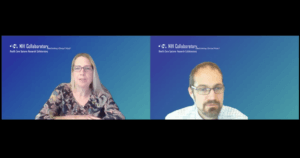
Leaders of the NIH Collaboratory’s Electronic Health Records (EHR) Core Working Group spoke in a recent interview about the impacts of the COVID-19 pandemic on pragmatic trials. They also talked about upcoming projects and a recent survey of the NIH Collaboratory Trials.


“The pandemic amplified themes that we’ve heard all along, which is how to get resources, how to get support for the data that we need for these trials or to configure EHRs as we need for these trials,” said Dr. Rachel Richesson, a professor of learning health sciences at the University of Michigan and a cochair of the EHR Core. “The pandemic just shifted priorities tremendously and made it quite challenging. As a result, we’ve had discussions about…really making the value case for pragmatic research and embedded research,” Richesson said.

View the full video.

Dr. Keith Marsolo, also a cochair of the Core, added, “The pandemic obviously was a big challenge for health systems in general as they transitioned to telehealth, dealt with shutdowns, things of that nature.” Marsolo is an associate professor in population health sciences at Duke University.

“Things are starting to move forward a little bit more. In one [NIH Collaboratory Trial], they were able to leverage some infrastructure that was purchased to help provide telehealth services for their region. So they’ve been able to bootstrap their trial off of that infrastructure,” Marsolo said.

Richesson also described an upcoming paper reporting the results of a recent survey of the NIH Collaboratory Trials. The survey focused on the challenges of using EHR data in pragmatic trials embedded in healthcare systems.

“No surprise on the challenges we encountered: It’s still challenging to get data from organizations for research, the data are still heterogeneous,…and there are challenges on the research team to ensure that that information is equivalent and how these data can be pulled together to support the research question,” Richesson said. “There’s a particular emphasis with the newer studies on patient-reported outcomes and how to get those collected as part of routine care,” she said.

View the full video.


Screen shot of video interview with Dr. Rachel Richesson and Dr. Keith Marsolo
Dr. Rachel Richesson and Dr. Keith Marsolo

August 10, 2021: COVID-19 Grand Rounds to Highlight Outpatient Treatment Trials

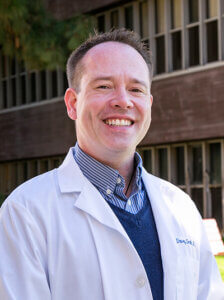
Headshot of Dr. Davey Smith
Dr. Davey Smith

In this Friday’s COVID-19 Grand Rounds session, Dr. Davey Smith of the University of California San Diego will present “Got Anything for This Cough? Outpatient Treatment Trials in the Time of COVID.”

The Grand Rounds session will be held on Friday, August 13, at 1:00 pm eastern. Join the online meeting.

The NIH Collaboratory Coordinating Center is using its popular Grand Rounds platform to share late-breaking research and promote resources in support of clinical researchers affected by the COVID-19 public health emergency.

For previous COVID-19 Grand Rounds, and more news and resources related to the COVID-19 public health emergency, see the COVID-19 Resources page.

August 9, 2021: ‘Pause’ for COVID-19 Complicates Research Embedded in Healthcare Systems

Leaders of the NIH Collaboratory’s Health Care Systems Interactions Core Working Group spoke in a recent interview about the impacts of the COVID-19 pandemic on the NIH Collaboratory Trials.

“Some of the projects are facing healthcare systems that are on pause for research,” said Leah Tuzzio, a senior research associate at Kaiser Permanente Washington Health Research Institute (KPWHRI) and a member of the Core. “It’s happened before when policy changes or when [electronic health record] systems change or when someone important leaves, but the pandemic has had a huge impact,” she said.

“Healthcare systems are strongly influenced by the environment and by changes in their environment, and so any pragmatic trial that’s really embedded in the healthcare system will be affected by the environment around it,” said Dr. Eric Larson, a KPWHRI senior investigator and the chair of the Core. Healthcare systems participating in the NIH Collaboratory NIH Collaboratory Trials have been overwhelmed by their number one priority, which—in addition to caring for their patients—is adapting to COVID, Larson said.

In addition to guiding the NIH Collaboratory Trials through pandemic-related challenges, the Health Care Systems Interactions Core has been working on several long-term projects.

“One of the things that we’re currently working on is a typology of the healthcare systems that have participated in [the GRACE and BeatPain Utah NIH Collaboratory Trials] as well as the projects that came before,” said Core project manager Rachel Hays. The Core is surveying NIH Collaboratory Trial investigators about what lessons they would pass on to future pragmatic trial investigators about building partnerships with their participating healthcare systems, she said.


Screen shot of interview with Eric Larson, Leah Tuzzio, and Rachel Hays
Dr. Eric Larson, Leah Tuzzio, and Rachel Hays

August 3, 2021: COVID-19 Grand Rounds Continues With the TOGETHER Early Treatment Trial

Headshot of Edward Mills
Dr. Edward Mills

In this Friday’s COVID-19 Grand Rounds session, Dr. Edward Mills of McMaster University will present “The TOGETHER Early Treatment of COVID Trial: Building Platform Trial Infrastructure for Infectious Diseases.”

The Grand Rounds session will be held on Friday, August 6, at 1:00 pm eastern. Join the online meeting.

The NIH Collaboratory Coordinating Center is using its popular Grand Rounds platform to share late-breaking research and promote resources in support of clinical researchers affected by the COVID-19 public health emergency.

For previous COVID-19 Grand Rounds, and more news and resources related to the COVID-19 public health emergency, see the COVID-19 Resources page.

August 2, 2021: Can a Primary Care Telehealth Intervention Change the Paradigm for Advance Care Planning?

A supplemental grant to the ACP PEACE study team will test the ability of a telehealth program to improve rates of advance care planning among older patients in primary care in a large healthcare system. Dr. Angelo Volandes and Dr. James Tulsky discussed the new study in a Zoom-based interview after the NIH Collaboratory’s annual steering committee meeting.

Volandes said colleagues contacted him early in the COVID-19 pandemic because they felt unprepared to have conversations with patients and their caregivers about advance care planning in primary care. So, he wondered, “What If we could create a telehealth program where we trained clinicians to have these conversations and also empowered patients and caregivers to better understand their options when it came time to making decisions about serious illness like COVID-19?” Volandes is a physician at Brigham and Women’s Hospital and an associate professor of medicine at Harvard Medical School.

The new study will expand on ACP PEACE, an NIH Collaboratory Trial, which is testing implementation of an advance care planning program that combines clinician communication skills training and patient video decision aids. ACP PEACE is focused on patients with advanced cancer and their clinicians in oncology settings.

Both the new study and ACP PEACE will assess how advance care planning practices changed after the start of the COVID-19 pandemic. View the full video.

“The fact that we’re studying time periods before and after COVID…will help us see the extent to which advance care planning shifted during this time period and will help us understand better the results we see in the oncology community [and] what’s happening in the primary care community,” said Tulsky, a co–principal investigator for both studies. Tulsky is chief of psychosocial oncology and palliative care at the Dana-Farber Cancer Institute and a professor of medicine at Harvard Medical School.

Tulsky added that the study team will learn the value of implementing advance care planning over telehealth. Also, he said, “many of the conversations oncologists are planning for are quite late in the course of care, and this is much earlier, and so we’ll see if that makes a difference.”

“Advance care planning isn’t going to be something just for the purview of people with an advanced serious illness…but rather this is something that we all will need to talk about,” said Volandes. “So I really do think this is going to be a culture shift for healthcare more broadly, but also we’re going to see healthcare systems start prioritizing it beyond, say, patients with advanced serious illness to make it the new normal for everybody.”

ACP PEACE is supported within the NIH Collaboratory by a cooperative agreement from the National Institute on Aging and receives logistical and technical support from the NIH Collaboratory Coordinating Center.


Screen shot of an interview with Dr. Angelo Volandes
Dr. Angelo Volandes

Grand Rounds August 20: Fluvoxamine for Early Treatment of COVID-19: The STOP COVID Clinical Trials

Speaker:
Eric Lenze, MD
Wallace and Lucille K. Renard Professor of Psychiatry
Washington University School of Medicine, St. Louis

Topic: Fluvoxamine for Early Treatment of COVID-19: The STOP COVID Clinical Trials
Date: Friday, August 20, 2021, 1:00-2:00 p.m. ET

Meeting Info: To check whether you have the appropriate players installed for UCF (Universal Communications Format) rich media files, go to https://dukemed.webex.com/dukemed/systemdiagnosis.php.

To join the online meeting:
Go to https://dukemed.webex.com/dukemed/j.php?MTID=m228b52a4666c1e24046e11c01ae7bd0d

You must log in to the URL first.
Click ‘Audio Conference’
Choose ‘I will call in’, select the Toll number.
Dial in using the information from the dialog box that appears.
Be certain to use the Access Code AND the Attendee ID.

Troubleshooting:
If the URL above does not work, go to dukemed.webex.com and enter:
Meeting Number: 120 909 9614
Meeting Password: 1234

For Audio ONLY:
Call-in toll number (US/Canada): 1-650-479-3207
Access code: 120 909 9614

NOTE: For Toll-free users, the call-back (call me) services are also available.

July 29, 2021: COVID-19 Brings Another Real-World Challenge to Pragmatic Research

Principal investigators of the NIH Collaboratory Trials reported several common challenges to implementation of their studies as a result of the COVID-19 pandemic, according to a recent survey. Dr. Emily O’Brien discussed the results of the survey in an interview after the NIH Collaboratory’s annual steering committee meeting.


“Last spring, we started to hear reports of changes in things like care-seeking behavior, research staff working from home, pauses in recruitment at an institutional level,” said O’Brien. “But there wasn’t a lot of information on how these changes affected pragmatic clinical trials specifically,” she said.

O’Brien is a an associate professor in population health sciences at Duke University and a cochair of the NIH Collaboratory’s Patient-Centered Outcomes Core Working Group. View the full interview.

O’Brien and her colleagues at the NIH Collaboratory Coordinating Center conducted a brief survey about the impacts of the pandemic on the NIH Collaboratory Trials, such as challenges they had encountered, solutions they had implemented, and any new measures the study teams had started using. The most common findings were related to delays in trial activities, including training, modifications in the electronic health record, recruitment, and intervention delivery.

“Fortunately, pragmatic trials have a few inherent features that allow them to flex to disruptions that come about from extraneous factors, like those associated with COVID-19,” O’Brien said.

Some study investigators reported that changes in trial implementation had improved their ability to reach a wider audience through virtual interventions. Some also reported renewed commitment from partnering healthcare systems to work together as they encountered challenges in implementation.

“We really think that these silver linings represent lessons learned that can be applied more broadly when we get through the pandemic to help make research more efficient, in line with the Collaboratory’s broader goals,” O’Brien said.


Screen shot from an interview with Dr. Emily O'Brien
Dr. Emily O’Brien

Grand Rounds August 13: Got anything for this cough? Outpatient Treatment Trials in the Time of COVID

Speaker:
Davey Smith, MD
Protocol Co-Chair ACTIV-2
Professor of Medicine, UC San Diego

Topic: Got anything for this cough? Outpatient Treatment Trials in the Time of COVID
Date: Friday, August 13, 2021, 1:00-2:00 p.m. ET

Meeting Info: To check whether you have the appropriate players installed for UCF (Universal Communications Format) rich media files, go to https://dukemed.webex.com/dukemed/systemdiagnosis.php.

To join the online meeting:
Go to https://dukemed.webex.com/dukemed/j.php?MTID=m228b52a4666c1e24046e11c01ae7bd0d

You must log in to the URL first.
Click ‘Audio Conference’
Choose ‘I will call in’, select the Toll number.
Dial in using the information from the dialog box that appears.
Be certain to use the Access Code AND the Attendee ID.

Troubleshooting:
If the URL above does not work, go to dukemed.webex.com and enter:
Meeting Number: 120 909 9614
Meeting Password: 1234

For Audio ONLY:
Call-in toll number (US/Canada): 1-650-479-3207
Access code: 120 909 9614

NOTE: For Toll-free users, the call-back (call me) services are also available.

July 23, 2021: Long Term COVID Patient Engagement: Best Practices Informed By Patients’ Experiences Seeking Medical Care (Diana Berrent, JD; Natalie Lambert, PhD; Nick Guthe)

Speakers

Diana Berrent, JD
Survivor Corps, Founder

Natalie Lambert, PhD
Associate Research Professor
Indiana University School of Medicine

Nick Guthe
Survivor Corps Member and Advisor

Topic

Long Term COVID Patient Engagement: Best Practices Informed By Patients’ Experiences Seeking Medical Care

Keywords

Long-term COVID; COVID-19 symptoms; Survivor Corps; Patient-centered outcomes; Real-world evidence; Patient engagement

Key Points

  • Survivor Corps is a 170,000 member grassroots organization founded in 2020 to support and educate people with COVID-19 and those who continue to experience long-lasting symptoms of COVID-19.
  • People who experience long-term, after-effects of COVID-19 report feeling alone and desperate due to the difficult and dissatisfying medical care they receive and their medical provider’s lack of knowledge about long-term COVID.
  • Long-term COVID patients want to be heard and believed by medical professionals who are thorough in their examination and testing methods.
  • Survivor Corps advocates for crucial research to be done on the symptoms that cause the most human pain and suffering, and not just the symptoms that are experienced most frequently.
  • COVID-19 research can be done at a faster pace if we engage citizen-scientists and quickly release NIH research funding.
  • The life-or-death struggles of people with long-term COVID illustrate the need to treat this condition as an emergency medical situation—the same as we would treat an acute case of COVID-19.

Discussion Themes

The CDC guidelines are the first-step, interim guidance; however, no treatment options have been offered. Another iteration of these guidelines needs to be released soon.

We know from people who have experienced long-lasting effects of COVID-19 that the condition can be debilitating and devastating—patients are in urgent need of understanding and help.

Medical professionals should focus on real-word evidence to develop patient-centered outcomes.

Read more about Survivor Corps, Dr. Lambert’s research, the report from the Survivor Corps COVID-19 ‘Long Hauler’ Symptom Survey, and physician resources.

Tags

#pctGR, @Collaboratory1, @Survivor_Corps