March 24, 2022: ACP-COVID Intervention Associated With Higher Rates of Advance Care Planning

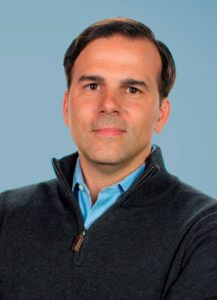
Headshots of Dr. Angelo Volandes, Dr. James Tulsky, and Sophia Zupanc
Left to right: Dr. Angelo Volandes, Dr. James Tulsky, and Sophia Zupanc

A program consisting of video decision aids for patients and communication skills training for clinicians was associated with higher rates of documentation of advance care planning among older adults, especially African American and Hispanic patients, in a recent study from the NIH Pragmatic Trials Collaboratory.

The COVID-19 pandemic has led to disproportionately higher death rates among older adults and racial and ethnic minority groups. Improving access to advance care planning for these groups, as in other high-risk populations, could help patients receive care that reflects what matters most to them.

The Advance Care Planning: Communicating With Outpatients for Vital Informed Decisions (ACP-COVID) study was a pre-post, open-cohort nonrandomized controlled trial comparing rates of advance care planning documentation among older patients in an ambulatory care network of 22 clinics in the New York City metropolitan area. Outcomes were measured during a 6-month pre–COVID-19 baseline period, a 6-month period during the first wave of the COVID-19 public health emergency, and a 6-month intervention period.

The study’s results were published in JAMA Network Open.

Video decision aids were shared with all patients 65 years or older up to 2 weeks before an in-person or telehealth appointment in the participating clinics. The videos addressed choosing a healthcare proxy, having an advance care planning conversation, and information about COVID-19 and vaccinations. Communication skills training was offered to all clinicians in the practices.

Rates of advance care planning documentation were much higher during the intervention period compared with the 2 other study periods. In addition, African American and Hispanic patients were more likely than non-Hispanic White patients to have advance care planning documentation during the intervention period, groups which also had higher exposure to serious COVID-19 illness during the study.

Watch a recent COVID-19 Grand Rounds session about the ACP-COVID study.

ACP-COVID was supported within the NIH Pragmatic Trials Collaboratory by the NIH Common Fund through a cooperative agreement for the ACP-PEACE NIH Collaboratory Trial from the National Institute on Aging and by supplemental funding from the Office of Strategic Coordination within the Office of the NIH Director. Learn more about ACP PEACE.


March 4, 2022: ACP COVID: A Trial to Evaluate an Advance Care Planning Video and Communication Skills Training Intervention for Older Adults During an Evolving Pandemic (Angelo E. Volandes, MD, MPH; James A. Tulsky, MD; Sophia N. Zupanc, BA)

Speaker

Angelo E. Volandes, MD, MPH
Associate Professor, Harvard Medical School and Massachusetts General Hospital

James A. Tulsky, MD
Chair, Department of Psychosocial Oncology and Palliative Care
Dana-Farber Cancer Institute
Professor of Medicine, Harvard Medical School

Sophia N. Zupanc, BA
Dana-Farber Cancer Institute

Keywords

Advanced Care Planning; VitalTalk; ACP DECISIONS; Unstructured data; Patient engagement; Clinician engagement

Key Points

  • ACP COVID combines the VitalTalk program and ACP DECISIONS videos to help patients and families navigate difficult decisions around advanced care planning.
  • VitalTalk is a non-profit organization providing evidence-based communication training. VitalTalk trained health care providers to communicate advanced care planning options with patients.
  • The ACP COVID study compared advanced care planning documentation rates at three specific timepoints: 6 months prior to COVID-19(control period, Sep 2019-Mar 2020), during the first wave of COVID-19(control period, March 2020-Sep 2020), and during the time period when vaccines were first rolled out in New York state(intervention period, Dec 2020-June 2021).
  • Advanced care planning conversations best happen in the outpatient setting, not in the hospital right before intubation.
  • Almost 24% of patients in the intervention period had Advance Care Planning conversations which was significantly higher than the control periods.

Discussion Themes

The clinician training program gave clinicians the skills to cope with the implications of the pandemic and led to increased clinician engagement.


Read more about ACP-COVID.


 Tags

#pctGR, @Collaboratory1

March 2, 2022: COVID-19 Grand Rounds to Share Findings of ACP COVID Study of Advance Care Planning

Headshots of Dr. Angelo Volandes, Dr. James Tulsky, and Sophia Zupanc
Dr. Angelo Volandes, Dr. James Tulsky, and Sophia Zupanc

In this Friday’s COVID-19 Grand Rounds session, Dr. Angelo Volandes of Massachusetts General Hospital and Dr. James Tulsky and Sophia Zupanc of Dana-Farber Cancer Institute will present “ACP COVID: A Trial to Evaluate an Advance Care Planning Video and Communication Skills Training Intervention for Older Adults During an Evolving Pandemic.” The study is supported by a supplemental grant award to the investigators of ACP PEACE, an NIH Pragmatic Trials Collaboratory Trial.

The Grand Rounds session will be held on Friday, March 4, at 1:00 pm eastern. Join the online meeting.

The NIH Pragmatic Trials Collaboratory Coordinating Center is using its popular Grand Rounds platform to share late-breaking research and promote resources in support of clinical researchers affected by the COVID-19 public health emergency.

For previous COVID-19 Grand Rounds, and more news and resources related to the COVID-19 public health emergency, see the COVID-19 Resources page.

October 20, 2021: PCT Grand Rounds Features STAMP Trial of Advance Care Planning in Ambulatory Care

Headshot of Dr. Terri Fried
Dr. Terri Fried

In this Friday’s PCT Grand Rounds session, Dr. Terri Fried of Yale University will present “The STAMP Trial: Increasing Engagement in Advance Care Planning and Lessons Learned From Partnering With Community Ambulatory Practices.”

The Sharing and Talking About My Preferences (STAMP) trial tested a telephone-based intervention to encourage more patients to complete advance care planning. The study is supported by the National Institute of Nursing Research and the National Institute of Aging.

The Grand Rounds session will be held on Friday, October 22, at 1:00 pm eastern. Join the online meeting.

August 2, 2021: Can a Primary Care Telehealth Intervention Change the Paradigm for Advance Care Planning?

A supplemental grant to the ACP PEACE study team will test the ability of a telehealth program to improve rates of advance care planning among older patients in primary care in a large healthcare system. Dr. Angelo Volandes and Dr. James Tulsky discussed the new study in a Zoom-based interview after the NIH Collaboratory’s annual steering committee meeting.

Volandes said colleagues contacted him early in the COVID-19 pandemic because they felt unprepared to have conversations with patients and their caregivers about advance care planning in primary care. So, he wondered, “What If we could create a telehealth program where we trained clinicians to have these conversations and also empowered patients and caregivers to better understand their options when it came time to making decisions about serious illness like COVID-19?” Volandes is a physician at Brigham and Women’s Hospital and an associate professor of medicine at Harvard Medical School.

The new study will expand on ACP PEACE, an NIH Collaboratory Trial, which is testing implementation of an advance care planning program that combines clinician communication skills training and patient video decision aids. ACP PEACE is focused on patients with advanced cancer and their clinicians in oncology settings.

Both the new study and ACP PEACE will assess how advance care planning practices changed after the start of the COVID-19 pandemic. View the full video.

“The fact that we’re studying time periods before and after COVID…will help us see the extent to which advance care planning shifted during this time period and will help us understand better the results we see in the oncology community [and] what’s happening in the primary care community,” said Tulsky, a co–principal investigator for both studies. Tulsky is chief of psychosocial oncology and palliative care at the Dana-Farber Cancer Institute and a professor of medicine at Harvard Medical School.

Tulsky added that the study team will learn the value of implementing advance care planning over telehealth. Also, he said, “many of the conversations oncologists are planning for are quite late in the course of care, and this is much earlier, and so we’ll see if that makes a difference.”

“Advance care planning isn’t going to be something just for the purview of people with an advanced serious illness…but rather this is something that we all will need to talk about,” said Volandes. “So I really do think this is going to be a culture shift for healthcare more broadly, but also we’re going to see healthcare systems start prioritizing it beyond, say, patients with advanced serious illness to make it the new normal for everybody.”

ACP PEACE is supported within the NIH Collaboratory by a cooperative agreement from the National Institute on Aging and receives logistical and technical support from the NIH Collaboratory Coordinating Center.


Screen shot of an interview with Dr. Angelo Volandes
Dr. Angelo Volandes

July 7, 2020: PROVEN Primary Results Published

Congratulations to Drs. Vincent Mor, Susan Mitchell, and Angelo Volandes and their team for the publication of their article in JAMA Internal Medicine reporting the primary results of the Pragmatic Trial of Video Education in Nursing Homes (PROVEN), an NIH Collaboratory Trial.

Vincent Mor
Dr. Vincent Mor, Co-PI of PROVEN
Dr. Susan Mitchell, Co-PI of PROVEN
Dr. Angelo Volandes
Dr. Angelo Volandes, Co-PI of PROVEN

PROVEN was the first large-scale embedded pragmatic clinical trial conducted in nursing homes. The intervention was an advance care planning video, meant as an adjunct to first-person discussions with the clinical care provider to help people understand their options for end-of-life care, including life prolongation, limited care, and comfort care. PROVEN’s primary outcome was the number of transfers to the hospital from the nursing home over 12 months among long-stay residents with advanced illness. Secondary outcomes included hospital transfers, burdensome treatments, and hospice use among residents with or without advanced illness.

Although the video program was effective in previous small randomized trials, it was not effective in the PROVEN trial in reducing either the primary or secondary outcomes. The authors suggest that implementation error may explain the findings: intervention fidelity was low, only 1 in 5 targeted residents were shown the video, and implementation of the intervention was highly variable across facilities. The authors state that the results are “sobering,” that creative approaches are needed to change care in nursing homes, and that the perspectives of key stakeholders should be considered.

“For pragmatic trialists and implementation scientists focused on the nursing home setting, the highest level of health care system readiness and endorsement from senior and local leadership must be present before embarking on [pragmatic clinical trials]; otherwise, low implementation fidelity may compromise interpretation of its findings.” — Mitchell et al. 2020 JAMA Internal Med

Drs. Mitchell and Mor are also co–principal investigators of the National Institute on Aging (NIA) IMPACT Collaboratory (Imbedded Pragmatic Alzheimer’s Disease [AD] and AD-Related Dementias [AD/ADRD] Clinical Trials),  which is similar to the NIH Collaboratory in that it aims to build the nation’s capacity to conduct pragmatic clinical trials embedded within healthcare systems. The population of interest for the IMPACT Collaboratory is people living with dementia and their caregivers.

Data and resources from PROVEN will be posted on the NIH Collaboratory’s Data and Resource Sharing page in the coming months. As part of the program’s commitment to sharing, all NIH Collaboratory Trials are expected to share data and resources, such as protocols, consent documents, public use datasets, computable phenotypes, and analytic code.

See the June 12, 2020, Grand Rounds webinar for a presentation of the PROVEN results: A Cluster Randomized Pragmatic Trial of an Advance Care Planning Video Intervention in Long-Stay Nursing Home Residents: Main Findings from the PROVEN Trial (Susan Mitchell, MD, MPH).

June 12, 2020: A Cluster Randomized Pragmatic Trial of an Advance Care Planning Video Intervention in Long-Stay Nursing Home Residents: Main Findings from the PROVEN Trial (Susan Mitchell, MD, MPH)

Speaker

Susan L. Mitchell, MD, MPH
Senior Scientist
Hebrew SeniorLife
Hinda and Arthur Marcus Institute for Aging Research
Professor of Medicine
Harvard Medical School

Topic

A Cluster Randomized Pragmatic Trial of an Advance Care Planning Video Intervention in Long-Stay Nursing Home Residents: Main Findings from the PROVEN Trial

Keywords

Embedded pragmatic trial; PROVEN; Advance care planning; Nursing homes; Video intervention; Medicare; Care preferences; Decision support tool; Minimum data set; Intention to treat

Key Points

  • The PROVEN trial was the first large-scale embedded pragmatic trial conducted in nursing homes.
  • The advance care planning (ACP) video intervention in PROVEN was meant as an adjunct to first-person discussions with the clinical care provider.
  • The levels of care preferences described in the ACP videos were life prolongation, limited care, and comfort care.
  • PROVEN’s primary outcome was the number of transfers to the hospital from the nursing home.

Discussion Themes

Widely adoptable, effective interventions to improve ACP in nursing homes remain elusive.

Of the challenges of conducting PCTs embedded in nursing homes, it is important not to overlook the real-world priorities of stakeholders. A high level of endorsement, from C-suite to frontline care providers, is needed before attempting such a trial.

While a priority for nursing home administrators is the number of residents who transfer to the hospital, an essential question for patients and palliative care experts is whether patients receive care that matches their goals and preferences. This is hard to ascertain in a pragmatic way.

Read more about the PROVEN trial, and learn about a new research initiative built on the success of the NIH Collaboratory: the National Institute on Aging’s IMPACT Collaboratory, which is directly funding pilots of embedded PCTs across diverse healthcare settings to improve the care of patients with dementia and their caregivers.

Tags

#pctGR, @Collaboratory1