Long-term solutions to disparities in health will involve focused partnerships and community engagement. In this video, the BeatPain Utah team shares their strategies for reaching and enrolling rural and frontier populations. Key characteristics of good partnerships are shared goals, mutual respect of expertise, and shared resources and data.
Speakers
Julie Fritz, PhD, PT
Associate Dean for Research College of Health, School of Medicine, University of Utah
BeatPain Utah NIH Collaboratory Trial PI
David Wetter, PhD
Interim Chief, Division of Health System Innovation & Research, University of Utah
The STOP CRC trial investigators deployed many strategies to ensure the inclusion of all populations in their trial, including piloting the trial, refining the materials based on patient feedback, assembling an advisory board, and conducting plan-do-study-act cycles at the sites. This video describes their experiences with building partnerships throughout this process.
Developing a Pipeline of Investigators: An Investigator Perspective
Description
In this video, Dr. Natalia Morone, PI of the OPTIMUM trial, describes her experience with developing a pipeline of faculty for research. She also describes the Career Education and Enhancement for Health Care Research program, designed for post-docs and early career faculty in health-related sciences.
Biography
Natalia Morone, MD, MS
Associate Professor of Medicine, Boston University
OPTIMUM NIH Collaboratory Trial PI
Developing a Pipeline of Investigators and Leaders in Pragmatic Clinical Trials
Description
In this video, Dr. George Manesh, Director of the Center for Translation Research and Implementation Science at NHLBI, shares how to increase the number of investigators and leaders in pragmatic clinical trials. He offers 5 key takeaways: start as early as possible, nurture a large pool of trainees, use funding mechanisms such as supplements, create mentor/mentee dyads, and use NIH clinical trial funding announcements that offer career development.
Speaker
George Mensah, MD, FACC
Director of The Center for Translation Research and Implementation Science (CTRIS)
National Heart, Lung, and Blood Institute (NHLBI), part of the National Institutes of Health (NIH)
In an interview during the annual Steering Committee meeting, Drs. Rosa Gonzalez-Guarda and Cherise Harrington, cochairs of the Health Equity Core Working Group, shared insights and next steps for health equity in the NIH Pragmatic Trials Collaboratory.
One question discussed at the meeting was how to embed health equity in pragmatic clinical trials. Gonzalez-Guarda said that a key component of addressing health equity is acknowledging the structural and social drivers of that inequity and developing strategies to target them.
“The next phase is to figure out ways that we can encourage embedded pragmatic clinical trials that address the structural causes of health inequities,” said Gonzalez-Guarda, who noted that the National Institutes of Health is supporting more structural interventions.
One way the NIH Pragmatic Trials Collaboratory can lead is by integrating a pragmatic clinical trial lens into structural intervention work, Gonzalez-Guarda said. This work is central to the Health Equity Core, which was launched last fall and began meeting regularly in early 2023.
Health Equity Core members are reviewing a checklist on how to infuse a health equity lens into the research life cycle. As a next step, Harrington and Gonzalez-Guarda would like to ask Core members to think critically about how the checklist can be adapted for pragmatic clinical trials and develop it as a new tool for the research community.
Harrington said another way the Health Equity Core can make an impact is by gathering examples from the NIH Collaboratory Trials of data on underrepresented populations that are not statistically significant but may be clinically significant so that other projects can learn from them.
Drawing from and adding to the NIH Pragmatic Trials Collaboratory’s lessons learned is also a key strategy for the Health Equity Core’s work. Harrington said it is important to share knowledge outside of the research community.
“We need to remember to ask ourselves, 'What am I leaving with this community after the funding is gone that they can still leverage?,’” said Harrington.
Many of the NIH Collaboratory Trials are already implementing health equity plans and engagement strategies to reach diverse patient populations, providers, and community stakeholders.
Gonzalez-Guarda said that it is important to continue this work and to support the careers of junior researchers working on pragmatic clinical trials so they can use engagement practices and be successful. In addition to preparing investigators to engage with diverse communities, part of the engagement work may also be training for communities to better engage with projects in a more meaningful way, Harrington said.
Developing tools and resources is a top priority as the Health Equity Core moves forward, and Gonzalez-Guarda and Harrington look forward to providing guidance for pragmatic clinical trials and continuing the conversation from the Steering Committee meeting.
The NIH National Center for Advancing Translational Sciences (NCATS) recently announced a new Request for Information (RFI) entitled, “Advancing Clinical and Translational Science Through Accelerating the Decentralization of Clinical Trials.” The goals of the RFI are to identify ways that decentralized clinical trials can help make trials more effective, efficient, and equitable. In particular, comments are sought on ways to decrease health disparities by enabling participation of those who are underrepresented in clinical trials, including by race, ethnicity, socioeconomic status, background, gender, and mental or physical ability.
The potential areas for commentary include
Application of research methods in decentralized clinical trials (DCTs)
Resources, Infrastructure, and Enabling Technologies
Community Engagement
Workforce Development
Partnerships and/or Collaborations
Study Participation and Adherence
Data integration, quality, accessibility, and reproducibility
The NIH Pragmatic Trials Collaboratory is pleased to announce the addition of 2 new Core Working Groups that will be focused on implementation science and health equity.
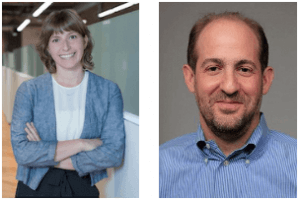
From left, Devon Check, PhD, and Hayden Bosworth, PhD
The Implementation Science Core will provide technical support and pragmatic trial expertise for NIH Collaboratory Trials with a specific focus on innovative dissemination and implementation science approaches. The Core will study methods and strategies to promote the uptake of interventions that have proven effective in routine practice, with the aim of improving population health.
The Implementation Science Core will be co-led by Devon Check and Hayden Bosworth. Devon Check, PhD, is a health services and implementation researcher and Assistant Professor, in the Department of Population Health Sciences at Duke University. Hayden Bosworth, PhD, is a health services and implementation researcher and Deputy Director for the Center for Health Services Research in Primary Care at the Durham VA Medical Center as well as Professor in the Department of Population Health Sciences and Professor of Medicine, Psychiatry, and Nursing at Duke University Medical Center. Jill George, CCRA, of the Duke Clinical Research Institute, will serve as the project manager for the Implementation Science Core in the Coordinating Center.
The Health Equity Core will provide leadership and guidance that will help the NIH Pragmatic Trials Collaboratory, its trials and investigators be more equitable in research. The Core’s work includes supporting pragmatic trials to address social and structural drivers of inequities, implement patient and community engagement strategies, promote the inclusion and mentorship of historically underrepresented scientists, and develop culturally and contextually aligned research and translation strategies that overcome bias and resonate with patients and communities.
Rosa Gonzalez-Guarda, PhD, MPH, RN, CPH, FAAN
The Health Equity Core will be led by Rosa Gonzalez-Guarda, PhD, MPH, RN, CPH, FAAN, an Associate Professor of Nursing at Duke University, Faculty Lead for the Population Health Research Area of Excellence at Duke’s Center for Nursing Research, and co-director of the Community Engagement Core for Duke Clinical Translational Science Institute. Alex Fist, MPH, of the Duke Clinical Research Institute, will serve as the project manager for the Health Equity Core in the Coordinating Center.
“By launching these 2 new Core Working Groups, the NIH Pragmatic Trials Collaboratory is reaffirming its commitment to generating knowledge that supports equitable pragmatic research to improve healthcare for all,” said Dr. Adrian Hernandez, co-principal investigator of the NIH Pragmatic Trials Coordinating Center. “Through their work in the areas of implementation science and health equity, the new Cores can help uncover how best to implement improved clinical practices so the benefits reach at-risk and traditionally underserved populations.”
Gerald Bloomfield, MD, MPH Associate Professor with Tenure, Medicine
Associate Professor, Global Health
Duke University School of Medicine
Michelle Kelsey, MD Assistant Professor of Medicine
Duke University School of Medicine
Keywords
Diversity, Inclusion
Key Points
There is a national priority to increase diversity in clinical trials, from regulatory, funding agencies, industry, and others, so that the participant population reflects the U.S. population at large, which is steadily becoming more diverse.
The Duke Clinical Research Institute (DCRI) organized and sponsored a Think Tank to address diversity in clinical trial research. It was held virtually on April 28-29, 2021. Participating organizations included FDA, NIH, academic institutions, pharmaceutical and device companies, patient advocacy groups, community groups, and data groups, and representatives from each organization had opportunity to extend invitation to others.
Three key themes emerged from the Think Tank discussion: build partnerships with participants and communities; improve accessibility of clinical trials; improve representation among clinical investigators.
For the theme of building partnerships, community engagement was identified as particularly effective for recruitment of racial and ethnic minority groups. In systematic reviews, community involvement and partnership with community-based organizations are universally cited as key to success. Communities should be involved from the very beginning where both the community and investigators take ownership of the research and are equally involved and interested.
For the theme of improving the accessibility of clinical trials, the Think Tank identified steps such as decentralizing clinical trials to reduce geographic barriers, using digital tools, and leveraging community infrastructure already in place to improve accessibility to clinical trials.
For the theme of improving representation and diversity among clinical investigators, having a more representative clinical trial workforce might translate to more diverse participants. We have seen that having a higher proportion of women authors resulted in a higher proportion of women enrolled per trial. To prioritize diversity in the clinical research workforce, institutions should hire individuals from under-represented groups and offer support and mentorship of their research endeavors.
Discussion Themes
-Is there low hanging fruit we should encourage people to focus on? Where to start? This is an issue that a number of institutions have been thinking about for some time. We have made tremendous progress with some of the programs that Michelle alluded to, programs that are developing a pipeline of researchers. In terms of untapped potential, the engagement with the community, taking the time to identify who folks are and speak face to face. Ask questions like here’s what we think are priorities; are we right? Ask and engage community partners.
–How do investigators target rural areas to increase diversity? This is one of the biggest gaps that we do not have a solution for yet in the clinical trial space. NIH has done a lot with epidemiological research to reach, engage, understand rural populations. The face-to-face component, the time in front of individuals is a critical step to being welcomed and to engaging people in rural settings.
Learn more Read about the DCRI Think Tank results: Inclusion and diversity in clinical trials: Actionable steps to drive lasting change.
Consuelo H. Wilkins, MD, MSCI
Senior Vice President and Senior Associate Dean
for Health Equity and Inclusive Excellence
Professor of Medicine
Vanderbilt University Medical Center
Keywords
Equity, Diversity, Recruitment
Key Points
Because the system and structures have not been built equitability, we will need to invest more and have more transparency and accountability at every level, from the investigator, funder, publisher and journals. It is everyone’s responsibility.
There is a need to shift our language. People are “underrepresented” because they have been historically excluded and marginalized. How we categorize race and ethnicity in the U.S. has been historically about oppression. These terms and designations were intended to restrict rights. The racism built into these categories does not go away when we do research.
There are barriers at the health care professional and researcher level. Researchers push the focus on the population, but do we have the level of cultural humility required, and are we trustworthy enough to be doing this type of research and engaging these populations?
What does pragmatic mean to minoritized racial and ethnic groups? When we say pragmatic = real world do we understand that health care in the real world is unfair, unjust, racist, discriminatory? We have to recognize the centuries of injustices that have happened in our health systems. The legacies of these inequities and the structural factors live on and are obvious when we look at the health outcomes of populations in our country. How do we adjust, repair, bring in resources to recruit and work with these populations?
The Trial Innovation Network Recruitment Innovation Center aims to positively impact human health by improving participant enrollment and retention in multi-center clinical trials. Achieving this goal will require sophisticated informatics-based recruitment tools and novel engagement approaches to accelerate recruitment and retention.
The recruitment plan needs to include study materials that are tailored and accessible to the research population. Study design and approach should support diversity goals. If we are focusing on equity, we need to give participants what they need, such as transit vouchers, childcare considerations, utilizing telehealth, flexible hours, accessible community locations, and compensation
Discussion Themes
-If we accept and acknowledge that race is a social construct, not a category that is tied to biological or genetic differences, then what does that mean when we see clear differences and disparities in health outcomes for these populations? When you live in an environment where you have been minoritized and are experiencing discrimination, it has an impact on your biology. There is plenty of data that shows that. The social circumstances affect health outcomes. It leads to physiological changes, it leads to insulin resistance, changes in your immunology. These social factors can result in changes. That does not mean there are inherent differences or causes because of their race and ethnicity. We have to capture those social and structural factors better so we can stop using race and ethnicity as proxies for the social factors.
-How far along are we in the reframing of looking at the true underlying factors? We have a long way to go; we are talking about data we don’t currently collect. In January we will be expected to collect data on social needs. How will that be collected? Who is asking? Are we piping in community-level factors? The structural issues are really rampant. For example, a question I like to ask is, which of these best describes you, but it is not compatible with the downstream EHR definitions, which are based on CDC terms.
–How should we think about these issues in global studies? First, we lump so many groups into large categories that we call race that we really have very little understanding of the nuanced differences. If we are really looking for population differences then we need a better strategy for identifying culture. It gets down to the social factors, are we capturing these factors that are different within populations. Social factors are often driving health outcomes not other factors.







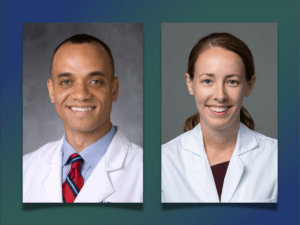 In this Friday’s PCT Grand Rounds, Dr. Gerald Bloomfield and Dr. Michelle Kelsey will present