October 22, 2021: The STAMP Trial: Increasing Engagement in Advance Care Planning and Lessons Learned from Partnering with Community Ambulatory Practices (Terri R. Fried, MD)

Speaker

Terri R. Fried, MD
Section Chief, Geriatrics
Professor of Medicine
Yale School of Medicine
Attending Physician
VA Connecticut Healthcare System

Topic

The STAMP Trial: Increasing Engagement in Advance Care Planning and Lessons Learned from Partnering with Community Ambulatory Practices

Keywords

STAMP Trial; Advance Care Planning; ACP; Patient engagement; Cluster randomized trial

Key Points

  • The STAMP (Sharing and Talking about My Preferences) Trial is a cluster randomized controlled trial aimed at increasing engagement in Advanced Care Planning (ACP).
  • The STAMP Trial first aimed to re-conceptualize advance care planning (ACP) to achieve the ultimate goal of enabling the patient or surrogate to make decisions in a future moment rather than making decisions in advance. In this way, ACP is a flexible act of communication that allows for in-the-moment advice of a patients care providers about the nuances of a particular clinical situation.
  • ACP is a Health Behavior that involves stages of change. The STAMP Trial uses a 10 minute survey to assess how ready a patient is to start the ACP communication process.
  • Patients are given ACP materials based on their stage of readiness as assessed by the survey.
  • Results showed a small increase in ACP planning for groups randomized to the study interventions, but that small increase applied over large numbers of patients could have a significant impact on the number of people participating in ACP.

Discussion Themes

Cluster randomized trial design is complex unless you are working with an intervention that is implemented in a whole health care system rather than individual patients.

Determining a denominator in a cluster randomized trial at the patient level was very difficult.


Read more about Dr. Fried’s work on the STAMP Trial.

Tags

#pctGR, @Collaboratory1
October 15, 2021: The Impact of Community Masking on COVID-19: A Cluster-Randomized Trial in Bangladesh (Jason Abaluck, PhD)

Speaker

Jason Abaluck, PhD
Professor of Economics
Yale School of Management

Topic

The Impact of Community Masking on COVID-19: A Cluster-Randomized Trial in Bangladesh

Keywords

COVID-19; Cluster-randomized trial; Masking; Community spread; NORM model

Key Points

  • Dr. Abaluck’s cluster-randomized trial on the impact of community masking in ~350,000 adults in 600 villages of Bangledesh aimed to answer 2 questions: What strategies or interventions will increase mask-wearing? and What is the impact of mask wearing intervention on COVID-10?
  • There are two major differences between the existing randomized trials of mask wearing for flu and the impact of community masking in Bangladesh trial. The first issue is the existing trials were randomized individually not by communities so you cannot evaluate weather masks act as source control. The second issue with the existing trials is the discrepancy between the number of people who attest to wearing a mask and the number who actually wore a mask.
  • The impact of community masking in Bangladesh trial used the NORM model to increase mask wearing. The NORM model distributes masks at No-cost, Offers information about why mask wearing is important, Reinforces mask wearing by having mask promoters give free masks and information in public places, and Modeling by trusted community leaders wearing masks and endorsing mask wearing.
  • The NORM model more than tripled mask usage(13% usage increased to 42%), increased physical distancing, and had a sustained impact that lasted at least 10 weeks.
  • Communities where the NORM model was employed saw a 9% reduction in symptomatic COVID-19 infections.
  • Mask wearing showed a greater reduction in COVID-19 among the elderly.

Discussion Themes

The NORM model would have different efficacy rates in different cultures and communities.

You can get some people to wear a mask by just distributing the masks in public places and asking them to wear them.

Masks are not an all-or-nothing protection. Masks have a dose-reduction effect and that dose-reduction translates into a transmission effect.


Read more about the Dr. Abaluck’s work on masking and COVID-19 in the recently published Discussion Paper.

Tags

#pctGR, @Collaboratory1, @Jabaluck

October 20, 2021: PCT Grand Rounds Features STAMP Trial of Advance Care Planning in Ambulatory Care

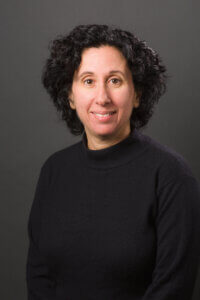
Headshot of Dr. Terri Fried
Dr. Terri Fried

In this Friday’s PCT Grand Rounds session, Dr. Terri Fried of Yale University will present “The STAMP Trial: Increasing Engagement in Advance Care Planning and Lessons Learned From Partnering With Community Ambulatory Practices.”

The Sharing and Talking About My Preferences (STAMP) trial tested a telephone-based intervention to encourage more patients to complete advance care planning. The study is supported by the National Institute of Nursing Research and the National Institute of Aging.

The Grand Rounds session will be held on Friday, October 22, at 1:00 pm eastern. Join the online meeting.

October 13, 2021: COVID-19 Grand Rounds to Feature Cluster Randomized Trial of Community Masking

Headshot of Jason Abaluck
Dr. Jason Abaluck

In this Friday’s COVID-19 Grand Rounds session, Dr. Jason Abaluck of Yale University will present “The Impact of Community Masking on COVID-19: A Cluster-Randomized Trial in Bangladesh.”

The Grand Rounds session will be held on Friday, October 15, at 1:00 pm eastern. Join the online meeting.

The NIH Collaboratory Coordinating Center is using its popular Grand Rounds platform to share late-breaking research and promote resources in support of clinical researchers affected by the COVID-19 public health emergency.

For previous COVID-19 Grand Rounds, and more news and resources related to the COVID-19 public health emergency, see the COVID-19 Resources page.

October 8, 2021: Lessons Learned and Patient Partnership in ADAPTABLE (Schuyler Jones, MD; Madelaine Faulkner Modrow, MPH)

Speakers

Schuyler Jones, MD
Associate Professor of Medicine
Duke University School of Medicine

Madelaine Faulkner Modrow, MPH
Program Director
Department of Epidemiology and Biostatistics
University of California, San Francisco

Topic

Lessons Learned and Patient Partnership in ADAPTABLE

Keywords

Patient engagement; Pragmatic clinical trial; Aspirin; ADAPTABLE; Study design; Stakeholder engagement; Recruitment

Key Points

  • ADAPTABLE is a pragmatic clinical study of 15,000 patients to examine a simple, everyday decision, whether to take 81mg or 325mg of aspirin daily, to identify if that decision could prevent heart attacks.
  • ADAPTABLE used both pragmatic and personalized approaches to participant recruitment.
  • Pragmatic recruitment involves broad-based email and social media outreach to a large pool of potential subjects. This method of recruitment was lower cost, less time intensive, and faster paced than personalized recruitment.
  • Personalized recruitment involves traditional in-clinic or phone call personal outreach to potential participants. This method of recruitment was higher cost, time intensive, and slower paced than personalized recruitment.
  • ADAPTABLE learned a critical lesson in patient engagement: in-clinic enrollment was much higher at 81% of those approached versus e-communication enrollment at 35% of those contacted.
  • Key principles of patient engagement include trust and partnership, respect and listening, empowering patients to find solutions, and value and design the trial for the patient experience.

Discussion Themes

We are moving from a traditional model of research to a relational model with participants coming together with researchers and forming a kind of social contract where a participant’s voice is valued in the research process.

We have lessons left to learn in order to fully utilize technology for patient engagement including how to use broad outreach methods to increase enrollment of diverse populations.

Patients continue to look to their clinician or doctor for advice on whether to participate in a clinical trial. Trusted contacts will continue to play an important role in the recruitment process.


Read more about the ADAPTABLE trial.

Tags

#pctGR, @Collaboratory1

October 6, 2021: Patient Partnership in ADAPTABLE Featured in This Friday’s PCT Grand Rounds

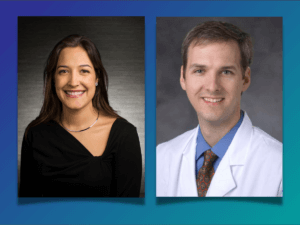
Headshots of Madelaine Faulkner Modrow and Dr. Schuyler Jones
Madelaine Faulkner Modrow (left) and Dr. Schuyler Jones

In this Friday’s PCT Grand Rounds, Madelaine Faulkner Modrow of the University of California, San Francisco, and Dr. Schuyler Jones of Duke University will present “Lessons Learned and Patient Partnership in ADAPTABLE.”

The Grand Rounds session will be held on Friday, October 8, at 1:00 pm eastern. Join the online meeting.

For webinar recordings and slides from previous Grand Rounds sessions, see the Grand Rounds hub.

October 1, 2021: COVID-OUT: From Computer Modeling to a Phase III Trial of Early Outpatient Treatment for SARS-CoV-2 Infection (Carolyn Bramante, MD, MPH; Thomas Murray, PhD; Jared Huling, PhD)

Speakers

Carolyn Bramante, MD, MPH
Division of General Internal Medicine
Departments of Internal Medicine and Pediatrics
Core faculty in the Program in Health Disparities Research and the Center for Pediatric Obesity Medicine
University of Minnesota Medical School

Thomas Murray, PhD
Division of Biostatistics
Coordinating Centers for Biometric Research
School of Public Health
University of Minnesota

Jared Huling, PhD
Division of Biostatistics
School of Public Health
University of Minnesota

Topic

COVID-OUT: From Computer Modeling to a Phase III Trial of Early Outpatient Treatment for SARS-CoV-2 Infection

Keywords

COVID-OUT; Study design; Randomized controlled trial; Metformin; Parallel enrollment design; De-centralized study; Nested SMART study

Key Points

  • The COVID-OUT trial is a phase 3, double-blinded, matched placebo-controlled, factorial design study of early outpatient treatments for SARS-Co-V-2 infection.
  • Metformin has a history of antiviral properties and has been shown, pre-COVID-19, to lower inflammation in the body, inhibit mTOR action, and cytokine-reducing effects.
  • Metformin is safe, inexpensive, and widely available.
  • The COVID-OUT trial aims to test 1,124 subjects in a 6 arm study design with metformin alone, ivermectin alone, fluvoxamine alone, metformin and fluvoxamine combined, metformin and ivermectin combined, and placebo.
  • A parallel enrollment design is used with a nested SMART study prevention trial.
  • COVID-OUT uses pre-packaged pill boxes to deliver meds to participants at 7 sites in order to encourage the correct dosage for each drug.

Discussion Themes

De-centralized clinical trials take a lot of training for participating sites. You could potentially do more with a larger central site and more limited involvement of the de-centralized sites.

Randomization strategies can be challenging in de-centralized trials.

Platform factorial design with multiple agents of interest presents a challenge for statistical analysis.


Read more about the COVID-OUT trial.

Tags

#pctGR, @Collaboratory1

Grand Rounds October 29: Embedding Pragmatic Trials into Emergency and Critical Care

Speakers:
Matthew W. Semler, MD, MSc
Assistant Professor
Vanderbilt University Medical Center

Jonathan D. Casey, MD, MSc
Assistant Professor
Vanderbilt University Medical Center

Topic: Embedding Pragmatic Trials into Emergency and Critical Care

Date: Friday, October 29, 2021, 1:00-2:00 p.m. ET

Meeting Info: To check whether you have the appropriate players installed for UCF (Universal Communications Format) rich media files, go to https://dukemed.webex.com/dukemed/systemdiagnosis.php.

To join the online meeting:
Go to https://dukemed.webex.com/dukemed/j.php?MTID=m4c6e3e4827442a92338a5649cee613e6

Click ‘Connect to Audio”
Choose ‘Computer Audio’ or ‘I will call in’.
If using the ‘call in option’, follow the information from the dialog box that appears.
Be certain to use the Access Code AND the Attendee ID.

Troubleshooting:
If the URL above does not work, go to dukemed.webex.com and enter:
Meeting Number: 2622 682 0537
Meeting Password: 12345

For Audio ONLY:
Call-in toll number (US/Canada): 1-650-479-3207
Access code: 2622 682 0537

NOTE: For Toll-free users, the call-back (call me) services are also available.

September 29, 2021: COVID-19 Grand Rounds to Feature COVID-OUT Trial of Outpatient Treatments

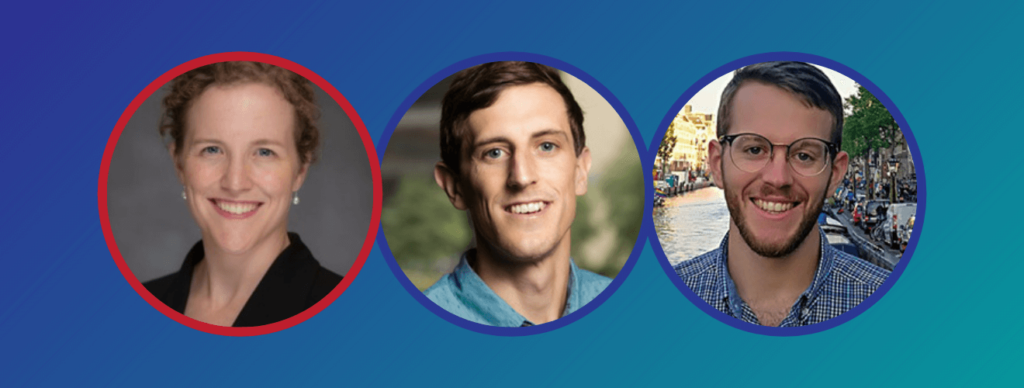
Headshots of Drs. Carolyn Bramante, Thomas Murray, Jared Huling
Left to right: Dr. Carolyn Bramante, Dr. Thomas Murray, and Dr. Jared Huling

In this Friday’s COVID-19 Grand Rounds session, Dr. Carolyn Bramante, Dr. Thomas Murray, and Dr. Jared Huling of the University of Minnesota will present “COVID-OUT: From Computer Modeling to a Phase III Trial of Early Outpatient Treatment for SARS-CoV-2 Infection.” COVID-OUT is a factorial randomized clinical trial of metformin, ivermectin, fluvoxamine, or a combination of these medications among outpatients with symptoms of COVID-19 or long COVID.

The Grand Rounds session will be held on Friday, October 1, at 1:00 pm eastern. Join the online meeting.

The NIH Collaboratory Coordinating Center is using its popular Grand Rounds platform to share late-breaking research and promote resources in support of clinical researchers affected by the COVID-19 public health emergency.

For previous COVID-19 Grand Rounds, and more news and resources related to the COVID-19 public health emergency, see the COVID-19 Resources page.

Grand Rounds October 8: Lessons Learned and Patient Partnership in ADAPTABLE

Speakers:
Madelaine Faulkner Modrow, MPH
Program Director
Department of Epidemiology and Biostatistics
University of California, San Francisco

Schuyler Jones, MD
Associate Professor of Medicine
Duke University School of Medicine

Topic: Lessons Learned and Patient Partnership in ADAPTABLE

Date: Friday, October 8, 2021, 1:00-2:00 p.m. ET

Meeting Info: To check whether you have the appropriate players installed for UCF (Universal Communications Format) rich media files, go to https://dukemed.webex.com/dukemed/systemdiagnosis.php.

To join the online meeting:
Go to https://dukemed.webex.com/dukemed/j.php?MTID=m4c6e3e4827442a92338a5649cee613e6

Click ‘Connect to Audio”
Choose ‘Computer Audio’ or ‘I will call in’.
If using the ‘call in option’, follow the information from the dialog box that appears.
Be certain to use the Access Code AND the Attendee ID.

Troubleshooting:
If the URL above does not work, go to dukemed.webex.com and enter:
Meeting Number: 2622 682 0537
Meeting Password: 12345

For Audio ONLY:
Call-in toll number (US/Canada): 1-650-479-3207
Access code: 2622 682 0537

NOTE: For Toll-free users, the call-back (call me) services are also available.