Grand Rounds November 5: Benefits of Stroke Treatment Delivered Using a Mobile Stroke Unit Compared to Standard Management by Emergency Medical Services: The BEST-MSU Study

Speaker:
James C Grotta, MD
Director Stroke Research and Mobile Stroke Unit
Memorial Hermann Hospital-Texas Medical Center
Houston, Texas

Topic: Benefits of Stroke Treatment Delivered Using a Mobile Stroke Unit Compared to Standard Management by Emergency Medical Services: The BEST-MSU Study

Date: Friday, November 5, 2021, 1:00-2:00 p.m. ET

Meeting Info: To check whether you have the appropriate players installed for UCF (Universal Communications Format) rich media files, go to https://dukemed.webex.com/dukemed/systemdiagnosis.php.

To join the online meeting:
Go to https://dukemed.webex.com/dukemed/j.php?MTID=m4c6e3e4827442a92338a5649cee613e6

Click ‘Connect to Audio”
Choose ‘Computer Audio’ or ‘I will call in’.
If using the ‘call in option’, follow the information from the dialog box that appears.
Be certain to use the Access Code AND the Attendee ID.

Troubleshooting:
If the URL above does not work, go to dukemed.webex.com and enter:
Meeting Number: 2622 682 0537
Meeting Password: 12345

For Audio ONLY:
Call-in toll number (US/Canada): 1-650-479-3207
Access code: 2622 682 0537

NOTE: For Toll-free users, the call-back (call me) services are also available.
September 22, 2021: PCT Grand Rounds Explores Enabling Patient-Reported Outcome Measures in Clinical Trials

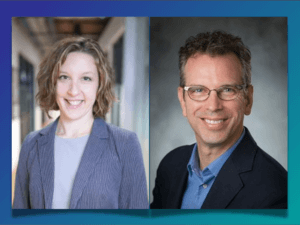
Headshots of Dr. Theresa Coles and Dr. Kevin Weinfurt
Dr. Theresa Coles (left) and Dr. Kevin Weinfurt

In this Friday’s PCT Grand Rounds, Dr. Theresa Coles and Dr. Kevin Weinfurt of Duke University will discuss the use of patient-reported outcome measures in clinical trials, using examples from cardiovascular trials.

The Grand Rounds session will be held on Friday, September 24, at 1:00 pm eastern. Join the online meeting.

For webinar recordings and slides from previous Grand Rounds sessions, see the Grand Rounds hub.

September 17, 2021: Population-based Outreach to Prevent Suicidal Behavior: A Pragmatic Randomized Trial (Gregory Simon, MD, MPH; Susan M Shortreed, PhD)

Speaker

Gregory Simon, MD, MPH
Senior Investigator
Kaiser Permanente Washington Health Research Institute

Susan M Shortreed, PhD
Senior Investigator, Biostatistics Unit
Kaiser Permanente Washington Health Research Institute
Affiliate Professor, Department of Biostatistics
University of Washington

Keywords

Care Management; Dialectical Behavior Therapy; Patient engagement; Suicide prevention

Key Points

  • The SPOT trial was a pragmatic randomized clinical trial comparing care management and dialectical behavioral therapy skills training to usual care in adults at risk of self-harm or suicidal behavior.
  • Dialectical Behavior Therapy skills training (DBT) was delivered online and supported by coaching.
  • A care management intervention was intended to facilitate and maintain engagement in effective outpatient care.
  • Adult outpatients who reported suicidal ideation on a mental health questionnaire were randomized to one of 3 study groups: continued usual care, offer of Care Management program, offer of DBT skills Training program.
  • Patients were sent a message expressing care and concern through an online system and invited to participate in the study.
  • Patients were followed for 18 months and fatal or non-fatal self-harm events were recorded as the primary outcome measure.
  • Interim analysis detected a signal of possible serious outcome in April/May 2019, but upon analysis rerun, the signal dropped below threshold and the DSMB recommended the trial continue.
  • Patients offered care management had no reduction in Risk of self-harm behavior compared to usual care. Patients offered DBT had significantly increased risk of self-harm compared to usual care.

Discussion Themes

Real-time feedback from potential subjects is important to ascertain if recruitment efforts or intervention is affecting patients negatively.

The inclusion of the usual care group allowed us to determine more than just care management works better than DBT.


Read more about the SPOT trial and study results.


Tags

#pctGR, @Collaboratory1

Grand Rounds October 1: COVID-OUT: From Computer Modeling to a Phase III Trial of Early Outpatient Treatment for SARS-CoV-2 Infection

Speakers:
Carolyn Bramante, MD, MPH
Division of General Internal Medicine
Departments of Internal Medicine and Pediatrics
Core faculty in the Program in Health Disparities Research and the Center for Pediatric Obesity Medicine
University of Minnesota Medical School

Thomas Murray, PhD
Division of Biostatistics
Coordinating Centers for Biometric Research
School of Public Health
University of Minnesota

Jared Huling, PhD
Division of Biostatistics
School of Public Health
University of Minnesota

Topic: COVID-OUT: From Computer Modeling to a Phase III Trial of Early Outpatient Treatment for SARS-CoV-2 Infection

Date: Friday, October 1, 2021, 1:00-2:00 p.m. ET

Meeting Info: To check whether you have the appropriate players installed for UCF (Universal Communications Format) rich media files, go to https://dukemed.webex.com/dukemed/systemdiagnosis.php.

To join the online meeting:
Go to https://dukemed.webex.com/dukemed/j.php?MTID=m4c6e3e4827442a92338a5649cee613e6

Click ‘Connect to Audio”
Choose ‘Computer Audio’ or ‘I will call in’.
If using the ‘call in option’, follow the information from the dialog box that appears.
Be certain to use the Access Code AND the Attendee ID.

Troubleshooting:
If the URL above does not work, go to dukemed.webex.com and enter:
Meeting Number: 2622 682 0537
Meeting Password: 12345

For Audio ONLY:
Call-in toll number (US/Canada): 1-650-479-3207
Access code: 2622 682 0537

NOTE: For Toll-free users, the call-back (call me) services are also available.
September 15, 2021: PCT Grand Rounds to Announce Primary Results of NIH Collaboratory’s Suicide Prevention Outreach Trial (SPOT)

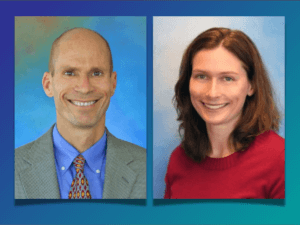
Side-by-side headshots of Dr. Greg Simon and Dr. Susan ShortreedIn this Friday’s PCT Grand Rounds, investigators from the Suicide Prevention Outreach Trial (SPOT), an NIH Collaboratory Trial, will announce the study’s primary results.

Principal investigator Dr. Greg Simon and biostatistician Dr. Susan Shortreed, both of the Kaiser Permanente Washington Health Research Institute, will present “Population-Based Outreach to Prevent Suicidal Behavior: A Pragmatic Randomized Trial (SPOT NIH Collaboratory Trial).” The Grand Rounds session will be held on Friday, September 17, at 1:00 pm eastern. Join the online meeting.

The SPOT NIH Collaboratory Trial is a pragmatic clinical trial embedded in Mental Health Research Network sites to test suicide prevention strategies among adult patients who have serious thoughts of suicide. The trial tested 2 strategies: a collaborative care management approach for depression, and an online skills training method designed to help people manage painful emotions and stressful situations. Both strategies were compared with usual care.

SPOT is supported within the NIH Collaboratory by a cooperative agreement from the National Institute of Mental Health.


September 10, 2021: Effect of Salt Substitution on Cardiovascular Events and Death (Bruce Neal, MB ChB, PhD, FRCP, FAHA, FAHMS)

Speaker

Bruce Neal, MB ChB, PhD, FRCP, FAHA, FAHMS
Executive Director, George Institute Australia
Professor of Medicine, UNSW Sydney
Honorary Professor, Sydney Medical School, University of Sydney
Professor of Clinical Epidemiology, Imperial College London

Topic

Effect of Salt Substitution on Cardiovascular Events and Death

Keywords

Cluster randomized trial; Salt substitute; Stroke; Cardiovascular disease; SSaSS

Key Points

  • The SSaSS study is a pragmatic, cluster randomized trial on the effects of salt substitutes versus regular salt on stroke, major adverse cardiovascular events, and mortality.
  • The SSaSS study followed almost 21,000 people in 600 village clusters over 5 years. At the end of the 5 year study, 92% of the intervention group was still using salt substitute and 6% of control started using salt substitute.
  • Data from the study show evidence of lower blood pressure, lower risk of stroke, lower risk of major adverse cardiovascular events, and protection against premature death with no evidence of harm.
  • There was no evidence of any increased risk of hyperkalemia.

Discussion Themes

Successful recruitment approaches in this large, long-term trial required extensive engagement and networking with local health workers and community leaders.

Salt substitute as a method to lower stroke and cardiovascular risk is attractive because it looks and tastes the same as salt, and doesn’t ask people to change their behavior.

The use of salt substitutes to decrease the intake of discretionary sodium, the salt used in home cooking or sprinkled on food after cooking, may have more effect in developing countries.  Developed countries consume processed and packaged foods more often and have less discretionary sodium intake.  In developed countries, it may be necessary to encourage food manufacturers to decrease sodium and increase potassium in the processed and packaged foods they produce.

Many millions of lives could benefit from the effects of salt substitute if this could be implemented in developing countries around the world.

Read more about Dr. Neal’s work with the SSaSS study.

Tags

#pctGR, @Collaboratory1

September 8, 2021: PCT Grand Rounds Explores Effects of Salt Substitution on Cardiovascular Events and Death

Head shot of Dr. Bruce Neal
Dr. Bruce Neal

In this Friday’s PCT Grand Rounds, Dr. Bruce Neal of the George Institute Australia and UNSW Sydney will share findings from a clinical trial of the effect of salt substitution on cardiovascular events and death.

The Grand Rounds session will be held on Friday, September 10, at 1:00 pm eastern. Join the online meeting.

For webinar recordings and slides from previous Grand Rounds sessions, see the Grand Rounds hub.

August 25, 2021: PCT Grand Rounds to Feature DOREMI Trial in Cardiogenic Shock

Headshot of Dr. Benjamin Hibbert
Dr. Benjamin Hibbert

In this Friday’s PCT Grand Rounds, Dr. Benjamin Hibbert of the University of Ottawa Heart Institute will share findings from the DOREMI trial of milrinone vs dobutamine for the treatment of cardiogenic shock.

The Grand Rounds session will be held on Friday, August 27, at 1:00 pm eastern. Join the online meeting.

For webinar recordings and slides from previous Grand Rounds sessions, see the Grand Rounds hub.

August 20, 2021: Fluvoxamine for Early Treatment of COVID-19: The STOP COVID Clinical Trials (Eric Lenze, MD)

Speaker

Eric Lenze, MD
Wallace and Lucille K. Renard Professor of Psychiatry & Anesthesiology
Washington University School of Medicine, St. Louis

Topic

Fluvoxamine for Early Treatment of COVID-19: The STOP COVID Clinical Trials

Keywords

COVID-19 treatment; STOP COVID; Fluvoxamine; Repurposed therapy; Decentralized clinical trial

Key Points

  • While using Fluvoxamine to treat anxiety in patients with Wolfram Syndrome, Dr. Reiersen from Washington University, St. Louis learned that Fluvoxamine reduced inflammation and interfered with viral function.
  • Dr. Lenze, Dr. Reiersen, and Dr. Mattar began the preliminary pragmatic, non-contact, but high-touch STOP COVID trial in April 2020.
  • Results from the preliminary study showed that 0% of patients experienced clinical deterioration in the Fluvoxamine group while 8.3% of patients in the placebo group deteriorated.
  • The STOP-COVID 2 study was a decentralized, hub-and-spoke clinical trial conducted across the US and 2 provinces of Canada.
  • The Data Safety Monitoring Board(DSMB) for the study recommended an early stop for futility due to a low case rate and difficulty recruiting patients.

Discussion Themes

What outcome variables should we be using in COVID-19 studies? A binary outcome measure may limit the power of the study. When possible, continuous outcomes provide more statistical power and come closer to representing real-life outcomes.

What role should primary care providers play in clinical studies?

Read more about Dr. Lenze’s work with the STOP COVID trials.

Tags

#pctGR, @Collaboratory1

Grand Rounds August 27: Milrinone as Compared with Dobutamine in the Treatment of Cardiogenic Shock: the DOREMI trial

Speaker:
Benjamin Hibbert, MD, PhD
Clinician Scientist and Interventional Cardiologist
University of Ottawa Heart Institute

Topic: Milrinone as Compared with Dobutamine in the Treatment of Cardiogenic Shock: the DOREMI trial
Date: Friday, August 27, 2021, 1:00-2:00 p.m. ET

Meeting Info: To check whether you have the appropriate players installed for UCF (Universal Communications Format) rich media files, go to https://dukemed.webex.com/dukemed/systemdiagnosis.php.

To join the online meeting:
Go to https://dukemed.webex.com/dukemed/j.php?MTID=m228b52a4666c1e24046e11c01ae7bd0d

You must log in to the URL first.
Click ‘Audio Conference’
Choose ‘I will call in’, select the Toll number.
Dial in using the information from the dialog box that appears.
Be certain to use the Access Code AND the Attendee ID.

Troubleshooting:
If the URL above does not work, go to dukemed.webex.com and enter:
Meeting Number: 120 909 9614
Meeting Password: 1234

For Audio ONLY:
Call-in toll number (US/Canada): 1-650-479-3207
Access code: 120 909 9614

NOTE: For Toll-free users, the call-back (call me) services are also available.