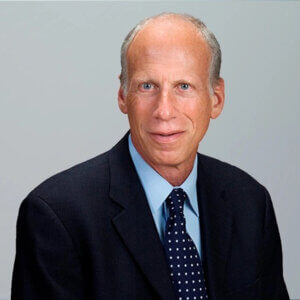
Grand Rounds December 3: Primary Care-Based Behavioral Treatment for Long Term Opioid Users with Chronic Pain: Primary Results and Lessons Learned from the PPACT Pragmatic Trial

Speaker:
Lynn DeBar, PhD MPH
Senior Scientist
Kaiser Permanente Washington Health Research Institute
Seattle, WA

Topic: Primary Care-Based Behavioral Treatment for Long Term Opioid Users with Chronic Pain: Primary Results and Lessons Learned from the PPACT Pragmatic Trial

Date: Friday, December 3, 2021, 1:00-2:00 p.m. ET

Meeting Info: To check whether you have the appropriate players installed for UCF (Universal Communications Format) rich media files, go to https://dukemed.webex.com/dukemed/systemdiagnosis.php.

To join the online meeting:
Go to https://dukemed.webex.com/dukemed/j.php?MTID=m4c6e3e4827442a92338a5649cee613e6

Click ‘Connect to Audio”
Choose ‘Computer Audio’ or ‘I will call in’.
If using the ‘call in option’, follow the information from the dialog box that appears.
Be certain to use the Access Code AND the Attendee ID.

Troubleshooting:
If the URL above does not work, go to dukemed.webex.com and enter:
Meeting Number: 2622 682 0537
Meeting Password: 12345

For Audio ONLY:
Call-in toll number (US/Canada): 1-650-479-3207
Access code: 2622 682 0537

NOTE: For Toll-free users, the call-back (call me) services are also available.
November 19, 2021: Exploring Approaches in Using Digital and Mobile Health in Patient-oriented Research: Pearls and Pitfalls (Anish K. Agarwal MD, MPH MS)

Speaker

Anish K. Agarwal MD, MPH MS
Assistant Professor of Emergency Medicine
Clinical Innovation Manager, Penn Medicine Center for Health Care Innovation
University of Pennsylvania, Perelman School of Medicine

Topic

Exploring Approaches in Using Digital and Mobile Health in Patient-oriented Research: Pearls and Pitfalls

Keywords

Mobile health; Digital health; Patient-oriented research; Study design

Key Points

  • Digital and mobile health is a rapidly evolving field that integrates with the electronic health records in both low and high tech ways.
  • Dr. Agarwal conducted a randomized control trial of overweight veterans who had daily access to a smartphone or tablet. These participants were sent a wearable device to collect step count data.
  • An important consideration for studies using mobile health technology is participant access to a smart or mobile device. 85% of Americans have access to a Smartphone where 97% have access to a mobile device that can receive texts. 20% use a smartwatch.
  • Mobile methods are just tools to support overall study design.
  • Dr. Agrawal conducted a study on post-operative opioid prescribing and use. Data was gathered from participants via text messaging systems.
  • Simple text messages that are more conversational in nature are received better by the participant. Links in text messages should be limited. It’s important for participants to understand the privacy and security of their communications and data. Nudge a participant with a text at the right time to avoid being overbearing.

Discussion Themes

Let patients know that SMS is not secure, and frame questions to avoid patients sending HIPAA covered data via text.

A good relationship with your institutions Privacy and Safety office is fundamental to navigating IRB regulations for research with digital and mobile devices.


Read more about Dr. Agarwal’s studies using mobile health devices: Effect of Gamification With and Without Financial Incentives to Increase Physical Activity Among Veterans Classified as Having Obesity or Overweight: A Randomized Clinical Trial and Patient-Reported Opioid Consumption and Pain Intensity After Common Orthopedic and Urologic Surgical Procedures With Use of an Automated Text Messaging System.


Tags

#pctGR, @Collaboratory1

November 12, 2021: Using Financial Incentives to Increase COVID-19 Vaccine Uptake (Charlene Wong, MD MSHP; Noel T. Brewer, PhD)

Speakers

Charlene Wong, MD MSHP
Associate Professor of Pediatrics and Public Policy
Duke University School of Medicine
Chief Health Policy Officer for COVID-19
North Carolina Department of Health and Human Services

Noel T. Brewer, PhD
Gillings Distinguished Professor in Public Health
Department of Health Behavior
Gillings School of Global Public Health
University of North Carolina
Member, Lineberger Comprehensive Cancer Center
University of North Carolina

Topic

Using Financial Incentives to Increase COVID-19 Vaccine Uptake

Keywords

COVID-19; Vaccine; Incentive; North Carolina DHHS

Key Points

  • The Summer Cash Card incentive program, run by the North Carolina Department of Health and Human Services from May 26 to June 8, 2021, offered $25 gift cards as an incentive to receive a COVID-19 vaccination and an additional $25 gift card to anyone transporting individuals to a vaccination site.
  • During the time period that the Summer Cash Card incentive program was running, 2 in 10 people indicated that they were likely to get vaccinated, but remained unvaccinated for reasons such as lost wages, lack of child care, and lack of transportation.
  • Other incentive programs used in North Carolina included drawings for larger cash prizes or college scholarships for teens.
  • Recipients of $25 gift cards completed a survey asking the importance of getting the $25 gift card in their decision to get vaccinated or drive someone to get vaccinated.
  • Results from the survey showed that the financial incentive was particularly important to Hispanic individuals and individuals with an annual income below $40,000.
  • During times when vaccine administration fell, incentive sites did not see the same drop in vaccination rates.
  • Incentives are effective if they are known, valued, contingent, certain, and immediate.

Discussion Themes

For many individuals cost or transportation issues are the main barrier to vaccination.

Financial incentives could be considered coercive, but the benefits to the individual and the community are broad and the risks low. The $25 incentive is a fair amount to cover the costs of lost wages and transportation that it takes to get to the vaccine clinic.

Focus for incentives is still on the remaining people who are not vaccinated at all rather than on those who need booster vaccines.


Read more about the North Carolina DHHS financial incentive program for COVID-19 vaccines. Read the JAMA paper published in October 2021.


Tags

#pctGR, @Collaboratory1

November 17, 2021: PCT Grand Rounds to Explore Digital and Mobile Health in Patient-Oriented Research

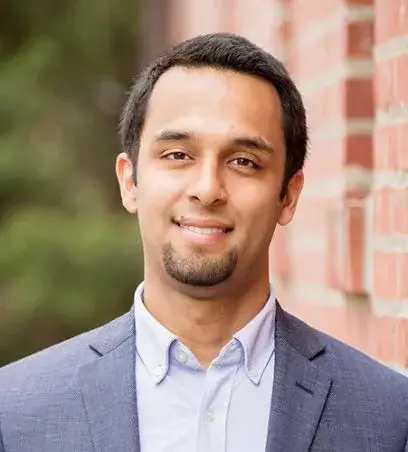
Headshot of Dr. Anish Agarwal
Dr. Anish Agarwal

In this Friday’s PCT Grand Rounds session, Dr. Anish Agarwal of the University of Pennsylvania will present “Exploring Approaches in Using Digital and Mobile Health in Patient-Oriented Research: Pearls and Pitfalls.”

Dr. Agarwal is an assistant professor of emergency medicine at Penn and the clinical innovation manager at the Penn Medicine Center for Health Care Innovation.

The Grand Rounds session will be held on Friday, November 19, at 1:00 pm eastern. Join the online meeting.

November 10, 2021: COVID-19 Grand Rounds to Highlight Use of Financial Incentives for Vaccine Uptake

Headshot of Dr. Charlene Wong
Dr. Charlene Wong

In this Friday’s COVID-19 Grand Rounds session, Dr. Charlene Wong of Duke University will present “Using Financial Incentives to Increase COVID-19 Vaccine Uptake.” Wong is the chief health policy officer for COVID-19 at the North Carolina Department of Health and Human Services.

The Grand Rounds session will be held on Friday, November 12, at 1:00 pm eastern. Join the online meeting.

The NIH Collaboratory Coordinating Center is using its popular Grand Rounds platform to share late-breaking research and promote resources in support of clinical researchers affected by the COVID-19 public health emergency.

For previous COVID-19 Grand Rounds, and more news and resources related to the COVID-19 public health emergency, see the COVID-19 Resources page.

November 5, 2021: Benefits of Stroke Treatment Delivered Using a Mobile Stroke Unit Compared to Standard Management by Emergency Medical Services: The BEST-MSU Study (James C Grotta, MD)

Speaker

James C Grotta, MD
Director Stroke Research and Mobile Stroke Unit
Memorial Hermann Hospital-Texas Medical Center
Houston, Texas

Topic

Benefits of Stroke Treatment Delivered Using a Mobile Stroke Unit Compared to Standard Management by Emergency Medical Services: The BEST-MSU Study

Keywords

Stroke; BEST-MSU study; Mobile Stroke Unit; Patient-centered outcome; tPA

Key Points

  • We can improve stroke outcomes by giving tPA in the first hour after stroke onset, but to do this, we have to bring the treatment to the patient.
  • The Mobile Stroke Unit (MSU) is an ambulance equipped with a CT scanner and other medical care equipment necessary to treat stroke.
  • The BEST-MSU Study was a partially randomized trial that examined outcomes of patients who were treated by the MSU versus in the hospital emergency department.
  • The BEST-MSU study compared the diagnosis of telemedicine and onboard neurologists, and they agreed that the patient was having a stroke 88% of the time, which is the same as the agreement rate of two neurologists in the hospital setting.
  • For every 100 patients treated with the MSU rather than the standard medical practice in a hospital emergency setting, 27 will have less final disability and 11 more will be disability-free.

Discussion Themes

Consent to deliver treatment wasn’t necessary in this case because the treatment delivered was the standard of care. Consent to use the patient’s data was obtained in the emergency department after the patient had stabilized. Very few patients refused to consent.

Implementation of the MSU with the local fire departments was straight forward, but the politics of the area served was a challenge for implementation.

One barrier to treating stroke quickly with the MSU is the patient’s hesitancy to call 911. Calling emergency services needs to be made less threatening and less expensive to promote better patient outcomes.


Read more about The BEST-MSU study here and in the paper publish in September 2021 “Prospective, Multicenter, Controlled Trial of Mobile Stroke Units.”


Tags

#pctGR, @Collaboratory1

October 29, 2021: Embedding Pragmatic Trials into Emergency and Critical Care (Matthew W. Semler, MD, MSc; Jonathan D. Casey, MD, MSc)

Speakers

Matthew W. Semler, MD, MSc
Assistant Professor
Vanderbilt University Medical Center

Jonathan D. Casey, MD, MSc
Assistant Professor
Vanderbilt University Medical Center

Topic

Embedding Pragmatic Trials into Emergency and Critical Care

Keywords

Pragmatic clinical trials; Study design; Comparative effectiveness trials; Treatment effect; SMART trial; PreVent trial; Exception from Informed Consent (EFIC)

Key Points

  • Emergency medical clinicians are faced with common decisions in everyday practice with little to no data from randomized clinical trials to help inform their decisions.
  • Four barriers to comparative effectiveness trials in a critical care setting are a brief therapeutic window, patients with multiple co-morbidities, the inability of the patient to consent to research, and analyzing average treatment effect rather than individual treatment effect.
  • The PreVent Trial studied the use of bag-mask ventilation to prevent hypoxemia for patients who had been administered anesthesia in preparation for intubation.
  • Efficient, pragmatic trial procedures that don’t delay treatment enable comparative effectiveness randomized clinical trials to be conducted effectively.
  • After 50 years of debate about bag-mask ventilation during this interval period, the PreVent Trial found that bag-mask ventilation cut the rate of hypoxemia by 50% without affecting aspiration.
  • The SMART Trial was a cluster-randomized, multiple-crossover trial of fluid management that studied patient outcomes when Balanced Crystalloids were used versus Saline solution.
  • The large sample size of over 15,000 patients provided the SMART trial with the power to detect that a balanced crystalloid fluid prevented Major Adverse Kidney Events in 1% of patients compared to Saline solution. /li>
  • Exception from Informed Consent (EFIC), implemented in 1996 allows trials in emergency situations of the condition is life-threatening, existing treatments are unproven or unsatisfactory, and research involves no more than minimal risk.
  • Analyzing Individual Treatment Effects will allow clinical providers to tailor their decisions to their individual patient.

Discussion Themes

Clinical equipoise poses a challenge for comparative effectiveness trials.

Key to getting buy-in from clinician stakeholders is explaining the importance of the research to the patient.


Read more about PreVent trial and the SMART trial.

Tags

#pctGR, @Collaboratory1

Grand Rounds November 12: Using Financial Incentives to Increase COVID-19 Vaccine Uptake

Speakers:
Charlene Wong, MD MSHP
Associate Professor of Pediatrics and Public Policy
Duke University School of Medicine
Chief Health Policy Officer for COVID-19
North Carolina Department of Health and Human Services


Noel T. Brewer, PhD
Gillings Distinguished Professor in Public Health
Department of Health Behavior
Gillings School of Global Public Health
University of North Carolina
Member, Lineberger Comprehensive Cancer Center
University of North Carolina

Topic: Using Financial Incentives to Increase COVID-19 Vaccine Uptake

Date: Friday, November 12, 2021, 1:00-2:00 p.m. ET

Meeting Info: To check whether you have the appropriate players installed for UCF (Universal Communications Format) rich media files, go to https://dukemed.webex.com/dukemed/systemdiagnosis.php.

To join the online meeting:
Go to https://dukemed.webex.com/dukemed/j.php?MTID=m4c6e3e4827442a92338a5649cee613e6

Click ‘Connect to Audio”
Choose ‘Computer Audio’ or ‘I will call in’.
If using the ‘call in option’, follow the information from the dialog box that appears.
Be certain to use the Access Code AND the Attendee ID.

Troubleshooting:
If the URL above does not work, go to dukemed.webex.com and enter:
Meeting Number: 2622 682 0537
Meeting Password: 12345

For Audio ONLY:
Call-in toll number (US/Canada): 1-650-479-3207
Access code: 2622 682 0537

NOTE: For Toll-free users, the call-back (call me) services are also available.

November 3, 2021: PCT Grand Rounds to Feature BEST-MSU Study of Stroke Treatment

Headshot of Dr. James Grotta
Dr. James Grotta

In this Friday’s PCT Grand Rounds session, Dr. James Grotta of Memorial Hermann Hospital-Texas Medical Center will present “Benefits of Stroke Treatment Delivered Using a Mobile Stroke Unit Compared to Standard Management by Emergency Medical Services: The BEST-MSU Study.”

The BEST-MSU study, supported by the Patient-Centered Outcomes Research Institute (PCORI), examined the effectiveness of prehospital diagnosis and treatment of patients with stroke symptoms using a mobile stroke unit with subsequent transfer to a comprehensive stroke center emergency department (CSC ED) for further management, compared with standard prehospital triage and transport by emergency medical services to a CSC ED for evaluation and treatment.

The Grand Rounds session will be held on Friday, November 5, at 1:00 pm eastern. Join the online meeting.

October 27, 2021: PCT Grand Rounds Features Pragmatic Trials in Emergency and Critical Care

Headshots of Dr. Matthew Semler and Dr. Jonathan Casey
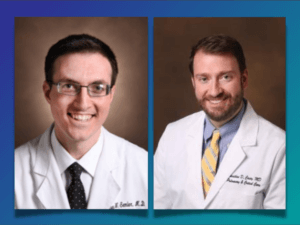
Dr. Matthew Semler and Dr. Jonathan Casey

In this Friday’s PCT Grand Rounds session, Dr. Matthew Semler and Dr. Jonathan Casey of Vanderbilt University will present “Embedding Pragmatic Trials Into Emergency and Critical Care.”

Drs. Semler and Casey are leaders of the Pragmatic Critical Care Research Group, a network of clinical centers conducting comparative effectiveness clinical trials of common interventions in critical care.

The Grand Rounds session will be held on Friday, October 29, at 1:00 pm eastern. Join the online meeting.