Which PCTs Should Have a DMC? – ARCHIVED

ARCHIVE Data and safety monitoring


Section 2

Which PCTs Should Have a DMC? – ARCHIVED

While FDA regulations require sponsors to monitor their trials, there are different ways this can be accomplished. One method is an independent DMC, sometimes also referred to as a Data and Safety Monitoring Board (DSMB). These committees are independent of the trial sponsor and investigators; they should have no vested interest in the trial or its outcome. Current US Food and Drug Administration (FDA) regulations impose no requirements for the use of DMCs except for research studies conducted in emergency settings in which the requirement for informed consent has been waived (21 CFR 50.24(a)(7)(iv)). Funding agencies impose broader requirements, as discussed later.

FDA guidance advises considering the following when determining whether a study warrants using a DMC:

  • Is it a large, multicenter study of long duration?
  • Is the study endpoint such that a finding at interim analysis might ethically require termination of the study before its planned completion?
  • Are there a priori reasons for a particular safety concern (e.g., particularly invasive treatment?)
  • Is there prior information suggesting the potential for serious toxicity due to the study treatment?
  • Is the study being performed in potentially fragile or vulnerable populations (e.g., children, pregnant women, very elderly, terminally ill, those with diminished mental capacity)?
  • Is the study being performed in a population at elevated risk of death or other serious outcomes, even when the study objective addresses a less serious endpoint?

If a study has one or more of these characteristics, the FDA recommends that sponsors consider the use of a DMC to further protect study participants.

Additional considerations include whether review by a DMC is practical (e.g., due to study length) and whether a DMC can help ensure the scientific validity of a trial. Examples of studies that may not need a DMC include short-term studies where a DMC is unlikely to have the opportunity to make a difference and studies with less serious outcomes (e.g., symptom relief) in which early termination is unlikely to be appropriate. As many PCTs will be large, multicenter studies with serious clinical outcomes, it is likely that most of these will warrant use of a DMC (Ellenberg et al 2015).

Research sponsors may have their own policies outlining the type of data monitoring required and which studies must have a DMC. For example:

  • NIH policy requires most NIH-funded randomized trials to have a DMC if they are multicenter and pose any material risk to participants.
  • PCORI policy states that a DMC should be appointed if required by the IRB, regulatory agency, or determined appropriate “after considering factors such as potential risks; target study subject population, nature, and size; and the research project’s scope and complexity.”

PCT investigators should work with their sponsor(s) to implement an appropriate data monitoring plan for the study and determine whether a DMC (or DSMB or independent monitoring committee) will be used. The NIH Collaboratory has made available brief descriptions of the data monitoring plans for all NIH Collaboratory Trials as part of the publicly available ethics and regulatory documentation for these trials. The data monitoring details are excerpted in the table below. Not all NIH Collaboratory Trials use an independent DMC, but all have a data monitoring plan that was discussed with the NIH sponsor and determined to be in compliance with their policies. More details on data monitoring for some of these trials are explored throughout the chapter.


Data Monitoring Plans Used in NIH Collaboratory Trials
NIH Collaboratory Trial Minimal risk? Uses a DMC? Monitoring plan
ABATE Infection Yes No The sponsor approved the trial’s data monitoring plan, and study-related event forms were distributed to all participating sites.
ACP PEACE Yes Yes The DSMB has members with expertise in advance care planning (ACP), cluster trial design, biostatistics, EHR data and health data access, and geriatrics. The DSMB will identify any safety issues every 6 months.
BackInAction Yes Yes For the conduct phase, the trial will establish an independent monitoring committee (IMC) comprising experts in chronic pain, internal medicine, family medicine, qualitative research, and clinical trials. The IMC will review adverse events/serious adverse events and data on recruitment and retention efforts every 6 months.
EMBED Yes No The trial has an independent study monitor for data monitoring and oversight.
FM TIPS Yes Yes For the conduct phase, the sponsor will establish a DSMB for data monitoring through a contract research organization.
GGC4H Yes Yes The trial has established an IMC that monitors and evaluates the safety of study participants; monitors the performance of the study; and assures adherence to the reporting of any adverse events and serious adverse events.
HiLo No Yes A DSMB has been established. In addition, a site management and monitoring team reviews enrollment reports weekly during the enrollment phase. Any concerns will be communicated with the unit staff and members of the steering committee.
ICD-Pieces Yes Yes The study team tracks and regularly informs the DMC of safety events, including the primary outcome (all-cause unplanned hospitalization), secondary outcomes (cardiovascular events, emergency department visits, and death), and safety events that are possible outcomes of the interventions. The team tracks the primary outcome rates by healthcare system and reports these to the sponsor and DMC quarterly.
LIRE Yes No Two safety officers reviewed study data at regular intervals for any safety concerns.
NOHARM Yes Yes A DSMB reviewed the oversight protocol and reviews progress and safety issues periodically. For the conduct phase, the study team will adhere to the sponsor’s requirements for monitoring and oversight.
Nudge Yes Yes A DSMB has been established. The study team continuously monitors responses to the text messages and has a weekly call with the pharmacist team to discuss patient responses to the text messages to ensure that any clinical messages from patients are responded to appropriately.
OPTIMUM Yes Yes For the conduct phase, the trial will establish an independent DSMB.
PPACT Yes No An independent monitor identified by the study team and sponsor reviewed subject accrual, serious adverse events, and clinician/patient compliance with treatment every 6 months.
PRIM-ER Yes No The trial has a 3-member IMC to monitor patient safety and the performance of the clinical study in meeting its stated objectives. The IMC will be engaged at periodic intervals during the course of the study as outlined in the charter.
PROVEN Yes Yes The trial had a full DSMB. The statisticians were able to review unblinded interim data, but the PIs remained blinded.
SPOT Yes Yes The trial was monitored by a standing DSMB at the sponsor.
STOP CRC Yes No The trial’s safety monitoring plan consisted of semi-annual review of study progress and adverse events by 2 independent monitors--a statistician and a gastroenterologist--who were approved by the sponsor.
TiME Yes Yes An external DSMB appointed by the sponsor reviewed study progress, outcome event rates, and routinely performed laboratory tests as indicators of safety.
TSOS Yes Yes The trial has a DSMB providing oversight. Outcomes monitored included adverse events (medication side effects, death), suicidality, loss to follow-up, and demographics.

Source: NIH Collaboratory Trial ethics and regulatory documentation. For more information on the NIH Collaboratory Trials, including study population and primary outcome, see the NIH Collaboratory Trials table in the What Is a Pragmatic Clinical Trial chapter.

In sections that follow, we review special considerations for data monitoring in PCTs, including monitoring protocol adherence when information on “real-world” use is desired, issues associated with use of EHR data such as data quality and timeliness, complexities of monitoring adverse events in PCTs, whether PCTs should ever be stopped early due to futility, and any particular perspectives or expertise that may be useful on a DMC charged with monitoring PCTs.

SECTIONS

CHAPTER SECTIONS

REFERENCES

back to top

Ellenberg SS, Culbertson R, Gillen DL, Goodman S, Schrandt S, Zirkle M. 2015. Data monitoring committees for pragmatic clinical trials. Clin Trials. 12:530–536. doi:10.1177/1740774515597697.


Version History

October 7, 2020: Changed the title of AcuOA NIH Collaboratory Trial to its new title, BackInAction (change made by L. Wing).

July 3, 2020: Minor corrections to layout and formatting (changes make by D. Seils).

July 1, 2020: Added DMC plans for four new NIH Collaboratory Trials to the table; updated hyperlinks; and added a Grand Rounds link to Resources (changes made by L. Wing).

December 13, 2018: Updated FDA guidance link; added the DMC plans for six new UG3 NIH Collaboratory Trials to the table; updated text as part of annual content update (changes made by L. Wing).

Published August 25, 2017

Additional Resources

Participant Recruitment


Section 7


Additional Resources

Journal articles
Role of health plan administrative claims data in participant recruitment for pragmatic clinical trials: An Aspirin Dosing: A Patient-centric Trial Assessing Benefits and Long-term Effectiveness (ADAPTABLE) example (Shi et al. 2020) Using administrative claims data to identify potential trial participants and facilitate recruitment and enrollment for PCTs
Series: Pragmatic Trials and Real World Evidence: Paper 3. Patient Selection Challenges and Consequences (Oude Rengerink et al. 2017) Recruitment challenges within a routine care setting
Recruiting community health centers into pragmatic research: Findings from STOP CRC (Coronado et al. 2015) Recruitment challenges within community settings
PCT Grand Rounds webinars
July 31, 2020 Using Real-World Data to Plan Eligibility Criteria and Enhance Recruitment: Actionable Recommendations and Resources from the Clinical Trials Transformation Initiative
September 13, 2019 ADAPTABLE Recruitment and Follow-up: Health Plan Research Network Engagement
August 23, 2019 Oh Yes, We Have Tons of Patients Who Can Do This Study!
July 26, 2019 Digital in Trials: Improving Participation and Enabling Novel Endpoints
May 17, 2019 The Vitamin D and Omega-3 Trial (VITAL): Design and Results of a Large Pragmatic Trial
May 4, 2018 Leveraging Community Engagement and Informatics-Based Tools to Increase Participant Recruitment and Retention
March 3, 2017 Showcasing Innovative Operational and Recruitment Approaches in the ADAPTABLE Trial
Other recruitment resources
Trial Innovation Network The Trial Innovation Network is a collaborative initiative supported by the National Center for Advancing Translational Sciences (NCATS) at the NIH. One of the network’s resources is a Recruitment Innovation Center (RIC) that assists with evidenced-based recruitment and retention methods, tools, and strategies.
ADAPTABLE PCORnet's Aspirin study website with detailed trial information, including protocol, consent form, and videos
Diuretic Comparison Project Veterans Affairs (VA) project website with details about the study
CTTI Recommendations (PDF) Clinical Trials Transformation Initiative (CTTI) resources for efficient and effective trial recruitment

DISCLAIMER: The views expressed in this chapter are those of the contributors and do not necessarily represent the views of the National Heart, Lung, and Blood Institute; the National Institutes of Health; or the U.S. Department of Health and Human Services.

SECTIONS

CHAPTER SECTIONS


Version History

August 25, 2020: Added resources to the table including hyperlinks. Removed References section at bottom of page (changes made by L. Wing).

December 18, 2018: Made nonsubstantive edits as part of annual content update (changes made by L. Wing).

December 5, 2018: Added link to 5/4/2018 Grand Rounds in resource box as part of annual content update (changes made by L. Wing).

Published August 25, 2017

Case Study: ICD-Pieces™

Participant Recruitment


Section 3


Case Study: ICD-Pieces™

The following real-life case study elaborates on each of the recruitment considerations outlined in the previous section. Using a NIH Collaboratory Trial from the NIH Collaboratory as a case study, recruitment considerations in the Improving Chronic Disease Management with Pieces (ICD-Pieces) trial are presented to help illustrate how these questions are being addressed. ICD-Pieces is a cluster randomized clinical trial in patients who have the three coexistent chronic conditions of chronic kidney disease (CKD), Type 2 diabetes, and hypertension.  The study tests the hypothesis that practice facilitators can use information technology to identify patients with the triad of CKD, Type 2 diabetes, and hypertension from the electronic health record (EHR) and can assist primary practitioners to deliver evidence-based interventions to improve outcomes compared to usual care.

Recruitment Targets

  • Patients 18 to 85 years of age with the three coexisting conditions identified above who receive care from primary care physicians (PCPs) in a participating healthcare system
  • Individual practices that are randomized into the intervention group or usual care group within each healthcare system
  • Four health systems: Parkland Health, Texas Health Resources, ProHealth Physicians of Connecticut, and the VA North Texas Health Care System

Recruitment Methods

Information Technology Platform

The trial’s recruitment method is based on an electronic patient identification algorithm within Pieces™, a software platform created by the Parkland Center for Clinical Innovation (https://pccinnovation.org). First, the study team searches for prospective eligible patients by screening data extracts from participating clinics’ and providers’ patients. Then, using the electronic tool to create a digitally curated patient registry, eligible patients who have the three medical conditions (i.e., CKD, hypertension, diabetes) are identified at each site. Eligibility criteria include laboratory values, prescription medications, and diagnosis codes for hypertension and diabetes, in addition to laboratory results that establish evidence of chronic kidney disease, including a decrease in estimated glomerular filtration rate (eGFR) and/or proteinuria.

Design and Randomization

The study uses a prospective cluster-randomized design, stratified by the 4 participating healthcare systems, to assign patients to the intervention or control arms. The unit of randomization is the primary care practice. In two of the healthcare systems, clinical practices are defined by an individual PCP caring for a unique panel of patients with a designated clinical team that consists of one RN and one medical assistant, and which does not overlap with the practices of other providers. In the other two systems, clinical practices are defined as a group of patients cared for by providers sharing personnel and workflows at the same practice location and randomized as a single unit.

After stratifying by healthcare system, primary care practices are randomly allocated to either the intervention group or the control (usual care) group using a randomized permutation block within each stratum. Then, based on the assignment of the practice, eligible patients are assigned to either the intervention or control group. Patients in the active intervention arm receive a collaborative model of care facilitated by the Pieces platform and the local Practice Facilitator (described below); patients in the control arm receive treatment as usual.

The primary outcome is the 12-month all-cause hospitalization rate for patients with a triad of CKD, Type 2 diabetes, and hypertension.

The number of patients to be studied totals 10,659, distributed as shown in the following table.

ICD-Pieces Trial Planned Enrollment

Healthcare system Number of practices Number of patients to be enrolled
ProHealth Connecticut 57 3085
Texas Health Resources 5 3501
Parkland Health and Hospital System 42 3265
VA North Texas Health Care System 9 808

Patient Inclusion Criteria

In order to participate in the study, patients must be 18 to 85 years of age and have coexisting CKD, hypertension, and diabetes per the following inclusion criteria:

  • CKD (present ≥3 months apart): Two or more eGFRs <60 ml/min or two or more positive tests for albuminuria and/or proteinuria. Albuminuria/proteinuria can be defined by quantitative criteria with albumin/creatinine ratio >30mg/g, urine protein creatinine ratio >200mg/g, or positive dipstick with protein detection (adjusted for urinary concentration/specific gravity).
  • Hypertension: Systolic blood pressure >140 mmHg recorded on two separate occasions at least 1 week apart; diastolic blood pressure >90 mmHg on two separate occasions at least 1 week apart; use of antihypertensive agents other than thiazide diuretics, or hypertension included in the problem list within a patient’s medical record. (Thiazide diuretics are excluded because they are commonly prescribed for other conditions such as hypocalcemia, and documented high systolic or diastolic blood pressure in the patient’s chart or hypertension on the problem list in the EHR are more sensitive indicators of patients with hypertension.)
  • Diabetes: Random blood glucose >200mg/dL; hemoglobin A1C >6.5%; use of hypoglycemic agents other than metformin, or type 2 diabetes included in the problem list within a patient’s medical record. (Metformin is excluded because it is commonly prescribed for other conditions such as polycystic ovary disease, and documented abnormal lab results in the patient’s chart, or type 2 diabetes on the problem list are more sensitive indicators of patients with type 2 diabetes.)

The study team created a registry of eligible patients and updates the database on schedule for each site. The software tool (Pieces) identifies patients meeting study criteria from the EHR and sends data files of both candidate and confirmed patients on a weekly basis to the ICD-Pieces registry created within the EHR. The registry lists eligible patients and their information such as demographics, lab results and dates, diagnosis on problem list, medication list, and date of next PCP visit. Candidate patients are those confirmed to have type 2 diabetes and hypertension but need a laboratory result within 12 months of their visit to confirm that they have CKD. Confirmed patients are those who have received laboratory confirmation of CKD within the past 12 months of their visit, in addition to having diagnoses of hypertension and type 2 diabetes.

Practice Facilitators

In coordination with the study’s local Practice Facilitator, participating healthcare systems have flexibility in the method of notifying physicians about upcoming clinic appointments for eligible patients. The role of Practice Facilitator is essential in supporting the study’s patient enrollment, patient education, and monitoring to ensure that patients receive the necessary intervention within the course of normal clinic operations and that they progress to care targets. At two of the participating healthcare systems, the facilitator is an RN. At the other two systems, the facilitator is a pharmacist with support from research assistants. The facilitator uses the study registry to identify both candidate and confirmed patients who have an office visit scheduled within the following 1 to 2 weeks. For previsit planning, the facilitator notifies the office staff of candidate patients who need labs completed before their office visit. The office staff then contacts patients who need a lab test to have it done in advance of their clinic visit.

For confirmed patients, providers are notified in any of three ways based on available IT resources:

  • An embedded decision support/Best Practices Alert during the patient visit
  • An individual study enrollment notification to the provider by pharmacist notes within the patient chart
  • Group messaging to providers from the facilitator with a list of all the providers' confirmed eligible patients who have clinic appointments scheduled for that week

Primary Care Provider Participation

Recruitment of patients into the ICD-Pieces study is dependent on the participation of providers. In all 4 systems, provider recruitment began with soliciting and obtaining agreement from the executive leadership of each healthcare system. Involvement of and support by executive leadership was critical to promote acceptance by providers. Criteria for selecting providers to participate in the study include:

  1. Connection of the clinic or practice to the healthcare system’s main EHR platform (e.g., Epic, Allscripts) in order to obtain patient data
  2. Organization and clinic readiness as determined by leadership of each healthcare system (e.g., considering factors such as inadequate staffing, competing quality initiative programs, clinic reorganization and restructuring)

The four participating healthcare systems designed different methods for recruiting providers into the study according to their system’s operations. Providers are informed about the ICD-Pieces study, including their expected roles, at their scheduled medical or clinical meetings. During these sessions, they can ask questions and seek clarification from the study team. Providers can decline from enrolling their patients. The focus is on minimizing any burden of participating in the clinical trial.

The unit of randomization for the trial is at the primary care practice level. Practices that were randomized into the intervention group were onboarded at different times to begin patient recruitment. The provider has the final say in decision making about patient enrollment. At 2 of the healthcare systems, the providers receive notification during clinic visits of their confirmed eligible patients, and they can decline enrollment if they think their patient is not suitable for the study. At the other two healthcare systems, providers are notified by a pharmacist note appended to the patient’s chart, and then the provider can choose to implement or decline the recommendations. After providers agree to enroll their patients in the study, providers will activate the study protocol by signing the study orders for patient care. At some of the clinic sites, the clinic staff may pin the orders to patient charts as reminder for providers to sign the orders.

Patient recruitment has been affected by provider turnover due to retirement, relocation, or ceasing their affiliation with the healthcare systems. The study has contingency plans in place for provider replacement.

Informed Consent and Opt Out

A waiver of informed consent was approved by the three Institutional Review Boards (IRBs) overseeing this study. Information about the study is available to patients in the participating practices. To respect potential patient privacy concerns, patients are offered the opportunity, using public notification of available opt-out mechanisms, to opt out of their data being used in the study. The office staff hands out educational materials and a patient information sheet that describes the study and the research team to eligible patients, plus a contact phone number to call if they decide to opt out of the study.

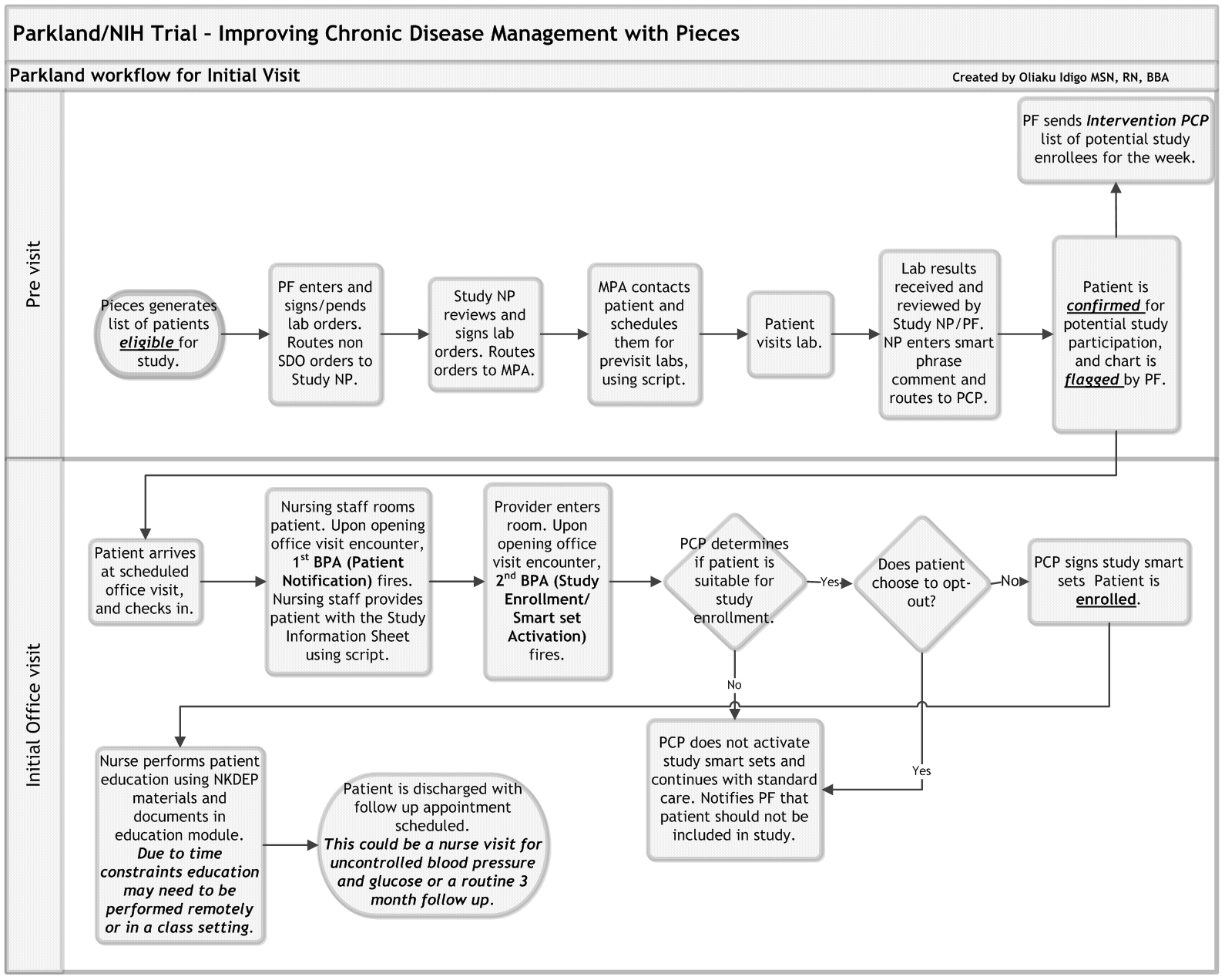
The following figure shows a diagram of a sample workflow for a healthcare system participating in the ICD-Pieces trial.

Workflow for Initial Patient Visit
Workflow figure

* Diagram created by Oliaku Idigo, MSN, RN, BBA, Parkland Health and Hospital System.
Abbreviations: BPA=Best Practice Alert; MPA=Medical Practice Assistant; NP=Nurse Practitioner; PCP=Primary Care Physician; PF=Practice Facilitator

Recruitment Materials

  • Pieces™ database
  • ICD-Pieces study registry
  • Epic® Reporting Workbench
  • Best Practice Alerts
  • Study protocols including the CKD diabetes management protocol and the CKD hypertension management protocol
  • Order sets/smart sets created within the EHR
  • Pharmacist notes in the EHR

Enrolling Participants

The Practice Facilitator contacts the office manager to schedule a face-to-face onboarding meeting with providers and clinic staff at the time of their regular office meeting to discuss the study, and the role providers and staff are expected to play in patient enrollment. The meeting also is essential to obtain input on how to fit study activities into their clinical workflow. This is followed by ongoing contact via e-mail, telephone, or in-basket messaging (a secure, closed messaging system within the EHR used for sending and receiving messages about patient care and billing needs).

Patient enrollment in the intervention group occurs during the clinic visit when the PCP activates the study protocol and signs the study orders using the Best Practice Alert that appears during the office visit or acknowledges the pharmacist notes. Order sets (also known as smart sets)—a group of related orders that apply to a prespecified diagnosis or particular period of time—are activated and delegated by PCPs as standing orders, such as blood pressure monitoring, patient education, and medication titration. Patients in the usual care group have to meet study inclusion criteria and be seen in clinic.

Although eligibility for enrollment is determined before the patient's office visit, PCPs have the final say as to whether their patients are suitable for the study and PCP exclusions are tracked by the study team. We recognize that we may not be able to enumerate all patients’ conditions that need to be excluded (e.g., terminal cancer, cirrhosis, or other terminal conditions). After order set activation, the office staff and Practice Facilitator provide patient education and initiate follow-up procedures leading up to the next scheduled office visit.

Use of the Electronic Health Record System

The study team created a study registry as well as a best practice alert, smart set, and study protocol in the Epic EHR at 2 of the participating healthcare systems, Parkland and Texas Health Resources. Pharmacist note templates were created at the VA and ProHealth systems. Regular automated updates are entered into the study database from the EHR, which enables the continuous monitoring and assessment of enrolled patients’ progress toward the study goals in the intervention group. The study team plans to use the EHR to retrieve data for final outcome assessment.

The primary outcome of ICD-Pieces is all-cause hospitalizations for patients with a triad of CKD, diabetes, and hypertension. Secondary outcomes include 30-day all-cause readmissions (for those patients who have an index hospitalization), emergency room visits, cardiovascular events, dialysis and deaths.

Potential Barriers and Challenges

ICD-Pieces Recruitment Design Modification

The randomization for ICD-Pieces was initially planned to be based on clinics of the four healthcare systems involved in the study. However, it was discovered that the patient panels in clinics varied in size among systems. This introduced an element of heterogeneity among clusters being randomized and negatively affected the intracluster correlation coefficient (ICC) and effect sample size. Even with a large number of eligible patients, it could be difficult to detect a difference between the intervention and usual care groups.

For example, at Parkland Health and Hospital System, the early plans for panel size for clinics ranged between 300 to more than 1000 patients per cluster due to the larger number of providers employed at some of the clinics. In comparison, the patient panel size for Texas Health Resources clinics was mostly under 100. The organization of clusters at Parkland was redefined to practices based on patient panels managed by unique teams of one provider and staff. As a consequence, it was possible to achieve more homogeneous clusters and an effect study sample size with higher power to detect a difference. At ProHealth Physicians of Connecticut, administrative adjustments in division of clinic regions led to an adjustment in cluster sizes from 13 regional consolidated clinics to 50 distinct practices or clusters, resulting in clusters similar in size to practices in the other systems participating in the trial.

A possible concern with cluster randomization by practices is cross-contamination between intervention and usual care groups (i.e., the clinical practices in this case). In ICD-Pieces, this risk is mitigated by the fact that each individual practice cares for a unique group of patients with a permanently designated team of one RN and one medical assistant, and does not overlap with other practices. The ICD-Pieces team generates patient lists/registries for each individual practice, allowing Practice Facilitators to direct interventions to the intervention group and avoid generalized alerts/activation of protocols and cross-contamination to the control group.

Providers’ Lack of Understanding of Waiver of Consent Concept

The study received a waiver of informed consent from the three IRBs overseeing the study. However, patients are able to opt out of their data being used in the study, and providers can opt out patients based on their clinical judgment. Some providers initially struggled with the concept of enrolling patients into the study without written informed consent. A few patients declined to participate when their provider attempted to explain the study to them. It took some effort to engage a few providers before they understood the appropriate study workflow, which begins with the office staff providing an information sheet to each eligible patient before he or she enters the examination room to see his or her provider. The information sheet describes the study, its purpose, the study team, and how patients can opt out of the study if they so choose. The provider’s role is to provide the recommended evidence-based care to his or her patients and then authorize the Practice Facilitator to follow up with patients based on established protocols. After the providers understood the workflow, enrollment of patients began to run smoothly.

Patients Not Appearing for Clinic Appointments

For patients who are “no shows” at their clinic visits, the office staff calls to reschedule the appointment. The proportion of eligible patients missing appointments has varied among healthcare systems.

Shortage of Clinic Staff

Sometimes a staff shortage during busy periods in smaller clinics has the effect of interrupting patient enrollment. The study team endeavors to catch the patients on their next PCP visit.

Data Transmission Issues

Changes in the Pieces data integration system and a turnover of technical staff have the effect of slowing down enrollment. The data integration system is an IT platform for receiving, joining, combining, and analyzing data on a cloud-based server that was migrated from one cloud provider to another. During the trial, it became necessary to change the data transmission pathway and issue new credentials. Another IT issue involved lab data that were not being updated in the study’s registry; consequently, some eligible patients were not identified when they came to their clinic visit. The study team was able to resolve these IT issues and get enrollment back on track.

Providers’ Resistance

Some providers were initially resistant because of the perception that the study adds an inordinate level of burden to their regular workflow. The study team worked with them to better incorporate study activities into the clinic workflow to minimize the burden on providers and staff. The Practice Facilitators took on more responsibilities, such as medication titration and ordering labs as authorized by the provider. In one health system, some providers have become advocates for the study because, after being part of it, they realized it was reducing their burden while helping them meet their performance metrics.

There was also a question about payment to physicians to conduct research. It was necessary to explain that the funds for the ICD-Pieces trial are strictly intended for research and not for reimbursing regular patient care. Enrollment of patients through activation of order sets requires very minimal extra time from PCPs.

Last, the issue of loss of “locus of control” was recognized and respected in all interactions with providers. Providers are accustomed to making decisions about the care provided to their patients and they may feel a loss of control because additional care is being suggested for their patients.

Other Resources for Recruitment

Participant recruitment is one of the most critical plans to design and implement in clinical research, whether it be a more traditional or a more pragmatic trial. This ICD-Pieces case study has described several recruitment details within a pragmatic trial, including electronic platforms and clinical data that can augment recruitment, and various factors that might help or hinder it. Still, other pragmatic trials also provide learning opportunities on enrollment, and some of those resources follow in the next section.

DISCLAIMER: The views expressed in this chapter are those of the contributors and do not necessarily represent the views of the National Heart, Lung, and Blood Institute; the National Institutes of Health; or the U.S. Department of Health and Human Services. 

SECTIONS

CHAPTER SECTIONS


Version History

December 3, 2025: Updated hyperlinks (changes made by G. Uhlenbrauck).

September 27, 2023: Updated text describing ICD-Pieces case study for clarity (changes made by E. McCamic).

December 5, 2018: Updated text describing ICD-Pieces case study and updated links to PCCI as part of annual content update (changes made by L. Wing).

Published August 25, 2017

Questions to Consider

Participant Recruitment


Section 2


Questions to Consider

When planning a trial's recruitment activities, it would be helpful for study teams to consider important questions like the following:

  • Who (individuals or groups) will be the targets of the embedded intervention?
  • What recruitment methods will be needed in the context of the trial’s randomization scheme, inclusion criteria, enrollment goals, and clinical workflow?
  • What recruitment materials and procedures will be developed?
  • How will eligible participants be contacted and enrolled, whether individual participants or clusters of clinics or clinicians?
  • How will the partner health system’s EHR be used for study recruitment, enrollment, intervention delivery, and/or outcome assessment?
  • What barriers to recruitment are anticipated, and how will these challenges be addressed?

The next section elaborates on each of these recruitment considerations as illustrated by a real-life ePCT case study from the NIH Collaboratory Trials.


DISCLAIMER: The views expressed in this chapter are those of the contributors and do not necessarily represent the views of the National Heart, Lung, and Blood Institute; the National Institutes of Health; or the U.S. Department of Health and Human Services.

SECTIONS

CHAPTER SECTIONS


Version History

August 25, 2020: Made nonsubstantive edits as part of annual content update (changes made by L. Wing).

December 18, 2018: Made nonsubstantive edits as part of annual content update (changes made by L. Wing).

Published August 25, 2017

Intervention Staffing and Training Flexibility- ARCHIVED

ARCHIVED PAGE

Archived on August 7, 2025. Go to the latest version.

Dissemination and Implementation


Section 8


Intervention Staffing and Training Flexibility- ARCHIVED

Case Example: Collaborative Care for Chronic Pain in Primary Care (PPACT)

Collaborative Care for Chronic Pain in Primary Care (PPACT) is a trial targeting patients with chronic pain receiving long term opioid treatment and is designed to help patients adopt self-management skills for chronic pain, limit use of opioid medications, and identify factors amenable to treatment in the primary care setting (Debar et al. 2012, Debar et al. 2018). The trial is being carried out in the regions of Kaiser Permanente (KP) Georgia, Hawaii, and the Northwest (Oregon/Southwest Washington) and relies on an interdisciplinary team (nurse case managers, behavioral specialists, physical therapists, and pharmacists) to carry out the intervention and support the primary care providers in working with their patients enrolled in the intervention. By design, PPACT interventionists continue ongoing frontline clinical work in participating healthcare systems in addition to their work implementing PPACT. While this helps to ensure that the intervention is as closely integrated into the health care delivery system as possible, it has also meant that the study is vulnerable to many forces within the health care systems that affect staffing in the requisite areas. This has influenced availability of clinicians for the study and staff turn-over across the studies. For example, the simultaneous integration of behavioral health specialists into primary care in the KP Hawaii and Northwest regions has led to a dearth of adequately trained clinicians and led to the use of health coaches at KP Hawaii rather than behavioral health specialists, as well as the need to rehire and train for the behavioral health role multiple times at KP Northwest. At KP Georgia the consolidation of nurses in primary care clinics has led to many cohorts of the intervention being conducted without the involvement of a nurse case manager. Further, physical therapy is carved out of the integrated health plan at KP Georgia leading to the need to organize communications and hand offs between interdisciplinary team members differently in that region. Across all performance sites we have streamlined intervention training and customized it depending on the experience and professional scope of work of those from different disciplines.

Strategy Details
Diffusion By design, PPACT interventionists were dually employed by the health plan and had other professional responsibilities in addition to delivering the intervention. These interventionists (nurses, behavioral specialists, physical therapists) often reported modifying their practice approaches more broadly based on what they’d learned through the PPACT training and involvement in the study.
Dissemination At times these same interventionists were also asked by KP clinical leaders and administrators to describe the PPACT intervention approach to other clinicians in the health care systems and to work with the leaders/administrators to adapt feasible components for use more broadly in the health care systems.
Implementation By design, a larger group of KP clinicians were allowed and encouraged to participate in the PPACT intervention trainings to promote familiarity with the program and aid clinical communication between the PPACT intervention team and other clinicians within participating health care systems.
Sustainability Because of the variable nature of the clinical collection of pain-related patient reported outcomes at the beginning of the study, investigators identified a psychometrically validated but abbreviated version of the standard brief pain inventory scale (the PEGS – Krebs et al, 2009) and worked with KP nationally to adopt and build within the questionnaire section of the electronic health record. This is now the standard pain measure used in the three health care systems participating in the PPACT trial.

SECTIONS

CHAPTER SECTIONS

REFERENCES

back to top

Debar LL, Kindler L, Keefe FJ, et al. 2012. A primary care-based interdisciplinary team approach to the treatment of chronic pain utilizing a pragmatic clinical trials framework. Transl Behav Med. 2:523–530. doi:10.1007/s13142-012-0163-2. PMID:23440672

DeBar L, Benes L, Bonifay A, et al. 2018. Interdisciplinary Team-Based Care for Patients with Chronic Pain on Long-Term Opioid Treatment in Primary Care (PPACT) – Protocol for a Pragmatic Cluster Randomized Trial. Contemp Clin Trials. 6;67:91-99. doi: 10.1016/j.cct.2018.02.015. PMID: 29522897

Krebs EE, Lorenz KA, Bair MJ, et al. 2009. Development and initial validation of the PEG, a three-item scale assessing pain intensity and interference. J Gen Intern Med. 24:733–738. doi:10.1007/s11606-009-0981-1. PMID:19418100.


Version History

December 5, 2018: Added reference (change made by K. Staman).

Published August 25, 2017

Creation of Targeted Tools- ARCHIVED

ARCHIVED PAGE

Archived on August 7, 2025. Go to the latest version.

Dissemination and Implementation


Section 6


Creation of Targeted Tools- ARCHIVED

To help speed implementation and translation of research findings into practice across the nation, tools, such as online materials, training videos, etc., can be created. Materials developed to train the sites participating in the PCT are good starting places for materials for a broader audience. But again, a health system leader must first recognize the need for the tool, then champion its implementation (pointing to the need to involve these stakeholders in study design).

Case Example: REDUCE MRSA and ABATE Infection Trials

The REDUCE MRSA trial was a large, cluster-randomized pragmatic trial of 43 hospitals (74 adult ICUs) that demonstrated that universal bathing with chlorhexidine and universal nasal decolonization with mupirocin significantly reduced MRSA clinical cultures and all-cause bloodstream infections in adult ICUs.

To support broad implementation and facilitate rapid integration of techniques into routine care in ICUs across the country, investigators made the toolkit with educational materials and documentation widely available (Universal ICU Decolonization: An Enhanced Protocol), offered standardized support, and encouraged local adaptation and collaboration. Septimus et al. note several contributing factors that influenced the success of implementation: “(1) a well-designed toolkit with proven success in a pragmatic clinical trial; (2) a program team, experienced in implementing evidence-based practices, that is responsive to local needs; and (3) an established infrastructure for implementing large quality improvement projects (Septimus et al. 2016)."

The implementation of the REDUCE MRSA trial was informed by Pronovost’s five key components of effective translation of knowledge into practice:

  • A focus on systems rather than the care of individual patients
  • Engagement of local interdisciplinary teams to assume ownership of the improvement project
  • Creation of centralized support for the technical work
  • Encouraging local adaption of the intervention
  • Creating a collaborative culture within the local unit and larger system (Pronovost et al. 2008; Septimus et al. 2016)

Most importantly, the successful and rapid implementation of the toolkit used in REDUCE MRSA demonstrates the ability to rapidly integrate research into clinical care, which is, in essence, the foundation of a learning health system.

The diffusion, dissemination, implementation, and sustainability strategy for REDUCE MRSA is described in the table below.

Strategy Details
Diffusion Publication of key finding in the New England Journal of Medicine in June 2013 (Huang et al. 2013).

Universal decolonization of patients in the ICU using a combination of chlorhexidine (CHG) bathing and intranasal mupirocin significantly reduced methicillin-resistant Staphylococcus aureus (MRSA)–positive clinical cultures by 37% and bloodstream infections from any pathogen by 44%.

Dissemination Within HCS partner: A policy and procedure for universal decolonization for all ICU patients was introduced by the HCS partner (Hospital Corporation of America) to all their hospitals in January 2013, following abstract presentation of trial results at a national meeting.
Implementation Within HCS partner: Nursing prompts from the trial for CHG bathing documentation were modified (removed trial name) and activated across the health system. ICU order sets for mupirocin were made available to all hospitals.

External: Investigators also developed a generalizable toolkit with protocols and instructions for CHG bathing and targeted decolonization for MRSA, and a multistep translation program to implement routine universal decolonization in ICUs.

Sustainability Within HCS partner: Feedback reports of CHG and mupirocin compliance developed and deployed.

External: The toolkit is publically available by the Agency for Healthcare Research and Quality: Universal ICU Decolonization: An Enhanced Protocol.

The Active Bathing to Eliminate Infection (ABATE) Trial is a sister trial of REDUCE MRSA. The goal was to determine if using antiseptic bathing for all patients and nasal ointments for patients harboring methicillin-resistant Staphylococcus aureus (MRSA) reduces multidrug-resistant organisms and bloodstream infections. The setting for this trial was not ICUs, as with the REDUCE MRSA trial, but rather was conducted in non-ICU settings. Because the trial’s results are pending, the team is holding off on implementation outside of the ICU until an answer is known.


The diffusion, dissemination, implementation, and sustainability strategy for the ABATE Infection trial is described in the table below.

Strategy Details
Diffusion Presentation and publication of trial results
Dissemination If trial demonstrates value, the health system partner (HCA Healthcare) will create a policy and procedure for universal decolonization in general medical/surgical units for all hospitals in their system following abstract presentation of trial results at a national meeting.
Implementation Investigators will develop a generalizable toolkit with protocols and instructions for CHG bathing and decolonization targeted decolonization for MRSA and a multistep translation program to implement routine universal decolonization and targeted nasal decolonization in non-ICU units. Video of protocol highlighting important instructions is available in the NIH Collaboratory Knowledge Repository.
Sustainability The toolkit will be publicly available. The patient bathing video is available on the NIH Collaboratory website.

SECTIONS

CHAPTER SECTIONS

REFERENCES

back to top

Huang SS, Septimus E, Kleinman K, et al. 2013. Targeted versus universal decolonization to prevent ICU infection. N Engl J Med. 368:2255–2265. doi:10.1056/NEJMoa1207290. PMID: 23718152

Pronovost PJ, Berenholtz SM, Needham DM. 2008. Translating evidence into practice: a model for large scale knowledge translation. BMJ. 337:a1714. doi: 10.1136/bmj.a1714. PMID: 18838424.

Septimus E, Hickok J, Moody J, et al. 2016. Closing the translation gap: toolkit-based implementation of universal decolonization in adult intensive care units reduces central line-associated bloodstream infections in 95 community hospitals. Clin Infect Dis. 63:172–177. doi:10.1093/cid/ciw282. PMID: 27143669.


Version History

December 5, 2018: Revised the implementation and sustainability information for the ABATE trial as part of the annual update (changes made by K. Staman).

Published August 25, 2017

Additional Resources

ARCHIVED PAGE

Archived on November 26, 2025. Go to the latest version.

Dissemination Approaches For Different Stakeholders


Section 7


Additional Resources

The National Library of Medicine (NLM) has services and platforms designed to help archive, share, and find products from research (Table). For more data sharing resources and platforms, see the Additional Resources the Data Sharing Solutions for Embedded Research sections of the Data Sharing and Embedded Research Chapter

 Resource  Description
National Library of Medicine Tools
NLM Health IT Landing Page Includes multiple resources:

Value Set Authority Center (VSAC) Platform for sharing value sets used in cohort definitions
PheKB A platform that enables access to validated phenotype definitions (“algorithms”), validation of existing phenotype algorithms on EHRs, collaboration on existing and new phenotype algorithms, and interaction with potential phenotype algorithm collaborators


National Information Center on Health Services Research & Health Care Technology (NICHSR) Includes databases relevant to Health Services Research
 

PubMed

Contains citations for biomedical literature
ClinicalTrials.gov A database of publicly and privately-funded clinical studies
Grants and Funding A central resource for Grants and funding information

Grand Rounds

Grand Rounds March 9, 2018 Communication and Dissemination in Learning Health Systems (Eric Larson, MD, MPH)
Grand Rounds September 29, 2018 Preprints: What, Why Not, and How (Harlan Krumholz, MD)
Podcast September 29, 2018
Preprints: What, Why Not, and How (Harlan Krumholz, MD)
Information on Finding Reputable Journals
Writing webinars
Writing for Clinical Research Discusses the structure and features of research articles, the writing process, submission and peer review, and the responsibilities of authorship.
 Authorship and conflict of interest 
The International Committee of Medical Journal Editors (ICJME) recommendations Criteria for authorship for peer review journals as well as author responsibilities for reporting conflicts of interest
Reporting and dissemination tools
PCORnet Best Practice Sharing Session Using Narratives to Promote Engagement: The MyPaTH Story Project. This session describes how the PaTH network has developed an archive of patient stories to support the development of people-centered research questions in PCORnet and facilitate patient engagement in patient-centered outcomes research.
PCORI’s Dissemination and Implementation Framework A dissemination and implementation (D&I) framework to facilitate strategic planning for sharing information and for putting new evidence into practice to speed change.
PCORI’s Dissemination and Implementation Toolkit A companion document to the D&I Framework that describes the core components of dissemination and implementation.
Aggregate Analysis of ClinicalTrial.gov (AACT) database The Clinical Trials Transformation Initiative (CTTI) created the Aggregate Analysis of ClinicalTrial.gov (AACT) database,  which is a publicly-accessible ClinicalTrials.gov dataset that can be used to analyze studies and characterize the current state of clinical trials, including at the individual specialty level.

The product list contains publications, information regarding the methodology leading to the creation of AACT, tips, and example analyses.

SECTIONS

CHAPTER SECTIONS


Version History

April 5, 2021: Added NLM resources (changes made by K. Staman).

December 11, 2018: Added resources as part of annual update (changes made by K. Staman).

Published August 25, 2017

ClinicalTrials.gov

ARCHIVED PAGE

Archived on November 26, 2025. Go to the latest version.

Dissemination Approaches For Different Stakeholders


Section 4


ClinicalTrials.gov

ClinicalTrials.gov is a publicly available registry and database for clinical trials. Publicly and privately supported studies that involve human subjects research are required to register on the site (and provide the design of the study) before patient enrollment begins and provide summary results no less than 12 months after the study ends.

As part of the registration process, users are asked to indicate if they will share individual participant data, explain what exactly will be shared, or explain why it won’t be shared. Users are also asked to provide a URL of where the data will be shared and include supporting information, such as the

  • protocol
  • statistical analysis plan
  • informed consent form
  • clinical study report
  • analytic code

To enhance use of these data, the Clinical Trials Transformation Initiative created the Aggregate Analysis of ClinicalTrial.gov (AACT) database so that researchers could easily access and analyze these data.

In 2016, the U.S. Department of Health and Human Services clarified and codified Section 801 in a final rule governing the registration and data reporting for clinical trials with ClinicalTrials.gov. Recently, the National Library of Medicine has launched a multi-year initiative to modernize and enhance the user experience of this public resource, and a beta ClinicalTrials.gov website was released in late 2021 (Fine 2021). The new website will acknowledge the different users, including patients and caregivers, data providers, and data researchers:

“We aim to ensure that:

  1. Clinical trial information is current, complete, and reliable.
  2. All users can easily find and use information about clinical trials.
  3. Clinical trial information, resources, and tools provide value to the research ecosystem.” — Rebecca Williams, PharmD, MPH, acting director of ClinicalTrials.gov at the National Library of Medicine, National Institutes of Health (Williams 2021).

The rule requires sponsors or principal investigators to register clinical trials and report key data about the trial design, study population, and outcomes.

The registry was developed to help ensure information about human subjects research is expediently added to the public knowledge base and to enable a full understanding of the effectiveness of interventions and therapies. The registry also provides a platform to document the frequency and severity of side effects, prevent duplicating studies, and help prospective researchers plan future studies. Because journals often reject papers with negative results, small studies, and trials stopped early, ClinicalTrials.gov is a critical dissemination strategy that fills in these gaps (Piller 2015a). However, this registry was created with a traditional explanatory trial in mind, and is not ideally suited to the reporting of pragmatic trials or implementation research. An improved structure for reporting ePCTs would be beneficial for this type of research.

Although reporting all results—including negative results—is critical to the scientific process, overall compliance with FDA requirements is poor (Anderson et al. 2015; Miller et al. 2015; Piller 2015b); about half of clinical trial results go unreported (Anderson et al. 2015), and most research institutions fail to report some of their trials (Piller 2015a). (For more, see this interactive map.) Although the government can levy a fine of up to $10,000 a day or suspend research funding for failure to report results, it has not penalized any institution (Piller 2015a). Reasons for low reporting include: lack of money set aside in budgets for reporting, time burden, lack of incentive, delay for the creation of a journal article, or pressure from sponsors.

Before an FDA law requiring investigators to publish summaries of trial results on ClinicalTrials.gov went into effect in December 2007, some participants in clinical research were unable to find the results of the research in which they participated, as this article in the Atlantic describes (Yasinski 2016). Although the majority of patients want to know the results of the clinical trial in which they participated (Shalowitz and Miller 2008), fewer than 10% of them actually receive this information (Getz et al. 2012). Patients may not know of the existence of ClinicalTrials.gov, and even if they do, the language is often written for audiences other than for patients, and consequently, the information provided may not be written in a clear, plain language that is understandable to average readers.

SECTIONS

CHAPTER SECTIONS

Resources

ClinicalTrials.gov Updates and Modernization, Speaker: Stacey Arnold, PhD

PRS Beta Update: A recorded demonstration presented by Heather Dobbins, PhD, Lead Results Analyst and PRS Modernization Product Owner previewing PRS Beta.

ClinicalTrials.gov Registration and Reporting handout
This handout provides basic information about registering and reporting on ClinicalTrials.gov

The Clinical Trials Transformation Initiative (CTTI) created the Aggregate Analysis of ClinicalTrial.gov (AACT) database,  which is a publicly-accessible ClinicalTrials.gov dataset that can be used to analyze studies and characterize the current state of clinical trials, including at the individual specialty level.

The product list contains publications, information regarding the methodology leading to the creation of AACT, tips, and example analyses.

REFERENCES

back to top

Anderson ML, Chiswell K, Peterson ED, Tasneem A, Topping J, Califf RM. 2015. Compliance with Results Reporting at ClinicalTrials.gov. N Engl J Med. 372:1031–1039. doi:10.1056/NEJMsa1409364. PMID:25760355.

Fine AM. 2021 Dec. 8. ClinicalTrials.gov Modernization Effort: Beta Releases Now Available. NLM Musings from the Mezzanine. https://nlmdirector.nlm.nih.gov/2021/12/08/clinicaltrials-gov-modernization-effort-beta-releases-now-available/. Accessed July 28, 2021.

Getz K, Hallinan Z, Simmons D, et al. 2012. Meeting the obligation to communicate clinical trial results to study volunteers. Expert Rev Clin Pharmacol. 5:149–156. doi:10.1586/ecp.12.7. PMID:22390557.

Miller JE, Korn D, Ross JS. 2015. Clinical trial registration, reporting, publication and FDAAA compliance: a cross-sectional analysis and ranking of new drugs approved by the FDA in 2012. BMJ Open. 5:e009758. doi:10.1136/bmjopen-2015-009758. PMID:26563214.

Piller C. 2015a. Law ignored, patients at risk. STAT: Reporting from the frontiers of health and medicine. https://bioethics.georgetown.edu/2017/02/law-ignored-patients-at-risk/ Accessed Aug 1, 2017.

Piller C. 2015b. Failure to report: About the investigation. STAT: Reporting from the frontiers of health and medicine.

Shalowitz DI, Miller FG. 2008. Communicating the Results of Clinical Research to Participants: Attitudes, Practices, and Future Directions. PLoS Medicine. 5:e91. doi:10.1371/journal.pmed.0050091. PMID:18479180

Yasinski E. 2016 Jan 11. The Outcome of My Clinical Trial Is a Mystery. The Atlantic. https://www.theatlantic.com/health/archive/2016/01/clinical-trial-unpublished-results/423540/ Accessed Aug 1, 2017.


Version History

February 19, 2024: Corrected a copy-paste error in the text (changes made by D. Seils).

14, 2022: Added updated information on ClinicalTrials.gov (changes made by E. McCamic)

June 25, 2021: Added handout on ClinicalTrials.gov to the resources bar and changed the name of the section to “ClinicalTrials.gov” (changes made by K. Staman).

December 11, 2018: Added text as part of the annual review process (changes made by K. Staman).

Published August 25, 2017

Reporting to the Scientific Community: General Considerations

ARCHIVED PAGE

Archived on November 26, 2025. Go to the latest version.

Dissemination Approaches For Different Stakeholders


Section 2


Reporting to the Scientific Community: General Considerations

By their nature as embedded interventions within healthcare settings, such as clinics, hospital units, or healthcare systems, PCTs have special considerations for authors to support full and transparent reporting. Good reporting allows decision makers to judge how applicable the results of the PCT are to their own conditions and environments. Full reporting also serves as a foundation for authors as they develop their primary journal publication.

Depending on the particulars of the PCT’s design, authors might need to report about:

  • How data from EHRs were used in the research
  • Who the stakeholders were and how they were approached and engaged to participate in the design, conduct, or dissemination of the study
  • How any unanticipated changes in study arms were adjusted for or accommodated
  • Whether the trial needed alternate approaches to the informed consent process or protection of human subjects

These considerations are introduced below. More reporting information and guidance for authors is in the Collaboratory resource PCT Reporting Template. The Equator Network (Enhancing the QUAlity and Transparency Of health Research) provides a list of 407 different reporting guidelines, including guidelines for quality improvement initiatives, explanatory trials, and pragmatic trials (see Table).

Reporting Guideline Name Study Type
SQUIRE 2.0 Standards for QUality Improvement Reporting Excellence): revised publication guidelines from a detailed consensus process Quality improvement
CONSORT Consolidated Standards of Reporting Trials Randomized trials
CONSORT Pragmatic Trial Extension Pragmatic trials
CONSORT Cluster Trial Extension Cluster randomized trials
TRIPOD-Cluster Checklist Transparent Reporting of Multivariable Prediction Models for Individual Prognosis or Diagnosis Developed or Validated Using Clustered Data Cluster randomized trials

Secondary uses of EHR data

If the source of data was from a clinical or billing database instead of one created primarily for research, good reporting will include such elements as the steps used in gaining permission to use the data, how the population of interest was identified (i.e., development of phenotypes, use of ICD-10 codes), how data from different sources were linked, how data quality was assessed, the process for data management during the study, and the plan for archiving or sharing the data after the study. If the PCT employed a research network for querying data (e.g., distributed research network, CTSA network, or PCORnet partner network), then the network should be described in sufficient detail.

Accommodating or adjusting to unanticipated changes in the study arms

As trials evolve, changes may occur in the care provided within the intervention and/or control arms that could affect the conduct or analysis of the study. For example, some components of the intervention may appear in usual care at some control sites or clusters. Contamination can be due to various reasons: unintentional spill-over of intervention effects, other healthcare initiatives that focus on the same problem, or changes in leadership, sites, or healthcare delivery system technologies. Authors should describe how they accommodated changes, especially if the changes affected the statistical analysis of the trial.

Human subjects protection

Authors should describe how approval by an ethics committee or institutional review board (IRB) was obtained. Include details such as the type of informed consent (written, oral, information sheet) and the mode (electronic, mail, in-person). Explain if the trial was determined to be exempt from requiring informed consent. If applicable, describe the existence of a data monitoring committee. For cluster-randomized trials (CRTs), indicate whether consent was obtained from cluster representatives or individual cluster members, or both. Describe whether consent was obtained before or after randomization.


SECTIONS

CHAPTER SECTIONS

Resources

Grand Rounds

medRxiv: A Paradigm Shift in Disseminating Clinical and Public Health Research; NIH Pragmatic Trials Collaboratory PCT Grand Rounds; July 12, 2019

This presentation describes medRxiv, a server for health science preprints. The benefits of preprints in medicine include early sharing of new information, enabling less "publishable" studies to be more readily available, and facilitating replication and reproducibility studies.


Version History

February 20, 2024: Updated hyperlink to PCT Reporting Template (changes made by D. Seils).

July 25, 2023: Nonsubstantive change to the table (changes made by D. Seils).

February 16, 2023: Added the TRIPOD-Cluster checklist to the list of reporting guidelines; and made nonsubstantive changes to the Resources sidebar (changes made by D. Seils).

June 12, 2020: Added Grand Rounds to the Resources bar (changes made by K. Staman).

December 11, 2018: Updated as part of annual review, added text and table (changes made by K. Staman).

Published August 25, 2017

Additional Resources- ARCHIVED


Version History

Published August 25, 2017