


ARCHIVED PAGE
Archived on August 7, 2025. Go to the latest version.
Dissemination and Implementation
Section 4
Changes to Policy and Guidelines – ARCHIVED
Case Example: Trauma Survivors Outcomes and Support Trial (TSOS)
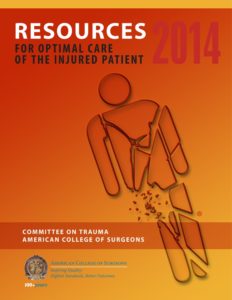
The investigators of the Trauma Survivors Outcomes and Support Trial (TSOS) have been working with the American College of Surgeons Committee on Trauma for over a decade to integrate findings from pragmatic trials into guidelines that regulate trauma care nationally. From the mid-1990s through 2012, a series of single and multisite trials were conducted that suggested that alcohol screening and brief interventions delivered from trauma centers could reduce alcohol consumption and perhaps also recurrent traumatic injury. These efforts in part facilitated a universal alcohol screening and intervention requirement from the American College of Surgeons Committee on Trauma for US Level I and Level II trauma centers in 2014 (American College of Surgeons. 2014). The study team convened policy summits with the College to review the results of these trials, and, as part of the 2014 orange book the College included a post-traumatic stress disorder (PTSD) and comorbidity screening and intervention best practice guideline without a formal requirement.
The next step, and an explicit goal of the TSOS trial, is to provide the college with multisite pragmatic trial evidence that could further inform regulatory policy. The clinical goal of TSOS is to coordinate care and improve outcomes for trauma survivors with PTSD and comorbidity. The trial is being conducted at 25 US level 1 trauma centers, and frontline providers receive intervention training at each center. Sites are asked to recruit 40 patients over the course of the 4-year study, and patients undergo a baseline electronic health record PTSD screen, are randomized, and then complete 3, 6, and 12 month follow-up assessments (Zatzick et al. 2016).
With TSOS, nearly all the clinical investigators are front-line trauma center providers who understand that if the College issues the requirement, they will have to perform those mandated screening and intervention procedures at their trauma centers. When the research team was developing the screening and intervention process, they remained focused on the ultimate implementation. The clinical and policy team developed a unique set of methods for understanding implementation mechanisms: these begin with immersive participant observation by study team members at training site visits, over the telephone, and in their own clinical activities. Team members record field observations in real time—in ways that don’t drive up the cost of the trial—and these notes, logs, and other observations are reviewed with the a mixed-methods expert. These field observations give the team some preliminary information regarding the implementation science constructs that will inform sustainable implementation and acute care regulatory policy. In the final year of the trial, an American College of Surgeons’ policy summit has been scheduled to facilitate translation of results into national policy (Zatzick et al. 2016).
The TSOS diffusion, dissemination, implementation, and sustainability strategy is shown below.
| Strategy Details | Details |
|---|---|
| Diffusion | TSOS will publish results in a peer-reviewed academic journal. |
| Dissemination | The TSOS study team will present at health services, psychiatric and trauma-surgical conferences in order to disseminate the results of the study. The TSOS team will also work to present the results of the study in the American College of Surgeons Committee on Trauma (ACS COT) Resources for Optimal Care of the Inured Patient guidebook, and thus disseminating through the mechanism of a nationally recognized resource guide for trauma care practice. Dissemination will also occur through the end of study policy summit with the ACS COT. |
| Implementation | The TSOS team is currently working with the ACS COT. Co-Investigator Dr. Jurkovich and PI Dr. Zatzick are ACS-COT members. They will attempt to contribute to the guidebook PTSD screening and intervention suggestions based on trial results, which could result in trauma center verification requirements. Such policy contributes to a “make it happen” implementation context. Additionally, electronic health record screenings are occurring at 25 trauma center sites nationally for PTSD and the intervention will be implemented at all 25 sites in the TSOS stepped-wedge design. |
| Sustainability | The ACS COT resources guidebook trauma center verification requirements could possibly be influenced if the TSOS trial proves effective in reducing the symptoms of PTSD and co-morbidity; changes to the resources guidebook could in turn influence the sustainability of the TSOS intervention, given that verification requirements often result in additional resource allocation for services. Additionally, study team members are positioned to help influence national policy, thereby contributing to sustainability of guidelines derived from positive TSOS study investigative results. |
SECTIONS
sections
- Introduction – ARCHIVED
- Dissemination and Implementation Frameworks – ARCHIVED
- Let It, Help It, Make It Happen – ARCHIVED
- Changes to Policy and Guidelines – ARCHIVED
- Legislative Changes- ARCHIVED
- Creation of Targeted Tools- ARCHIVED
- Stepped Wedge Designs- ARCHIVED
- Intervention Staffing and Training Flexibility- ARCHIVED
- Pragmatic Implementation Process Assessments- ARCHIVED
- Partnering With Quality Improvement and Population Health Initiatives- ARCHIVED
- Implementation in the Trial Versus in the Real World- ARCHIVED
- Additional Resources- ARCHIVED
- FAQ- ARCHIVED
REFERENCES
American College of Surgeons. 2014. Resources for Optimal Care of the Injured Patient. https://www.facs.org/~/media/files/quality%20programs/trauma/vrc%20resources/resources%20for%20optimal%20care.ashx. Accessed August 1, 2017.
Zatzick DF, Russo J, Darnell D, et al. 2016. An effectiveness-implementation hybrid trial study protocol targeting posttraumatic stress disorder and comorbidity. Implement Sci. 11:58. doi:10.1186/s13012-016-0424-4. PMID: 27130272.
current section : Changes to Policy and Guidelines – ARCHIVED
- Introduction – ARCHIVED
- Dissemination and Implementation Frameworks – ARCHIVED
- Let It, Help It, Make It Happen – ARCHIVED
- Changes to Policy and Guidelines – ARCHIVED
- Legislative Changes- ARCHIVED
- Creation of Targeted Tools- ARCHIVED
- Stepped Wedge Designs- ARCHIVED
- Intervention Staffing and Training Flexibility- ARCHIVED
- Pragmatic Implementation Process Assessments- ARCHIVED
- Partnering With Quality Improvement and Population Health Initiatives- ARCHIVED
- Implementation in the Trial Versus in the Real World- ARCHIVED
- Additional Resources- ARCHIVED
- FAQ- ARCHIVED