February 23, 2022: PCT Grand Rounds Will Feature Fully Remote CHIEF-HF Trial

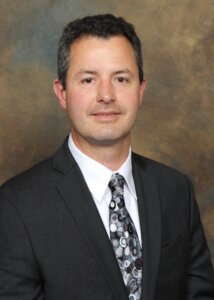
Headshot of Dr. John Spertus
Dr. John Spertus

In this Friday’s PCT Grand Rounds, Dr. John Spertus of the University of Missouri–Kansas City will present “The Next Generation of Patient-Centered Trials – No Site Visits, Home Delivery of Meds and Patient-Reported Outcomes – The CHIEF-HF Trial.” The Grand Rounds session will be held on Friday, February 25, at 1:00 pm eastern.

The CHIEF-HF trial examined the effect of canagliflozin on symptoms and quality of life for patients with heart failure. The trial was conducted completely remotely because of the COVID-19 pandemic and thus offers lessons about remote strategies in future clinical trials.

Join the online meeting.

February 16, 2022: Pediatric Drug Development Is Focus of PCT Grand Rounds This Week

Headshot of Dr. Perdita Taylor Zapata
Dr. Perdita Taylor-Zapata

In this Friday’s PCT Grand Rounds, Dr. Perdita Taylor-Zapata of the National Institute of Child Health and Human Development (NICHD) will present “Building a Resource: The Process of Developing a Trans-Stakeholder Framework to Enable Pediatric Drug Development.” The Grand Rounds session will be held on Friday, February 18, at 1:00 pm eastern.

Dr. Taylor-Zapata, a board-certified pediatrician, leads the NICHD’s Best Pharmaceuticals for Children Act clinical program, a drug development program that sponsors clinical trials to inform and improve pediatric drug labeling.

Join the online meeting.

Grand Rounds March 4: ACP COVID: A Trial to Evaluate an Advance Care Planning Video and Communication Skills Training Intervention for Older Adults During an Evolving Pandemic (Angelo E. Volandes, MD, MPH; James A. Tulsky, MD; Sophia N. Zupanc, BA)

Speakers:
Angelo E. Volandes, MD, MPH
Associate Professor, Harvard Medical School and Massachusetts General Hospital

James A. Tulsky, MD
Chair, Department of Psychosocial Oncology and Palliative Care
Dana-Farber Cancer Institute
Professor of Medicine, Harvard Medical School

Sophia N. Zupanc, BA
Dana-Farber Cancer Institute

Topic: ACP COVID: A Trial to Evaluate an Advance Care Planning Video and Communication Skills Training Intervention for Older Adults During an Evolving Pandemic

Date: Friday, March 4, 2022, 1:00-2:00 p.m. ET

Meeting Info: To check whether you have the appropriate players installed for UCF (Universal Communications Format) rich media files, go to https://dukemed.webex.com/dukemed/systemdiagnosis.php.

To join the online meeting:
Go to https://dukemed.webex.com/dukemed/j.php?MTID=m4c6e3e4827442a92338a5649cee613e6

Click ‘Connect to Audio”
Choose ‘Computer Audio’ or ‘I will call in’.
If using the ‘call in option’, follow the information from the dialog box that appears.
Be certain to use the Access Code AND the Attendee ID.

Troubleshooting:
If the URL above does not work, go to dukemed.webex.com and enter:
Meeting Number: 2622 682 0537
Meeting Password: 12345

For Audio ONLY:
Call-in toll number (US/Canada): 1-650-479-3207
Access code: 2622 682 0537

NOTE: For Toll-free users, the call-back (call me) services are also available.

February 11, 2022: Great Power and Great Responsibility: Machine Learning in Clinical Research (E. Hope Weissler, MD, MHS; Erich Huang, MD, PhD)

Speakers

E. Hope Weissler, MD, MHS
Resident, Vascular and Endovascular Surgery
Duke University School of Medicine

Erich Huang, MD, PhD
Chief Science and Innovation Officer, Onduo

Topic

Great Power and Great Responsibility: Machine Learning in Clinical Research

Keywords

Machine Learning; Artificial Intelligence; Data Liquidity; Data Storage; HL7FHIR

Key Points

  • Machine learning may address issues that have reduced the efficiency and effectiveness of clinical research and help clinical research projects reach their full potential.
  • Machine learning may improve the pragmatism of research, decreasing costs and time it takes to conduct a research study.
  • Machine learning can be used to canvas the literature, hypothesize drug-target interactions, propose new therapeutics, and analyze highly dimensional research output.
  • Effects of machine learning are up to us and could potentially reduce the pragmatism of research if applied indiscriminately. Machine learning could produce overly selected study participant groups, too closely managing adherence, and using ultra-high-touch follow-up methods.
  • Data Liquidity refers to the ease with which data can be transferred or exchanged. This depends largely on the manner in which the data is stored.
  • Some forms of data are liquid than others due to privacy, security, and ethical concerns.

Discussion Themes

A lot of emphasis is currently being placed on the mobile/wearable device area, but an equally important area to develop in machine learning is patient identification and recruitment.

Is data ever really de-identified? Should data be owned by the patient? Why is health data treated differently than consumer data? Privacy regulation is difficult and needs to be addressed further by Congress in the future.


Read more about Dr. Weissler and Dr. Huang’s machine learning in clinical research.


Tags

#pctGR, @Collaboratory1

February 9, 2022: PCT Grand Rounds to Highlight Machine Learning in Clinical Research

Headshots of Dr. Hope Weissler and Dr. Erich Huang
Dr. Hope Weissler and Dr. Erich Huang

In this Friday’s PCT Grand Rounds, Dr. Hope Weissler of Duke University and Dr. Erich Huang of Onduo will present “Great Power and Great Responsibility: Machine Learning in Clinical Research.” The Grand Rounds session will be held on Friday, February 11, at 1:00 pm eastern.

Join the online meeting.

February 4, 2022: SPIRRIT-HFpEF: Opportunities and Challenges in a Large Registry-Based Randomized Clinical Trial(Adam DeVore, MD, MHS; Lars Lund, MD, PhD)

Speakers

Adam DeVore, MD, MHS
Associate Professor of Medicine
Duke University Medical Center
Duke Clinical Research Institute

Lars Lund, MD, PhD
Professor of Cardiology
Karolinska Institutet
Karolinska University Hospital

Topic

SPIRRIT-HFpEF: Opportunities and Challenges in a Large Registry-based Randomized Clinical Trial

Keywords

Heart Failure; SPIRRIT-HFpEF; Randomized clinical trial; Spironolactone; Eplerenone; Swedish Heart Failure Registry (SwedeHF)

Key Points

  • The SPIRRIT-HFpEF trial, conducted Sweden and the US, was a randomized pragmatic clinical trial of spironolactone or eplerenone in heart failure.
  • Death from heart disease is decreasing while death from Heart Failure is increasing.
  • The SPIRRIT-HFpEF trial focused on improving the trajectory for the growing heart failure population.
  • Patients treated with Spironolactone had a modest but not statistically significant improvement over placebo, but total hospitalizations were less.
  • Patients with a lower ejection fraction were more likely to benefit than patients with a higher ejection fraction.
  • The Swedish Heart Failure Registry (SwedeHF) has been collecting data from HF patients since 2000.’

Discussion Themes

The hardest aspect of a clinical trial is recruitment and enrollment. Patients are spread out over the health care system. The challenge is getting staff and personnel to do the work of screening and prescreening.

In the SPIRRIT-HFpEF, the drawbacks of not blinding were small and the costs of blinding would have been huge.


Learn more about the SPIRRIT-HFpEF trial and the Swedish Heart Failure Registry.  Read about the SPIRRIT-HFpEF trial results.


Tags

#pctGR, @Collaboratory1

January 27, 2022: Grand Rounds Podcast Now Available, Featuring Dr. Chris Lindsell on Selecting Outcomes for Outpatient Trials

Headshot of Dr. Christopher John LindsellIn the latest episode of the NIH Collaboratory Grand Rounds podcast, Dr. Christopher Lindsell and Dr. Adrian Hernandez continue the discussion about research outcomes and the importance of understanding stakeholder perspectives in choosing the correct outcomes for outpatient trials.

The full January 14 Grand Rounds webinar with Dr. Lindsell is also available.

January 26, 2022: PCT Grand Rounds to Highlight Primary Results of EMBED Trial

Headshots of Dr. Edward Melnick and Dr. Gail D'Onofrio
Dr. Edward Melnick and Dr. Gail D’Onofrio, co–principal investigators of EMBED

In this Friday’s PCT Grand Rounds, the principal investigators of EMBED, an NIH Collaboratory Trial, will announce the study’s primary results.

Co–principal investigators Dr. Edward Melnick and Dr. Gail D’Onofrio of Yale University will present “EMBED Trial Results: Pragmatic Trial of User-Centered Clinical Decision Support to Implement Emergency Department-Initiated Buprenorphine for Opioid Use Disorder.” The Grand Rounds session will be held on Friday, January 28, at 1:00 pm eastern.

EMBED is a pragmatic trial to evaluate the effect of user-centered computerized clinical decision support on rates of emergency department–initiated buprenorphine and referral for ongoing medication-assisted treatment for patients with opioid use disorder.

Join the online meeting.

EMBED is supported within the NIH Collaboratory by the NIH Common Fund and by a cooperative agreement from the National Institute on Drug Abuse.

January 21, 2022: Primary Palliative Care for Emergency Medicine (Corita R. Grudzen, MD, MSHS, FACEP)

Speaker

Corita R. Grudzen, MD, MSHS, FACEP
Professor, Emergency Medicine and Population Health
Associate Dean, Clinical Sciences
Deputy Director, Clinical and Translational Science Institute
Vice Chair for Research, Emergency Medicine
Ronald O. Perelman Department of Emergency Medicine
NYU Grossman School of Medicine

Keywords

Palliative Care; Stepped-Wedge study design; Emergency Department (ED); Gagne Index; PRIM-ER


Key Points

  • The Emergency Department is increasingly seeing older adults with serious illness rather than patients with acute trauma.
  • Primary Palliative Care for Emergency Medicine (PRIM-ER) is a stepped-wedge study partnership of 18 health systems in 33 EDs designed to change the culture and norms of emergency care to promote palliative care at home or hospice rather than admittance to the hospital.
  • The study used the Gagne Index greater than 6 to identify patients at high risk of short-term mortality. Patients with dementia did not need to meet the Gagne Index criteria to be included in the study.
  • A baseline survey, training of 2,470 emergency providers, and study intervention has been completed at all 33 sites.
  • Only .2% of ED patients in the study were admitted to hospice after their ED visit.  At 12 months post ED visit, 30% of dementia patients had died whereas 15.6% of the non-dementia chronic disease patients had died. Data analysis is ongoing.

Discussion Themes

Stepped-wedge studies present timing issues and COVID-19 increased these problems. A cluster randomized design may have been easier to implement.


The PRIM-ER study was considered quality improvement by the IRB, so no human subjects approval from the IRB was required.


The PRIM-ER next step will be developing tools for patients with dementia regarding palliative care in the ED.


Learn more about the PRIM-ER study.


Tags

#pctGR, @Collaboratory1

January 14, 2022: Searching for a Unicorn: Understanding Stakeholder Perspectives When Selecting Outcomes for Outpatient Trials (Christopher Lindsell, PhD)

Speaker

Christopher Lindsell, PhD
Professor of Biostatistics and Biomedical Informatics
Director, Vanderbilt Institute for Clinical and Translational Research (VICTR) Methods Program
Codirector, Vanderbilt Health Data Science (HEADS) Center

Topic

Searching for a Unicorn: Understanding Stakeholder Perspectives When Selecting Outcomes for Outpatient Trials

Keywords

Research outcome; Outpatient clinical trials; Patient-reported outcomes; Researcher-observed outcomes; Pragmatic trials; ACTIV-6; Days of benefit; Mean time unwell

Key Points

  • A research outcome is the main piece of data used to decide if the research intervention has failed or succeeded.
  • If the incorrect outcome is chosen, the question of whether the intervention has succeeded can’t be answered accurately. Finding the correct outcome requires asking the question ‘What matters?’
  • In studies that are designed to help you feel better faster, we may need to prioritize symptoms and signs (patient reported outcomes) over objective measures (researcher observed outcomes).
  • Outcomes should be chosen based on the purpose of the study.
  • Researchers need to balance sensitivity and specificity when choosing an outcome measure.
  • The ACTIV-6 study uses an overall symptom outcome scale to determine if patients ‘feel better faster.’
  • ACTIV-6 uses Days of Benefit and Time to Recovery/hospitalization and death as an outcome to determine if the intervention is successful.

Discussion Themes

It’s important to strive to complete the most powerful and efficient studies that we can do.

Having multiple medicines available that balance risk and benefit differently gives patients options for their treatment. Individual patients have differing levels of risk tolerance and different ideas about what is the most beneficial outcome.


Learn more about the ACTIV-6 study.


Tags

#pctGR, @Collaboratory1