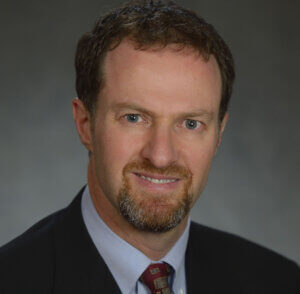
This Friday’s PCT Grand Rounds will feature the next installment of our special series, Ethical & Regulatory Dimensions of Pragmatic Clinical Trials. Monica Taljaard and David Magnus will present “The Stepped Wedge Cluster Randomized Trial: Friend or Foe?”
The Grand Rounds session will be held on Friday, December 9, 2022, at 1:00 pm eastern.
Taljaard is a senior scientist in the Clinical Epidemiology Program at the Ottawa Hospital Research Institute and a professor of epidemiology and community medicine at the University of Ottawa. Magnus is the director of the Stanford Center for Biomedical Ethics and the Thomas A. Raffin Professor of Medicine and Biomedical Ethics and associate dean for research at the Stanford University School of Medicine.
This special Grand Rounds series features moderated webinar discussions with panels of experts. The sessions focus on a range of topics, including the ethics of data sharing; ethical and regulatory considerations in the design and conduct of pragmatic trials; pragmatic research involving patients with dementia; and the use of waivers and alterations of consent.
Stephanie Morain, PhD, MPH Assistant Professor
Berman Institute of Bioethics & Johns Hopkins Bloomberg School of Public Health
Kayte Spector-Bagdady, JD, MBioethics
Associate Director, Center for Bioethics & Social Sciences in Medicine
Assistant Professor of Obstetrics & Gynecology
University of Michigan Medical School
Keywords
Ethics, Data Sharing, Pragmatic Clinical Trials
Key Points
As one of the federal departments and agencies with the largest research and development budget, the NIH came out with one of the first federal data sharing policies in 2003 called the NIH Data Sharing Policy and Implementation Guidance.
The guidance has been updated over the years, and in 2020 NIH came out with the final iteration that goes into effect in January 2023 that applies to any research funded in whole or in part by NIH to maximize data sharing through the informed consent process. Additionally, in August 2022, the latest federal data-sharing memorandum, Ensuring Free, Immediate, and Equitable Access to Federally Funded Research Memorandum (2022 OSTP Memo), was released requiring articles resulting from federal funding be made “freely available and publicly accessible” without embargo or delay.
When you apply these rules to pragmatic clinical trials (PCTs), there are ethical challenges because PCTs often use waivers or alterations of informed consent and are embedded into ongoing clinical care using extant data.
Traditionally data sharing is presented as honoring the preferences of trial participants with a heavy emphasis on the role of informed consent to fulfill the ethical obligation to respect those whose data are shared. But if PCTs use a waiver/alteration of consent, the trial cannot assume sharing data is consistent with preferences of patient-subjects and cannot rely on informed consent to fulfill the ethical obligation of respect.
For PCTs, data volume is potentially larger, data may be “about” those beyond patient-subjects (i.e. clinicians, health systems), data may have been collective for administrative/clinical purposes, data may be more representative of “real world” conditions, and data may be controlled by a third party (e.g. CMS).
For investigators and health systems, there are substantial risks and burdens of data sharing with unclear benefits. There are substantial logistical burdens in preparing data for sharing, meaningful risks of reidentification, and concern for biased or misleading analyses, with little demonstrated demand for PCT data and relatively low social value from PCT data reuse.
Two takeaways: 1. Look beyond informed consent processes to fulfill obligations of respect when sharing individual level data from PCTs. 2. If public demand for greater data sharing is to be driven by awareness of its benefits, then PCTs need to do a better job measuring and communicating about the benefits.
Discussion Themes
-Can you better define data sharing, is it the publication? Data sharing has been in the context of the patient-level deidentified data from these studies. The government has made an interesting transition to focusing on sharing data that are generated in research for secondary analyses but then shifted to wanting access to data from the primary analysis.
–How can we include diverse communities in this discussion especially in terms of trust? The context of PCT data sharing support arguments made elsewhere for engaging individuals who are going to be enrolled in these studies. We need to look beyond informed consent when we look at ways we respect individuals and make sure we have an understanding of their values and preferences for the study itself and how data is shared downstream. There could be broader engagement of stakeholders in these communities, better transparency, and creative ways to demonstrate respect outside of informed consent.
The Grand Rounds session will be held on Friday, November 11, 2022, at 1:00 pm eastern.
Morain is a core faculty member in the Berman Institute of Bioethics and an assistant professor of health policy and management in the Bloomberg School of Public Health, both at Johns Hopkins University. Spector-Bagdady is interim codirector of the Center for Bioethics and Social Sciences in Medicine and an assistant professor of obstetrics and gynecology at the University of Michigan Medical School. Both Morain and Spector-Bagdady are members of the NIH Collaboratory’s Ethics and Regulatory Core.
This special Grand Rounds series features moderated webinar discussions with panels of experts. The sessions focus on a range of topics, including the ethics of data sharing; ethical and regulatory considerations in the design and conduct of pragmatic trials; pragmatic research involving patients with dementia; and the use of waivers and alterations of consent.
Joseph Ali, JD Assistant Professor, Dept. of International Health
Johns Hopkins Bloomberg School of Public Health
Core Faculty & Associate Director for Global Programs
Johns Hopkins Berman Institute of Bioethics
Tanya Matthews, PhD
HRPP Director
Kaiser Permanente Washington
Leslie J. Crofford, MD
Wilson Family Chair in Medicine
Professor of Medicine and Pathology, Microbiology & Immunology
Chief, Division of Rheumatology
Vanderbilt University Medical Center
Keywords
Ethics, IRB, FM-TIPS
Key Points
Trials are getting larger and collecting greater volumes of clinical data than ever before, often as part of Common Data Elements (CDEs). These data increasingly include info that might signal physical, mental health or behavioral health risks to patient-subjects (e.g. substance use, depression, anxiety, suicidality). This raises a lot of questions: Whose responsibility is it to monitor those risk factors? What should be monitored and how? Who can and should act/respond? What do patients and other stakeholders desire?
There are additional complexities with pragmatic clinical trials (PCTs), including overlapping roles and responsibilities of clinical and research staff; collection of broad sets of CDEs can make data monitoring more challenging; various and combined methods for data collection (e.g. extraction from health records and/or have treating clinicians or patients complete measures); and trials may operate under waivers of consent. There is a possible for risk-signaling data to “slip between the cracks.”
When trials collect risk-signaling data related to study outcomes, researchers and other stakeholders should understand and align stakeholder expectations; consider characteristics of the trial and study population to inform response; define triggers, thresholds, and responsibilities for action; identify appropriate response mechanisms and capabilities; integrate responses with clinical practices and systems; and address privacy demands. No single factor is more important than another.
Case Study: The Fibromyalgia Tens In Physical Therapy (FM-TIPS) trial was designed to demonstrate the feasibility of adding TENS to treatment of patients with FM in a real-world PT practice setting and determine if addition of TENS to standard PT for FM reduces pain, increases adherence to PT and allows patients with FM to reach their specific functional goals with less drug use.
FM-TIPS prospectively defined possible ethical concerns for the trial including concerns around mental health and substance use disorders, that led the study team to add language to the consent document about unexpected findings and the team decided to conduct monthly monitoring of data to identify any signals but to otherwise rely on clinicians to manage issues as is standard in PT practice.
Due to the low referral rates of fibromyalgia patents to PT (~30%), FM-TIPS had an emergent ethic issue related to patient recruitment and whether the study team could include the American College of Rheumatology criteria to screening to increase eligibility. In the end, the study team determined that making a new diagnosis unknown to the participant was beyond the scope of a PCT in a PT setting.
-Does it matter if the trial is being done at an integrated delivery system and a more traditional? There is a different level of decision making between the two cases Leslie described in the FM-TIPs trial. Setting is king when you are making some of these decisions; some settings are more academic and are used to these trials. Others are not used to doing trials. The setting really does matter, and it is a different way of thinking about the research enterprise.
–Actionable to whom by whom is a good question. Another way to think about this topic is when should or should not a trial take on a clinical role? In the FM-TIPS example, there was one case where the data collected by the trial team would also be collected by the clinical team. The timeliness of the response is also important; if the trial is monitoring something they need to be able to respond timely. In the second example, they were not able to. The context of the trial matters a lot in addition to actionability.
The NIH Pragmatic Trials Collaboratory announced the addition of a new collection in the Living Textbook of Pragmatic Clinical Trials focused on ethical and regulatory aspects of pragmatic trials.
“The Living Textbook is a dynamic, evolving collection of knowledge gained from 10 years of conducting pragmatic clinical trials within the NIH Collaboratory,” said Dr. Kevin Weinfurt, co–principal investigator of the NIH Collaboratory Coordinating Center and editor-in-chief of the Living Textbook. “Our new offering of content focuses on ethics and regulatory issues and will further expand researchers’ ability and capacity to conduct these innovative studies,” he said.
The collection launches with 4 new chapters contributed by members of the NIH Collaboratory’s Ethics and Regulatory Core:
Privacy Considerations: Real-world data sources like electronic health records, insurance claims, and patient-reported outcomes are generated for purposes other than research. This chapter examines the privacy considerations for use of real-world data in pragmatic trials from patient, clinician, and healthcare system perspectives by reviewing current regulatory frameworks and highlighting experiences from studies that used real-word data for research.
Identifying Those Engaged in Research: Clinical research routinely involves 2 distinct roles: researchers and research participants. But pragmatic trials, as well as other clinical research, can be more complex and may require consideration of additional roles. This chapter describes, in addition to the standard roles of researchers and research participants, the roles of service providers and those affected by the research. Appropriate mechanisms of oversight for each of these groups is summarized.
Consent, Waiver of Consent, and Notification: Informed consent, which is one means of upholding the fundamental ethical principle of respect for persons, is codified in human subjects protection regulations. However, the regulations acknowledge that it may be ethically and practically inappropriate to obtain informed consent for some research. This is particularly relevant for pragmatic trials. This chapter reviews regulatory requirements for informed consent, discusses waivers and alterations of consent, and examines mechanisms for notification, with a focus on special considerations for pragmatic trials.
Collateral Findings: Collateral findings in pragmatic trials are findings that emerge during the course of the trial that are unrelated to the primary research question but may have implications for the individual patients, clinicians, or healthcare systems from whom or within which research data are collected. This chapter examines the ethical considerations related to the identification and management of collateral findings by describing these findings and how they differ from findings that emerge in other contexts.
Additional content that is in development for the Ethics & Regulatory collection will provide more information about these important aspects of pragmatic research.
Navigate the new collection by using the “Ethics & Regulatory” drop-down menu on any page of the Living Textbook at rethinkingclinicaltrials.org. The drop-down menu appears alongside the menus for the existing collections of “Design,” “Data, Tools & Conduct,” and “Dissemination.”
The Grand Rounds session will be held on Friday, October 14, 2022, at 1:00 pm eastern.
Ali is an assistant professor of international health at Johns Hopkins University, Matthews is director of human research protections at Kaiser Permanente Washington, and Crofford is professor and chair of medicine at Vanderbilt University. Crofford is also a co-principal investigator for FM-TIPS, an NIH Collaboratory Trial.
This special Grand Rounds series will include an additional 4 moderated webinar discussions with panels of experts. The sessions will focus on a range of topics, including the ethics of data sharing; ethical and regulatory considerations in the design and conduct of pragmatic trials; pragmatic research involving patients with dementia; and the use of waivers and alterations of consent. Read the full program.
The Johns Hopkins Berman Institute of Bioethics invites applications for a Postdoctoral Fellowship in the Ethics and Regulatory Aspects of Pragmatic Clinical Trials. This position includes pursuing independent research, working alongside faculty members involved with the ethics and regulatory aspects of large-scale pragmatic clinical trials and participating in the Hecht-Levi Postdoctoral Fellowship in Bioethics.
The postdoctoral fellow is expected to pursue one or more projects addressing the ethics and regulatory aspects of pragmatic clinical trials in collaboration with Berman Institute faculty members. The Fellow will actively engage with the Ethics and Regulatory Cores of the [NIH Pragmatic Trials Collaboratory] and the Pragmatic and Implementation Studies for the Management of Pain to Reduce Opioid Prescribing (PRISM) Resource Coordinating Center.
As a member of the Hecht-Levi cohort of Bioethics Postdoctoral Fellows at the Berman Institute, the Fellow will have access to Berman Institute faculty and resources, including weekly seminars, presentations, discussions with leading academics and policy makers, professional development training, outreach efforts, and teaching opportunities commensurate with experience and background.
Art and Ilene Penn Professor and Chair
Department of Medical Ethics & Health Policy
University of Pennsylvania Perelman School of Medicine
Keywords
Ethics, Learning Health System
Key Points
Academic medical institutions may seem like the natural setting to build Learning Health Systems (LHS), but they face unique structural barriers that require leadership, focus, and intentionality to overcome.
Dr. Joffe and his collaborators conducted a preliminary study of qualitative interviews, funded by PCORI, with 99 leaders of 16 geographically diverse Learning Health Systems. The LHS were identified by AAMC Research on Care Community, self-descriptions, and snowball referrals, and they included LHS that are medical school affiliated and non-affiliated, safety net systems, and children’s hospitals.
The key questions asked during the interviews were: In your view what defines an outstanding LHS? How does your org approach governance and oversight of learning within your LHS? How are patients and families included in governance of learning within your LHS? From these questions three main challenges emerged.
The research team identified three main challenges academic medical institutions face in building LHS. One challenge is that academic medical institutions traditionally have multiple missions, including research, patient care, and education, and systemically integrating learning into clinical operations is novel addition to the traditional missions.
Another challenge is that LHS benefit from a certain degree of centralization and hierarchy, allowing them to establish system priorities, standardize practices and implement lessons learned. Academic medical systems place a high value on faculty autonomy, where individual investigators determine the focus of their research. They place a high value on external funding that their faculty bring into the institution. In contrast, an institution that is committed to being an LHS must commit its own resources in pursuit of that mission.
Finally, the incentive structures at academic medical institutions differ from those in an LHS. Traditional faculty incentives in academic medical centers typically include pursuit of investigator-initiated innovation and research, external funding, and publication in prominent journals. In contrast, a high-functioning LHS requires teamwork, deference to system or unit priorities, and a focus on improving local outcomes, efficiency, and expertise.
Despite the challenges, progress is possible. It requires leadership, focus and intentionality making it central to the mission of the organization. It also means creating a pathway that ties faculty promotion to the contributions they make to the learning mission.
Discussion Themes
-Has COVID-19 shifted the dynamic of Learning Health Systems, and if so, how? There might be an opportunity to learn from the lessons of Covid. People had to very quickly decide where are our priorities, invest resources, do clinical trials, move into an environment with little patient/provider contact, and suddenly folks from multiple parts of the institution were together making decisions. A next step would be to do after action reports on what they did; what did we do that we could learn from and reorganize ourselves? How do we strategically choose the things that are the most important given the resources available?
-Is this ethically problematic that we don’t have LHS proceeding in academic medical centers? How can institutions help move the needle? The argument for LHS model is strong. The opportunity is there given the data available in the EHR and the ability to implement pragmatic clinical trials. Given what we know in the gap between the care that is possible and care that is delivered, there is an ethical imperative to pursue the learning mission. It is incumbent on all of us, and it should be a central part of the goal for all of us to deliver care to patients and families. We should all think about how our organizations can move in this direction.
In this Friday’s PCT Grand Rounds, Dr. Steve Joffe will kick off our special Grand Rounds series, Ethical & Regulatory Dimensions of Pragmatic Clinical Trials, with a keynote presentation, “Building an Academic Learning Health System: Why Is It So Hard?” The Grand Rounds session will be held on Friday, September 9, 2022, at 1:00 pm eastern.
Dr. Joffe is a pediatric oncologist and bioethicist who is currently the Art and Ilene Penn Professor of Medical Ethics & Health Policy and Professor of Pediatrics at the University of Pennsylvania Perelman School of Medicine.
This special Grand Rounds series will include an additional 5 moderated webinar discussions with panels of experts. The sessions will focus on a range of topics, including responding to signals of mental and behavioral health risk in pragmatic trials; the ethics of data sharing; ethical and regulatory considerations in the design and conduct of pragmatic trials; pragmatic research involving patients with dementia; and the use of waivers and alterations of consent. Read the full program.
Dr. Steven Joffe will give a keynote presentation on September 9th.
The NIH Pragmatic Trials Collaboratory is launching a special Grand Rounds series to examine ethical and regulatory challenges in pragmatic clinical trials. Over the past decade, the program’s Ethics and Regulatory Core has worked with investigators to navigate ethical and regulatory complexities associated with research conducted within healthcare systems. With this new Grand Rounds series, the Core is bringing together bioethicists, investigators, and regulatory experts to share lessons learned, discuss empirical findings, and explore remaining uncertainties.
The webinar series, Ethical and Regulatory Dimensions of Pragmatic Clinical Trials, will kick off on Friday, September 9, at 1:00 pm ET with a keynote presentation by Dr. Steven Joffe, chair of the Department of Medical Ethics and Health Policy in the Perelman School of Medicine at the University of Pennsylvania.
The series will include an additional 5 moderated webinar discussions with panels of experts. The sessions will focus on a range of topics, including responding to signals of mental and behavioral health risk in pragmatic trials; the ethics of data sharing; ethical and regulatory considerations in the design and conduct of pragmatic trials; pragmatic research involving patients with dementia; and the use of waivers and alterations of consent.
Download the Ethical and Regulatory Dimensions of Pragmatic Trials series flyer and see the full schedule below.


 This Friday’s PCT Grand Rounds will feature the next installment of our special series, Ethical & Regulatory Dimensions of Pragmatic Clinical Trials. Monica Taljaard and David Magnus will present “The Stepped Wedge Cluster Randomized Trial: Friend or Foe?”
 This Friday’s PCT Grand Rounds will feature the next installment of our special series, Ethical & Regulatory Dimensions of Pragmatic Clinical Trials. Stephanie Morain and Kayte Spector-Bagdady will present
  The NIH Pragmatic Trials Collaboratory announced the addition of a new collection in the
 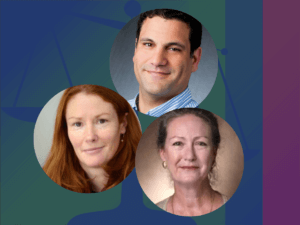 This Friday’s PCT Grand Rounds will feature the next installment of our special Grand Rounds series, Ethical & Regulatory Dimensions of Pragmatic Clinical Trials. Joe Ali, Tanya Matthews, and Leslie Crofford will present
  The Johns Hopkins Berman Institute of Bioethics this week opened the application period for its 2023-2024 postdoctoral fellowships, including a