What Are the Challenges of Using Data Directly From the EHRs?

What Are the Challenges of Using Data Directly From the EHRs?

Description

Dr. Rachel Richesson discusses the challenges of using data directly from the electronic health records (EHRs), including differences in systems different data coding and representation conventions.

Speaker

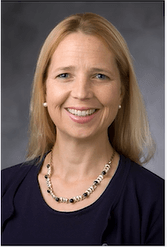
Rachel Richesson, PhDHeadshot of Rachel Richesson
Professor of Learning Health Sciences, University of Michigan Medical School
Electronic Health Records Core Co-chair


Related

What Is A Computable Phenotype?

What Are the Benefits to Standardizing Phenotype Definition?

What Are the Key Factors in Using EHR Data for Endpoints and Outcomes?

Using Electronic Health Record Data in Pragmatic Clinical Trials
What Are the Arguments For and Against the Stepped-Wedge Design?

What Are the Arguments For and Against the Stepped-Wedge Design?

Description

Dr. Liz Turner discusses arguments for and against using the stepped-wedge design when choosing the right cluster randomized trial in pragmatic research. Turner recommends if possible, using a parallel design, but if a stepped-wedge design is necessary, plan for time effects in design and analysis.

Speaker

Liz Turner, PhD
Associate Professor, Biostatistics and Bioinformatics and Global Health
Biostatistics and Study Design Core Co-Chair


Related

What Are the Types of CRT Designs?

What Is An Example of How to Choose a Study Design?

Pilot and Feasibility Testing: The LIRE Example

Pilot and Feasibility Testing: The LIRE Example

Description

Pilot testing improves the likelihood of a successful trial and is an opportunity to maximize acceptability, maintain affordability, and consider scalability. The pilot phase is the time to establish partnerships with healthcare systems leaders, test and validate electronic health record data, identify local champions, and assess how well the intervention can be incorporated into workflow. In this video, Dr. Jerry Jarvik, PI of the LIRE trial, describes essential aspects of pilot testing.

Speaker

Jerry Jarvik, MD, MPH
Radiologist, University of Washington Medical Center
Professor of Radiology, Neuroradiology, Health Services and Neurological Surgery, University of Washington
Adjunct Professor of Orthopedics & Sports Medicine and Pharmacy
LIRE NIH Collaboratory Trial PI

Related

Pilot Testing

Feasibility Assessment Scenarios From the Collaboratory's Demonstration

What Is the Intraclass Correlation Coefficient?

What Is the Intraclass Correlation Coefficient?

Description

Dr. Liz Turner discusses the Intraclass Correlation Coefficient (ICC), which is the measure between-cluster outcome variability relative to the overall variability in the system.

Speaker

Liz Turner, PhD
Associate Professor, Biostatistics and Bioinformatics and Global Health
Biostatistics and Study Design Core Co-Chair


Related

What Are the Reasons to Randomize Clusters Instead of Individuals?

What Is Outcome Clustering, and How Can It Affect a Trial?

How Does Clustering Affect Power and Detectable Difference?

How Do You Estimate the Degree of Clustering for Outcomes?

Developing a Pipeline of Investigators: An Investigator Perspective

Developing a Pipeline of Investigators: An Investigator Perspective

Description

In this video, Dr. Natalia Morone, PI of the OPTIMUM trial, describes her experience with developing a pipeline of faculty for research. She also describes the Career Education and Enhancement for Health Care Research program, designed for post-docs and early career faculty in health-related sciences.

Biography

Natalia Morone, MD, MS
Associate Professor of Medicine, Boston University
OPTIMUM NIH Collaboratory Trial PI

Related

Developing a Compelling Grant Application

View the full Grand Rounds video

Photo of Greg Simon

Engaging With Stakeholders in Pragmatic Clinical Trials

Engaging With Stakeholders in Pragmatic Clinical Trials

Description

In this video, Dr. Greg Simon shares how to engage with a range of stakeholders, both early and throughout the process of pragmatic clinical trials. Stakeholders at the local site will have practical advice about how to get the research done, and healthcare system leaders may be more interested in the value added by the research.

Speaker

Gregory Simon, MD, MPH
Senior Investigator, Kaiser Permanente Washington Health Research Institiute
SPOT NIH Collaboratory Trial PI
Health Care Systems Interactions Core Chair
Coordinating Center Leadership

Related

Embedded ePCT Team Composition

What Is A Computable Phenotype?

What Is A Computable Phenotype?

Description

Dr. Rachel Richesson discusses the specifications of defining computable phenotypes. This term is often used to identify patients for a study or to identify conditions that serve as outcomes of various studies.

Speaker

Rachel Richesson, PhDHeadshot of Rachel Richesson
Professor of Learning Health Sciences, University of Michigan Medical School
Electronic Health Records Core Co-chair


Related

What Are the Challenges of Using Data Directly From the EHRs?

What Are the Benefits to Standardizing Phenotype Definition?

What Are the Key Factors in Using EHR Data for Endpoints and Outcomes?

Using Electronic Health Record Data in Pragmatic Clinical Trials

What Is An Example of How to Choose a Study Design?

What Is An Example of How to Choose a Study Design?

Description

Dr. Liz Turner provides a framework for choosing a study design by discussing the design of SPOT, STOP CRC, LIRE, and OPTIMUM, which are all NIH Collaboratory Trials within the Collaboratory. Turner shares similarities and differences regarding the design of these trials to aid researchers in making decisions about the most effective study design for their trial.

Speaker

Liz Turner, PhD
Associate Professor, Biostatistics and Bioinformatics and Global Health
Biostatistics and Study Design Core Co-Chair


Related

What Are the Types of CRT Designs?

What Are the Arguments For and Against the Stepped-Wedge Design?

Headshot of Rachel Richesson

Uses of EHRs in NIH Collaboratory Projects

Uses of EHRs in NIH Collaboratory Projects

Description

In the NIH Pragmatic Trials Collaboratory ePCTs, the electronic health record has been used to determine eligibility, deliver the intervention, and assess outcomes. This video explores challenges and lessons learned encountered by the ICD-Pieces Trial.

Speaker

Rachel Richesson, PhDHeadshot of Rachel Richesson
Professor of Learning Health Sciences, University of Michigan Medical School
Electronic Health Records Core Co-chair


Related

Living Textbook Chapter: Endpoints and Outcomes: Inpatient Endpoints in Pragmatic Clinical Trials

Headshot of Dr. Pearl O'Rourke

Informing and Consenting: What Are the Goals?

Informing and Consenting: What Are the Goals?

Description

This Grand Rounds presentation was part of a special series, Ethical & Regulatory Dimensions of Pragmatic Clinical Trials. Drs. Pearl O’Rourke, Dave Wendler, Miguel Vazquez, and Michael Ho shared the difference between informing participants about research and the informed consent process.

Speakers

Headshot of Dr. Pearl O'RourkePearl O’Rourke, MD (retired)
Harvard Medical School
Ethics and Regulatory Core Co-chair


David S. Wendler, PhD, MA
Senior Researcher, Department of Bioethics, NIH Clinical Center


Miguel Vasquez, MD
Professor of Internal Medicine, UT Southwestern Medical Center
ICD-Pieces NIH Collaboratory Trial PI


Michael Ho, MD, PhD
Professor of Medicine, University of Colorado School of Medicine
Nudge NIH Collaboratory Trial PI

Related Content

Living Textbook: Mechanisms for Notification