September 3, 2025: The Non-Learning Health System, in This Week’s Rethinking Clinical Trials Grand Rounds

Graphic featuring a headshot of Dr. Rob CaliffIn this Friday’s Rethinking Clinical Trials Grand Rounds, Robert Califf of Duke University will present “The Non-Learning Health System.”
The Grand Rounds session will be held on Friday, September 5, 2025, at 1:00 pm eastern.

As a former US commissioner of food and drugs, Califf led the Food and Drug Administration from 2016 to 2017 and again from 2022 to 2025. Prior to his tenure at the FDA, Califf was a professor of medicine and the vice chancellor for clinical and translational research at Duke University. He was the founding director of the Duke Clinical Research Institute and the founding principal investigator for the NIH Pragmatic Trials Collaboratory. Califf was elected to membership in the National Academy of Medicine in 2016.

In the Grand Rounds session, Califf will discuss how academia adapts or dies in our new environment, as well as inspire us to embrace these changes as an opportunity to improve.

Join the online meeting.

August 26, 2025: Special September 5 Grand Rounds Will Feature Rob Califf on “The Non-Learning Health System”

Graphic featuring a headshot of Dr. Rob CaliffIn a special session of Rethinking Clinical Trials Grand Rounds on September 5, special guest Dr. Robert Califf will present “The Non-Learning Health System.”

The Grand Rounds session will be held on Friday, September 5, 2025, at 1:00 pm eastern.

As a former US commissioner of food and drugs, Califf led the Food and Drug Administration from 2016 to 2017 and again from 2022 to 2025. Prior to his tenure at the FDA, Califf was a professor of medicine and the vice chancellor for clinical and translational research at Duke University. He was the founding director of the Duke Clinical Research Institute and the founding principal investigator for the NIH Pragmatic Trials Collaboratory. Califf was elected to membership in the National Academy of Medicine in 2016.

In the Grand Rounds session, Califf will discuss how academia adapts or dies in our new environment, as well as inspire us to embrace these changes as an opportunity to improve.

Join the online meeting.

August 5, 2025: Robert Califf to Present Special Grand Rounds on the “Non-Learning Health System” on September 5

Graphic featuring a headshot of Dr. Rob CaliffIn a special session of Rethinking Clinical Trials Grand Rounds on September 5, special guest Dr. Robert Califf will present “The Non-Learning Health System.”

The Grand Rounds session will be held on Friday, September 5, 2025, at 1:00 pm eastern.

As a former US commissioner of food and drugs, Califf led the Food and Drug Administration from 2016 to 2017 and again from 2022 to 2025. Prior to his tenure at the FDA, Califf was a professor of medicine and the vice chancellor for clinical and translational research at Duke University. He was the founding director of the Duke Clinical Research Institute and the founding principal investigator for the NIH Pragmatic Trials Collaboratory. Califf was elected to membership in the National Academy of Medicine in 2016.

In the Grand Rounds session, Califf will discuss how academia adapts or dies in our new environment, as well as inspire us to embrace these changes as an opportunity to improve.

Join the online meeting.

August 8, 2024: FDA Commissioner and NIH Director Share Thoughts on the Future of Pragmatic Clinical Trials

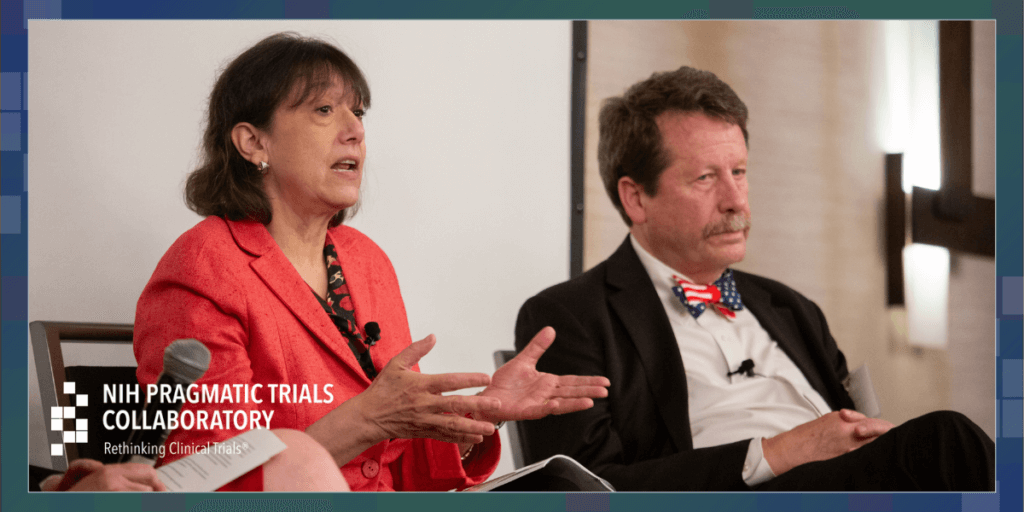
Speaking at the NIH Pragmatic Trials Collaboratory’s 2024 Annual Steering Committee Meeting in May, Commissioner of Food and Drugs Robert Califf and NIH Director Monica Bertagnolli discussed the intersection of pragmatic research and national health priorities.

Califf and Bertagnolli spoke about the role the NIH Collaboratory can play in promoting scientifically rigorous, pragmatic clinical research that addresses the urgent need for better and faster implementation of research findings into patient care. They also addressed shortcomings of the electronic health record (EHR) and the challenges of building a learning health system.

Dr. Monica Bertagnolli and Dr. Robert Califf speak at the NIH Pragmatic Trials Collaboratory's 2024 Annual Steering Committee Meeting

Wendy Weber of the National Center for Complementary and Integrative Health moderated the discussion, which focused on 3 challenges in clinical research and their relation to the NIH Collaboratory:

  • Medical providers and patients lack scientific evidence to support medical decisions
  • A learning health system can help to develop this evidence, but challenges in developing this system remain
  • How can the NIH Pragmatic Trials Collaboratory aid in these challenges?

“The most fundamental flaw we have in general right now is that we don't tell people that their biggest risk is getting standard healthcare in the healthcare system,” Califf said.  “Without evidence, clinicians don't actually know what to do. We act like we know, but we don’t,” he added.

Medical providers and patients alike must often make underinformed decisions. The lack of scientific evidence to support these decisions poses a challenge, as it demands clinicians use their individual experience and judgment when making a recommendation. Here, the deficiencies of the EHR become most obvious, as it fails to meet the needs of the population by not providing sufficient data for providers to refer to. Bertagnolli emphasized this, stating the EHR needed to become a learning environment, facilitating both the collection and dissemination of knowledge even for busy doctors.

“We need to reach every person,” Bertagnolli challenged the researchers in the audience. “We need to get in every corner of the United States with our data, with our research. We need to make it possible for busy doctors and clinics to be in a learning environment,” she said.

“What's the one unifying bit of technology we have that is not delivering what we need? It's the electronic health record,” Bertagnolli added.

Developing a health system that fosters collaboration and constant learning is paramount to obtaining generalizable medical evidence. Califf emphasized this need, calling for a singular “voice” that can represent the population’s prevention and health issues, collectively demonstrating what works.

However, several barriers hinder the development of such a system. The healthcare industry often finds that delivery practices that optimize profit margins are not optimal for patient health outcomes, which creates an environment of ethical uncertainty. Furthermore, the United States spends more on healthcare than do comparable countries with higher life expectancies, leading to unnecessary expenditures and unwillingness to adopt new initiatives.

“We're paying for a lot of things that don't help. So how are we going to figure out what to stop doing?” Bertanolli asked. “The only way is data. And the only people who can bring that data are our care providers to collect those data and learn from them. It is imperative to get a learning health system in progress,” she said.

The NIH Pragmatic Trials Collaboratory has long played a role in establishing cost-effective, large-scale research that treats care providers as research partners to deliver generalizable, actionable data. The program’s efforts in promoting collection of data from clinical care environments ensure that research remains grounded in real-world patient outcomes. Moreover, the NIH Collaboratory's emphasis on gathering data from underrepresented populations enhances the relevance of research findings, addressing disparities in healthcare delivery and outcomes.

Along with data collection, Bertagnolli encouraged the NIH Collaboratory to be an advocate for this new health system and encourage organizations to participate in the development of this system. The NIH Collaboratory brings years of specialized clinical knowledge and input, ensuring that the system is informed by evidence-based practices and responsive to the needs of both care providers and patients.

“It's a matter of convincing people to get over the hump, embrace a learning health system, and participate—and specifically, I'd say get the wheel turning as fast as you can, answer as many questions as you can, and talk about it,” added Califf.

View the full materials from the 2024 Annual Steering Committee Meeting.

August 31, 2023: FDA’s Robert Califf and Coauthors Assert More Is Needed to Achieve Learning Health Care

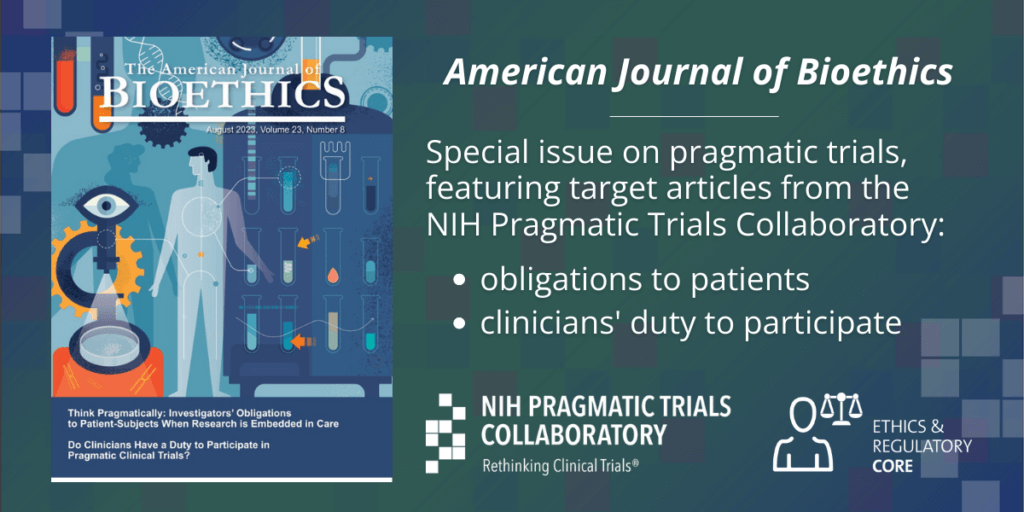
A graphic that includes the cover image from the August 2023 issue of the American Journal of Bioethics. The text in the graphic reads as follows: "American Journal of Bioethics Special issue on pragmatic trials, featuring target articles from the NIH Pragmatic Trials Collaboratory."In an article published this month in the American Journal of Bioethics, FDA Commissioner Robert Califf and coauthors suggest that—despite the potential of embedded pragmatic research to generate information to improve clinical practice and public health policy—it is still relatively uncommon in US healthcare.
“Simply stated, what we are currently doing does not work, and in the face of declining health status we lack answers to critical questions about what we should be doing in health care and public health practice.”

The authors state 3 major obstacles:

  • Inadequate data systems: Electronic health records are not designed for research use, and are driven by billing codes and reimbursement structures.
  • Data sharing malaise: We have failed to develop a convincing paradigm for sharing individual-level data from routine healthcare delivery
  • Current oversight: Research oversight is still not designed to facilitate embedded pragmatic clinical trials or research using real-world evidence.

The authors suggest that achieving a learning health system will require

  • More collaboration between health systems and businesses involved in healthcare
  • More innovative structures for data sharing across institutions
  • Incentives for building the sophisticated infrastructure necessary to enable this work
  • Considerations from the bioethics community about how best to foster this research while respecting all those who participate

This article was part of a special issue of the American Journal of Bioethics on pragmatic clinical trials. Members of the Ethics and Regulatory Core contributed the target articles to this issue regarding investigator obligations and the clinician’s duty to participate in embedded research.


May 2, 2022: Califf Reflects on Origins and Impact of NIH Pragmatic Trials Collaboratory

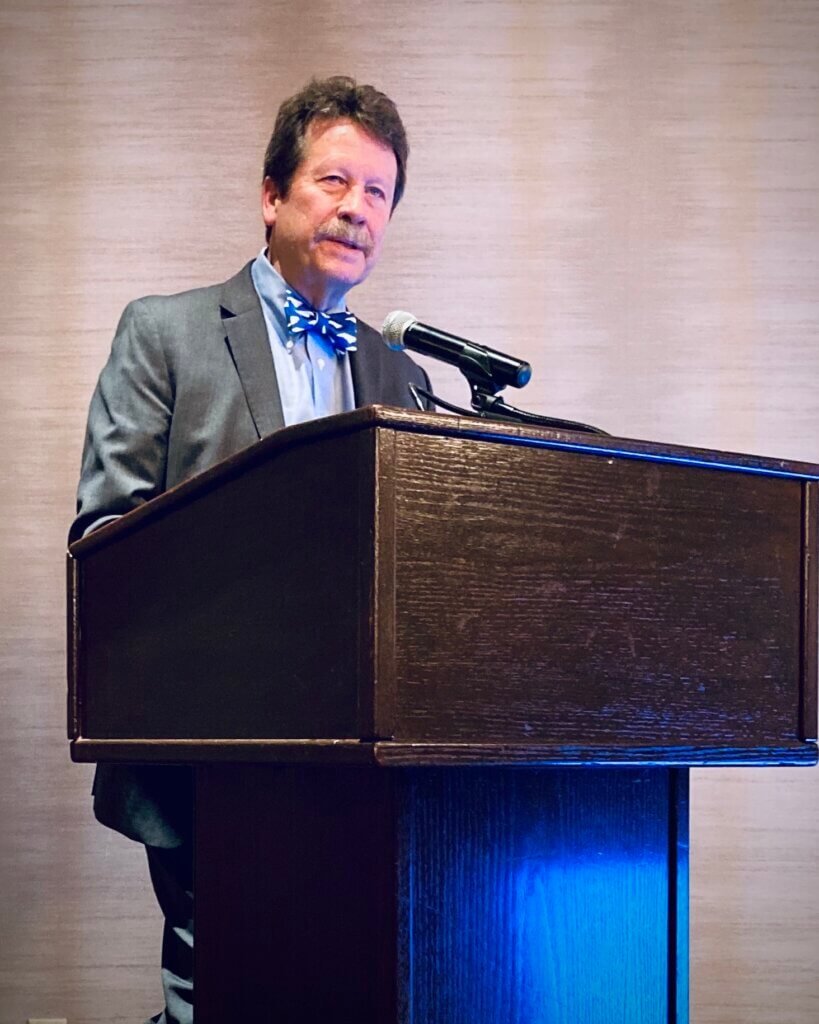
In a keynote speech at the NIH Pragmatic Trials Collaboratory Steering Committee annual meeting, FDA Commissioner Dr. Rob Califf called for more and faster evidence generation. “We have to generate evidence more quickly and then insist that it gets used,” he said.

After his remarks, Califf joined Dr. Wendy Weber of the National Center for Complementary and Integrative Health to reflect on the origins and impact of the program. Califf was the first principal investigator of the program’s Coordinating Center, and Weber is the NIH program officer.

“We have a huge need for evidence, we have sources of data now that are digital and readily available,” Califf said. “So we should have consortia of investigators and patients who work together to get the answers as quickly as possible.

Califf noted that an important part of the original application for NIH funding was “a recognition that this was a startup and that it would be a work in progress.”

View the full interview.

Dr. Robert CaliffOn what has surprised him the most – “Patients and clinicians pretty readily grasp the need and the concept. They want to do it. The data part is a lot harder than most people thought. The technology has come a long way; we can do it now. Probably the hardest thing has actually been that the business models for health systems run counter to generating evidence. It’s something that we really haven’t overcome at this point.”

On opportunities for the program – “I think the program needs to keep the model that it has, but I’m hoping we can build in the incentive forces that are really needed to have it become, I will call it, ‘viral.’ We all want to know what the best treatment is, how to compare treatments, all the things that are involved in the network. Between FDA and NIH, and now CMS much more involved, and the interest of private industry, we could potentially really create the incentives that allow people to do what they now know how to do so well.”

On the legacy of the program – “I hope we’ll look back and say the Collaboratory and the things around the Collaboratory stimulated a new way of doing research that became the main way that we do research.”

See the complete materials from the 2022 Steering Committee meeting.

Dr. Califf to Speak Today at NIH Common Fund 10-Year Commemoration Symposium


On June 19, 2014, the NIH Common Fund is celebrating 10 years of achievement with a symposium, A Decade of Discovery, featuring its far-reaching research. Dr. Robert Califf, principal investigator of the NIH Collaboratory Coordinating Center, will speak during the 2:15-3:15 pm session “Reengineering the Clinical Research Enterprise.” Proceedings will be streamed live throughout the day.

View the agenda, live videocast, and commemorative book

Winners from the video and song contest will also be recognized.