


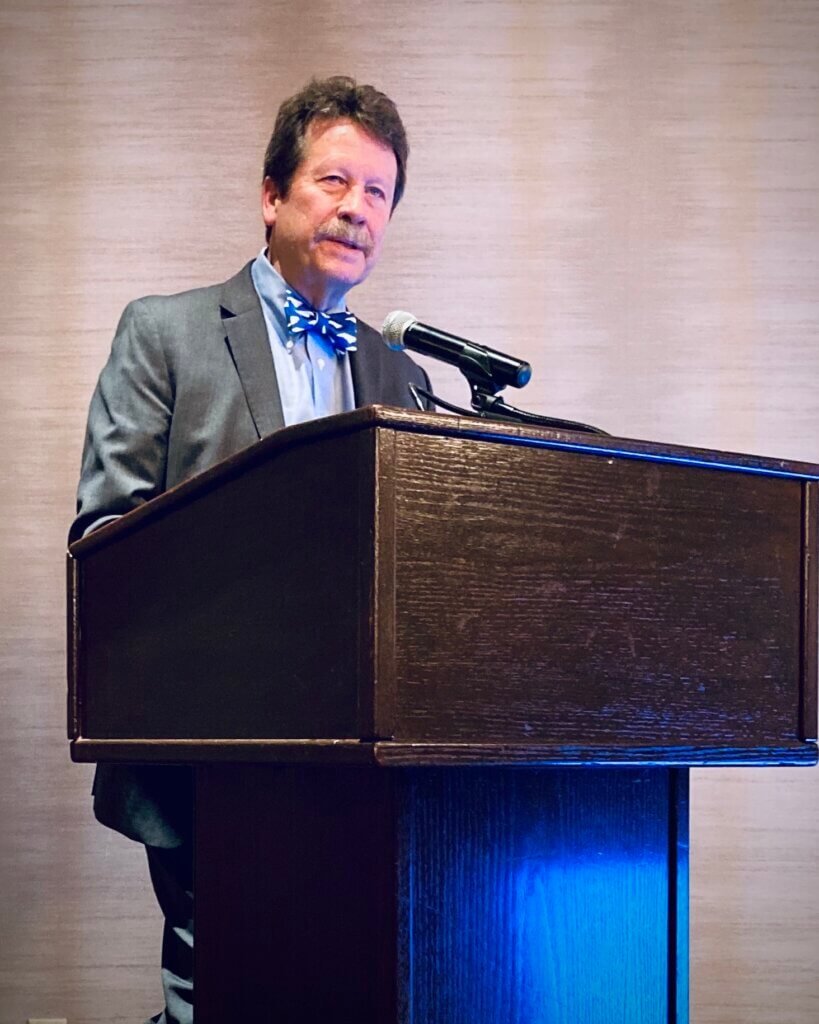
In a keynote speech at the NIH Pragmatic Trials Collaboratory Steering Committee annual meeting, FDA Commissioner Dr. Rob Califf called for more and faster evidence generation. “We have to generate evidence more quickly and then insist that it gets used,” he said.
After his remarks, Califf joined Dr. Wendy Weber of the National Center for Complementary and Integrative Health to reflect on the origins and impact of the program. Califf was the first principal investigator of the program’s Coordinating Center, and Weber is the NIH program officer.
“We have a huge need for evidence, we have sources of data now that are digital and readily available,” Califf said. “So we should have consortia of investigators and patients who work together to get the answers as quickly as possible.
Califf noted that an important part of the original application for NIH funding was “a recognition that this was a startup and that it would be a work in progress.”
 On what has surprised him the most – “Patients and clinicians pretty readily grasp the need and the concept. They want to do it. The data part is a lot harder than most people thought. The technology has come a long way; we can do it now. Probably the hardest thing has actually been that the business models for health systems run counter to generating evidence. It’s something that we really haven’t overcome at this point.”
On opportunities for the program – “I think the program needs to keep the model that it has, but I’m hoping we can build in the incentive forces that are really needed to have it become, I will call it, ‘viral.’ We all want to know what the best treatment is, how to compare treatments, all the things that are involved in the network. Between FDA and NIH, and now CMS much more involved, and the interest of private industry, we could potentially really create the incentives that allow people to do what they now know how to do so well.”
On the legacy of the program – “I hope we’ll look back and say the Collaboratory and the things around the Collaboratory stimulated a new way of doing research that became the main way that we do research.”
See the complete materials from the 2022 Steering Committee meeting.