The Grand Rounds session will be held on Friday, February 14, 2025, at 1:00 pm eastern.
ACP PEACE, an NIH Collaboratory Trial, is evaluating a comprehensive advance care planning program for older patients with advanced cancer that combines clinician communication skills training and patient video decision aids.
Volandes is a professor of medicine and the vice chair for research in the Department of Medicine at Dartmouth Health and the Geisel School of Medicine at Dartmouth. Tulsky is a professor of medicine at Harvard Medical School and the Poorvu Jaffe Chair of Supportive Oncology at the Dana-Farber Cancer Institute.
The Grand Rounds session will be held on Friday, January 31, 2025, at 1:00 pm eastern.
ARBOR-Telehealth, an NIH Collaboratory Trial, is evaluating the use of a telehealth physical therapy strategy for patients who present to primary care clinics with low back pain in rural communities. A secondary aim of the study is to compare the effectiveness of the study’s risk-stratification approach. Learn more about ARBOR-Telehealth.
Skolasky is a professor of orthopaedic surgery and the director of the Spine Outcomes Research Center, and McLaughlin is an assistant professor of physical medicine and rehabilitation—both at the Johns Hopkins University School of Medicine.
A new study snapshot and updated ethics and regulatory documentation are now available for the TAICHIKNEE trial. One year into the study, and after receiving approval to transition from the planning phase to the implementation phase, the research team reviewed and updated the minutes of their initial consultation with the Ethics and Regulatory Core.
TAICHIKNEE will compare the effects of web-based tai chi interventions versus routine care for individuals experiencing knee pain due to osteoarthritis. The practice of tai chi integrates physical, psychosocial, and behavioral components and has exhibited clinically significant improvements in chronic knee osteoarthritis pain conditions. The results of the study will inform widespread adoption of mind-body approaches for knee osteoarthritis across healthcare systems.
TAICHIKNEE is supported within the NIH Pragmatic Trials Collaboratory through a cooperative agreement from the National Center for Complementary and Integrative Medicine. Learn more about TAICHIKNEE.
Dr. Corita Grudzen and Dr. Keith Goldfeld, principal investigators for PRIM-ER
An evidence-based training program to improve the capacity of emergency department care teams to communicate with seriously ill older patients about palliative care did not lead to lower rates of hospital admission, according to the results of the PRIM-ER trial.
More than three-quarters of seriously ill older adults in the United States will visit an emergency department in their last 6 months of life. Palliative care specialists are not always available in emergency departments, and emergency clinicians may lack the training or tools to assist older adults who have serious, life-limiting illness in making complex medical decisions.
PRIM-ER, an NIH Collaboratory Trial, was a stepped-wedge, cluster randomized trial of a palliative care training program in 29 emergency departments in the United States. The program consisted of training in palliative care, simulation-based communication workshops, clinical decision support tools, and audit and feedback.
The study team, led by Corita Grudzen at Memorial Sloan Kettering Cancer Center and Keith Goldfeld at New York University, evaluated the initial emergency department visits of nearly 99,000 older adults with serious, life-limiting illness before and after implementation of the training program. The primary outcome was hospital admission from the emergency department. Secondary outcomes included subsequent healthcare use and survival.
There was no difference in the rate of hospital admission for seriously ill older adults after emergency department staff received the palliative care training intervention. The intervention also did not have an effect on subsequent health care use or short-term mortality.
“Our complex, multicomponent intervention designed to embed palliative care skills in emergency medicine practice for patients with serious, life-limiting illness did not show an effect on hospital admission, subsequent health care use, or short-term mortality,” said Grudzen, an emergency medicine physician and palliative care specialist. “Despite this, the development, implementation, and testing of primary palliative care interventions remain a priority, given the workforce shortages in hospice and palliative medicine,” Grudzen said.
An important and unanticipated experience in the conduct of the PRIM-ER trial between 2018 and 2022 was the COVID-19 public health emergency. Strain placed on the healthcare system by the pandemic limited the ability of home care and hospice agencies to accept patients and narrowed the referral options available to emergency department clinicians. These impacts may have influenced the trial’s results.
PRIM-ER was supported within the NIH Pragmatic Trials Collaboratory by a grant award from the National Institute on Aging.
“The NIH Collaboratory is a critical resource for the conduct of pragmatic trials,” Grudzen said. “The faculty willingly share their expertise in all aspects of pragmatic trial design, conduct, and analysis. Their recommendations are the rare combination of cutting edge, practical, and battle tested. The program’s additional electronic and virtual resources are invaluable to growing the pragmatic trial community,” she said.
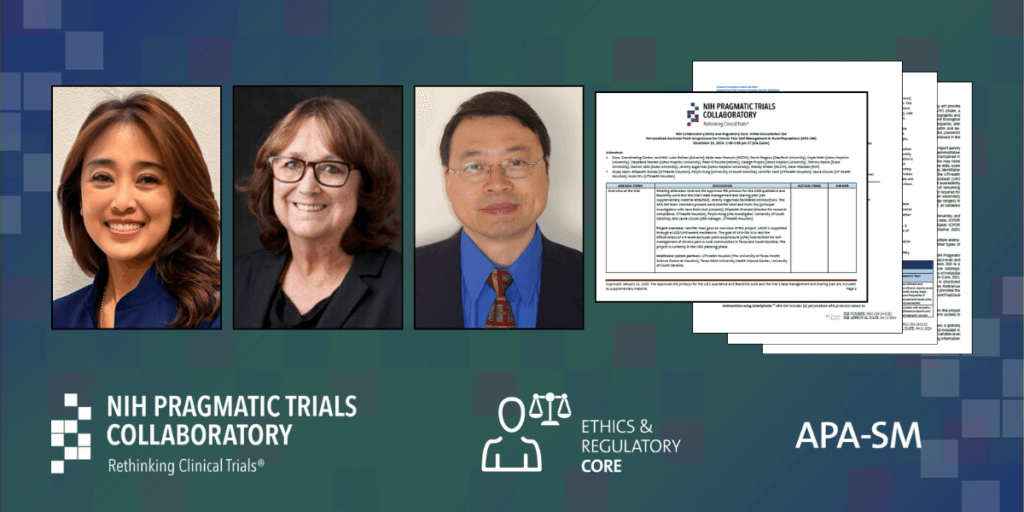
Ethics and regulatory onboarding documentation for one of the NIH Pragmatic Trials Collaboratory’s newest trials is now available. The documents include meeting minutes and supplementary materials summarizing recent discussions of ethics and regulatory issues associated with the APA-SM trial.
The consultations took place by video conference and included representation from the study team, members of the NIH Collaboratory’s Ethics and Regulatory Core, NIH staff, and NIH Collaboratory Coordinating Center personnel.
APA-SM will test a 4-week auricular point acupressure intervention for self-management of chronic pain in rural communities in South Carolina and Texas. The study will also include implementation outcomes, a cost-effectiveness analysis, and an evaluation of predictive factors for treatment response.
APA-SM is supported through the NIH HEAL Initiative with administrative oversight by the National Center for Complementary and Integrative Health and the National Institute of Neurological Disorders and Stroke.
Ethics and regulatory documentation for all of the NIH Collaboratory Trials is available on our Data and Resource Sharing page.
Only half of eligible patients in US federally qualified health centers were screened for cervical cancer in 2021. The COVID-19 pandemic exacerbated these disparities. Distribution of human papillomavirus (HPV) self-sampling kits to patients is a widely adopted strategy in other countries but is nascent in the United States.
The STEP-2 study team will conduct a cluster randomized trial in federally qualified health centers in Oregon and Washington to evaluate the comparative effectiveness and cost-effectiveness of in-clinic distribution of self-sampling kits, in-clinic plus mailed distribution, and usual care. The project is supported by a grant award from the National Cancer Institute.
Rachel Winer, Amanda Petrik, and Jasmin Tiro are the principal investigators for the STEP-2 trial. Winer is a professor of epidemiology at the University of Washington. Petrik is an investigator at the Kaiser Permanente Center for Health Research. Tiro is a professor of public health sciences at the University of Chicago.
Welcome and hear from our new NIH Collaboratory Trial; provide introductions and an overview of the NIH Pragmatic Trials Collaboratory; hear from the Core Working Groups; and engage in discussion.
The Grand Rounds session will be held on Friday, January 10, 2025, at 1:00 pm eastern.
FM-TIPS, an NIH Collaboratory Trial, is examining whether the addition of transcutaneous electrical nerve stimulation to routine physical therapy improves movement-evoked pain compared with physical therapy alone among patients with fibromyalgia. The trial is supported by the National Institute of Arthritis and Musculoskeletal and Skin Diseases through the NIH HEAL Initiative. Learn more about FM-TIPS.
Reisinger is an associate professor of internal medicine and the associate director of engagement, integration, and implementation in the Institute for Clinical and Translational Science; and Dailey is an assistant research scientist in the Department of Physical Therapy and Rehabilitation Science—both in the University of Iowa’s Carver College of Medicine.
A new study snapshot and updated ethics and regulatory documentation are now available for the I CAN DO Surgical ACP trial. As part of the study’s transition from the planning phase to the implementation phase this fall, the investigators reviewed and updated the minutes of their initial consultation with the Ethics and Regulatory Core.
I CAN DO Surgical ACP, an NIH Collaboratory Trial, is testing a system-based approach to help older adults undergoing elective surgery engage in advance care planning. Another goal of the study is to understand digital engagement, language, and social drivers of health that drive engagement in the intervention.
The study is supported by a grant award from the National Institute on Aging and is led by Elizabeth Wick and Rebecca Sudore of the University of California, San Francisco, and Genevieve Melton-Meaux of the University of Minnesota.
Dr. Michael Ho and Dr. Sheana Bull, principal investigators for Nudge
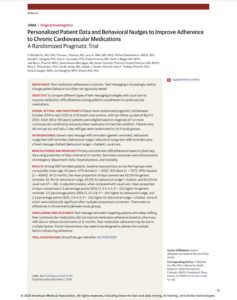
Text message–based reminders to patients who delayed refilling their cardiovascular medications did not improve medication adherence compared with usual care in the recently completed Nudge trial.
Nudge, an NIH Collaboratory Trial, was a randomized, pragmatic clinical trial embedded in 3 healthcare systems testing a variety of text messaging strategies to encourage patients to refill their cardiovascular medications. Poor medication adherence is common among patients with chronic conditions, and poor adherence to cardiovascular medications is associated with higher rates of adverse health outcomes, including hospitalization and mortality.
The study team randomly assigned 9501 patients who delayed refilling their cardiovascular medications to receive either usual care or 1 of 3 text message interventions: (1) a generic text message reminder to refill medication; (2) a text message reminder that incorporated “behavioral nudges”; and (3) a behavioral nudge text message reminder plus a chatbot that used preprogrammed algorithms to assess common barriers to medication adherence. The primary outcome was the proportion of days covered in the 365 days after randomization for all cardiovascular medication classes for which the patient had a refill gap at baseline.
At the end of the trial, there were no statistically significant differences in the proportion of days covered with medication between the study groups. There were also no differences in emergency department visits, hospitalizations, and mortality. In a post hoc analysis exploring medication adherence in the first 3 months after a refill gap, the study team saw modest improvement in refill adherence with the text messaging strategies compared with usual care.
Given that most patients refilled their medications within 30 days of receiving a reminder text message, the authors concluded that the lack of benefit after 30 days may be related to “intervention decay” that has been seen with other interventions. “Additional interventions need to be rigorously tested to try to improve adherence to chronic cardiovascular medications,” they wrote.
Nudge was supported within the NIH Pragmatic Trials Collaboratory by a grant award from the National Heart, Lung, and Blood Institute.
“The feedback and guidance from the NIH Collaboratory’s Cores were instrumental to overcoming the challenges we faced in completing this project,” said Michael Ho, co–principal investigator for Nudge and a senior clinician investigator at Kaiser Permanente Colorado’s Institute for Health Research.


 In this Friday’s PCT Grand Rounds, Angelo Volandes of Dartmouth Health and James Tulsky of Dana-Farber Cancer Institute will present “A Cluster Randomized, Stepped-Wedge Pragmatic Trial to Enhance Goals-of-Care Communication for Older Adults With Cancer (ACP-PEACE).”
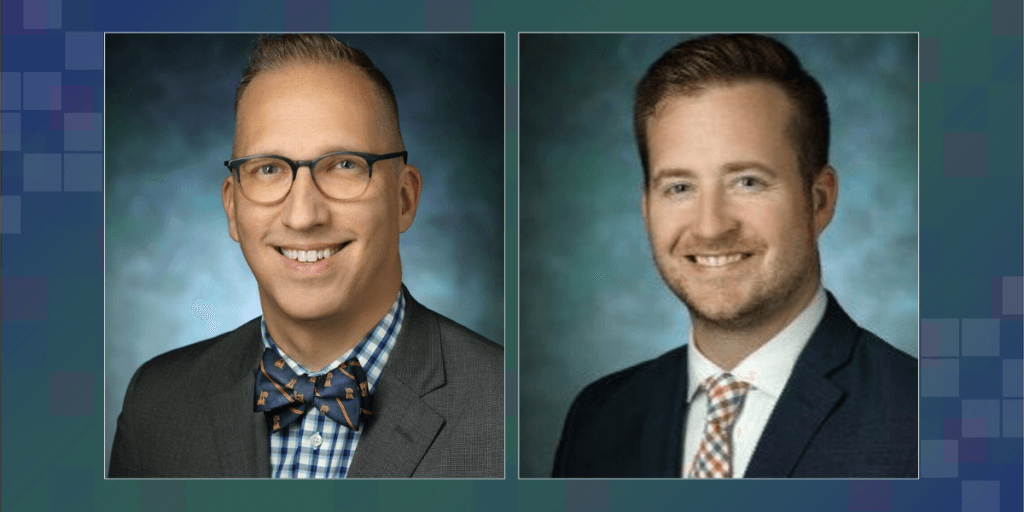 In this Friday’s PCT Grand Rounds, Richard Skolasky and Kevin McLaughlin of Johns Hopkins University will present
  A new study snapshot and updated ethics and regulatory documentation are now available for the
 There was no difference in the rate of hospital admission for seriously ill older adults after emergency department staff received the palliative care training intervention. The intervention also did not have an effect on subsequent health care use or short-term mortality.
 Ethics and regulatory onboarding documentation for one of the NIH Pragmatic Trials Collaboratory’s newest trials is now available. The documents include meeting minutes and supplementary materials summarizing recent discussions of ethics and regulatory issues associated with the APA-SM trial.
 In this Friday’s PCT Grand Rounds, Heather Schacht Reisinger and Dana Dailey of the University of Iowa will present
  A new study snapshot and updated ethics and regulatory documentation are now available for the I CAN DO Surgical ACP trial. As part of the study’s transition from the planning phase to the implementation phase this fall, the investigators reviewed and updated the minutes of their initial consultation with the Ethics and Regulatory Core.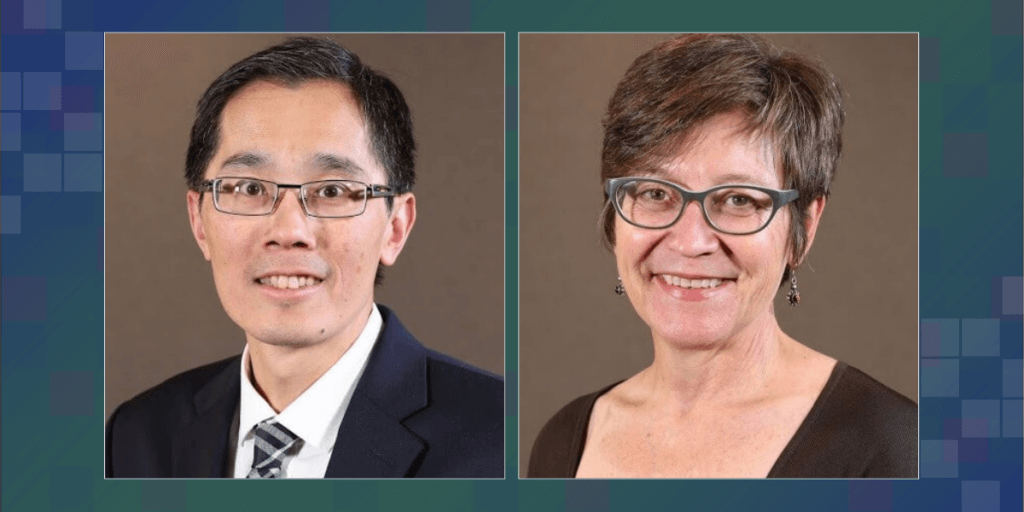
 At the end of the trial, there were no statistically significant differences in the proportion of days covered with medication between the study groups. There were also no differences in emergency department visits, hospitalizations, and mortality. In a post hoc analysis exploring medication adherence in the first 3 months after a refill gap, the study team saw modest improvement in refill adherence with the text messaging strategies compared with usual care.