Real-World Data and Real-World Evidence in Regulatory Decisions

Real-World Data and Real-World Evidence in Regulatory Decisions

Description

Dr. Jacqueline Corrigan-Curay of the US Food and Drug Administration discusses recent trends in incorporating real-world data and real-world evidence in regulatory decisions.

Speaker
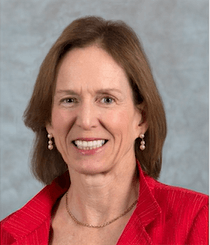
Jaqueline Corrigan-Curay, JD, MD
Principal Deputy Center Director in FDA’s Center for Drug Evaluation and Research (CDER)


Related

View the full Grand Rounds video: Real World Evidence: Contemporary Experience and Future Directions
What Are Pragmatic Clinical Trials?

What Are Pragmatic Clinical Trials?

Description

Dr. Lesley Curtis describes the characteristics of a pragmatic clinical trial, which typically are large, efficient studies done in the real world that result in evidence for the adoption of an intervention into clinical practice.

Speaker

Lesley Curtis, PhDHeadshot of Dr. Lesley Curtis
Professor of Population Health Sciences and Medicine, Duke University
Duke Clinical Research Institute
Collaboratory Steering Committee Chair

Related

Why Should I Do A Pragmatic Trial?

Responding (or Not) to Signals of Potential Clinical Significance in Pragmatic Clinical Trials

Responding (or Not) to Signals of Potential Clinical Significance in Pragmatic Clinical Trials

Description

This Grand Rounds presentation was part of our special Grand Rounds series, Ethical & Regulatory Dimensions of Pragmatic Clinical Trials. Joe Ali, Tanya Matthews, and Leslie Crofford discuss what to do when data in a pragmatic clinical trial includes information that might signal physical, mental health or behavioral health risks to patient-subjects (e.g. substance use, depression, anxiety, suicidality).

Speakers

Joseph Ali, JD
Assistant Professor, Dept. of International Health
Johns Hopkins Bloomberg School of Public Health
Core Faculty & Associate Director for Global Programs
Johns Hopkins Berman Institute of Bioethics

Tanya Matthews, PhD
HRPP Director
Kaiser Permanente Washington


Leslie J. Crofford, MD
Wilson Family Chair in Medicine
Professor of Medicine and Pathology, Microbiology & Immunology
Chief, Division of Rheumatology
Vanderbilt University Medical Center


Related Content

Living Textbook: How Are PRO Measures Used?

Keynote: Broadening Clinical Trial Populations: Why It’s Important and How Can We Improve

Keynote: Broadening Clinical Trial Populations: Why It’s Important and How Can We Improve

Description

In this Keynote Presentation, Dr. Clyde Yancy offers ways to ensure all populations have access to pragmatic clinical trials. The path forward includes expanding recruitment and training of coordinator and investigator research teams, incorporating novel information technology strategies, revision of the informed consent process to match literacy levels, and education at the societal level to advance overall "research IQ."

Speaker

Clyde W. Yancy, MD, MSc, MACC, FAHA, MACP, FHFSA
Vice Dean, Diversity and Inclusion, Northwestern University, Feinberg School of Medicine


Related

Participant Recruitment

Community Health Improvement Core Page

What Are Some Success Strategies for Writing PCT Grant Applications?

What Are Some Success Strategies for Writing PCT Grant Applications?

Description

It's important to be thorough, informed, timely, and clear when discussing the research question for a PCT grant application. Dr. Wendy Weber provides an overview of strategies for success when writing PCT grant applications.

Speaker

Wendy Weber, ND, PhD, MPH
Branch Chief, Clinical Research Branch
Division of Extramural Research
National Center for Complementary and Integrative Health (NCCIH)


Related

What Are Common Pitfalls in Writing PCT Grant Applications?

Is It Important to Explain the Definition of Pragmatic to Grant Reviewers?

What Are the “Must Dos” of Writing PCT Grant Applications?

What Should I Avoid When Writing PCT Grant Applications?

Developing a Compelling Grant Application

Patient-Centered Outcomes Research: Approaches for Patient and Community Engagement

Patient-Centered Outcomes Research: Approaches for Patient and Community Engagement

Description

The Patient-Centered Outcomes Institute (PCORI) is an independent, non-profit research organization dedicated to funding real-world questions that will inform patients and other health care stakeholders. In this video, Dr. Anne Trontell, Associate Director of PCORI, shares the importance of early and continuous investment in engaging patients, stakeholders, and communities.

Speaker

Anne Trontell, MD, MPH
Associate Director in the Clinical Effectiveness and Decision Science Program
Patient-Centered Outcomes Research Institute


Related

Building Partnerships and Teams to Ensure a Successful Trial

Steven George, PT, PhD

Implementation and Intervention Complexity in Pragmatic Clinical Trials

Implementation and Intervention Complexity in Pragmatic Clinical Trials

Description

In this interview, Dr. Stephen George discusses how complexity can change as you work in partnership with the people who will be implementing the intervention. The complexity of an intervention has to be simple enough to be feasible in the context of the research setting.

Biography

Steven George, PT, PhDSteven George, PhD
Professor in Orthopaedic Surgery, Duke University


Related Content

Living Textbook: Intervention Delivery and Complexity

Read our news and view the full presentation.

What Are the Reasons to Randomize Clusters Instead of Individuals?

What Are the Reasons to Randomize Clusters Instead of Individuals?

Description

Dr. Liz Turner discusses reasons to randomize clusters instead of individuals, making it logistically easier to implement the intervention your trial is studying.

Speaker

Liz Turner, PhD
Associate Professor, Biostatistics and Bioinformatics and Global Health
Biostatistics and Study Design Core Co-Chair


Related

What Is Outcome Clustering, and How Can It Affect a Trial?

What Is the Intraclass Correlation Coefficient?

How Does Clustering Affect Power and Detectable Difference?

How Do You Estimate the Degree of Clustering for Outcomes?

Assessing Data Quality

Assessing Data Quality

Description

Assessing data quality is a key step in research that uses data from the electronic health record. These data are a surrogate for clinical phenomena, meaning they represent an interpretation of clinical information about a patient instead of absolute truth. This video describes steps for assessing data quality, including identifying variation between populations at different sites and assessments of accuracy, completeness, and consistency.

Speaker

Rachel Richesson, PhD Headshot of Rachel Richesson
Professor of Learning Health Sciences, University of Michigan Medical School
Electronic Health Records Core Co-chair


Related

Data as a Surrogate for Clinical Phenomena

Data Quality Measures

What Are the Types of CRT Designs?

What Are the Types of CRT Designs?

Description

Dr. Liz Turner discusses the features of two types of cluster randomized trials, regular parallel arm and the stepped-wedge design. Turner discusses complete vs. incomplete versions of the stepped-wedge design and provides case examples of each type of design.

Speaker

Head shot of Dr. Liz Turner

Liz Turner, PhD
Associate Professor, Biostatistics and Bioinformatics and Global Health
Biostatistics and Study Design Core Co-Chair


Related

What Are the Arguments For and Against the Stepped-Wedge Design?

What Is An Example of How to Choose a Study Design?