


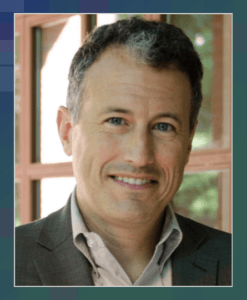
 In a new episode of the Rethinking Clinical Trials Podcast, Roy Perlis of Harvard Medical School and JAMA+ AI expanded on key takeaways from his recent Grand Rounds presentation, “Keeping a Human in the Loop: Scientific Publishing and AI.”
Listen to the podcast. For alerts about new episodes, subscribe for free on Spotify, Amazon Music, Apple Podcasts, or SoundCloud.
Scientific communities are divided about the appropriate role of artificial intelligence (AI) in manuscript preparation or review. In the podcast, Perlis revealed some ways AI has made things harder for journals (the increased volume of “slop” submissions); ways it’s made things easier (the writing is better); and ways it might be leveraged to address the industry’s longstanding issues.
“I think AI is going to be very helpful to us in helping to streamline aspects of the peer review process,” Perlis said. “One of the big frustrations I hear from authors, one of my big frustrations as an author, is the incredibly long lag time between submitting something, getting reviews back, and turning it around. In my mind, it’s one way that we slow down science unnecessarily.”
The use of AI may save time and energy when it comes to the rote aspects of manuscript review, such as confirming that a research team followed their analytic protocol or met the criteria mandated by their study design.
“The part where I really value human input, and I think that the machines are still not great at, is: Is this innovative? Is it impactful? Is it significant? Is this really, for the average reader of this journal, going to be useful to them or important to them? I think that’s still very hard to automate,” said Perlis.
He identified trust and discovery as other institutional values that will be maintained through human intervention.
Perlis is a professor of psychiatry at Harvard Medical School. He serves as the director of the MGH Center for Quantitative Health and the editor in chief of JAMA+ AI.
 In a new episode of the Rethinking Clinical Trials Podcast, Majid Afshar and Mary Ryan Baumann of the University of Wisconsin-Madison expanded on key takeaways from their recent Grand Rounds presentation, “
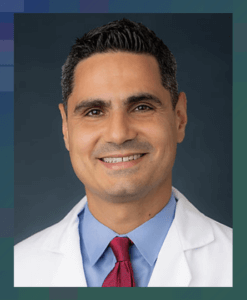 In this Friday’s Rethinking Clinical Trials Grand Rounds, Nestoras Mathioudakis of the Johns Hopkins University School of Medicine will present “