January 20, 2025: New Podcast Considers a Path Forward for the American Healthcare Landscape

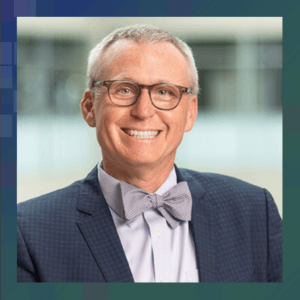
In a new episode of the Rethinking Clinical Trials Podcast, David Zaas discussed key takeaways from his recent presentation: “Landscape of Healthcare in America: Gaps and Opportunities (That Researchers Need to Hear).”

Listen to the podcast. For alerts about new episodes, subscribe for free on Spotify, Amazon Music, Apple Podcasts, or SoundCloud.

Zaas was the keynote speaker at the recent virtual workshop hosted by the NIH Pragmatic Trials Collaboratory: “Digging Into Dilemmas of Pragmatic Clinical Trials.” His presentation described the state of healthcare delivery in the United States and the constraints on healthcare systems that are important for researchers to understand. In a conversation with Adrian Hernandez, he expanded on some of his most important points.

“Too often I think we look at access as a transactional measure… We have to build systems where we deliver the same outstanding quality and excellence at every site, which means specialization and access to clinical trials as part of a standard of care,” Zaas said.

In addressing the mounting financial pressures faced by healthcare systems, Zaas emphasized the need for continued investment and structural change.

“We know that healthcare has been broken. We now have a burning platform for change… to redesign what we do in order to deliver more efficient, higher value care delivery—and still support the outstanding clinical care and the research that we need to,” Zaas said. “So, while I’m worried about some of the financial challenges, I think we need to use it as an opportunity to change the system for good.”

Zaas is the president of Atrium Health Wake Forest Baptist and professor of internal medicine at Wake Forest University School of Medicine.

Grand Rounds October 31, 2025: The LHS Shared Commitments — All Treats, No Tricks (Peter Margolis, MD, PhD; Sean C. Dowdy, MD, FACS, FACOG; Sarah Greene, MPH)

Speakers

Peter Margolis, MD, PhD
Adjunct Professor of Pediatrics
Stanford University School of Medicine
Emeritus Professor of Pediatrics
University of Cincinnati School of Medicine
Former Co-Director of the James M. Anderson Center for Health Systems Excellence
Cincinnati Children’s Hospital Medical Center

Sean C. Dowdy, MD, FACS, FACOG
Chief Value Officer
Robert D. and Patricia E. Kern Associate Dean for Practice Transformation
Professor, Division of Gynecologic Oncology
Mayo Clinic

Sarah Greene, MPH
Consultant and Senior Advisor
The National Academy of Medicine

Keywords

Learning Health System; Healthcare; Knowledge

Key Points

  • In service to the goal of establishing a Learning Health System (LHS), the National Academy of Medicine developed and shared a foundational set of shared commitments. These principles, published in 2024, sought to define a common cause for all healthcare workers.
  • To build on the concept of the shared commitments, consider the LHS from a systems perspective: not as a sum of its parts, but as the product of their interaction. Discussions around the feasibility of LHSs often center around individual parts, e.g. data and informatics, incentives, and culture; but an LHS succeeds when these pieces are built and interact as part of a whole.
  • So, what does a coherent system look like? A learning organization is an organization skilled at creating, acquiring, and transferring knowledge between parts and at modifying its behavior to reflect new knowledge and insights.
  • Turning an LHS from an idea to a lived reality involves intertwining infrastructure with an adaptive cycle, propelled by a defined population or system; methods for system change and learning; and measurement and evaluation.
  • The LHS is not intended as a single program or one-size-fits-all structure; it’s a system that learns at multiple levels of scale, from the individual level to the population level. Dr. Margolis shared an example of a patient-physician collaboration that resulted in an electronic health record (EHR)-integrated dosing algorithm utilized across the healthcare system.
  • The Kern Center at Mayo Clinic demonstrates how the shared commitments come to life within an organization over time. Founded 15 years ago, Kern brings together diverse experts who create and evaluate data-driven solutions that transform healthcare for patients, clinicians, and communities. It seeks to generate both clinical and practical knowledge, emphasizing practice impact over research.
  • Roughly 4 years ago, the Kern Center was experiencing an existential crisis; a suboptimal focus was negatively impacting on their reputation within the institution. They pivoted to deep practice engagement and a focus on defining and pursuing clinical practice priorities, and have become an essential piece of practice transformation. Resources like the Project Dashboard and HealthLocator are facilitating communication and the diffusion of practice impact.
  • Every organization faces a design challenge. Organizing in traditional ways means imposing resource constraints based on assumptions about who can contribute and how. When organizations prioritize the capacity for information to flow freely, however, their learning capacity expands; they can overcome constraints by leaning on the amount, quality, and diversity of expertise available to a network. To illustrate this, Dr. Margolis shared a few examples of LH network successes.
  • The approach to the LHS has changed and adapted since its inception. Ms. Greene shared 10 reasons they think it will endure, to serve as a high-level roadmap to bring organizational leaders to the table and to help distinguish it from other approaches for translating knowledge into action.

Discussion Themes

In its first decade, Kern was established as a research arm; while it was intended to be transformative, it wasn’t well-integrated with clinical practice. A hybrid model, rooted in research and practice, didn’t work either. Transitioning to a focus on practice only has allowed them to start doing transformative work.

The speakers discussed a couple of facets of patient engagement with LHSs. First, during startup, a community of patients, clinicians, researchers, and other stakeholders often work together to identify measures of success. Second, patients who enter LHSs are consented. However, there is always more work to be done in terms of engaging patients in a mutual exchange of information.

The pursuit of standardization can come into conflict with a system’s ability to innovate. Over time, Dr. Dowdy noted, he’s started giving more weight to the unique circumstances of each hospital and their pursuant need for freedom to innovate. They’ve started emphasizing standardized expectations, measured via the Mayo Clinic Value index, as opposed to standardized methods.

Grand Rounds September 5, 2025: The Non-Learning Health System (Robert Califf, MD)

Speaker

Robert Califf, MD
Instructor in Medicine
Duke University Medical Center
Former Commissioner of Food and Drugs

Keywords

Healthcare; Learning Health System; Evidence-Based Practices; Health Outcomes

Q&A

The following reflects key takeaways from a fireside chat with Dr. Robert Califf, in which he shared his perspective on the “non-learning” health system. For a comprehensive account of Dr. Califf’s insights, watch the recording.

What do you mean by the “non-learning” health system?

25 years ago, certain visionaries looked at the advancement of computing, electronic health records, and other digital data and noted that data could and should be used to improve healthcare delivery and, in turn, health outcomes.

But increasingly, the healthcare system in the United States is “learning” based on institutional financial outcomes as opposed to patient outcomes. That’s not to say it’s a zero-sum game—but efforts are being directed towards expensive technologies that offer marginal benefit (but deliver good economic returns) as opposed to primary care, prevention, and interventions that address basic risk factors.

How can we reshape those incentives?

If the goal is to optimize the longevity, well-being, and functionality of the American population, incentives within the healthcare system should be aligned with health outcomes.

Why has it been so difficult to integrate evidence-based practices into healthcare settings? And how can we begin to change that?

If we align health care systems’ incentives with health outcomes, they will figure out how to operationalize these practices. But if we assume the incentives will not be realigned in the near future, we will need to eke out areas of alignment with decision-makers, incremental improvements that are not so disruptive that they get squashed. And finally, we need to develop disruptive external systems to challenge health systems.

What tasks should this community focus on?

Keep working on pragmatic trials; show that interventions have practical applications. Keep developing the skills to communicate about your work to the public. And be prepared to put our system back together when it breaks.

Discussion Themes

Other discussion themes included the critical role of randomized trials and the potential role of AI in answering scientific questions; what the research community can learn from other industries; and anticipated changes to the healthcare system and research landscape.