


Decentralized Pragmatic Clinical Trials
Section 2
What Decentralized Elements Are Used in Pragmatic Trials?
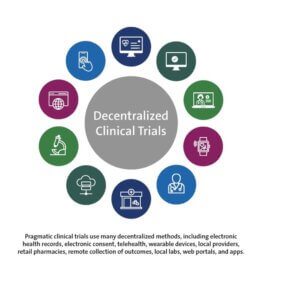
With a decentralized trial, certain elements of the trial can be delivered remotely (Figure). NIH Collaboratory Trials employ many decentralized elements, including electronic consent, telehealth interventions, connected sensors, retail pharmacies, local providers, and remote collection of patient-reported outcome measures and other outcomes. Decentralized trials can also use at-home shipments of investigational products, local labs, and mobile research sites.
Figure. Decentralized Elements of PCTs
Case Examples
eConsent
The HiLo trial planned to compare the effects of liberalizing the serum phosphate target versus maintaining aggressive phosphate control for patients receiving maintenance hemodialysis (Edmonston et al 2021). The trial planned to approach 4400 patients with end-stage renal disease receiving maintenance hemodialysis at 80-120 sites. Patients interested in participating were given an iPad to provide electronic consent while in the dialysis unit.
Oral Consent and Telehealth
The BeatPain Utah trial is comparing the effectiveness of nonpharmacologic intervention strategies for patients with back pain seeking care in 13 federally qualified health centers (FQHCs) throughout Utah (Fritz et al 2022). The strategies being evaluated are designed to overcome barriers specific to rural and low-income communities served by FQHCs through the innovative use of an electronic referral (through the EHR) and telehealth resources. The intervention consists of counseling, physical therapy, and brief consultation sessions delivered via telehealth. After a remote/virtual connection is made between a referred patient and a pain teleconsultant, an explanation of the study is provided to the patient. If the patient is eligible and interested, oral consent is obtained and documented. A written version of the consent document is provided to the participant.
Text Messages
The Nudge study used text messaging as the intervention, and Chat 4 Heart Health uses an artificially intelligent chatbot to text with participants. The goal was to improve adherence to heart medications or to heart-healthy habits such as eating better, being more active, quitting tobacco, and managing blood pressure (Ho et al 2024).
Connected Sensors
FM-TIPS aims to test the feasibility and effectiveness of adding transcutaneous electrical nerve stimulator (TENS) to the treatment of patients with fibromyalgia (Post et al 2022). For the trial, a TENS unit will be worn by the patient during physical activity at home, to determine if TENS use improves the symptoms of fibromyalgia, increases adherence to physical therapy, increases the likelihood of meeting therapeutic goals, and reduces medication use. Data are collected by uploading data from the TENS unit and through remotely collected patient-reported outcome measures.
SECTIONS
Resources
Good Clinical Practice: Considerations for Trials with Pragmatic or Decentralized Features
A two-day workshop from the Reagan-Udall Foundation (recordings, slides, and transcripts available)
REFERENCES
Edmonston DL, Isakova T, Dember LM, et al. 2021. Design and rationale of HiLo: a pragmatic, randomized trial of phosphate management for patients receiving maintenance hemodialysis. Am J Kidney Dis. 77(6):920-930.e1. doi:10.1053/j.ajkd.2020.10.008. PMID: 33279558.
Fritz JM, Del Fiol G, Gibson B, et al. 2022. BeatPain Utah: study protocol for a pragmatic randomised trial examining telehealth strategies to provide non-pharmacologic pain care for persons with chronic low back pain receiving care in federally qualified health centers. BMJ Open. 12:e067732. doi:10.1136/bmjopen-2022-067732. PMID: 36351735.
Ho PM, Glorioso TJ, Allen LA, et al. 2024. Personalized patient data and behavioral nudges to improve adherence to chronic cardiovascular medications: A randomized pragmatic trial. JAMA. doi:10.1001/jama.2024.21739. PMID: 39621340.
Post AA, Dailey DL, Bayman EO, et al. 2022. The Fibromyalgia Transcutaneous Electrical Nerve Stimulation in Physical Therapy Study protocol: A multisite embedded pragmatic trial. 102:pzac116. doi: 10.1093/ptj/pzac116. PMID: 36036838.
ACKNOWLEDGEMENTS
The Ethics and Regulatory Core Working Group of the NIH Collaboratory contributed to this work through discussions and edits to the text. Key contributors include Pearl O'Rourke, Joseph Ali, and Jeremy Sugarman.