Skip to content

COVID-19 Resources

Access the latest information on COVID-19 for clinical researchers
  • Home
  • About
    • NIH Collaboratory
      • Coordinating Center
      • NIH Collaboratory Trials
      • Core Working Groups
      • Steering Committee
      • Distributed Research Network
      • Our Impact
    • Living Textbook
      • Table of Contents
      • How to Use This Site
  • Resources
    • Data and Resource Sharing
    • Training Resources
    • Tools for Researchers
    • Publications
    • Knowledge Repository
  • Webinar
  • Podcast
  • News
    • News Feed
    • Calendar
    • Subscribe
return to home
Subscribe to Newsletter go to twitter feed go to linkedin go to blue sky feed
Search
NIH Collaboratory
Living Textbook of
Pragmatic Clinical Trials

COVID-19 Resources

Access the latest information on COVID-19 for clinical researchers
home button

Rethinking Clinical Trials

A Living Textbook of Pragmatic Clinical Trials

  • Design
    • What is a Pragmatic Clinical Trial?
    • Decentralized Pragmatic Clinical Trials
    • Developing a Compelling Grant Application
    • Experimental Designs and Randomization Schemes
    • Endpoints and Outcomes
    • Analysis Plan
    • Using Electronic Health Record Data
    • Building Partnerships and Teams to Ensure a Successful Trial
    • Intervention Delivery and Complexity
    • Patient Engagement
  • Data, Tools & Conduct
    • Assessing Feasibility
    • Acquiring Real-World Data
    • Assessing Fitness-for-Use of Real-World Data
    • Study Startup
    • Participant Recruitment
    • Monitoring Intervention Fidelity and Adaptations
    • Patient-Reported Outcomes
    • Clinical Decision Support
    • Mobile Health
    • Electronic Health Records–Based Phenotyping
    • Navigating the Unknown
  • Dissemination & Implementation
    • Data Sharing and Embedded Research
    • Dissemination Approaches for Different Audiences
    • Implementation
    • End-of-Trial Decision-Making
  • Ethics & Regulatory
    • Privacy Considerations
    • Identifying Those Engaged in Research
    • Collateral Findings
    • Consent, Disclosure, and Non-Disclosure
    • Data and Safety Monitoring
    • Ethical Considerations of Data Sharing in Pragmatic Clinical Trials
    • Ethics for AI and ML
    • IRB Responsibilities and Procedures

Mechanisms for Notification – ARCHIVED

CHAPTER SECTIONS

ARCHIVED PAGE

Archived on June 3, 2025. Go to the latest version.

Consent, Waiver of Consent, and Notification


Section 4

Mechanisms for Notification – ARCHIVED

Expand Contributors

Pearl O’Rourke, MD

Kayte Spector-Bagdady, JD, MBE

David Wendler, PhD, MA

Contributing Editor

Karen Staman, MS

When obtaining  consent is not required, researchers (and the IRB) may still decide to notify the patients included in research through various mechanisms, which can vary from a poster that provides a general or group notification (e.g., “We do research here”) to individual notification about a specific study. With any form of notification, there may also be an option to opt out.

Individual Notification

Even when a waiver of consent is granted, some investigators provide individual notification to those included in the research and may offer an opportunity to opt out as a mechanism to preserve autonomy. Individual notification can occur through various methods, including a letter sent by mail, an email through a patient portal, individually provided flyers, or a discussion with a physician.

Example from a NIH Collaboratory Trial:

TiME trial information sheet

Group Notification

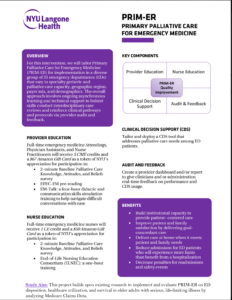
Group notification can include flyers and posters in clinics. The information can be specific to the study or a general statement that research is being conducted in that setting. For example, the Randomized Evaluation of Decolonization versus Universal Clearance to Eliminate MRSA (REDUCE MRSA) trial (Septimus et al. 2014) compared 3 commonly used strategies for preventing methicillin-resistant Staphylococcus aureus (MRSA) infections in adult intensive care units of a single health system. Although a waiver of consent was granted, the IRB required that patients be informed of the study through notices posted in each ICU room.

Example from a NIH Collaboratory Trial:

PRIM-ER Flyer
Opt Out

With opt out, subjects  are enrolled in the research unless they decline to participate. Opt out can be used along with either individual or group notification. Note that if opt out is an option, there must be a mechanism for tracking those who opt out such that their data are not collected.

Case Example: STOP CRC and Opt Out

The Strategies and Opportunities to Stop Colorectal Cancer in Priority Populations (STOP CRC) trial was designed to improve rates of colorectal cancer screening among the predominantly minority and low-income patients who receive healthcare services through Federally Qualified Health Centers (FQHCs; Coronado et al 2014). Prospective participants were identified in the EHR as being aged 50 to 74 years old and not up-to-date with colorectal cancer screening guidelines. Investigators sent these individuals an Introduction Letter explaining the program and provided an option to opt out of the mailed program by contacting the FQHC (Coronado et al 2014). The letter said: “If you have had a colonoscopy in the past 9 years or prefer that we not mail you a test, please contact us at xxx-xxx-xxxx.” Patients who did not opt out subsequently received a fecal immunochemical test (FIT) kit in the mail with a letter and a set of wordless instructions with pictograms of each step. Participants who did not opt out were also reminded by post card or phone to complete their tests.

Previous Section Next Section

SECTIONS

CHAPTER SECTIONS

sections

  1. Introduction – ARCHIVED
  2. Regulatory Requirements for Informed Consent – ARCHIVED
  3. Waivers and Alterations – ARCHIVED
  4. Mechanisms for Notification – ARCHIVED
  5. Findings on Approaches to Consent – ARCHIVED

REFERENCES

back to top

Coronado GD, Burdick T, Petrik A, Kapka T, Retecki S, Green B. Using an automated data-driven, EHR-embedded program for mailing FIT kits: lessons from the STOP CRC pilot study. J Gen Pract (Los Angel). 2014;2:1000141. doi:10.4172/2329-9126.1000141. PMID: 25411657.

Coronado GD, Vollmer WM, Petrik A, et al. Strategies and opportunities to STOP colon cancer in priority populations: design of a cluster-randomized pragmatic trial. Contemp Clin Trials. 2014;38(2):344-349. doi:10.1016/j.cct.2014.06.006. PMID: 24937017.

Septimus EJ, Hayden MK, Kleinman K, et al. 2014. Does chlorhexidine bathing in adult intensive care units reduce blood culture contamination? A pragmatic cluster-randomized trial. Infect Control Hosp Epidemiol. 35 Suppl 3:S17-22. doi:10.1086/677822. PMID: 25222893

back to top


Version History

Published October 13, 2022

current section :

Mechanisms for Notification – ARCHIVED

  1. Introduction – ARCHIVED
  2. Regulatory Requirements for Informed Consent – ARCHIVED
  3. Waivers and Alterations – ARCHIVED
  4. Mechanisms for Notification – ARCHIVED
  5. Findings on Approaches to Consent – ARCHIVED

Citation:

O’Rourke P, Spector-Bagdady K, Wendler D. Consent, Waiver of Consent, and Notification: Mechanisms for Notification – ARCHIVED. In: Rethinking Clinical Trials: A Living Textbook of Pragmatic Clinical Trials. Bethesda, MD: NIH Pragmatic Trials Collaboratory. Available at: https://rethinkingclinicaltrials.org/chapters/ethics-and-regulatory/consent-waiver-of-consent-and-notification/mechanisms-for-notification/. Updated December 3, 2025. DOI: 10.28929/164.

Footer Menu

  • How to Use This Site
  • About NIH Collaboratory
  • Enrollment Reporting
  • Grand Rounds
  • Funding Statement
Link to Twitter Link to LinkedIn Link to Blue Sky Link to NIH Collaboratory email

Reference in this Web site to any specific commercial products, process, service, manufacturer, or company does not constitute its endorsement or recommendation by the U.S. Government or National Institutes of Health (NIH). NIH is not responsible for the contents of any “off-site” Web page referenced from this server.

Log in
Privacy Statement
WordPress is a content management system and should not be used to upload any PHI as it is not an environment for which we exercise oversight, meaning you the author are responsible for the content you post. Please use this system accordingly. Site Map